
He was oppressed and treated harshly, yet he never said a word. He was led like a lamb to the slaughter. And as a sheep is silent before the shearers, he did not open his mouth. [Isaiah 53:7 (NLT)]
The next day John saw Jesus coming toward him and said, “Look! The Lamb of God who takes away the sin of the world!” [John 1:29 (NLT)]
 As I put away our various nativity sets until next December, I noticed they all include at least one lamb. Since shepherds came to see Jesus, it’s logical there would be a lamb or two in most depictions of Christmas. Nevertheless, as I packed up the figures, I thought about the shepherds and sheep visiting the child who was both the Good Shepherd and the Lamb of God. That Jesus took on both roles is a bit of a paradox. The shepherd may have watched over the sheep but, in the end, his lambs were destined to be slaughtered for food or ritual sacrifice.
Nowadays, the whole concept of animal sacrifice seems alien and primitive to us but lambs were sacrificed to God as far back as Abel. Israel’s history as a nation began that first Passover in Egypt when they smeared lamb’s blood on the doorframes of each house. The sacrifice of a lamb as atonement for sin appears frequently in the Hebrew Bible and, of the 151 Old Testament references to lambs in my NLT, 125 are about their sacrifice to God. By Jesus’ time, the priests in the temple sacrificed a lamb every morning and night, on every Sabbath, and at the feasts of the New Moon, Trumpets, Tabernacles, Pentecost, Passover, along with other occasions. The purpose of these animal sacrifices was sanctification (to purify the people from sin), righteousness (to obtain right standing with God), and forgiveness. Being a perfect lamb without blemish did not bode well for a lamb and being the sinless Lamb of God who would take away the sin of the world did not foreshadow a good ending for Jesus. Yet, “Lamb of God” is what John the Baptist called Him.
John’s words pointed to Jesus as being the perfect sacrifice for mankind’s sins but I don’t think he grasped the full implication of those words. Until the very end, even Jesus’ own disciples didn’t understand that being the Lamb of God meant that Jesus would willingly submit and go “like a lamb to the slaughter” to suffer and die on the cross. There was however, only one way the Lamb could take away the sin of the world. For the one perfect and final sacrifice to remove man’s guilt and open the way to God, the Lamb’s blood had to be shed and His life relinquished.
Earlier I mentioned that being both the Good Shepherd and Lamb of God seems a bit of a paradox—that the one who cares for the flock couldn’t also be the sacrificial lamb. Jesus, however, turns our expectations upside down. In His world, the week are strong, the first must be last, we reign by serving, the greatest is the least, and we find our lives by losing them. Jesus is both the Good Shepherd and the Lamb of God because, “The good shepherd sacrifices his life for the sheep. …I am the good shepherd; I know my own sheep, and they know me, just as my Father knows me and I know the Father. So I sacrifice my life for the sheep.” [John 10:11,14-15]
Next December, when we set out our nativity sets and place the shepherd and lamb around the crèche, let us remember that, as the Good Shepherd, Jesus tends, protects and guides us and, as the Lamb of God, He defeated Satan by dying on the cross and taking away the sins of the world. The Lamb, however, is more than a sacrificial victim. In Revelation, John describes the victorious and very much alive Lamb, enthroned with God, serving as judge of God’s opponents, and praised by all creation!

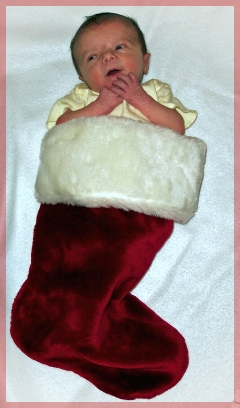
 Several years ago, one of my children asked if, with the benefit of hindsight, would I do it all over again—leave school, get married at twenty, have three children, and be a stay-at-home mom. Admitting that I had no idea what marriage and motherhood entailed when I did it, I would have enjoyed having had a life of my own, a career, and an opportunity to live without parental responsibility. Nevertheless, I added, in spite of the sacrifices, challenges, and trials over the years, I wouldn’t trade the life I’ve lived or the children God gave me for anything.
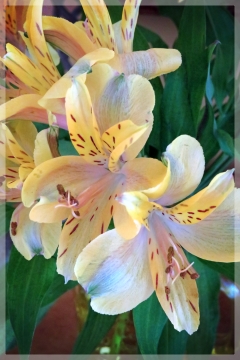
 Yesterday, I mentioned Dr. Frank Crane’s comments about the wonders of everyday life. After saying, “The miracle of miracles is life,” Crane adds, “The most amazing, baffling, mysterious thing in all the universe is a seed.” While cutting into an orange this morning, I looked at the seeds hidden in the juicy fruit and recalled his words. Think how a single orange seed can grow into an orange tree that produces countless flowers that almost miraculously transform into oranges that will then produce even more seeds. The amazing power and potential held in the core of one small seed is there because it was designed by God.
 In one of his four-minute essays, Dr. Frank Crane posited that that the Seven Wonders of the World weren’t the most wonderful things in the world; the wonders of everyday life were! I have to agree. The seven wonders are man-made and, of the original seven, only the great pyramid in Giza remains. On the other hand, the night sky has been there since God created it when time began. Within our galaxy there are some 300 billion stars. The Milky Way, however, is just one of some 2 trillion galaxies (making for a total stellar population of roughly 70 billion trillion.) Since that’s just in the observable universe, there probably are plenty more that haven’t yet been detected. That those trillions of stars are orbiting around an ever expanding universe boggles the mind! Nothing made by man even comes close.
 The Word gave life to everything that was created, and his life brought light to everyone. The light shines in the darkness, and the darkness can never extinguish it. [John 1:4-5 (NLT)
 Devotions of the Heart