
In those days Israel had no king; all the people did whatever seemed right in their own eyes. [Judges 17:6
 When the book of Judges opens, Joshua is dead after leading Israel’s united force to military victory as they entered Canaan. The land has been divided among the twelve tribes and it became each tribe’s responsibility to clear any remaining enemies from their territory, which they failed to do. No longer a unified people, Israel lost its way spiritually and began to take on the pagan practices of Canaan. After the optimism in the book of Joshua, Judges is filled with immorality, political division, and spiritual decline. Angry at Israel’s apostasy, God turned His people over to their enemies and, when they went to battle, He fought against them.
Eventually, Israel’s suffering would be so great that the people would cry out and turn from their evil ways and idolatry back to the Lord. When Israel called out, God heard their cries. He would designate a judge and empower the person to deliver the people from their enemies. The book of Judges names twelve judges: Othniel, Ehud, Shamgar, Deborah, Gideon, Tola, Jair, Jephthah, Ibzan, Elon, Abdon, and Samson.
Although they occasionally settled civil disputes, the judges’ main purpose was to serve as political and military commanders who would lead an army against their enemies. Like a judge, they executed judgment, condemned, and punished but the justice they meted out was to their pagan oppressors. After their victory, a period of obedience and peace would follow during the judge’s lifetime. Sadly, it never lasted and, eventually, the nation would fall back into its sinful ways. When the people repented, God would call up another judge and another cycle of regeneration and degeneration would begin.
Following Samson’s death, the people again returned to their old sinful ways and the last chapters of Judges are filled with horrific stories of idolatry, sexual perversion, lawlessness, civil war, and senseless slaughter. That downward spiral continued in 1 Samuel where we find four others referred to as judging Israel: Eli, Samuel, and Samuel’s two sons. These judges, however, were more like civil magistrates than military leaders. Although previous judges had been called by God, Samuel erred by appointing his corrupt sons as judges. Fed up with their wickedness and wanting to be like the nations surrounding them, Israel demanded a king and God gave them what they wanted.
While Judges clearly reveals that, without a leader, people will go astray, the books of Kings and Chronicles show us that having an earthly king isn’t any better. From the time of the judges through the period of the kings, we see a cycle of rebellion, retribution, repentance, and restoration. What Israel never seemed to understand was that they didn’t need a judge or a king to deliver them from foreign oppressors—what they needed was a Messiah to deliver them from their sins!
Nevertheless, that time of darkness and despair will not go on forever. The land of Zebulun and Naphtali will be humbled, but there will be a time in the future when Galilee of the Gentiles, which lies along the road that runs between the Jordan and the sea, will be filled with glory. The people who walk in darkness will see a great light. For those who live in a land of deep darkness, a light will shine. [Isaiah 9:1-2 (NLT)]
Copyright ©2022 jsjdevotions. All rights reserved.

 We know that four of the disciples were fisherman and one was a despised tax collector but have no idea what careers the others left behind to follow Jesus. If Jesus wasn’t carpentering, the fishermen weren’t fishing, the tax collector wasn’t collecting, and others weren’t doing whatever it was they did, how did these men support themselves? For the most part, they probably depended on the hospitality of strangers or friends like Martha, Mary, and Lazarus but we also know that the disciples were in Sychar purchasing food when Jesus had a conversation with the Samaritan woman at the well. Like any ministry, the group needed money for everyday expenses and Scripture tells us that people like Joanna, Susanna, and Mary Magdalene provided for them out of their resources.
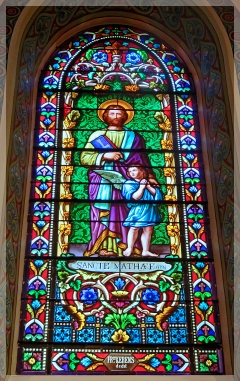 Although Mark and Luke call him Levi, there is no doubt that Levi and Matthew are the same man. He may have had two names, as did John Mark or was known by two different names as were Peter (Simon), Thomas (Didymus), Jude (Thaddeus), and Nathanael (Bartholomew). It simply may be that, like the Apostle Paul (Saul), he was known both by his Greek name of Matthew as well as his Hebrew one of Levi.
 The Torah made it abundantly clear that adultery was punishable by death and, since adultery involves more than one party, laws in Leviticus and Deuteronomy required the condemnation of both parties involved. Jesus was speaking to a crowd when some scribes and Pharisees brought a woman caught in adultery to Him. Insisting that the law required her to be stoned, they asked Jesus what to do.
 Devotions of the Heart