PREDICTIVE PROPHECY (Prophecy – 3)

Bel and Nebo, the gods of Babylon, bow as they are lowered to the ground. They are being hauled away on ox carts. The poor beasts stagger under the weight. Both the idols and their owners are bowed down. The gods cannot protect the people, and the people cannot protect the gods. They go off into captivity together. [Isaiah 46:1-2 (NLT)]
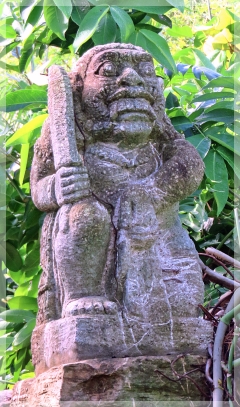
The Israelites were surrounded by various pagan peoples who worshipped foreign deities. Baal ruled over Canaan and Phoenicia, Chemosh over Moab, and Marduk/Bel and Nebo over Babylonia. The Philistines’ had Dagon and the Ammonites worshipped Molech. These gods usually had a domain over which they ruled. For example, Baal’s domain was rain, storms, and the harvest. Moab’s Chemosh presided over war and mountains. As patron deity of Babylon, Marduk/Bel was supposed to protect the city and rule over storms while Nebo’s purview was wisdom and science. The Philistines’ chief god Dagon presided over death, the afterlife, war, and agriculture while Ammon’s Molech reigned over the underworld, which may explain his association with child sacrifice in the Old Testament.

In spite of their reputed special powers, those pagan gods were nothing more than powerless idols who had to be carried around on ox carts and would be taken captive along with their worshippers! Marduk/Bel couldn’t protect Babylon from Cyrus or Alexander the Great and Baal, the god of rain and storms, couldn’t even make it rain after Elijah called for a drought or muster up a bolt of lightning to ignite a fire! In contrast, upon Elijah’s prayer, the God of Israel immediately flashed down flames and turned water-soaked wood into an inferno.

Perhaps, the ultimate test of any god is prophecy because only a true God can know all that has gone before and all that is yet to come. In Isaiah 41, the Lord called out those false gods because they couldn’t prophesy when He, the God of Israel, could! It wasn’t just His prophet Isaiah who accurately forecast the future; many others did as well. For example, Jeremiah accurately foretold Jerusalem’s destruction, King Jehoiakim’s death and the end of his line, Babylon’s fall, the length of captivity, and the exiles’ return to Judah. When interpreting Nebuchadnezzar’s dream, Daniel accurately foretold the different empires in historical progression—from Babylonian to Medo-Persian to Grecian and then to Roman. In 536 BC, more than 213 years before it happened, he predicted the division of Alexander the Great’s kingdom into four weaker nations. In fact, the book of Daniel predicted political history for the next 370 years!

Since true prophecy is the living word of God, I suppose the historic accuracy of those fulfilled prophecies shouldn’t surprise us. Their accuracy tells us that God exists, that there are no other gods, and that, just as He controlled the past, He is in full control of the future. There are, however, several prophecies yet to come. For example, Daniel’s predictive prophecies didn’t stop at 166 BC with the Maccabees and Antiochus IV. He continued on with end-time predictions of the antichrist, the tribulation, and humanity’s resurrection. The accuracy of past predictive prophecy tells us that those prophecies not yet fulfilled will come to pass. Will you be ready when they do?

I’ve read the last page of the Bible. It’s all going to turn out all right. [Billy Graham]

“Present the case for your idols,” says the Lord. “Let them show what they can do,” says the King of Israel. “Let them try to tell us what happened long ago so that we may consider the evidence. Or let them tell us what the future holds, so we can know what’s going to happen. Yes, tell us what will occur in the days ahead. Then we will know you are gods. In fact, do anything—good or bad! Do something that will amaze and frighten us. But no! You are less than nothing and can do nothing at all. [Isaiah 41:21-24a (NLT)]

Copyright ©2022 jsjdevotions. All rights reserved

IF HE CAN

“What do you mean, ‘If I can’?” Jesus asked. “Anything is possible if a person believes.” The father instantly cried out, “I do believe, but help me overcome my disbelief!” [Mark 9:23-24 (NLT)]

Beauty Berry FlowerPrayer is calling on God’s power; it’s like calling in the big guns to fight the battle. When doubt in the efficacy of prayer sneaks in, however, it’s more like calling in the big guns but not believing they’re loaded with enough ammunition. I am often like the father in Mark 9 who qualified his request that Jesus heal his son by saying, “If you can.” Like that father, I profess to believe but I need God to help me believe more! Sometimes, the enemy sneaks into my heart and causes me to doubt both the ammunition and God’s aim.

Looking for a feel-good movie to escape from the challenges of the day, we recently streamed the War Room. Not to be confused with the 1993 documentary The War Room, the war room in this 2015 movie is a converted closet with prayer requests covering the walls rather than an Arkansas political campaign headquarters. Focusing on the power of prayer, the story is about a crumbling marriage that is redeemed by prayer.

In one memorable scene, Elizabeth Jordan, the woman in the troubled marriage, and Miss Clara, a prayer warrior extraordinaire, are walking together when they’re confronted by a knife-wielding mugger demanding their money. As Elizabeth starts to get out her wallet, Miss Clara successfully defies him just by saying, “You put that knife down right now in the name of Jesus!” The next scene shows a frazzled Elizabeth reporting the incident to a skeptical policeman while the unruffled Miss Clara enjoys some ice cream.

Even the most positive reviews of this movie were critical of the unreality of those scenes but, as improbable as they were, their inclusion in the movie were necessary because they demonstrate the absolute faith—the total certainty—that is necessary for truly powerful prayer. Facing that mugger, Miss Clara had no doubt that she was in God’s hands and was certain that He would rescue her if she called on Jesus’ name. Later, as she calmly consumed both her and Elizabeth’s ice cream, it is obvious she wasn’t surprised by God’s protection. She expected it, as should we all if we truly believe. After all, nothing is impossible with God!

I’m not sure that God wants us to respond to a weapon-wielding robber the way Miss Clara did but I think He does want us to have the kind of faith demonstrated in that scene. When we come to Him in prayer, we must have faith enough to put our entire lives in His hands. We must believe that our prayers can actually make a difference. Indeed, prayer is the key to winning all those battles we can’t win on our own.

When we pray, do we ask with our lips but doubt in our hearts? When we ask, are we surprised when we receive? Father in heaven, I don’t know why I still doubt when you’ve shown me over and over again that my prayers do not fall on deaf ears. I have faith, dear Lord; please, help me have more!

Faith is not believing that God can. It is knowing that God will. [Ben Stein]

But when you ask him, be sure that your faith is in God alone. Do not waver, for a person with divided loyalty is as unsettled as a wave of the sea that is blown and tossed by the wind. Such people should not expect to receive anything from the Lord. [James 1:6-7 (NLT)]

Now all glory to God, who is able, through his mighty power at work within us, to accomplish infinitely more than we might ask or think. [Ephesians 3:20 (NLT)]

Copyright ©2022 jsjdevotions. All rights reserved

COME AS YOU ARE

“Now go out to the street corners and invite everyone you see.” So the servants brought in everyone they could find, good and bad alike, and the banquet hall was filled with guests. [Matthew 22:9-10 (NLT)]

My in-laws were great ones for giving theme parties. When they hosted a “Backwards Party,” guests entered through the back door, wore their clothes backwards (which my mother-in-law admitted made it difficult for the men), and ate dessert before dinner. At another get-together, attendees came dressed as children, received jump ropes and jacks, pulled taffy, and played games like “Mother May I?” and “Pin the Tail on the Donkey.” My introduction to their parties was in 1966 when they turned their house into a Prohibition era speakeasy and guests needed a password to enter. Women dressed as flappers while the men wore fedoras, vests, and spats. Another party had the theme, “Come as You Wish You Had Been.” My mother-in-law, dressed in shorts with a whistle around her neck, came as the PE teacher she once dreamed of becoming and my father-in-law dressed as the train conductor he once aspired to be. Other attendees dressed as ballerinas, weight lifters, princesses, cowboys, or baseball players.

The one theme party they never hosted was “Come as You Are!” After all, no one wants to come as they are. If we can’t be someone else entirely, at least we want to be a better version of ourselves! If I were invited to a “Come as You Are” party, I know I would cheat. I’d change out of my yoga pants, tee, and Crocs into an outfit that would suggest my life is far more exciting than it really is. Then I’d put on make-up, touch up my nails, comb my hair, and spritz on perfume before leaving the house. Yet, “Come as you are!” is exactly how God invites us to come to Him.

We don’t have to be neat, clean or accomplished, nor do we have to repair what’s broken in our lives to accept the invitation to Jesus’ party. Our Lord didn’t invite the elite or influential to be his disciples; He invited twelve ordinary, uneducated, and imperfect men. He knew Peter was impulsive, John and James hot-tempered, Judas flawed, and Matthew a traitorous tax-collector. The woman at the well and the thief on the cross didn’t have to pretend to be anything but the sinners they were and neither do we! The blind, lame, adulterous, afflicted, possessed, soiled and corrupt—they all came to Jesus, not as the innocent children they once were nor as they once wished they could have been, but just as they were. It’s hard to believe that our perfect God could love and accept us, as imperfect and flawed as we are, but He does.

Although we can come to Him as we are, make no mistake about it, we won’t remain that way. We must shed the old us and put on the new in the same way that Saul, the self-righteous Pharisee, did when he became Paul, the Apostle. When we accept Jesus’ invitation to come as we are, He will make of us what we should be.

The church is not a select circle of the immaculate, but a home where the outcast may come in. It is not a palace with gate attendants and challenging sentinels along the entrance-ways holding off at arm’s-length the stranger, but rather a hospital where the broken-hearted may be healed, and where all the weary and troubled may find rest and take counsel together. [James H. Aughey]

Jesus answered them, “Healthy people don’t need a doctor—sick people do. I have come to call not those who think they are righteous, but those who know they are sinners and need to repent.” [Luke 5:31-32 (NLT)]

Put on your new nature, and be renewed as you learn to know your Creator and become like him. In this new life, it doesn’t matter if you are a Jew or a Gentile, circumcised or uncircumcised, barbaric, uncivilized, slave, or free. Christ is all that matters, and he lives in all of us. [Colossians 3:10-11 (NLT)]

Copyright ©2021 jsjdevotions. All rights reserved.

WHO’S THE PILOT?

key west expressI trust you, O Lord. I said, “You are my God.” My future is in your hands. [Psalm 31:14-15a (GW)]

By the time our son was seventeen, he had his pilot’s license. To log solo flight time, he’d often fly from his school in another state to a small airport near our home. We’d meet him there and enjoy lunch together before he returned. Sometimes, he’d take one of us up for a short flight over the scenic countryside before he flew back to school. I don’t even like commercial flights on a jumbo jet with a seasoned pilot so getting on a single-engine Cessna with a teenager at the controls was a leap of faith for me. Nevertheless, when I’m on a plane, I have to leave the flying to those far more skilled than I—even when it’s a seventeen-year-old! Reassuring myself that there was less my son could hit in the air (while trying to forget that safely landing a plane was probably more difficult than parallel parking), I surrendered control to him and trusted that he knew what he was doing.

God is my Co-Pilot is the title of a 1945 film based on the World War II exploits of Robert Lee Scott, Jr. That title eventually became a Christianese catch-phrase and still can be found on bumper stickers today. While a charming sentiment, it is theologically incorrect. If God is our co-pilot, we’re in the wrong plane! There are no dual controls in God’s plane and He doesn’t want us touching the yoke or messing with the rudder pedals. God is neither our assistant nor are we His. He’s not the passenger on our plane; we’re the passengers on His. We don’t belong anywhere in the cockpit; we belong back in the cabin. He has a flight plan specifically designed for each of us and we have to trust that plan to Him.

While it’s easy to trust in God’s sovereignty and cede the controls to Him when the journey is smooth, it’s much harder when turbulence occurs or it begins to storm. I’ve had some bumpy (and frightening) flights, especially over the mountains in summer, but I never barged into the cockpit to take charge nor did I don a parachute and bail out. Trusting the captain, I surrendered control to him, buckled up, prayed, and let him do his job.

Unfortunately, it’s difficult for me to admit that I’m no better at running my life than I am at piloting a plane. While I’m willing to trust a complete stranger to pilot me safely home in the midst of a storm, I often bail out or push into the cockpit of life and try to seize the controls from God at the first sign of turbulence in life. The end result is that I crash and burn and God ends up being rescue squad, fire department, clean-up crew, and salvage expert. Trust and obey is really all God asks of us, and yet we often try to do His job for Him.

Heavenly Father, forgive us for the many times we try to wrest control of our lives to go in another direction than the one you planned for us. As Creator of the Universe, we concede that you are far more skilled at plotting the best route, keeping us on course, and handling all the storms, unruly fellow travelers, engine problems, and fuel shortages that trouble our days. Secure in your love for us, we know that you want us to have a safe landing. You are the captain—the pilot of our plane. Trusting in you, we are your passengers awaiting your orders.

When a train goes through a tunnel and it gets dark, you don’t throw away the ticket and jump off. You sit still and trust the engineer. [Corrie Ten Boom]

I know the plans that I have for you, declares the Lord. They are plans for peace and not disaster, plans to give you a future filled with hope. [Jeremiah 29:11 (GW)]

Copyright ©2021 jsjdevotions. All rights reserved.

LOST IN THE MAZE

Your word is a lamp to guide my feet and a light for my path. [Psalm 119:105 (NLT)]

scarecrowAlthough we usually visit my daughter’s family in New Mexico in October, my broken ankle canceled our plans. The only bright spot in the cancelation is that I won’t have to participate in the dreaded family tradition of navigating through the corn maze at the pumpkin farm! I say “dreaded” because I’m so directionally challenged that I’d have trouble finding my way out of a box. Actually, after our first outing, I’m surprised any of us ever again ventured into another corn maze.

For our first venture, we chose what was reported to be the best (and largest) maze in the area—a 16-acre corn field that had been transformed into an intricately designed labyrinth. Although we had a small map, we soon became convinced that it was for an entirely different maze. Between the trail’s fiendish twists and turns and its 6-foot walls of corn stalks, we soon were totally lost. We had no idea where we were, let alone where we’d been or where we were going. Hot, thirsty, and tired, the little ones started to whine and complain and we adults weren’t much better. What was supposed to be a fun family outing was turning into a miserable afternoon.

While pausing to finish the last of our water, my husband happened to glance down at the stakes placed along the pathways. Connected by twine, they kept people from taking shortcuts or straying off the convoluted trail into the corn. Seeing that some stakes had a barely noticeable tiny arrow drawn on their  ends, we tried following the markings. Finding that they never led us into dead ends or left us walking in circles, we continued following those arrows all the way to the exit. Even though the solution to our problem was right in front of us, in our frustration, we hadn’t seen it.

While wandering through that maze, we were like a flock of sheep without a shepherd—and a flock without a shepherd is just a herd of lost sheep (maybe even dead ones since they’ve been known to follow one another off cliffs or into deep water)! While we may be smarter than sheep, like them, we need guidance and our Shepherd is the Lord. While it’s easier to follow His lead when all is going well and the path seems straightforward, it grows more difficult when the path He’s laid out for us is a complicated or challenging one. In God’s world, however, there are no shortcuts and sometimes we have to navigate through what seems a hopeless maze. Think of the convoluted routes taken by the Apostle Paul on his four mission trips, the less than straightforward route to Canaan God gave Moses, and the many years and challenges encountered by David before he became king. The paths on which God placed them were filled with twists, turns, and even a few dead ends.

Although our Shepherd will never abandon us, it sometimes seems as if He has. Feeling hopelessly lost, we find ourselves unsure of where to go or what to do as we wander through a maze of difficulties or major decisions. Rather than tiny arrows drawn on wooden stakes, God guides us through our journey with His word. Without it, we can find ourselves as lost as my family was in that corn field. Whether the path God puts us on is a complex maze or a straightforward four-lane freeway, He has provided us with all the guidance we need in Scripture. Far more accurate than our useless map and easier to understand than those arrows, His word can be trusted to lead us through our troubles to hope, safety, sustenance, strength, and peace.

 All Scripture is inspired by God and is useful to teach us what is true and to make us realize what is wrong in our lives. It corrects us when we are wrong and teaches us to do what is right. God uses it to prepare and equip his people to do every good work. [2 Timothy 3:16-17 (NLT)]

Copyright ©2021 jsjdevotions. All rights reserved.

FELIX

Sending for Paul, they listened as he told them about faith in Christ Jesus. As he reasoned with them about righteousness and self-control and the coming day of judgment, Felix became frightened. “Go away for now,” he replied. “When it is more convenient, I’ll call for you again.” [Acts 24:24b-25 (NLT)]

flame vineFelix was the governor of Judea from 52 to 58/59 AD. A Greek who became a freedman under the reign of Emperor Claudius, he’s described as a cruel, immoral, and corrupt governor by ancient historians Josephus and Tacitus. Tacitus called him “a master of cruelty and lust who exercised the powers of a king in the spirit of a slave.” As Judea’s governor (or Procurator), his job included procuring funds for Rome which Felix accomplished mercilessly while lining his pockets as well. That it took 470 soldiers to safely escort the Apostle Paul from Jerusalem to Caesarea indicates the lawlessness of his time.

In Acts 24, we meet Felix as he conducts an inquiry into the Jews’ charges against Paul. After hearing the accusations of the Roman advocate Tertullus, Paul launched a strong defense against the false allegations. Perhaps uncomfortable with Paul’s reference to the righteous and unrighteous, Felix adjourned the case until the arrival of Lysias, the garrison commander who saved Paul’s life in Jerusalem.

A few days later, Paul again appeared before Felix. Joining the governor was Drusilla, his third wife and the granddaughter of Herod the Great. She’d left her husband, King Aziz of Emesa, for Felix and, like her uncle Herod Antipas (the one who beheaded John the Baptist), her marriage was illegal since she was neither divorced nor widowed. I imagine the shameless couple didn’t take kindly to the Apostle’s words as he spoke of righteousness, self-control, and the coming day of judgment. Frightened by Paul’s message, Felix sent him away, saying he’d call for him again when it was more convenient.

Although the governor frequently called for Paul to talk with him over the next two years, Felix never decided Paul’s guilt or innocence. Scripture tells us the corrupt man was looking for a bribe, but surely it didn’t take Felix two years to realize a payoff was not forthcoming. I suspect the governor was drawn to Paul’s message but, unwilling to repent, he couldn’t commit to the Way. The corrupt and powerful man was caught between two incompatible worlds—if he chose Christ, he would end up relinquishing his position, influence, ill-gotten wealth, and even his wife. Unwilling to do so, Felix thought himself a freedman, when, in fact, he was in bondage to his sinful way of life. Eventually recalled to Rome, Felix never decided about Paul or Jesus simply because it was inconvenient. Let us not make the same mistake!

The two sworn enemies of the soul are “Yesterday” and “Tomorrow.” Yesterday slays its thousands. Past sins plunge many into darkness and despair. … Tomorrow slays its tens of thousands. Vows, promises, resolutions are never fulfilled. “Some other time,” many say, when urged to repent and believe. They fail to realize that now is the acceptable time. [Herbert Lockyer]

Don’t you realize that you become the slave of whatever you choose to obey? You can be a slave to sin, which leads to death, or you can choose to obey God, which leads to righteous living. Thank God! Once you were slaves of sin, but now you wholeheartedly obey this teaching we have given you. Now you are free from your slavery to sin, and you have become slaves to righteous living. [Romans 6:16-18 (NLT)]

Copyright ©2021 jsjdevotions. All rights reserved.