
Here’s another old saying that deserves a second look: ‘Eye for eye, tooth for tooth.’ Is that going to get us anywhere? Here’s what I propose: ‘Don’t hit back at all.’ If someone strikes you, stand there and take it. If someone drags you into court and sues for the shirt off your back, giftwrap your best coat and make a present of it. And if someone takes unfair advantage of you, use the occasion to practice the servant life. No more tit-for-tat stuff. Live generously. [Matthew 5:38-42 (MSG)]
 The billboard’s message read, “When push comes to shove, don’t!” It was sponsored by a nonprofit foundation that uses a variety of media sources to encourage positive values, good role models, and a better life. “Hard to argue with a goal like that,” I thought before discovering that some people took exception to their peaceful message. Re-tweeting it, one rock musician told his fans just to “shove harder.”
Recently, the management of our home association sent an email regarding the previous night’s annual meeting. Being out of town, we’d missed it but, apparently, pushes had come dangerously close to shoves. Because it had deteriorated into arguments, shouting and name calling, the management company found it necessary to inform the home owners that such future behavior would not be tolerated. They warned that, if it recurred, the meeting immediately would be adjourned. I was shocked that such an email was found necessary. These weren’t enemy nations or small children on a playground; neighbors and adults, they all knew better.
When we think we’re not being heard, we tend to get louder and, instead of communicating, we end up with a shouting match. Feeling a bit “holier than thou” while reading about the contentious meeting, the Spirit’s convicting voice reminded me I’m not much different. Last month, my husband took a quick trip. When dropping him off at the airport, I’d asked where he wanted to be picked up and we agreed on the lower/arrivals level. Upon his return, he called to say he was waiting at the far end of the terminal by the Jet Blue door. I parked there and waited and waited. I finally gave him a call and we both heatedly asked where the other was. Back and forth it went—him saying he was right there and me insisting he wasn’t, our voices getting just a little louder with each exchange. My husband eventually paused and asked whether I was at arrivals or departures. “Exactly where you told me: on the lower level at arrivals!” I replied. “Oh,” he quietly said, “I’ll be right there!” You guessed it; he’d been waiting upstairs. If, instead of accusing one another of being wrong, one of us had simply asked where the other was, we could have avoided a rather tense homecoming! Granted, we didn’t call one another names but, on a smaller scale, we were no different than our irate neighbors.
In today’s angry world, rather than have a civil discussion, people frequently intimidate, attack, and demonize anyone who thinks differently. What happened to being able to disagree without being disagreeable? For a civilized people, we seem to have lost all civility. Epictetus said, “We have two ears and one mouth so that we can listen twice as much as we speak.” He also said, “It is impossible for a man to learn what he thinks he already knows.” Of course, in some cases, that man (or woman) doesn’t want to learn anything that goes contrary to what he desires.
We are called to be peace makers and we do that by being humble, patient, and using our ears twice as much as we do our mouths. Not pushing back when push comes to shove doesn’t mean we lie down and allow someone to walk all over us. Not pushing back means we continue to stand, but we stand with civility, kindness, patience, and love. Another billboard sponsored by the same group says, “Always be a little kinder than necessary.” If we were, there might not be so many pushes, shoves, and angry tweets!
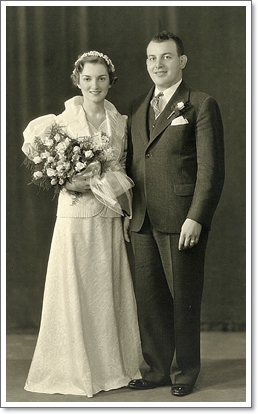 As I sorted through the papers that my mother-in-law had saved through the years, I came to a letter written to her in 1936 by her soon to be mother-in-law, Hattie. Hoping the young couple liked the mixer she’d given them, Hattie sent best wishes for a “long happy wedded life.” Wondering why such a mundane letter had been saved for 83 years, I read on. “May there be lots of love, joy and contentment in your home,” she continued, “forgiving each other as God forgives you.” Praying that my in-laws would have a long and “sweet contented life,” Hattie signed the letter “One who wishes you well in everything, Mother.”
 I was re-writing and updating my prayer list when I came to the names of several prodigals. Some of their names have been on that list for nearly two decades; during that time, they’ve been in and out trouble, jail, and rehab. Having wasted most of their lives, each one of them one would qualify as the poster child for lost causes. I thought of not adding their names to my new list. “After all, what’s the point?” I wondered.
 “I love you,” said my grandson to his mother; “I love you more,” was her quick reply. They went back and forth, each claiming to love the other most, until one said, “I love you to the moon and back!” Of course, they’re echoing the sentiments found in Sam McBratney’s delightful book Guess How Much I Love You. In it, every time Little Nutbrown Hare tells his father how much he loves him, Big Nutbrown Hare responds with an even larger amount of love. As he’s being tucked into his bed of leaves, the sleepy youngster thinks he’s finally out-distanced his dad when he says he loves him all the way to the moon. His father kisses him goodnight and, with a smile, whispers, “I love you right up to the moon—and back!” Since the moon’s distance varies with its orbit, the distance to the moon and back varies from around 443,362 to 505,244 miles. Even that measurement, however, isn’t correct; we can no more quantify a father’s love for his son than we can our Heavenly Father’s love for His children.
 While packing for our move, I considered Sarah and Abraham; they always seemed to be moving from one place to another. After starting in Ur of the Chaldees, Scripture mentions seventeen places through which they passed, sometimes more than once, including Haran, Bethel, Egypt, Dan, Salem, Gerar, and Beersheba before finally settling in Hebron. They did it all without cardboard boxes, bubble wrap, U-Hauls, pods, moving companies, pack-and-ship, or car transports. Of course, they didn’t have things like food processors, business files, Christmas decorations, picture albums, waffle irons, books, or electric toothbrushes! In all of Sarah’s 127 years, she probably never had as many sandals as I have shoes in my closet and, in all of Abraham’s 175 years, I’m sure he never had as many robes as there are tee-shirts in my husband’s. Because they were nomads, if it wasn’t necessary and easily transported, they didn’t have it.
 When Jesus stopped in Jericho, He was on His way to Jerusalem; His trial and crucifixion would soon follow. Although our Lord knew He would not pass that way again, no one else did; certainly not Zacchaeus. What if the publican had been too busy collecting taxes that day to go and see Jesus? What if it looked like it might rain or he was just too tired to make the effort? What if Zacchaeus had been discouraged by the large crowd and his inability to get a good viewing spot? Thinking he always could see Jesus the next time He passed through Jericho, what if he hadn’t run ahead and climbed that tree? Zacchaeus would have missed meeting Jesus and accepting His call.
