
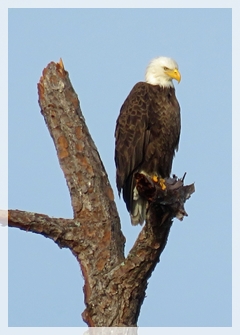
In a desert land he found him, in a barren and howling waste. He shielded him and cared for him; he guarded him as the apple of his eye, like an eagle that stirs up its nest and hovers over its young, that spreads its wings to catch them and carries them aloft. [Deuteronomy 32:10-11 (NIV)]
 A friend once asked her mother which of her children was the favorite. I can’t imagine making such a query, wanting to hear the answer, or how I’d respond to the same question. Since I can’t even pick my favorite color, I certainly couldn’t pick my favorite child. Is it the one with the over-the-top personality who not only could sell ice cubes to Eskimos but convince them to double their order because of a possible shortage? Is my favorite the adventurous one with the wonderfully quirky sense of humor and a mind that puts Wikipedia to shame? Is my favorite the thoughtful child—the one whose faith, strength, and patience rival that of Job? If they were beverages, one child would be a doppio espresso; another spiced chai with ginger, cardamom, allspice, cinnamon and cloves; while the third would be calming chamomile tea with a touch of honey. Like those beverages, each of my children is interesting, pleasant, and delightfully unique. One challenged me, one grieved me, and one worried me. Do I love them less because of that? Absolutely not! While I love them equally, because they have been blessed with different personalities and abilities, I don’t always treat them the same. Nevertheless, I love all three of them, just each in their own special way!
When my father called me the “apple of his eye,” I felt precious, treasured, and loved. I realize now that he never used that phrase within earshot of my siblings and suspect he used the same term of endearment in private with them. While there probably were times he liked one of us more than the others, I think we each were the apple of his eye in our own special way.
The Apostle John seemed to think he was the apple of Jesus’ eye. In his gospel, John refers to himself as “the disciple Jesus loved.” In the only other gospel written by one of the disciples, Matthew always refers to himself by name. I suspect the difference in how these men referred to themselves has far more to do with their writing style than with whether or not they felt loved. Granted, Jesus had his inner circle—John, Peter and James—but I don’t think that means He loved one disciple more than the next.
Indeed, John was the apple of Jesus’ eye—but so were Matthew, doubtful Thomas, Simon the Zealot, impulsive Peter, prayerful Mary, busy Martha, the woman at the well, and even the repentant thief on the cross. Because each was unique, they weren’t always treated the same but, without a doubt, each was loved and all were the “apple of his eye.” When we accepted Christ, God adopted us into His family and each of us, in our own special way, became His favored and much-loved child and the apple of His eye. Like John, every one of us is the disciple Jesus loves!
 When I was asked if I’d ever been hurt by a fellow believer, I had to reply that in my seventy plus years, I’ve been hurt (both intentionally and unintentionally) by all sorts of people, including the most devout of Christians. When asked if any Bible verse helped guide my response to the hurt, Ephesians 4:32 came to mind: “Be kind to each other, tenderhearted, forgiving one another, just as God through Christ has forgiven you.” I was then asked what I’d learned from my experiences. The first take-away, learned the hard way, was to immediately ask God to put His arm around my shoulder and His hand over my mouth before I said something stupid or nasty. The second was that, as tactless, unkind, petty, and rude that both Christians and non-Christians can be, they also can be right!
 In 2018, a woman posted a video on Facebook that was shared over 400,000 times in the next six days. It was of a little boy who had a unique way of reciting his ABCs—each letter was followed by a Bible verse that began with it. Rather than “A is for apple,” the youngster started with “Ask and it will be given to you; seek and you will find,” [Matthew 7:7] and finished with “Zion hears and rejoices.” [Psalm 97:8] In spite of the boy’s dark brown hair and East Texas drawl, the woman mistakenly identified him as blond-haired Prince George, third in line to the British throne. Originally posted in October of 2016, the video actually was of four-year-old Tanner Hemness from Tyler, Texas.
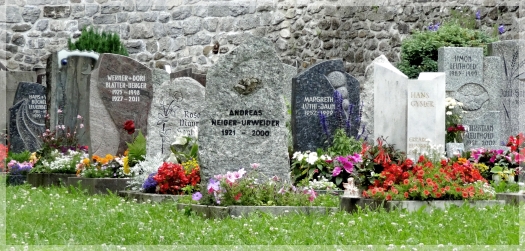 Many of the younger generation don’t know that yesterday’s Memorial Day originally was called Decoration Day and originated in the years following the Civil War. With some 620,000 dead from that conflict, communities began holding tributes to the fallen soldiers by reciting prayers and decorating their graves with flowers, flags and wreaths. The practice of leaving flowers at gravesites may have begun with the ancient Greeks who believed that, if the flowers took root and grew, the fallen had found peace or happiness in the afterlife.
 Contrary to popular belief, the purpose of our long holiday weekend is not to celebrate the end of school or the beginning of summer. More than a day for picnics and play, this is a day to honor those men and women who died while serving our country. Just as we stop to give thanks for our nation’s blessings on Thanksgiving, Memorial Day is the time we should stop to give thanks for the people who sacrificed their lives to makes those blessings possible.
 Devotions of the Heart