
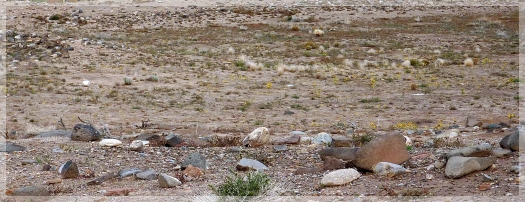
 Other seed fell among rocks. It began to grow, but the plant soon wilted and died for lack of moisture. [Luke 8:6 (NLT)]
If sinners take up religion in a fair day, they will lay it down in a foul day. They are willing to go to seas, but on condition there are no storms. They think too much of wearing a thorn, though it is borrowed from Christ’s crown. [D.L. Moody]
In the parable of the four soils, some of the farmer’s seed falls among the rocks. Again, this is not the farmer’s fault. Much of the soil of Israel and Judah was rocky and only a thin layer of topsoil covered the limestone base. While seeds might germinate, the seedlings would have weak root systems. Any moisture falling on such shallow soil evaporates quickly and, with roots unable to penetrate the stone, the sprouts soon wither and die. Just as the seed that fell on the pathway could be snatched away, it’s easy for the enemy to pull such weak seedlings out of the soil.
The rocky soil represents a shallow and impulsive faith—a faith based on emotions rather than a conscious decision to trust God with all things. We must never mistake outward fervor (in others or ourselves) as evidence of conversion. This is a “fair-weather faith” that answers the altar call with joy but disappears at the first sign of difficulty, service, or sacrifice. Superficial, it’s more about being religious than being obedient or devoted to God. This shallow response is what Dietrich Bonhoeffer might call “cheap grace…forgiveness without repentance, baptism without discipline, communion without confession, and grace without discipleship or the cross.” The Apostle James called it “dead” or “useless” faith because it goes through the motions without growing or producing fruit. With no depth of understanding, it is vulnerable and easily deceived.
Although human emotion can’t sustain our faith, with enough effort rocky soil can be broken up and shallow faith can deepen. When we deliberately choose to yield our lives to God’s plow and allow His Word to penetrate deep into our hearts, our faith can flourish and survive both drought and flood!
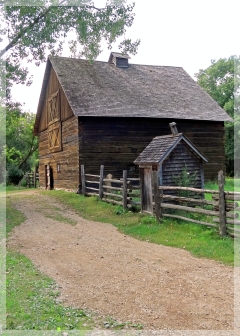 In the gospels of Matthew, Mark and Luke, we find Jesus telling the parable of the four soils in which the farmer’s seed falls on four types of ground and yields four different results. Although the same good seed is sown over the entire field, only one kind of soil will yield a good crop. Jesus isn’t giving a lesson about agricultural practices; the seed that is sown is God’s word and the soils represent the different responses we have to God’s word. The lessons taught are both for the sowers—those who teach, preach, or witness—and for the soil—the people who hear the Word.
 Although it was noon during the heat of the day when most people would be resting, the woman came to the well for water. Perhaps, because she’d been married five times and was living with a man not her husband, the other women in the village made it clear that she wasn’t welcome in the early morning or late evening when they gathered there. Nevertheless, it was with this woman that Jesus had the longest one-on-one conversation recorded in Scripture. It was to this Samaritan woman that Jesus revealed He was the Living Water she so desperately needed.
 Yesterday, I wrote about the sin of sloth, a sort of spiritual weariness; fortitude is considered its contrasting virtue. Taken captive in 605 BC and forced to trudge the 500 miles from Jerusalem to Babylon, Daniel is an example of fortitude. He lost his home, family, name, language, culture, nation, and possibly his manhood but the one thing he never lost was his faith in God. From the moment he arrived in Babylon, Daniel refused to compromise his principles by refusing to defile himself with prohibited food. Sixty-six years later, he was still determined to stay true to God. In spite of knowing he would be thrown to the lions for his actions, he ignored the law prohibiting praying to anyone but King Darius. Instead, Daniel opened his windows and, as he’d “always done,” prayed to the one true God while offering thanks and asking for God’s help. [Daniel 6:10-11]
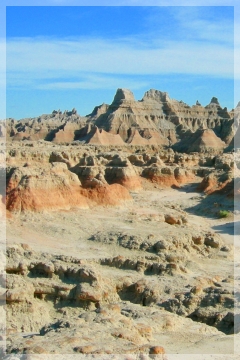 While some of us may have become couch-potatoes during his time of sheltering in place, that’s not truly the sin of sloth. Thought of as one of the seven “deadly sins,” sloth originally was two sins: acedia (meaning absence of care) and trisitia (meaning sorrow). A 4th century monk, Evagrius of Ponticus, listed them (along with gluttony, lust, greed, anger, vainglory, and pride) as the “terrible temptations” of life. Acedia and sadness were seen as particularly dangerous threats to the ascetic life of a monk living in the Egyptian desert, as was Evagrius. The monks easily could grow despondent, lonely, weary or discontented as they prayed, fasted, and labored in their harsh and isolated setting.
 It’s been five years since I’ve skied but I still remember that the three scariest words I ever heard when on the slopes were, “Follow me, Nonnie!” My grands loved to venture off the groomed runs into the bumps and through the woods. On my own, I never would have chosen to leave the main trail but, because I loved those little guys, I faithfully followed behind as they maneuvered between the trees and over the moguls.
 Devotions of the Heart