
So humble yourselves under the mighty power of God, and at the right time he will lift you up in honor. Give all your worries and cares to God, for he cares about you. [1 Peter 5:6-7 (NLT)]
Humility is the proper estimate of oneself. [Charles Spurgeon]
 “Haven’t they ever seen this show? They’re sure to fail!” I exclaimed as we watched the two chefs attempt to make panna cotta in the final round of Chopped. An Italian dessert made of sweetened cream, gelatin, and flavorings, panna cotta usually requires a minimum of four hours to set. In spite of chefs using quick process gelatin, liquid nitrogen, or the blast chiller to speed things up, I don’t think there’s ever been a successful panna cotta on the show. In fact, Chopped judge chef Alex Guarnaschelli calls panna cotta “Chopped suicide!” Nevertheless, these two chefs were sure they would be the ones who could pull it off in the allotted 30-minutes. As expected, instead of ending up with a dessert resembling a Jell-O mold made with cream, they both served something more like melted ice cream. I wondered what made them think they were that much better than any of the other chefs in the twelve years the show has aired. Apparently, competitive chefs tend to be a little short in the humility department!
We may not be chefs who think they’re more skilled than everyone else but, sometimes, we think we’re more skilled than God! As unwilling as the chefs were to accept that gelatin needs time to set, we’re often as unwilling to wait for God to do His work, His way, in His own time. So, rather than humbly admitting that God knows best, we try to be God and make things happen our way and in our time.
“Pray as if everything depends on God; work as if everything depends on you,” often is attributed to St. Ignatius and that advice may be wise in some cases. Nevertheless, there are times when we must humbly step back and leave it all to God. Just as it’s impossible to make a panna cotta in thirty minutes, we can’t make other people change. We can’t make them reconcile, forgive, love, heal, believe, or get sober but, sometimes, we act as if we can! Instead of using the blast chiller or extra gelatin, we try to nudge things along with intimidation, meddling, prying, interference, or concealment. Take it from one who’s learned the hard way, when we think our way is better and faster than God’s, the result is far worse than a runny panna cotta.
A certain amount of arrogance probably is necessary in cooking competitions. The chef needs to think he can achieve the impossible and, someday, a chef may prove victorious over 30-minute panna cotta. Prayer, however, is not a competition; it is a lesson in humility. It is admitting our powerlessness and handing the challenge to God for Him to deal with in His own time and way. Victory alone comes from Him!
We tend to use prayer as a last resort, but God wants it to be our first line of defense. We pray when there’s nothing else we can do, but God wants us to pray before we do anything at all. Most of us would prefer, however, to spend our time doing something that will get immediate results. We don’t want to wait for God to resolve matters in His good time because His idea of “good time” is seldom in sync with ours. [Oswald Chambers]

 The Apostle John used the word menó 53 times in his gospel and epistles. Frequently translated as abide, menó originally referred to the staying power of an army that is not driven from the battlefield. Meaning “to stay, remain, reside or stand fast,” menó came to imply an unbroken friendship or a continuous fellowship.
 Thinking of Jesus’ first miracle caused me to consider His other miracles. Along with general accounts of Him healing people in Capernaum, Gennesaret, and Jerusalem, the gospels mention 35 specific miracles He performed. When we consider the way Jesus healed the blind, His miracles seem almost tailor-made for the people blessed by them. John tells us that Jesus healed one blind man by mixing His spittle with dirt, rubbing the resulting mud over the man’s eyes, and telling the man to wash in the pool of Siloam. Mark tells of another occasion when Jesus took a blind man by the hand and led him out of the village. Surely, they talked but we don’t know about what. Jesus then spit on the man’s eyes and laid His hands on him. Although the man regained his sight, he didn’t understand what he saw so Jesus did it again. Was that one miracle done in two parts or could it have been two miracles: one to restore the man’s sight and the second so he could comprehend what he saw? Another time, Jesus skipped the spit and merely touched two blind men to restore their sight. Then we have the healing of Bartimaeus: Jesus immediately restored His sight without spit, mud, washing, or touch.
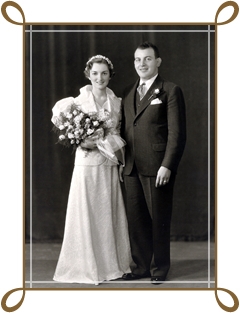 That Jesus chose Cana for His first public miracle and turned water into wine may not be as random as it first seems. By providing wine for the wedding, Jesus took on the bridegroom’s role which foreshadowed things to come.
 We know from His encounter with the rabbis when he was twelve that Jesus was wise beyond His years but He’s not associated with any miracles until that day in Cana. The lack of wine at that wedding created a crisis and a solution was urgently needed but I wonder why Mary went to Jesus rather than the master of the banquet or host with the problem. Did she expect her son to perform a miracle? Whenever she ran short of wine at home in Nazareth, rather than going to market did she simply ask Jesus to make it? Like the widow of Zarephath, did Mary have an endless supply of oil and flour? I think not. Although Jesus was fully God, He also was fully man and, for the most part, lived within the restrictions of humanity. Moreover, not one of the miracles He performed was done for convenience.
 Devotions of the Heart