MY PORTION

Yet I call this to mind, and therefore I have hope: Because of the Lord’s faithful love we do not perish, for his mercies never end. They are new every morning; great is your faithfulness! I say, “The Lord is my portion, therefore I will put my hope in him.” [Lamentations 3:21-24 (CSB)]
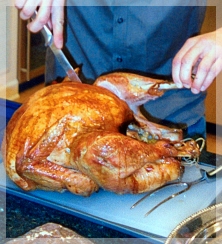
“The Lord is my portion,” wrote the prophet Jeremiah. Throughout the Bible, a wide variety of metaphors are used to describe God— rock, refuge, shield, shepherd, fortress, potter, and light—but portion is one of my favorites. Portion refers to one’s share—be it of plunder, an inheritance, or food. Not being a soldier, I can’t relate to the spoils of war and I’ve seen way too many inheritances argued over or squandered to associate those meanings with God. Food, however, is something to which we all can relate.

Indeed, God is our portion—our nourishment—He is what fills and fuels us. As our portion, He’s not one of those amuse-bouche one-bite treats served in fancy restaurants to whet our appetites nor is He a snack to tide us over until dinner time. He’s not a first course like soup or salad, nor a side dish to accompany the main course. God is not that uneaten parsley or edible flower garnishing our plates. He certainly isn’t our dessert, enjoyed only if we’ve saved room and which, while looking delicious, rarely lives up to its promise. He’s not even our entrée—the roast turkey or all-you-can-eat ribs of our lives. No, God is our entire portion—our soup to nuts—our all.

As our portion, God is our breakfast, lunch, dinner, and between-meals-snack rolled into one. He is what gives us sustenance and strength. All-sufficient, He is our confidence, our comfort, and our hope. Moreover, unlike earthly portions that disappear as they are consumed and leave us hungry again a few hours later, God keeps our plates filled to the brim and will satisfy our souls forever. He continually replenishes us with His mercy, guidance, love, and forgiveness. Our cupboards can become empty, and our wells may run dry, but God’s mercies will never end. He is and always will be our more than enough portion!

Great is Thy faithfulness! Great is Thy faithfulness!
Morning by morning new mercies I see.
All I have needed Thy hand hath provided;
Great is Thy faithfulness, Lord, unto me! [Thomas Chisholm]
My flesh and my heart may fail, but God is the strength of my heart, my portion forever. [Psalm 73:26 (CSB)]

Lord, you are my portion and my cup of blessing; you hold my future. [Psalm 16:5 (CSB)]

I cry to you, Lord; I say, “You are my shelter, my portion in the land of the living.” [Psalm 142:5 (CSB)]

Copyright ©2026 jsjdevotions. All rights reserved.

BEAUTIFUL WOMEN – Mother’s Day 2026

Charm is deceptive, and beauty does not last; but a woman who fears the Lord will be greatly praised. Reward her for all she has done. Let her deeds publicly declare her praise. [Proverbs 31:30-31 (NLT)]

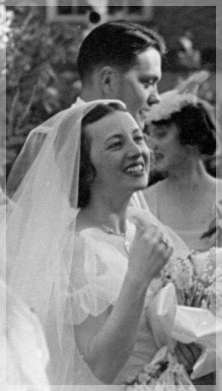
That smiling bride in today’s photo is my mother. Taken at her wedding eighty-eight years ago, it’s one of the few photos I have of her. A quiet unassuming woman, I don’t think she thought of herself as pretty and she disliked having her picture taken. Nevertheless, even with her freckled face, unruly hair, overbite, thick glasses and hearing aid, my mother was the most beautiful woman I’ve known…and her smile could light up a room.
It was at my mother’s side that I learned to love the written word. She urged me to read all sorts of books that were probably considered far too adult for a girl my age and we discussed every one of them in detail. She was intelligent and creative and encouraged me in every one of my endeavors. She was incredibly open with me about her past, her faith, and her feelings. Perhaps she knew her time on earth was brief, so she packed everything a mother wants to teach her daughter into fifteen short years.

It was from my mother that I learned about generosity, love, forgiveness, and how to find peace in the turmoil. She showed me that true love takes effort and is more a choice than a feeling. She introduced me to the writing of C.S. Lewis and started me on my journey of faith. It was through her that I came to know Jesus. This shy humble woman taught me courage: courage in the face of disappointment, adversity, and betrayal—courage in the face of cancer and in the face of death. She taught me how to live and how to die.

My mother probably was the most beautiful when she was the least attractive—without any make-up, a towel wrapped around her head like a turban, and lying in a hospital bed, just a few days before her death. As we were departing her hospital room, my father leaned over, picked up a corner of her oxygen tent, ducked in and kissed her. He said, “You look like an angel tonight.” Her response, said with a smile on her radiant face, was, “Maybe tomorrow I’ll be with the angels!” Indeed, as she passed through the valley of death, she knew who accompanied her. My mother wasn’t afraid because she had complete faith in God’s promises. She wasn’t worried; trusting God that the family she left behind would be just fine, she knew that where she was headed would be even better. She may not have been what some would call “pretty”, but my mother was the most beautiful woman in my world. I do, however, have to admit that my mother-in-law, another wonderful woman of faith, ran a close second! In His grace, God blessed me with two beautiful mothers—not everyone is so blessed!

Dear Lord, we thank you for our mothers: those beautiful women who gave us life. We also thank you for all of the other beautiful women of faith who have blessed our lives with their encouragement, enlightenment, love, guidance, and good example. Please reassure them that, in spite of what the mirror and society may tell them, they are truly beautiful both in your eyes and ours!

Don’t be concerned about the outward beauty of fancy hairstyles, expensive jewelry, or beautiful clothes. You should clothe yourselves instead with the beauty that comes from within, the unfading beauty of a gentle and quiet spirit, which is so precious to God. This is how the holy women of old made themselves beautiful. [1 Peter 3:3-5 (NLT)]

Copyright ©2026 jsjdevotions. All rights reserved.

WHERE’S THE BODY? (Easter)

The next day, on the Sabbath, the leading priests and Pharisees went to see Pilate. They told him, “Sir, we remember what that deceiver once said while he was still alive: ‘After three days I will rise from the dead.’ So we request that you seal the tomb until the third day. This will prevent his disciples from coming and stealing his body and then telling everyone he was raised from the dead! If that happens, we’ll be worse off than we were at first.” Pilate replied, “Take guards and secure it the best you can.” So they sealed the tomb and posted guards to protect it. [Matthew 27:62-65 (NLT)]

Easter means you can put the truth in a grave, but you can’t keep it there. [Anne Lamott]

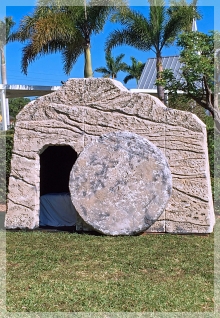
The Empty TombSeveral years ago, an entertainment network did a story on the highlights of Charlotte, North Carolina. Since the Billy Graham Library was considered a point of interest, it was visited by the show’s co-host Kristy Villa and her film crew. Commenting on the many crosses she saw throughout the property, Villa asked, “I see all the crosses, but where is Jesus?” Her guide simply replied, “He’s in Heaven,” adding, ”He is also present in the lives of those who believe in Him and follow Him as their personal Lord and Savior.” Villa exclaimed, “Oh, that’s right! Some worship a crucifix, but Christians worship a risen Christ.” Indeed, Christ’s story doesn’t end with a dead man hanging on a cross. Nevertheless, rather than an empty cross, our emphasis should be on His empty tomb!
Confucius, founder of Confucianism, was buried in his hometown of Qufu in China and the body of Muhammad, founder of Islam, can be found in the Mosque of the Prophet in the Saudi Arabian city of Medina. Gautama Buddha, founder of Buddhism, was cremated following his death. His cremains were divided into eight portions, taken throughout Central Asia, China, and Japan, and placed in different stupas (dome-shaped shrines). Today, the Buddha’s cremains (including his teeth and a finger bone) can be found in shrines throughout Asia. Bahá’u’lláh, founder of Bahá’í faith, was buried near his home in Bahji, Israel, and the remains of the Báb, a central figure in Bahá’í and founder of Bábisma, was interred at the Shrine of the Báb in Haifa, Israel. After his death, Joseph Smith, founder of the Morman church (LDS), was buried in the family cemetery in Nauvoo, Illinois. When Cyrus Teed, founder of Koreshanity, failed to resurrect, his decomposing body was buried on Estero Island; two years later, a hurricane washed his tomb out to sea. All of these men—people who claimed to know the truth revealed by God—are dead but their remains are still here.

Let us never forget that Jesus’ story didn’t end with His crucifixion! The cross couldn’t stop Jesus and the tomb couldn’t contain Him. Pilate’s best efforts to secure the tomb were worthless. A Roman seal, large boulder, and a sixteen-man Roman guard were not enough to keep Jesus shut in that tomb! Both cross and tomb are empty and His body’s remains are nowhere to be found! With His death and resurrection, Christ triumphed over both sin and death. Alleluia!

I know the resurrection is a fact, and Watergate proved it to me. How? Because 12 men testified they had seen Jesus raised from the dead, then they proclaimed that truth for 40 years, never once denying it. Every one was beaten, tortured, stoned and put in prison. They would not have endured that if it weren’t true. Watergate embroiled 12 of the most powerful men in the world—and they couldn’t keep a lie for three weeks. You’re telling me 12 apostles could keep a lie for 40 years? Absolutely impossible. [Charles Colson]

But the angel said, “Don’t be alarmed. You are looking for Jesus of Nazareth, who was crucified. He isn’t here! He is risen from the dead!” [Mark 16:6 (NLT)]

Copyright ©2026 jsjdevotions. All rights reserved.

THE LORICA

But let all who take refuge in you be glad; let them ever sing for joy. Spread your protection over them, that those who love your name may rejoice in you. [Psalm 5:11 (NIV)]

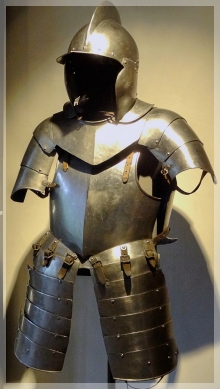
armorA Latin word, lorica originally meant armor or breastplate. Because of an ancient practice of inscribing a prayer on the armor or shields of knights who then recited the prayer before combat, lorica came to mean a prayer of protection.


Although there are many such prayers, the most famous is the Lorica of St. Patrick (also known as St. Patrick’s Breastplate). Legend has it that around 433 AD, St. Patrick wrote this prayer for protection. As the story goes, on Easter morning, Patrick led his fellow missionaries in a procession to the court of the pagan King Laoghhaire. Suspecting that they would be ambushed by the army of his pagan adversary, Patrick took his men through the woods while chanting this prayer/lorica. Rather than seeing the missionaries amid the trees, their enemies saw a mother deer followed by twenty fawns and let them pass. Having been brought safely through the ambush by God, Patrick and his companions marched into the king’s presence while chanting: “Let them that will, trust in chariots and horses, but we walk in the name of the Lord.”

Whether the story is fact, legend or, as I suspect, somewhere in-between, this beautiful hymn (also known as The Deer’s Cry) appears to be the first one ever written in Gaelic and quite likely by the beloved Patrick. In 1889, Cecil Alexander produced a metrical version of the prayer from an earlier English translation and the resulting hymn was set to traditional Irish tunes. Called “I Bind Unto Myself Today,” this beautiful old lorica can be found in the hymnals of many denominations and heard on You Tube.

Prayers for protection and deliverance are found throughout Scripture. Moses, David, Ezra, and Nehemiah all prayed for protection for themselves and others and Jesus prayed for the protection of His followers. We may not be facing Druids in the woods, but we enter into battle against evil every day. While we don’t wear armor or carry shields, we can proceed as did Patrick and his men: by wearing the armor of God, binding ourselves to Him in prayer, and walking in the name of the Lord.

I bind unto myself today
The strong name of the Trinity,
By invocation of the same
The Three in One and One in Three. …
I bind unto myself today
The power of God to hold and lead,
His eye to watch, His might to stay,
His ear to hearken to my need.
The wisdom of my God to teach,
His hand to guide, His shield to ward,
The word of God to give me speech,
His heavenly host to be my guard. …
Christ be with me, Christ within me,
Christ behind me, Christ before me,
Christ beside me, Christ to win me,
Christ to comfort and restore me.
Christ beneath me, Christ above me,
Christ in quiet, Christ in danger,
Christ in hearts of all that love me,
Christ in mouth of friend and stranger.
I bind unto myself the name,
The strong name of the Trinity,
By invocation of the same,
The Three in One and One in Three.
By whom all nature hath creation,
Eternal Father, Spirit, Word:
Praise to the Lord of my salvation,
Salvation is of Christ the Lord.
[St. Patrick’s Breastplate (Attributed to St. Patrick)] 

Therefore put on the full armor of God, so that when the day of evil comes, you may be able to stand your ground, and after you have done everything, to stand. Stand firm then, with the belt of truth buckled around your waist, with the breastplate of righteousness in place, and with your feet fitted with the readiness that comes from the gospel of peace. [Ephesians 6:13-15 (NIV)]

Copyright ©2026 jsjdevotions. All rights reserved

APPROACHING OUR KING

I will exalt you, my God and King, and praise your name forever and ever. I will praise you every day; yes, I will praise you forever. … The Lord is righteous in everything he does; he is filled with kindness. The Lord is close to all who call on him, yes, to all who call on him in truth. He grants the desires of those who fear him; he hears their cries for help and rescues them.[Psalm 145:1-2,17-19 (NLT)]

lion

After Esther fasted and prayed about approaching the king, she had both courage and a strategy. From the way Xerxes was so easily manipulated by his Persian noble friends and Haman, it’s clear that he was a temperamental, weak, and foolish man; Esther used that knowledge to her advantage. When she dressed in her finest robes and approached the king, I imagine she made sure he was in good spirits and that she looked irresistible. Welcoming Esther and offering her half his kingdom, Xerxes invited his queen to ask for anything, but she knew better than to take the royal offer literally. Graciously, she only asked for his and Haman’s presence at a banquet that evening. Esther’s delay didn’t mean she’d lost her courage. Persian etiquette for making a request typically began with a small unrelated favor, which is what Esther did. After a pleasant evening, she beguiled Xerxes simply by inviting him to dinner again. Gaining one small concession at a time, she eventually worked her way up to the real issue at hand. By waiting to make her appeal, Esther aroused the king’s curiosity.

A banquet was the perfect setting for Esther’s request. According to the ancient Greek historian Herodotus, Persians typically decided important matters when they were drunk; once they’d sobered up, their decisions would be confirmed. That certainly was the case when the drunken Xerxes banished Queen Vashti. On the other hand, any decisions made while sober were suspect and were to be reevaluated when the parties were intoxicated (which may explain why Xerxes and Haman sat down to drink after their apparently sober decision to eliminate the Jews)! Esther understood the importance of alcohol in the king’s decision making and, after two nights of banquets, she finally made her request while they were drinking wine. When Esther asked the king to save her life and the lives of her people, she prudently put the blame for the wicked plot entirely on Haman rather than her easily manipulated husband.

By necessity, Esther made her plea to the king in a calculated and roundabout way. Fortunately, we don’t have to strategize or scheme when we approach our Heavenly King! Because we are His beloved children and know that He loves us, we don’t have to worry that God’s interest in us has waned. There’s no need to dress in our finest attire to entice Him nor must we wait until He extends his golden scepter before approaching His throne. God is far more interested in our hearts than our appearance and our imperfect selves can approach Him any time. We don’t have to pique God’s curiosity or manipulate Him into asking us what we want because God knows what we need even before we do! We don’t have to carefully phrase our words out of fear that He will banish us from His presence if we displease Him. We certainly don’t have to ply God with vintage wine, start with little favors before working up to our big request, or wait until He’s in a good mood before offering our prayers. God is the same today as He was yesterday and will be tomorrow. If we have no words, the Holy Spirit will speak for us.

Let us never approach God with subterfuge and apprehension as Esther did Xerxes. We should come to Him as candidly as did David and the other psalmists. With our Heavenly King, we can honestly sob in sorrow, shout in anger, plead in distress, stammer in confusion, whisper in fear, weep in regret, confess in repentance, shout in praise, sing in thanksgiving, and even dance in joy—all without fear of banishment from His presence!

O Lord, hear me as I pray; pay attention to my groaning. Listen to my cry for help, my King and my God, for I pray to no one but you. Listen to my voice in the morning, Lord. Each morning I bring my requests to you and wait expectantly. [Psalm 5:1-3 (NLT)]

Copyright ©2026 jsjdevotions. All rights reserved.

FINDING COURAGE

So I turned to the Lord God and pleaded with him in prayer and fasting. I also wore rough burlap and sprinkled myself with ashes. [Daniel 9:3 (NLT)]

So we fasted and earnestly prayed that our God would take care of us, and he heard our prayer. [Ezra 8:23 (NLT)]

When writing about Esther last week, I thought how terrified she must have been when Mordecai asked her to step out of her comfort zone to save the Jews. Even though she was queen, her access to Xerxes was severely limited. Living secluded in a private chamber in the women’s quarters, she didn’t regularly dine with the king. Powerless, she was the one to be summoned rather than the one who did the summoning and she hadn’t been summoned by Xerxes for a month. She was just one of many beautiful women in the king’s harem and perhaps someone else had caught his eye. The previous queen was banished when she defied the king; Esther could expect nothing less if her presence wasn’t welcomed. The young queen had a simple choice: comfort or courage. She chose courage and saved a nation!

Where did Esther get the courage to defy the law and approach the king? She got it from God! That may seem a strange answer since God isn’t mentioned anywhere in her story. Nevertheless, after asking Mordecai to gather together all the Jews in Susa and fast for three days, Esther promised that she and her maids would do the same. The beautiful queen wasn’t fasting so that she’d fit into her sexiest gown! She was fasting in prayer.

For a Jew, fasting and prayer went hand in hand and, while prayer is not specifically mentioned, it certainly is implied. Fasting combined with prayer was a customary practice in times of grief, distress, or repentance. It was a way to seek God’s favor and demonstrate the sincerity of one’s prayers. Although fasting was only demanded on the Day of Atonement, Scripture tells us that the Israelites and people like Ezra, David, Nehemiah, Jehoshaphat, and Daniel all combined fasting with prayer. When Esther and the people of Susa fasted, I have no doubt their fast was accompanied by their heartfelt prayers. Only then did Esther have both a plan to save her people and courage enough to step out of her comfort zone to do it.

Unlike Esther, we may not be asked to save a nation. Nevertheless, God has a mission for each of us. Because He is far more interested in our growth and obedience than our comfort, God’s mission for us, like Esther’s, usually begins at the end of our comfort zone. How do we move from comfort to courage and from fear to faith?

Like Esther, we could choose to fast. The purpose of fasting is never to change God; its purpose is to change us. A fast helps us take our eyes off the world and focus them on God. While Esther probably fasted from food, a fast also can be from things like gaming, social media, alcohol, television, or anything else that takes our mind off God.

Although Scripture tells us that Jesus and the early church fasted, it does not demand that Christians fast. The spiritual practice of fasting is a personal choice for a Christian; prayer, however, is not. Prayer is an act of obedience to God and the way we demonstrate our faith. When faced with the choice of comfort or courage, whether or not we choose to fast, we must choose to pray. Prayer is what will enable us to step out of our comfort zone and courageously do God’s work.

Courage is faith that has said its prayers. [AA slogan]

I prayed to the Lord, and he answered me. He freed me from all my fears. Those who look to him for help will be radiant with joy; no shadow of shame will darken their faces. In my desperation I prayed, and the Lord listened; he saved me from all my troubles. [Psalm 34:4-6 (NLT)]

Copyright ©2026 jsjdevotions. All rights reserved.