CHUCK AND THOMAS

Then Thomas (also known as Didymus) said to the rest of the disciples, “Let us also go, that we may die with him.” [John 11:16 (NIV)]

You know the way to the place where I am going.” Thomas said to him, “Lord, we don’t know where you are going, so how can we know the way?” [John 14:4-5 (NIV)]

red-shouldered hawkIn 1976, Chuck Colson founded Prison Fellowship, the nation’s largest Christian nonprofit serving prisoners, former prisoners, and their families and acting as an advocate for criminal justice reform. Nevertheless, whenever I come across his name, I don’t think of the 36 years he spent in his ministry. Instead, I remember the ruthless man once considered Richard Nixon’s “hatchet man.” Along with being one of the Watergate Seven, Colson was known as a “dirty tricks artist” who tracked down incriminating photographs and leaked damaging and untrue rumors to discredit and blacken the reputations of political enemies. In 1974, as a new Christian, Colson pled guilty to obstruction of justice on a Watergate-related charge and served seven months in prison. It was after his release that he mobilized the Christian Church to minister to prisoners.

Why do we remember the negative rather than the positive about people? Think of the disciple Thomas. Most of us think of him as the doubter rather than a disciple zealous for Jesus. When the other disciples urged Jesus not to return to Judea because of the danger he faced, it was Thomas who urged the disciples to join Jesus and face death with Him!

The next we read of Thomas is at the last supper when the inquisitive man is probably more honest than the rest of the disciples. Not understanding that Jesus had just described His destination—heaven and eternal life—Thomas acknowledged his ignorance and asked the same question the others probably were silently asking. Thomas wasn’t doubting, the eager man just wanted to understand exactly where he was going and how he was to do it.

Although Thomas heard Jesus say that He was “the way, the truth, and the life,” like the other disciples, the man didn’t know what to believe after the crucifixion. One moment of skepticism and that’s what we remember of him but Thomas wasn’t the only one who doubted. Luke tells us that the disciples didn’t believe their eyes when Jesus first stood before them and thought they were seeing a ghost. [24:37] Even after seeing His pierced hands and feet, Luke says they “stood there in disbelief” and it was watching Jesus eat a piece of fish that finally convinced them. [24:41-42]

Let’s remember, Thomas wasn’t there the first time Jesus appeared and it wasn’t Jesus he doubted. He questioned the veracity of the disciples in the same way Mark tells us the disciples doubted Mary Magdalene that Sunday morning [16:11]. He wanted to be sure it actually was Jesus they saw. When Thomas finally sees Jesus, he makes the clearest confession of faith we find in any of the gospels by exclaiming, “My Lord and my God!” If anything, Thomas’ willingness to express his doubt led to a greater faith!

Neither Chuck Colson nor the Apostle Thomas should be remembered for their worst moments yet they probably are. Oddly, we don’t immediately think of Peter as the man who denied Jesus three times. Instead, we first think of him as the rock upon which Jesus built His church. May we grant the same amount of grace to the Chuck Colsons and the “doubting” Thomases we meet in life!

No, the real legacy of my life was my biggest failure—that I was an ex-convict. My greatest humiliation—being sent to prison—was the beginning of God’s greatest use of my life; He chose the one thing in which I could not glory for His glory. [Chuck Colson]

Thomas said to him, “My Lord and my God!” Then Jesus told him, “Because you have seen me, you have believed; blessed are those who have not seen and yet have believed.” [John 20:28-29 (NIV)]

Copyright ©2022 jsjdevotions. All rights reserved.

WHO KNOWS?

This is the message we heard from Jesus and now declare to you: God is light, and there is no darkness in him at all. [1 John 1:5 (NLT)]

The Word gave life to everything that was created, and his life brought light to everyone. The light shines in the darkness, and the darkness can never extinguish it. [John 1:4-5 (NLT)]

yinyangAn old Chinese parable tells of a poor farmer whose only horse runs away. His friends commiserate over his bad luck and ask how he’ll plow his field. The farmer answers, “Who knows? We shall see.” Two days later, the horse returns along with several wild horses. When the farmer’s friends congratulate him on the good fortune of now having a stable full of horses, the farmer replies, “Who knows? We shall see.” The following week, while trying to tame the horses, the farmer’s son breaks his leg in three places. The farmer’s friends offer condolences and wonder how he’ll get his work done with his son unable to walk and help. The farmer answers, “Who knows? We shall see.” When a war breaks out, the emperor’s men arrive and conscript all the young men in the village. With his leg in a cast and needing crutches, the farmer’s son is considered unfit for battle and remains in the village. As his neighbors watch their sons leave home, they congratulate the farmer on his stroke of luck. He replies, “Who knows? We shall see.” Although the son’s leg eventually heals, he has a bad limp. The farmer’s neighbors express their sympathy for such trouble. “Who knows? We shall see,” he again replies. By the time the war is over, all of the village’s boys have died in battle but, with his several horses and a son now able to help, the farmer can plow several fields and has grown wealthy. When the villagers congratulate him on his good fortune, the farmer replies, “Who knows? We shall see.”
This 2,000-year-old tale reflects Taoist stoicism and the belief in Yin Yang—everything in the universe consists of two complementary yet opposing forces. There is no good or bad, only that which appears to be so. The resigned farmer is subject to fate and it is only his attitude over which he has control. Associated with this philosophy is the Yin Yang symbol: two equal parts of white and black comma-shapes with a black dot in the white side and a white dot in the black one. It represents the belief that opposites cannot exist without one another—white cannot exist without black nor could light exist without dark. In the same way, good cannot exist without bad nor can bad exist without good. Rather than good and bad being at war, they are in a constant state of flux; there is a little bad in all that’s good and a little good in all that’s bad.

While it is comforting to think there are no absolutes and that life is just a balance of opposites, that’s not Biblical. We live in a world of absolutes and our triune God is absolutely righteous and the sovereign judge of all that’s evil. Moreover, not all things change—our God is immutable and Jesus is the same today as He was yesterday and will be tomorrow. If Christians had a symbol similar to that of Yin Yang, it wouldn’t show equal forces with neither side struggling for dominance. It would have the light consuming the darkness. Good and evil are not balanced—they are at war and good won the war when Christ died and rose from the dead! There is no dot of darkness in God’s light.

If this were a Christian parable, the imperturbable farmer wouldn’t answer, “Who knows? We shall see.” Rather than being complacent and merely accepting his fate, he would find purpose in it. He’d echo the Apostle Paul’s words, “In all things I give thanks, knowing that I can be content in all circumstance because my strength is in Christ.” The Christian does not find peace in a philosophy—he finds peace in the person of our triune God. Like the Taoist farmer, he doesn’t know what the next day will bring or how it all fits together but, unlike that farmer, he knows who is writing the story and how the story eventually will end!

Jesus spoke to the people once more and said, “I am the light of the world. If you follow me, you won’t have to walk in darkness, because you will have the light that leads to life.” [John 8:12 (NLT)]

Copyright ©2022 jsjdevotions. All rights reserved.

IN GOD WE TRUST

It is better to take refuge in the Lord than to trust in people. It is better to take refuge in the Lord than to trust in princes. [Psalm 118:8-9 (NLT)]

Then conquer we must, when our cause it is just, And this be our motto – “In God is our trust,” And the star-spangled banner in triumph shall wave O’er the land of the free and the home of the brave. [Francis Scott Key]

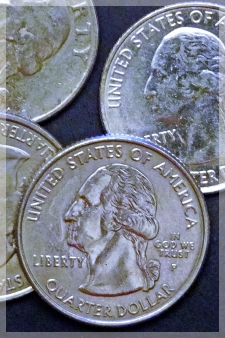
quartersIn one of those viral, supposedly true but probably not, inspirational stories, a wealthy man is said to bend over and pick up any and every coin he spots on the ground. When asked why he bothered to collect mere pennies, the man explained he didn’t pick up coins for their monetary value; he picked them up for the value of the message on them: “In God We Trust.” He believed the penny’s words to be God’s way of reminding him to trust the Lord rather than his wealth and considered every coin he found an opportunity to acknowledge his faith in prayer.

Thanks to Treasury Secretary Salmon Chase’s directive that, “The trust of our people in God should be declared on our national coins,” the phrase “In God We Trust” first appeared on a bronze two-cent piece in 1864. Our nation was in the midst of the bloody Civil War and those words were to profess the nation’s faith and trust in God during that turbulent time. The words were inspired by the fourth verse of our national anthem (written in 1814) that claimed “In God is our trust” as our nation’s motto.

In the 1950s, our nation was again embroiled in a war—the Cold War with the Soviet Union. In 1955, President Eisenhower signed a law requiring “In God We Trust” to appear on all U.S. paper and coin currency. The words were to differentiate us from the Soviet Union, a nation that promoted atheism and had passed anti-religion legislation. Unfortunately, there never seems to be a time when our nation is not in turmoil of some kind and we need to be reminded that our trust must be in God today as much as we did back in 1860s and 1950s!

Even though the front (or obverse) side of our nation’s great seal has the words E Pluribus Unum, meaning “Out of many, one,” that is not our nation’s motto. While it rightly reflects our country’s melting pot nature and how thirteen colonies came together to form one nation, “In God we trust,” became our national motto in 1956. Congress reaffirmed it as our motto in 2002, 2006, and again in 2011. The motto, explains historian Frank Lambert, “reclaims this notion that we’re a chosen people and that we were conceived under God and that we flourish under God, and we turn our backs on God at our own peril.” In spite of numerous legal challenges, the courts have upheld its use by saying that, rather than an official endorsement of religion, the motto is “ceremonial Deism.” As used by the Supreme Court, “ceremonial Deism” means that phrases like “In God We Trust” (or “under God” in the Pledge of Allegiance) are nominally religious statements and practices deemed to be merely ritual and non-religious through their long customary usage. For a believer, however, there should be nothing nominal or merely ritualistic about trusting God! We must never forget that this one nation exists under God and we must place our trust in Him! We should also remember Lambert’s warning, that “we turn our backs on God at our own peril!”

If we ever forget that we’re one nation under God, then we will be a nation gone under. [President Ronald Reagan]

He will judge the world with justice and rule the nations with fairness. The Lord is a shelter for the oppressed, a refuge in times of trouble. Those who know your name trust in you, for you, O Lord, do not abandon those who search for you. [Psalm 9:8-10 (NLT)]

Copyright ©2022 jsjdevotions. All rights reserved.


TAKE THE RISK

Be strong and courageous! … Do not be afraid or discouraged, for the Lord will personally go ahead of you. He will be with you; he will neither fail you nor abandon you. [Deuteronomy 31:6a,8 (NLT)]

Let all who fear the Lord repeat: “His faithful love endures forever.” … The Lord is for me, so I will have no fear. What can mere people do to me? [Psalm 118:4,6 (NLT)]

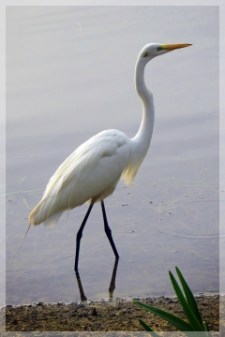
great egret
Judge Guido Calabresi regularly asks his Yale law students to imagine receiving an offer of an amazing invention that could improve people’s lives in every imaginable way. In exchange for this invention, however, the lives of at least 1,000 randomly selected young people would be taken every year. When asked if they’d accept the deal, his students inevitably conclude they wouldn’t. Calabresi then asks them the difference between that offer and the automobile. The very thing that allows us to travel, see loved ones, easily move products across the country, and do things that couldn’t be done otherwise, kills even more than that! Over 2,600 teens (16-20) accounted for auto accident fatalities in 2019 and, with over 46,000 car fatalities last year, more than 150 people of every age die each day because of a car. Be that as it may, we’re not about to give up driving!

Calebresi uses his example to illustrate how selective we are in our fears. We underestimate and accept chronic risks like riding in a car while overestimating prominent ones like a terrorist attack or plane crash. In actuality, rather than dying from either of those things, we’re more likely to die by choking on food or slipping in the shower or tub but, preferring bathing, eating, and even driving to the alternatives, we decide they’re worth the risk. On the other hand, after assessing the perils involved in things like free solo climbing, running with the bulls, or base jumping, most of us probably decide they’re not worth the risk.

In contrast, any risk we take in obedience to God always is worth it. Regardless of the danger, we must obediently accept the risks in the challenges and tasks He gives us. Think of what Abraham risked by packing up his family and leaving Haran for an unknown destination. Think of the risks taken by the midwives Shiphrah and Puah when they defied Pharaoh by letting boy babies live or the risk Moses took when he returned to Egypt and confronted Pharaoh. It was a huge risk when Gideon and his 300 men took on an army 400 times their size and when David faced Goliath with just a sling and stones. In spite of the risk, Esther approached the king, Daniel defied the law by praying, and the bleeding woman touched Jesus’ robe. Joseph of Arimathea took a risk when he asked Pilate for Jesus’ body and Peter and John risked imprisonment and worse when they defied the Council by continuing to share the gospel. When we search Scripture, we don’t find people who assessed the risks and played it safe. We find God’s version of bungee jumpers and wing-suit flyers—faith-filled and obedient risk takers.

Every God-sent risk comes with a God-sent promise. He will remain faithful to us and be present in the risk. He will protect and empower us and we’ll never need more than what He supplies. As followers of Jesus, we don’t walk by sight. In spite of the risks, we walk by faith because faith means we’re willing to risk anything for God!

Trust is faith that has become absolute, approved, and accomplished. When all is said and done, there is a sort of risk in faith and its exercise. But trust is firm belief; it is faith in full bloom. Trust is a conscious act, a fact of which we are aware. [E.M. Bounds]

Don’t be afraid, for I am with you. Don’t be discouraged, for I am your God. I will strengthen you and help you. I will hold you up with my victorious right hand. [Isaiah 41:20 (NLT)]

…For God has said, “I will never fail you. I will never abandon you.” So we can say with confidence, “The Lord is my helper, so I will have no fear. What can mere people do to me?” [Hebrews 13:5-6 (NLT)]

Copyright ©2022 jsjdevotions. All rights reserved.

LETTING GO

Then Jesus said to his disciples, “If any of you wants to be my follower, you must turn from your selfish ways, take up your cross, and follow me. If you try to hang on to your life, you will lose it. But if you give up your life for my sake, you will save it. … Jesus told him, “If you want to be perfect, go and sell all your possessions and give the money to the poor, and you will have treasure in heaven. Then come, follow me.” But when the young man heard this, he went away sad, for he had many possessions. [Matthew 16:24-25,19:21-22 (NLT)]

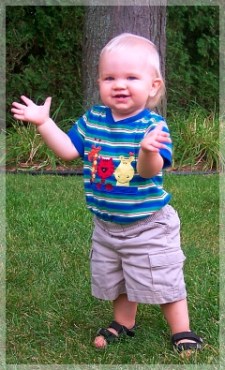
Like any mother, I remember my children’s first steps. After hesitantly pulling themselves up and taking a few tentative steps, they soon realized they could cruise along while holding onto something or someone. Eventually, the tots became bold enough to let go of one piece of furniture and reach toward another to continue their adventures. A fair amount of parental urging, however, was usually needed to get them to finally let go of furniture, walls, or people and walk completely on their own. But, after taking those first solo steps, there was no stopping them. Off they went exploring a new, wonderful, and limitless world while I ended up chasing them and wondering why I’d been in such a rush have them walk.

Like a toddler learning to walk or the rich man in today’s verse, are we reluctant to let go of something that is keeping us from a new, wonderful, and limitless world in Christ? The rich man was unwilling to let go of his wealth—are we afraid to release our grip on possessions that encumber us? Could we value things more than a relationship with God? Is there an unhealthy relationship holding us from a relationship with Jesus or have we become too comfortable in old patterns of behavior or attitudes to face new ones? Are we hanging on to anger or loath to let go of resentment and forgive?

Are we simply afraid of the unknown—of trusting? Are we unwilling to cede control and give charge of our lives to Him? Are we more interested in our own version of happiness than God’s or more interested in following our plan than His? Are we afraid of what He might ask of us? Could we think we’re simply not worthy of His love? Once we release all that is holding us back, the Kingdom of God is waiting for us. It’s there for the asking! We just need to let go and take that first step to experience His unconditional love, forgiveness, hope, joy, and eternal life!

The difference between the toddler and the Christian, however, is that while the toddler learns to walk completely on his own, once a Christian releases all that is holding him back, he is never alone. God’s hand will hold and sustain him and he need never stumble or fall.

19th century evangelist (and publisher) D. L Moody called profit, pleasure, and preferment “the wicked man’s trinity.” What are we willing to release for the Holy Trinity?

I once thought these things were valuable, but now I consider them worthless because of what Christ has done. Yes, everything else is worthless when compared with the infinite value of knowing Christ Jesus my Lord. For his sake I have discarded everything else, counting it all as garbage, so that I could gain Christ and become one with him. [Philippians 3:7-9a (NLT)]

Copyright ©2022 jsjdevotions. All rights reserved.

JOHN THE BAPTIST – Part 2

On the following day, John saw Jesus coming towards him and said, “Look, there is the lamb of God who will take away the sins of the world! This is the man I meant when I said, ‘A man comes after me who is always in front of me, for he existed before I was born!’ It is true I have not known him, yet it was to make him known to the people of Israel that I came and baptised people with water.” [John 1:29-31 (PHILLIPS)]

mourning doveWe don’t know if John the Baptist recognized Jesus as his distant cousin when the two men met on the banks of the Jordan. Although they were the same age and their mothers were related in some way, with John in the desert and Jesus in Nazareth, it’s not likely they knew one another. If they did, Jesus probably seemed nothing more than an ordinary person to John at the time.

When Jesus walked toward him that day, however, John knew he was seeing someone who was more than a carpenter from Nazareth. In the same way that Elizabeth knew Mary was “the mother of my Lord” when the unborn John leapt in her womb, John recognized Jesus’ true identity as the Son of God. John seemed to have no doubt about Jesus when he testified to seeing the Spirit descend on Him like a dove and, throughout John’s ministry, he continued to point out Jesus as the “Lamb of God.”

After Jesus’ baptism, the gospel of John tells us that both John and Jesus carried on baptizing ministries. Perhaps out of jealousy, some of John’s disciples complained that more people were going to Jesus than coming to John. Again, John made it clear that he knew their different roles when he compared himself to the best man and Jesus to the bridegroom. “He must become greater and greater, and I must become less and less.” [3:30]

More than a year later, what happened to John’s confidence in Jesus’ identity? The man who once had been so sure about Jesus sent his disciples to ask, “Are you the Messiah we’ve been expecting, or should we keep looking for someone else?” [Mt 11:3] Languishing in Herod’s dungeon, John probably wondered why the conquering king from David’s line hadn’t released him. Why hadn’t Jesus taken the throne from Herod and Rome? Where was the end-time outpouring of the Spirit, the winnowing fork that would separate the chaff from the wheat, and the one who would burn the chaff with “never-ending fire”?

In truth, Jesus wasn’t the Messiah that John and his disciples were expecting; nevertheless, He was the Messiah! John, however, didn’t understand that Jesus had to teach, heal, suffer, die, resurrect, and ascend before returning a second time and executing final judgment. At first, it seems that Jesus ducks John’s question with a summary of his miracles but John understood. The miracles Jesus listed fulfilled the messianic promises in Isaiah; they were proof that He was the Messiah. Jesus’ final message for John is a beatitude that encouraged the Baptizer (and the rest of us) not to stumble in our faith just because Jesus doesn’t fit our expectations.

While we may not be languishing in a dungeon as was John, we may be in languishing in grief, infertility, depression, illness, addiction, chronic pain, money issues, infidelity, or family problems. Just as Jesus didn’t meet John’s expectations, He doesn’t always meet ours. He didn’t free John from Herod’s prison and He may not free us from ours and, like John, we may have doubts. Faith and doubt, however, are not antonyms and doubt and unbelief are not synonyms! We can be people of faith and still have questions; like John, we never should be afraid to ask those questions. John went to Jesus for the answers and, like him, we should look to the words and works of Jesus Christ for our ours. We’ll discover, as did John, that the Lord’s credentials will hold up to the toughest of questions!

Jesus gave them this reply, “Go and tell John what you see and hear—that blind men are recovering their sight, cripples are walking, lepers being healed, the deaf hearing, the dead being brought to life and the good news is being given to those in need. And happy is the man who never loses faith in me.” [Matthew 11:4-6 (PHILLIPS)]

Copyright ©2022 jsjdevotions. All rights reserved.