WHERE WAS HE? (Daniel – part 3)

Don’t be afraid, for I am with you. Don’t be discouraged, for I am your God. I will strengthen you and help you. I will hold you up with my victorious right hand. [Isaiah 41:10 (NLT)]
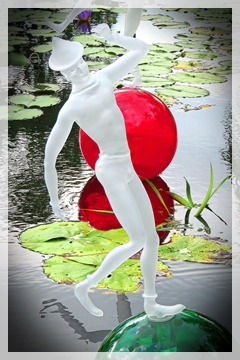
Frabel - Naples Botanic GardenSomeone was missing from yesterday’s story of Shadrach, Meshach, and Abednego and the fiery furnace: their good friend Daniel. When Nebuchadnezzar’s giant statue was erected on the plain of Dura, word was sent to all of his officials to assemble there for the statue’s dedication. We know Shadrach, Meshach, and Abednego were there because Daniel reported that they got tossed in a fiery furnace for refusing to bow to an idol. But what of Daniel? He’s the one who chronicled the event: the one who wrote that all of the high officers, officials, governors, advisers, treasurers, judges, magistrates, and provincial officials were present. Daniel gives no explanation for his absence at the dedication of the king’s golden statue.

We’d like to think that Daniel remained back in Babylon for some important task at the palace, was elsewhere on a vital mission, or even sick in bed. We want to think Daniel wasn’t there because, if he’d been in Dura that day, he should have joined his friends in the furnace. Four men would have been sent to certain death unless, unlike his friends, Daniel had bowed to the idol! Daniel, however, is our hero: the wise prophet who later braved a king’s wrath to pray and survived being thrown into a den of lions. We never want to think that our heroes are real people, with feet of clay, just like us. When we look at the Bible’s heroes, however, they really are every bit as flawed as are we! Among others, we have drunken Noah, lying Abraham, impatient Sarah, deceitful Jacob, thieving Rachel, temperamental Moses, jealous Miriam, weak Aaron, immoral Rahab, psychotic Saul, adulterous David, sex-addicted Solomon, bad dads Eli and Samuel, the thieving publican Matthew, and Peter, the disciple who denied Jesus. They all disappointed God and sinned at one time or another.

We’ll never know if Daniel was in that fiery furnace with his friends, far from Dura that day, or if he bowed to the idol. Oddly, the remote possibility that he might have bowed his head to an idol doesn’t bother me. It doesn’t disturb me because we have a great God of second (third, fourth, and more) chances. If Daniel sinned that day, along with prophecy and history, his story is one of forgiveness and redemption.

What we do know is that that God continued to give Daniel wisdom and revelations during the more than seventy years he served the four rulers of Babylon. We know that, when another opportunity arose to honor his God by rejecting idolatry, Daniel did the right thing. Perhaps he was inspired by his friends’ faith. In spite of knowing that he’d face certain death in a lions’ den, Daniel remained faithful and continued to openly pray to God rather than to the king. “May your God, whom you serve so faithfully rescue you,” said the king, and God did. Daniel, at the end of his story, was as faithful to God as were his three friends that day on the plain of Dura.

For he is the living God, and he will endure forever. His kingdom will never be destroyed, and his rule will never end. He rescues and saves his people; he performs miraculous signs and wonders in the heavens and on earth. He has rescued Daniel from the power of the lions. [Daniel 6: 26-27 (NLT)]

Copyright ©2019 jsjdevotions. All rights reserved.

WHAT WOULD YOU DO? (Daniel – part 2)

Do not be afraid, for I have ransomed you. I have called you by name; you are mine. When you go through deep waters, I will be with you. When you go through rivers of difficulty, you will not drown. When you walk through the fire of oppression, you will not be burned up; the flames will not consume you. For I am the Lord, your God, the Holy One of Israel, your Savior. [Isaiah 43:1b-3 (NLT)]

climbing asterOne night King Nebuchadnezzar had a disturbing dream and asked the court’s wise men to interpret it. Whether he couldn’t remember it (as happens with dreams) or, being obstinate, wanted to test the soothsayers and astrologers, we don’t know, but the king expected them to tell him the dream’s meaning without his revealing its content. Indignant at their failure to do so, he ordered the execution of all of Babylon’s counselors (which included Daniel, Shadrach, Meshach, and Abednego). Daniel approached the king and asked for time so that he could discover the dream’s meaning.
That evening the four men pled with God for His mercy and, during the night, the dream’s meaning was revealed to Daniel. After praising God for His revelation, Daniel correctly interpreted the king’s dream. In appreciation, the king praised Daniel’s God, chose Daniel for his court, and appointed Shadrach, Meshach, and Abednego as administrators over Babylon. While Nebuchadnezzar acknowledged that Daniel’s God was the greatest of gods, he never understood that Daniel’s God was the one and only God!

A large statue, only the head of which was gold, had been part of Nebuchadnezzar’s troubling dream. Perhaps, thinking he could change prophecy’s prediction that his kingdom would come to an end, he erected an enormous statue on a pedestal that was entirely overlaid with gold. When all of the officials were gathered around this ninety foot colossus, it was commanded that everyone, both foreign and Babylonian, was to bow to the image and worship it; those who disobeyed would be thrown into a blazing furnace. When Shadrach, Meshach, and Abednego refused to bow down, the king flew into a rage. Even when they were given a second chance, the men refused to worship the idol.

This was the kind of furnace used to bake bricks or smelt metal. We’re not talking third degree burns here; with a temperature of 1,800 degrees, they’d be cremated! The three, however, had faith in the God they served. This knew the God who kept them healthy and gave them wisdom was both good and powerful. Although confident that He could save them, they also knew that He might not choose to do so. Placing their lives in the hands of God, the three friends stood strong! Although thrown into the furnace, the Angel of the Lord saved them, and the men exited the furnace unharmed.

We only have to look at the fates of most of the disciples to know that angels won’t always save the faithful from incineration or open the doors to their prison cells. The disciples were imprisoned, beheaded, crucified, stoned, and beaten. Sadly, in some places, martyrdom of Christ’s followers continues today. The three men’s statement of faith is one of the strongest we’ll find throughout Scripture. Knowing there was no chance of survival, would we trust God as did they? Could we remain as faithful and strong as Shadrach, Meshach, and Abednego?

If we are thrown into the blazing furnace, the God whom we serve is able to save us. He will rescue us from your power, Your Majesty. But even if he doesn’t, we want to make it clear to you, Your Majesty, that we will never serve your gods or worship the gold statue you have set up. [Daniel 3:17-18 (NLT)]

Copyright ©2019 jsjdevotions. All rights reserved.

WHAT’S IN A NAME? (Daniel – part 1)

“But you are my witnesses, O Israel!” says the Lord. “You are my servant. You have been chosen to know me, believe in me, and understand that I alone am God. There is no other God—there never has been, and there never will be. [Isaiah 43:10 (NLT)]

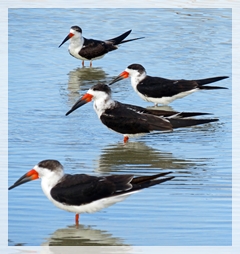
black skimmerAfter Nebuchadnezzar’s first invasion of Judah, he returned to Babylon with the temple’s treasures and some of Judah’s nobility as captives. The best and brightest of the young men were to learn the literature and language of Babylon so they could serve the king. In spite of being captives, they were housed in the palace and given the king’s choice of food. While this would appear to be a pretty good gig for prisoners of war, the boys were probably castrated and made eunuchs as was typically done for palace officials (and prophesied by Isaiah in 2 Kings 20:18).
Among these captives were Daniel, Hananiah, Mishael, and Azariah, all of whom were given new Babylonian names. Daniel, whose name meant “God is my judge,” became Belteshazzar, meaning “Bel protects his life” (Bel was another name for the chief Babylonian god Marduke). Hananiah, whose name meant “The Lord shows grace,” became Shadrach, meaning “Under the command of Aku” (the Sumerian moon god). Mishael, whose name meant “Who is like God?” became Meshach, meaning “Who is what Aku is?” and Azariah, whose name meant “The Lord helps,” became Abednego, “Servant of Nebo” (the god of learning and writing).

“What’s in a name?” asked Juliet in Shakespeare’s Romeo and Juliet. “That which we call a rose by any other name would smell as sweet,” added the star-crossed lover. Romeo’s name made him an enemy to her family but his name was meaningless to Juliet. She knew a man’s name did not determine his value or character. Nebuchadnezzar, king of Babylon, thought otherwise. By changing the captive boys’ names, he wanted more than just their assimilation to Babylon; he wanted their allegiance. When he took their names from them, he also thought he took their God.

These young men lost their homes and families, their masculinity and their names. To further distance them from the God of Israel, as eunuchs, they wouldn’t be allowed to worship in the temple if they ever returned home. Nevertheless, they never lost their identity as children of the God of Israel and refused to defile themselves by partaking of the king’s food and wine.

Some think their decision was based solely on health and nutrition and now offer a wide variety of eating plans based on Daniel’s diet. Their refusal, however, probably had more to do with the youths’ attempt to regain some control over their lives and faith. The king’s meat would not have been butchered or prepared according to Jewish law and would have included prohibited foods like horseflesh and pork that had first been offered to the pagan god Marduk. The four friends refused it and, working out a compromise with the palace guard, agreed to eat nothing but vegetables and water for a trial period of ten days. Since they looked better nourished after that time, they were allowed to continue observing their food rules. Their fitness, however, had more to do with God’s promise of provision than their diet. God granted them not just health but special wisdom. In spite of their new names, they now knew that, by remaining faithful to God, He would be remain faithful to them. Found superior to all of the others in their group, they entered the king’s service in his court.

These four young men knew there was nothing in a name. What mattered was their character and their faith in God—a God who was judge, showed grace, and helped them in their troubles. They knew the Lord would honor those who honored Him and it was this knowledge that would carry them through their later trials in Babylon.

Praise the name of God forever and ever, for he has all wisdom and power. He controls the course of world events; he removes kings and sets up other kings. He gives wisdom to the wise and knowledge to the scholars. [Daniel 2:20-21 (NLT)]

Copyright ©2019 jsjdevotions. All rights reserved.

PERSEVERING PRAYER

O Lord, God of my salvation, I cry out to you by day. I come to you at night. Now hear my prayer; listen to my cry. For my life is full of troubles, and death draws near. [Psalm 88:1-3 (NLT)]

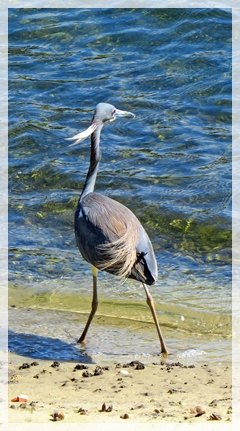
tri-colored heronLast month, a man crashed his car into the frigid waters of the Klamath River in California. Although the accident occurred around 3:00 in the morning, the nearly submerged upside-down car wasn’t reported until 5:30 AM. The dive team finally was able to attach a cable to its undercarriage and tow the vehicle to dry land at 8:00 AM. By this time, thinking it a recovery rather than a rescue operation and with airbags blocking the windows, no one expected to find anyone alive in the car. When the team commander opened the door, however, he heard the words, “Help me!” The car’s driver had survived nearly five hours in icy water while breathing from an air pocket in the car. I have no idea whether the man was a believer but I imagine he might be one now.

This morning, I thought of that man when reading Psalm 88. Although I think the psalmist, Heman the Ezrahite, was writing metaphorically about death drawing near, being “as good as dead,” standing “helpless and desperate,” in “the darkest depths,” with “wave after wave” engulfing him, in a “trap with no way of escape,” and with terrors swirling around “like floodwaters” that engulfed him completely, those words sounded as if they could have been penned by the driver of that submerged car. Alone, in darkness, in a frigid river, desperately trying to keep his head above water, fearful of running out of air, and thinking he’d met his end, I wonder if that frantic man prayed as passionately as did Heman in his psalm.

In his prayer, the despairing Heman doesn’t mince words; nothing is concealed. He lays his miserable life out for God (and everyone else) with brutal honesty. Grieving and in desperate need, estranged from friends and loved ones, he complains that darkness is his closest friend. Yet, in spite of his list of afflictions, there are no accusations, calls for revenge, or anger; there is just woeful resignation, acceptance, and entreaty.

While this is a psalm of lament, it is also one of trust, hope and perseverance. Freely expressing his discouragement and complaint, the psalmist calls to the God of his salvation. Knowing that God is sovereign over his suffering, he also knows God is sovereign over his relief. Even though it seems as if his prayers aren’t being heard, Heman tirelessly continues to pray, crying out to God “day by day” and at night.

I’ve never been gasping for air in an upside down car submerged in icy water and I don’t think I’ve ever been as desperate as Heman must have been when he wrote his psalm. Nevertheless, that doesn’t excuse me from my often sporadic, passionless and perfunctory prayers. Why does it seem that we must be in trouble, in desperate straits, in need of rescue, or in deep despair before we are as forthright, fervent and constant as Heman in our prayers? Shouldn’t every one of our prayers be said with the same level of urgency, ardor, honesty and emotion? Could some of our prayers remain unanswered simply because we haven’t offered them as earnestly as did Heman? What will it take before we pray with his passion? I certainly hope it doesn’t involve an overturned car floating down a river.

When you pray, rather let your heart be without words than your words without heart. [John Bunyan]

I am in a trap with no way of escape. My eyes are blinded by my tears. Each day I beg for your help, O Lord; I lift my hands to you for mercy. … O Lord, I cry out to you. I will keep on pleading day by day. [Psalm 88 8b-9,13 (NLT)]

The earnest prayer of a righteous person has great power and produces wonderful results. [James 5:16b (NLT)]

Copyright ©2019 jsjdevotions. All rights reserved.

PROTECT THEM, LORD

I love you, Lord; you are my strength. The Lord is my rock, my fortress, and my savior; my God is my rock, in whom I find protection. He is my shield, the power that saves me, and my place of safety. I called on the Lord, who is worthy of praise, and he saved me from my enemies. [Psalm 18:1-3 (NLT)]

grandchildIt was every parent’s nightmare; while the Dad was changing the toddler’s diaper, his four-year old daughter wandered away and disappeared in the zoo! We saw him as he was frantically asking people, “Did you see a little girl in a pink bike helmet?” As he went racing down the path toward the alligators and lions, we went toward the lemurs and play area. Fortunately that pink helmet made her easy to spot as she stood watching the black bears lumber through their enclosure. As we walked her back to her father, I said a prayer of thanksgiving that she would be returning home safely that day.

I thought of that anxious father the next day when reading Pearls Before Swine, a comic drawn by Stephan Pastis. Goat is extending sympathy to Pig for his grandma’s death when Pig carries him off. In the next few frames, Pig carts off his friends Duck and Cat. Next, we see all of Pig’s friends stuffed in a box under a sign saying, “SAFE PLACE WHERE I CAN KEEP AN EYE ON EVERYONE I LOVE SO NOTHING BAD CAN HAPPEN TO THEM.” The label on the box read, “Bad things stay away!” In the last frame, when Goat tries to explain that it doesn’t work that way, Pig just responds, “Don’t distract me. I’m standing guard.” Like Pig, I wish I could keep bad things from happening to those I love but I know I can’t. When my grands visit, determined that nothing bad is going to happen to them on my watch, I’m on high alert (and probably over protective). Of course, if parents and grandparents could, we’d erect a wall of protection around our loved ones to shield them, not just from death, but from heartache, injury, disappointment, and pain.

It would be a miracle if the worst that happens to that little girl is getting lost at the zoo and, while her pink bike helmet may protect her when she falls off her trike, it’s of little use elsewhere! We live in a fallen world: a world with disease, defiance, pain, sorrow, falseness, mistakes, greed, betrayal, loss, violence, malice, and death. Chances are that our children and grands will go further astray than just to the bears’ enclosure at the local zoo. Unlike Pig, we can’t stuff those we love in a box and stand guard over them night and day. Instead, we teach, encourage, warn, guide, lead, love, discipline, forgive, pray, equip them, and let them go. Although we provide them with God’s armor, we can’t make them accept or wear it.

We protect our gates, are cautious of what we allow into our homes, and stay alert to the dangers around us but what about when our loved ones leave home to lead their own lives? Many of the Psalms speak of God being a shield but that seems more figurative than literal. Although Shadrach, Mesach, and Abednego exited that fiery furnace unscathed, others weren’t that fortunate. Consider the fates of Stephen, the prophet Zechariah, John the Baptist, Jeremiah, Paul, and James! Sadly, there is no fool-proof way to protect our loved ones from Columbines or Sandy Hooks any more than we can from disappointment, grief, cancer, mental illness, rejection, failure, or death.

I used to ask God to be with my children and grands until I realized how silly my request was; He’s with them always! I now ask God to guard them from evil by making His presence known to them and His voice heard by them. As I pray God’s blessing of protection over my loved ones, I give them to Him, trusting that He will bring them safely home, if not in this world, then in the next!

But let all who take refuge in you rejoice; let them sing joyful praises forever. Spread your protection over them, that all who love your name may be filled with joy. For you bless the godly, O Lord; you surround them with your shield of love. [Psalm 5:11-12 (NLT)]

Copyright ©2020 jsjdevotions. All rights reserved.

TOSS ‘EM OUT – It’s a New Year

Nothing in all creation is hidden from God. Everything is naked and exposed before his eyes, and he is the one to whom we are accountable. [Hebrews 4: 13 (NLT)]

Snow in SteamboatExplaining her years of addiction, Alice said, “It’s all because my parents moved from Illinois to Texas while I was in high school.” Was the move a contributing factor to Alice’s drug use? Maybe, but that was more than twenty-five years ago and has nothing to do with her failure to deal with her behavior today. Since high school, she’s abandoned a child, served time in prison, been in and out of a well-known residential rehab so often that she should have her own room, and is still lying, stealing, and using. Like many of us, Alice is simply blame shifting.

Yes, our experiences influence us but, as Christians, our past determines neither our present nor our future. By blaming our genes, nationality, appearance, or our over-indulgent or too strict parents, we abandon ownership of our failures and sins. We say we had too little or were given too much, that the spouse was inattentive, the judge was prejudiced, the teacher was inept, or we shouldn’t have moved. I’ve heard people blame their rudeness, stinginess, drinking, and tempers on their upbringing when they alone are responsible for their conduct today. Blaming other people or things implies that we aren’t accountable for our actions and leads us to think we aren’t responsible for changing that behavior.

Contributing factors, extenuating circumstances, and difficult childhoods may be of interest to a therapist but not to God. We may be able to deceive ourselves and others, but our excuses will never deceive Him! There will come a day when each one of us will be held responsible for our thoughts, words, and deeds and any excuses we use to justify our sins will disappear.

For both the non-believer and believer, there is judgment. No matter what the excuse, the person who has rejected Christ is doomed. When Alice meets God face to face, He will see into her and hold her accountable for her sins: the way she denied Him and wasted the precious life he gave her. While believers are saved by faith alone, they too will be judged. At the Judgment Seat of Christ, they’ll be asked to give an accounting of their lives in service to Him. When Alice’s parents (both believers) stand before God, He won’t hold them accountable for their move to Texas but He may well hold them accountable for the way they continually enabled their daughter to squander her life.

Excuses may not be outright lies but they keep us from facing the truth and, without facing the truth about ourselves, we won’t change. Our goal in life is to become more like Christ and we can’t do that by rationalizing our failings. This is a new year and a perfect time to do some serious self-examination. Are we victims of circumstance or victors in Christ? Are there any excuses we should toss out with the holiday trash?

Since you have heard about Jesus and have learned the truth that comes from him, throw off your old sinful nature and your former way of life, which is corrupted by lust and deception. Instead, let the Spirit renew your thoughts and attitudes. Put on your new nature, created to be like God—truly righteous and holy. [Ephesians 4:21-24 (NLT)]

Copyright ©2019 jsjdevotions. All rights reserved.