THE KINGDOM

One day the Pharisees asked Jesus, “When will the Kingdom of God come?” Jesus replied, “The Kingdom of God can’t be detected by visible signs. You won’t be able to say, ‘Here it is!’ or ‘It’s over there!’ For the Kingdom of God is already among you.” Luke 17:20-21
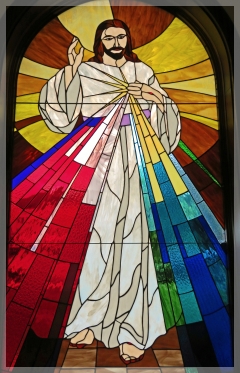
holy name cathedralDepending on your Bible translation, the Kingdom of God is mentioned at least 68 times in the New Testament. Rather than “Kingdom of God,” Matthew usually used “Kingdom of Heaven.” All four gospels, however, are speaking of the same place. Matthew was a Jew and primarily writing for a Jewish audience. While we tend to interpret the third commandment about not misusing the Lord’s name to mean not using it irreverently, Jews have a much stricter interpretation. Believing God’s name too sacred to say aloud, by the 1st century, His name wasn’t even written or spoken in anything but prayer. Even today, many observant Jews substitute “G-d” rather than write the full name.

Because Jesus continually preached the Kingdom of God (or Heaven), the Pharisees asked Him when it would come. Like the rest of Judah, they were thinking of a materialistic kingdom—one with boundaries and a Jewish ruler—so they missed what was happening in front of them. Looking for a political rather than a spiritual fix, they couldn’t understand that the Kingdom had arrived and God was busy restoring it.

Jesus’ answer to the Pharisees sounds like He’s saying the Kingdom is present and yet He also told His disciples to pray for its coming. Rather than an involved theological explanation to explain a kingdom that was both here and pending, Jesus compared the Kingdom of God to a mustard seed that was planted in a field but hadn’t matured into its future glory. The Kingdom was “already” because believers were taking part in building it but it also was “not yet” because it wouldn’t reach its full expression until the future. To further explain the Kingdom, Jesus used a number of metaphors: a farmer scattering seed, yeast in dough, a fishing net, a merchant in search of fine pearls, treasure in a field, a king settling his accounts, a landowner hiring workers for his vineyard, a king’s wedding feast for his son, ten bridesmaids meeting the bridegroom, and a landowner with tenant farmers. Even then, His own disciples were still thinking of an earthly kingdom when they asked the resurrected Jesus, “has the time come for you to free Israel and restore our kingdom?” [Acts 1:6]

The Kingdom of God is not about going to heaven when we die; it’s about bringing God’s kingdom to earth. We pray, “May your Kingdom come soon. May your will be done on earth, as it is in heaven.” [Matthew 6:10] God is king of everything and everyone and, when He reigns in our hearts and minds, His Kingdom is already here. At the same time, His Kingdom is not yet here until its full realization when paradise is re-created in the New Jerusalem.

The Messiah has accomplished the work of redemption, the Spirit has been poured out, yet evil has not been eradicated, the general resurrection is still future, and the final state of God’s kingdom has not been established. In other words, the new era has begun–has been inaugurated–but it has not yet replaced the old era. [Dr. Peter Cockrell]

Jesus answered, “My Kingdom is not an earthly kingdom. If it were, my followers would fight to keep me from being handed over to the Jewish leaders. But my Kingdom is not of this world.” [John 18:36 (NLT)]

Copyright ©2021 jsjdevotions. All rights reserved.

HE WEPT – PALM SUNDAY

The next day, the news that Jesus was on the way to Jerusalem swept through the city. A large crowd of Passover visitors took palm branches and went down the road to meet him. They shouted, “Praise God!  Blessings on the one who comes in the name of the Lord! Hail to the King of Israel!” [John 12:12-13 (NLT)]

All glory, laud, and honor to you, Redeemer, King,
to whom the lips of children made sweet hosannas ring.
You are the King of Israel and David’s royal Son,
now in the Lord’s name coming, the King and Blessed One.
[Theodulph of Orleans (820)]

palm - ncp7943awWe are people of physical signs and symbols and rituals help us connect with events. As a little girl, I loved Palm Sunday and not just because it meant my Lenten fasting would soon end and jelly beans would be in my Easter basket the following week. I loved the way our liturgical church observed it. The hymns of the day were filled with hosannas (a welcome relief from the more somber hymns of the Lenten season). Typically, the opening hymn was “All Glory, Laud, and Honor” and we children would follow the choir into the church while waving our palm branches. Even as a small child, I knew this day commemorated Jesus’ triumphal entry into Jerusalem.

Like the people of Jerusalem, I was filled with joy on this day. Having sung that “the wee little” Zacchaeus had to climb a tree to see the Lord, I pictured people lining the streets and jostling one another for the best view as they might for a parade. I wondered if little children sat on their parents’ shoulders so they could see Jesus. Between the palms I waved and the day’s joyful music, I felt like I was there in Jerusalem and watching the promised Messiah approach on his donkey.

Today, in preparation for Palm Sunday, rather that thinking about those joyful cries of “Hosanna!” and the royal welcome given to our Lord, I thought about Jesus and what He must have been thinking. As Jesus neared the city, Luke tells us that He wept. Jesus, however, wasn’t just a little teary-eyed. Luke used the word eklausen which meant to sob or wail loudly, as one who mourns the dead! As He rode triumphantly into Jerusalem, Jesus was in tears!

Having already told his disciples He would suffer and die, we know Jesus saw what lay at the end of the parade and it’s easy to think His tears were because of the horror awaiting Him. Those sobs, however, weren’t for Him—they were for His people and the city of Jerusalem.

Jesus knew that, in spite of their hosannas, He would be rejected. The people didn’t want their Messiah to be a Prince of Peace—they wanted him to be a conquering king. As He rode into town, Jesus pronounced judgment on the city that was blind to the true nature of God’s kingdom and prophesized its siege and destruction. Thirty-seven years later, the Romans laid siege to Jerusalem, the city was burned, the Temple destroyed, and over one million Jews were slaughtered. While palms waved and people cheered, the grief-stricken Jesus saw Jerusalem’s future and sobbed. It would be nearly 19 centuries before the Jews again had a homeland.

On that Sunday so long ago, the Prince of Peace arrived in the city whose name meant peace. The first part of Jerusalem’s name is yiroo, meaning “they will see” or “they will feel awe,” and core of the word is shalem, meaning completeness and wholeness. Shalem is the root of the Hebrew word for peace—shalom. Jerusalem’s name literally meant, “They will see wholeness” or “They will feel the awe of completeness.” That day they saw the wholeness of God but, sadly, they didn’t understand!

But as he came closer to Jerusalem and saw the city ahead, he began to weep. “How I wish today that you of all people would understand the way to peace. But now it is too late, and peace is hidden from your eyes. Before long your enemies will build ramparts against your walls and encircle you and close in on you from every side. They will crush you into the ground, and your children with you. Your enemies will not leave a single stone in place, because you did not recognize it when God visited you.” [Luke 19:41-44 (NLT)]

Copyright ©2021 jsjdevotions. All rights reserved.

SAINT OR SINNER?

Human pride will be brought down, and human arrogance will be humbled. Only the Lord will be exalted on that day of judgment. For the Lord of Heaven’s Armies has a day of reckoning. He will punish the proud and mighty and bring down everything that is exalted. [Isaiah 2:11-12 (NLT)]

black-crowned night heronJesus’ Parable of Two Men Who Prayed contrasts pride with humility, self-righteousness with repentance, and how not to pray with how to pray. In it, both Pharisee and publican (tax collector) go to pray in the Temple. The Pharisee boldly thanks God that he’s not a sinner like everyone else and then self-righteously singles out the sinful publican. Then, just to make sure God understands how good he really is, the man brags of his tithing; rather than giving a tenth of what he earns, he tithes a tenth of all that he acquires. Even though fasting was only required on the Day of Atonement, Pharisees fasted on Mondays and Thursdays as well, so the self-satisfied man finishes his prayer by boasting of his twice weekly fasts.

In stark contrast to the proud Pharisee is the second man: a detested tax collector. Considered traitors and thieves by their fellow Jews, tax collectors paid the Romans for the privilege of collecting taxes and then overcharged their countrymen while lining their pockets with the excess. The despised man stands meekly before God with his head bowed and eyes down. Beating his breast in sorrow, he humbly confesses his sinfulness and begs for God’s mercy.

Although Jesus’ listeners would have anticipated the Pharisee’s commendation and the thieving publican’s condemnation, Jesus turns their expectations upside down when He says it was the publican who was considered righteous by God. He explains: “For those who exalt themselves will be humbled, and those who humble themselves will be exalted.” [Luke 18:14] These were the same words Jesus used when, at a dinner party, He took the guests to task for their lack of humility as they jockeyed for the best seats around the table. [Luke 14:7-11]

We’re familiar enough with this parable not to identify with the Pharisee’s ostentatious display of piety but I suspect we’re more like the Pharisee than we care to admit. Although the Pharisee addressed God at the beginning of his prayer, the rest of it was all about him and seems more like a business contract than a prayer. Listing his good works, he seems to expect God’s commendation and favor in return for them. In theory, we know we’re justified by faith not works, that none of us are saved by our own merits, and that no human righteousness is enough for a God who demands perfection. In reality, however, we’re often more self-absorbed than self-examining, more likely to extol our virtues than admit our sins, and more interested in justifying our actions than being justified by God. Like the Pharisee, do we ever commend ourselves or justify our failings by pointing out the sins of others? How often do we actually take an inventory of our failings and honestly and humbly admit them to the Lord?

Sinners all, let us never forget how completely undeserving and unworthy we are of God’s grace.

The man who is seriously convinced that he deserves to go to hell is not likely to go there, while the man who believes he is worthy of heaven will certainly never enter that blessed place. [A.W. Tozer]

So humble yourselves before God. Resist the devil, and he will flee from you. Come close to God, and God will come close to you. Wash your hands, you sinners; purify your hearts, for your loyalty is divided between God and the world. Let there be tears for what you have done. Let there be sorrow and deep grief. Let there be sadness instead of laughter, and gloom instead of joy. Humble yourselves before the Lord, and he will lift you up in honor. [James 4:7-10 (NLT)]

Copyright ©2021 jsjdevotions. All rights reserved.

WHAT ARE THE ODDS? (Part 3)

He [Jesus] rolled up the scroll, gave it to the attendant, and sat down. All eyes in the synagogue were fixed on him. “Today,” he began, “this scripture is fulfilled in your own hearing.” [Luke 4:20-21 (NTE)]

evening primroseIn writing about Blaise Pascal yesterday, I mentioned that he, along with Pierre de Fermat, laid the groundwork for probability theory back in 1654. I remember a school friend writing her term paper on probabilities who began by testing what’s called the “birthday paradox:” in a room of 23 people, there is a 50% chance that two people will have the same birthday and, out of 75 people, there is a 99.9% chance of two people’s birth dates matching. Imagine her surprise when the first two people she asked had the same birth date! That, of course was sheer coincidence but, if the next 30 people she asked also had the same birth date, another explanation would have been necessary.

I know nothing of permutations, exponents, or probability theory, but even I know when coincidence can’t explain the improbable. Consider the improbability of anyone fulfilling the many Messianic prophecies found in the Hebrew Scriptures. The Messiah would come from the seed of a woman (not a man) and be born of a virgin in Bethlehem. He would be from the line of Abraham, a descendant of Isaac and Jacob, of the tribe of Judah, and from the house of David. The Messiah would spend time in Egypt, would be a Nazarene, and a messenger would prepare His way. He would be a light to the Gentiles, give sight to the blind and hearing to the deaf, visit the Temple, and enter Jerusalem as a king on a donkey. The Messiah would be betrayed for 30 pieces of silver, falsely accused, and stand silent before His accusers. He’d be mocked and ridiculed, his hands and feet pierced, dice would be thrown for his clothing, and would die with the wicked but be buried with the rich.

Taking just eight of the some 300 fulfilled Messianic prophecies in Hebrew Scripture, mathematics professor Peter Stoner calculated the odds of one man fulfilling them by coincidence at 1 in 1017 (100,000,000,000,000,000). Putting those many zeros into perspective, Stoner likened it to covering the entire state of Texas with silver dollars piled 2-feet deep, placing one marked silver dollar among them, and expecting a blindfolded person to wander through the state and pick up the marked coin in his first try. Stoner then figured the odds of one man fulfilling 16 of those Messianic prophecies at 1 in 1045 and of fulfilling 48 of those prophecies at 1 in 10157, a truly mind-boggling number. Although the odds against one man fulfilling all those prophecies are astronomical, that’s exactly what Jesus did! Looking at it purely from a mathematical viewpoint, Professor Stoner concluded, “Any man who rejects Christ as the Son of God is rejecting a fact proved perhaps more absolutely than any other fact in the world.”

While probability theory proves that Jesus is the promised Messiah, intellectual assent is not quite enough when it comes to our salvation because it’s not the same as believing in Jesus. Faith is more than an acceptance of facts; it is a commitment to those facts. A profession of intellectual belief is meaningless until it makes a discernible change in us! Nevertheless, Stoner’s use of probability theory to prove Jesus is the promised Messiah helps bolster our own faith. Moreover, it enables us to defend the validity of Scripture and the truth of Jesus’ identity to those who don’t believe.

And we have the prophetic word made more certain. You will do well to hold on to this, as to a lamp shining in a dark place, until the day dawns and the morning star shines in your hearts. You must know this first of all, that no scriptural prophecy is a matter of one’s own interpretation. No prophecy, you see, ever came by human will. Rather, people were moved by the holy spirit, and spoke from God. [2 Peter 1:19-21 (NTE)]

Copyright ©2021 jsjdevotions. All rights reserved.

BE ON THE LOOKOUT – ST. PATRICK’S DAY

That night Paul had a vision: A man from Macedonia in northern Greece was standing there, pleading with him, “Come over to Macedonia and help us!” So we decided to leave for Macedonia at once, having concluded that God was calling us to preach the Good News there. [Acts 16:9-10 (NLT)]

hope cloverI can’t say that I’ve ever had a dream or vision as clear cut as was Paul’s. If I ever did, I’m not sure I’d be as quick as he and his companions were to trust it. In Paul’s case, however, the dream helped him understand why the Holy Spirit previously prevented the men from preaching in the provinces of Asia and Bithynia (modern day Turkey). After hearing the Macedonian man’s plea, Paul finally had a clear sense of God’s direction. Paul, Silas, Timothy, and Luke headed west to Troas, set sail across the Aegean Sea, and made their way to Philippi in the Roman province of Macedonia (northern Greece). Paul’s obedience to that call took the gospel west toward Europe and changed Western civilization forever!

Nearly 300 years later, Irish history was changed when the man we know of as St. Patrick had a similar dream. Born Maewyn Succat around 387 in Roman Britain (Scotland), Patrick was kidnapped by Irish marauders at the age of sixteen. Taken to Ireland, the boy was sold into slavery and labored at herding and tending sheep. According to his memoirs, as Patrick prayed several times a day during his captivity, his faith grew and he felt the presence of the Holy Spirit. After six years of enslavement, he had a dream in which God told him, “Your ship is ready.” The young man escaped, walked 200 miles to the coast, and found some sailors who took him back to Britain. Once home, Patrick had another dream in which he was given a letter titled “The Voice of the Irish.” Upon opening it, he heard the voices of the people who’d once enslaved him calling, “We appeal to you, holy servant boy, to come and walk among us.” Initially reluctant to answer the call because of his lack of education, Patrick began religious training. He returned to Ireland about 15 years after his dream and the man known for explaining the Trinity with the three-leaved single stalk shamrock evangelized all over the land for the next thirty plus years. Patrick is said to have converted over 135,000 people, established 300 churches, and consecrated 350 bishops.

While we’re not likely to have such vivid dreams as Paul and Patrick, we should listen for the “Voice of the Irish” and be looking for a “man from Macedonia” in the people who cross our paths every day. They’ll probably look and sound much like everyone else and yet they’ll have a pressing need to know Jesus. May we respond as readily as did Paul and Patrick. We probably won’t change the world as did they, but we surely can change the world for someone.

God’s plan for enlarging his kingdom is so simple – one person telling another about the savior. Yet we’re busy and full of excuses. Just remember, someone’s eternal destiny is at stake. The joy you’ll have when you meet that person in heaven will far exceed any discomfort you felt in sharing the gospel. [Charles Stanley]

For “Everyone who calls on the name of the Lord will be saved.” But how can they call on him to save them unless they believe in him? And how can they believe in him if they have never heard about him? And how can they hear about him unless someone tells them? And how will anyone go and tell them without being sent? That is why the Scriptures say, “How beautiful are the feet of messengers who bring good news!” [Romans 10:13-14 (NLT)]

Copyright ©2021 jsjdevotions. All rights reserved.

INVESTING TALENTS – Matthew 15:14-30 (Part 2)

God has given each of you a gift from his great variety of spiritual gifts. Use them well to serve one another. Do you have the gift of speaking? Then speak as though God himself were speaking through you. Do you have the gift of helping others? Do it with all the strength and energy that God supplies. Then everything you do will bring glory to God through Jesus Christ. All glory and power to him forever and ever! Amen. [1 Peter 4:10-11 (NLT)]

great egretYesterday, I wrote about Jesus’ Parable of the Three Servants, often called the Parable of the Talents. Although I used it as an example of excuse making, that’s not what the parable is about. This parable comes right after Jesus’ description of the end times and the Parable of the Ten Bridesmaids in which He urged readiness for the Day of the Lord. Immediately following this parable about the talents, Jesus spoke about the final judgment. The story of these three servants makes it clear that, when that last day comes, the master will settle accounts: faith will be rewarded and the righteous servants separated from the false ones.

In this parable, before going away on a trip, the master entrusts his money to his three servants according to their individual abilities; no one receives more or less than he is capable of handling. When the master (Jesus) returns, his servants (Christ-followers) give an accounting for how they fulfilled their responsibilities and used the talents. While we think of talents as natural abilities or skills, in Jesus’ time, a talent was a unit of measurement used to weigh out gold or silver. A talent was the largest quantity at the time and a talent of silver was about the equivalent of an average worker’s income for twenty years. The master in this parable entrusted each of his servants with a fortune. Rather than bags of silver, however, the talents entrusted to us by God include our wealth along with our time, natural abilities (talents), spiritual gifts, and bodies. This treasure entrusted to us is no more ours to keep than were the bags of silver given to the servants theirs. The treasure belongs to the master; his servants are but caretakers of His gifts.

Instead of entrusting us with His investment portfolio, Jesus entrusts us with His ministry and the furthering of His Kingdom. Scripture tells us exactly what He expects us to do with the treasure He’s given us: spread the gospel, love God, love others (including our enemies), forgive those who have wronged us, be hospitable to outsiders, and be an example for the world by feeding the hungry and caring for the poor, imprisoned, and sick. How we achieve His purpose will be different for each one of us because a different sack of talents has been entrusted to each one of us. Whether the sack is filled with gold, silver, copper or iron, we each have been given exactly the right amount of what God expects to use. In writing about this parable, D.L. Moody said, “Many thousands of watch springs can be made out of a pound of iron. See that you improve faithfully the talent God has given you.”

When the master commends the first two servants for the return on his investment, he doesn’t say, “Well done, my good and successful servant.” He says, “Well done my good and faithful servant.” The third servant, however, is punished but not because he failed to give the master a good return on his money; he’s punished because he didn’t even try. Rather than invest the money or put in a bank and get interest, he simply buried it. He isn’t punished for being unsuccessful; he’s punished for his lack of faith! The master didn’t expect him to double the investment as did the other servants, but he did expect him to do something with it! The faithless and lazy servant squandered the opportunity given to him; we must not do the same!

God does not demand that we be successful. He only asks that we be faithful in using the treasure He has entrusted to us. We honor God by using our talents to work to further His Kingdom; the success of our endeavors, however, is up to Him!

We are not called to be successful; we are called to be faithful. [Mother Teresa]

Work willingly at whatever you do, as though you were working for the Lord rather than for people. Remember that the Lord will give you an inheritance as your reward, and that the Master you are serving is Christ. [Colossians 3:23-24 (NLT)]

Copyright ©2021 jsjdevotions. All rights reserved.