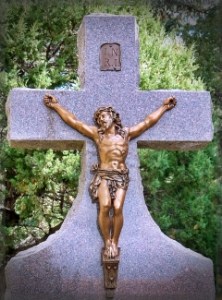
UNCLEAN – Mark 5 (Part 2)

“But this is the new covenant I will make with the people of Israel after those days,” says the Lord. “I will put my instructions deep within them, and I will write them on their hearts. I will be their God, and they will be my people.” [Jeremiah 31:33-34 (NLT)]

little blue heronThe book of Leviticus outlined several things that could make someone ceremonially or ritually unclean. These things included bodily discharges, touching a corpse, and skin infections, as well as contact with any unclean person or thing. By Jesus’ day, even entering a Gentile’s home made someone unclean. Anything and anyone an unclean person touched became unclean and, anyone who touched them or what they touched also became unclean.

People deemed unclean were barred from participating in worship, offering sacrifices, and having access to the Temple. Because ritual impurity was contagious, anyone unclean had to remain separated from the community. Purification ceremonies were required before returning to a state of ritual cleanness and they varied with the severity of the uncleanness. Because uncleanness could come from normal bodily functions or factors beyond their control, even devout Jews became unclean at some time. Nevertheless, people didn’t deliberately put themselves in situations that would make them unclean. Jesus was the exception to the rule!

Along with their miraculous restoration, the three people Jesus healed in Mark 5 have something else in common—their ritual uncleanness. Living among the dead in the burial caves made the demoniac unclean. Since pigs fed on the hillside near him, he also was unclean because of contact with them. Considering the demoniac’s wild behavior, he probably was soiled by his or the pigs’ feces or urine which also made him ritually unclean (as well as filthy). Jesus, however, didn’t see an unclean Gentile demoniac; he saw a child of God who desperately needed to be freed from Satan’s control!

While Jesus was on the way to Jairus’ home to heal the man’s daughter, He was approached by a woman who had been hemorrhaging for twelve years. Because her bodily discharge made her ritually unclean, she was a pariah who shouldn’t have been out in public. Just by touching Jesus’ robe, she would have passed her uncleanness to Him but, rather than rebuke the woman for her action, He called her “Daughter,” commended her faith, and healed her.

While Jesus was speaking to the bleeding woman, messengers arrived to tell Jairus his daughter was dead. Undeterred, Jesus continued to the man’s home and went into the room where the dead girl lay. Even though He could raise the dead with just a word (as He did with Lazarus), Jesus deliberately held the child’s hand before telling her to get up.  Although having direct contact with a corpse made Him ritually unclean, the moment He took her hand, she transformed from an unclean dead body into a living child.

Those weren’t the only times Jesus put His concern for people before ritual purity. He offered to go to the Roman centurion’s home to heal the man’s servant even though entering a Gentile’s home would make him ceremonially unclean. When Jesus returned to the Gerasenes, he had no qualms about laying hands on a Gentile deaf man. Perhaps the most shocking of Jesus’ actions is found in Mark 1 when a leper kneeling before Him asked to be made clean. In an amazing display of compassion, Jesus deliberately reached out and touched the man to heal him. Rather than being made unclean by the leper, the leper was made clean by Jesus’ touch!

Ritual impurity made people unfit to be in the presence of God. Although many of the things Jesus did would have made a normal Israelite impure, we never read of Him undergoing any sort of purification ritual. Jesus, however, wasn’t an ordinary Israelite. He didn’t need to be purified to enter into the presence of God; He was God! Rather than becoming polluted by touching the unclean, Jesus transformed their impurity to purity because His holiness was contagious! In the New Covenant, people’s purity no longer depends on external regulations; it now depends on the cleansing power of Jesus Christ. His purity is greater than our impurity! Thank you, Lord.

So then, my brothers and sisters, we have boldness to go into the sanctuary through the blood of Jesus. He has inaugurated a brand new, living path through the curtain (that is, his earthly body). We have a high priest who is over God’s house. Let us therefore come to worship, with a true heart, in complete assurance of faith, with our hearts sprinkled clean from an evil conscience and our bodies washed with pure water. [Hebrews 10:19-22 (NTE)]

Copyright ©2023 jsjdevotions. All rights reserved.


HEALING – Mark 5 (Part 1)

A woman in the crowd had suffered for twelve years with constant bleeding. … She had heard about Jesus, so she came up behind him through the crowd and touched his robe.  For she thought to herself, “If I can just touch his robe, I will be healed.” [Mark 5:25,27-28 (NLT)]

monarch butterflyIn Mark 5, we find three stories of miraculous healings: the demoniac living among the graves in the Gerasenes, the woman who bled for twelve years, and the daughter of Jairus who was brought back to life. These are beautiful stories, but what about all the other people in 2,000 years for whom there has been no healing? Like the woman with the blood disorder, my friend has suffered for more than twelve years, tried every remedy, and gotten no relief. This man of deep faith prays for healing as do all his family and friends. His faith is as strong as that of the nameless woman and yet he’s had no relief.

As the local synagogue’s leader, it’s likely Jairus was one of those in the synagogue who criticized Jesus for healing a man on the Sabbath. He even might have been with the Pharisees when they accused Jesus of being possessed by Satan. He and his daughter certainly weren’t more deserving than a neighbor’s grandson. Along with the child’s parents and countless others, they knelt before Jesus and begged for the boy’s healing. Nevertheless, in spite of their prayers and five-and-a-half years of treatment, healing never came. We didn’t ask God to raise him from the dead; we just wanted Eddie to live more than his brief eight years!

The bleeding woman and Jairus sought out the Lord but Jesus crossed the Sea of Galilee and calmed a storm to reach the Gentile demoniac. My uncle was a good man of deep Christian faith but he descended into the hell of psychosis from which he couldn’t escape and, instead of living among the graves, he lived in a state psychiatric hospital. He desperately sought Jesus but, in spite of countless prayers for release from his demons, release only came when he died. Why was the pagan demoniac healed and not my uncle?

If all we needed for healing was sincere faith and fervent prayers, good Christians would never get sick or die—but, they do. Billy Graham suffered from Parkinson’s disease for 25 years and Martin Luther had 24 years of ill-health. Luther’s pain was so crippling that he frequently prayed for death’s relief. Based on existing records, forensic scientists believe Francis of Assisi suffered from malaria, tuberculosis, peptic ulcer, gastric cancer, brucellosis, blindness from trachoma, and leprosy until his death at 44. Among other ailments, John Calvin suffered from kidney stones, painful gout, heartburn and indigestion, chronic facial pain, roundworms, migraines, and chronic insomnia until his death at 55 (probably from tuberculosis). If anyone had a direct line to God’s ear, it would be men like these and the Apostle Paul. Without a doubt, they all prayed for relief but God chose not to remove their many thorns.

Although Jesus taught us that God will respond to our faithful prayers, He never taught us that faith automatically brings about healing. While there are many instances in Scripture where Jesus links faith and healing, there are many others where the healing seems almost random. When we look at His many miraculous healings, there’s no formula to them. In fact, Jesus’ healing seems unrelated to people’s faith. The man healed by the pool at Bethesda didn’t even know Jesus’ name. The only constant is Jesus rather than faith or prayer!

God can and does heal. Whether or not He does so is His sovereign choice and our physical healing may not be God’s top priority! Of the many sick and suffering people crowded around the pool in Bethesda, Jesus healed just one man. The reasons why God restores health to some and not to others is beyond our understanding. Healing is neither evidence of our faith nor proof of God’s love for us and we can’t allow bitterness or anger to fill our hearts when it doesn’t occur. Even for the most faithful, miraculous healings are the exception not the rule! Someday, all sickness and death will be gone but, until then, we must have faith and trust in God.

He has chosen not to heal me, but to hold me. The more intense the pain, the closer His embrace. [Joni Eareckson Tada]

I was given a thorn in my flesh, a messenger from Satan to torment me and keep me from becoming proud. Three different times I begged the Lord to take it away. Each time he said, “My grace is all you need. My power works best in weakness.” So now I am glad to boast about my weaknesses, so that the power of Christ can work through me. [2 Corinthians 12:7-9 (NLT)]

Copyright ©2023 jsjdevotions. All rights reserved.

LIKE KUDZU

Don’t let down your guard lest even now, today, someone—man or woman, clan or tribe—gets sidetracked from God, our God, and gets involved with the no-gods of the nations; lest some poisonous weed sprout and spread among you, a person who hears the words of the Covenant-oath but exempts himself, thinking, “I’ll live just the way I please, thank you,” and ends up ruining life for everybody. [Deuteronomy 29:18-19  (MSG)]

kudzuLast month we took a driving trip through Virginia and North Carolina to enjoy the fall colors in the Blue Ridge and Smoky Mountains. While taking a train ride along the Nantahala River Gorge, we commented on the beautiful vines covering the hillside. Our seat-mate told us this lovely looking plant is a destructive weed called kudzu. Native to Asia, this semi-woody vine was introduced to the U.S. back in 1876 during the Philadelphia Centennial Exposition. Originally advertised as an ornamental plant, kudzu’s ability to grow up to a foot day (and up to 60-feet a year), overtake, grow over, and smother just about anything in its path, has given it a new name: “the vine that ate the South.”

Thinking that kudzu would revitalize the land, reduce erosion, and add nitrogen to the soil, the government once offered up to $8 per acre as incentive for farmers to plant it. Giving no thought to the long-term effects of planting over 3-million acres with such a fast-growing plant, more than 85-million seedlings were given to southern landowners from the 1930s to the 50s. Spreading through runners with vines that can grow to 100-feet, kudzu ended up stifling agriculture production and timber growth, killing native plants, and causing loss of animal habitat and biodiversity.

As I learned about kudzu, I couldn’t help but see parallels to sin. Like a kudzu seedling, a sin may seem little and inconsequential but it can take over our lives and negatively impact the lives of those around us at an even faster pace. When David allowed the seed of lust to grow in his heart, he never thought his tryst with Bathsheba would lead to a pregnancy, murder, his child’s death, fratricide, and rebellion in his household. The ramifications of his sin were felt for generations! Like kudzu, sin is destructive.

Like kudzu, with its large lobed leaves and long clusters of fragrant violet flowers, sin often looks quite beautiful, innocent, and inviting. Looks, however, are deceiving; kudzu doesn’t look like the killer it is, the seductive Delilah seemed harmless enough, and that forbidden fruit in Eden was most inviting! If sin and evil looked like the invasive weeds they really are, we wouldn’t be so easily tempted to plant them in our lives!

Able to weather dry hot periods, kudzu is opportunistic. With climate change leading to warmer weather and more drought, it’s taking over where native plants can’t survive and is spreading from the southeastern U.S. to the Midwest, Northeast, and even Oregon. Sin is equally opportunistic. Satan tried to vanquish Jesus when He was hungry and weak after fasting in the wilderness for forty days, he tempted Joseph with Potiphar’s wife at a low point in the young man’s life, and he tempted Job after he’d lost family, health, and wealth!

Whether just a little kudzu or a lot of it, the weed must be kept from expanding and the same goes for sin! A little flirtation may seem harmless but it can turn into adultery in an instant. Although goats, persistent mowing, and applying herbicide can keep kudzu under control, the best way to defeat it is the hard labor of hand pulling, digging out, and removing the plants’ root crowns. Sin can be as difficult to defeat but it can be done. Rather than goats, we use the Holy Spirit to convict and guide us along with persistent prayer. We continually apply God’s word to our actions and labor to eradicate sin’s root from our lives! Of course, the best way to deal with both an invasive plant like kudzu and sin is to prevent it from taking root as soon as it’s recognized!

Blossoming flowers look beautiful before they’re cut or picked, but without soil or water they wither more quickly than grass. That’s what happens to all who forget God—all their hopes come to nothing. … Or they’re like weeds springing up in the sunshine, invading the garden, spreading everywhere, overtaking the flowers, getting a foothold even in the rocks. But when the gardener rips them out by the roots, the garden doesn’t miss them one bit. The sooner the godless are gone, the better; then good plants can grow in their place. [Job: 8:12-19 (MSG)]

Copyright ©2023 jsjdevotions. All rights reserved.

WHO WILL WE SERVE?

But if you refuse to serve the Lord, then choose today whom you will serve. Would you prefer the gods your ancestors served beyond the Euphrates? Or will it be the gods of the Amorites in whose land you now live? But as for me and my family, we will serve the Lord. [Joshua 24:15 (NLT)]

lake coeur d'Alene IDLast year, our family rented a lake home in Idaho. Although we never saw our next-door neighbors, we saw their landscaper nearly every day. A robotic lawnmower, it was meticulous about not missing even a small patch of grass on their expansive lawn. About twice the size of our robotic vacuum, this mower puts our little vac to shame. Rather than going in seemingly random circles, it efficiently cut in back-and-forth straight lines. The gizmo never strayed onto the beach, got lost in the shrubbery, banged into lawn furniture, or wandered into our yard! From lakeside to house, it went up and down the slope without slowing down and returned to its charging station when its power ran low. An obedient and hard-working servant, it was on call 24/7 and would have mowed all night if so directed. The mower’s schedule, boundaries, and grass height requirement were controlled by its master’s smartphone! Because that technology came with a hefty price tag, it also came with a built-in-alarm system, GPS theft-tracking, and a pin code.

Like that robotic lawn mower, we are servants, but our unseen master is God. Unlike the mower, however, rather than serving our master 24/7, we can choose to obey only when it’s convenient or self-serving. Like the mower, we were purchased for a steep price—not with VISA, but with the blood of Jesus! Like the mower’s owner, God doesn’t want any of his servants lost or stolen. He always knows exactly where we are, what we’re doing, and even what we’re thinking, but He does it without benefit of an app, GPS, pin code, alarm, smartphone, or Alexa.

Mass produced in a factory, the mower isn’t unique, doesn’t resemble its maker, and, with a microchip instead of a brain, has no will of its own. On the other hand, we are one-of-a-kind and created by the hand of God in His image. Rather than a computer chip, we have a brain and a will that allows us to make choices within our human limitations. Like that mower, however, we have invisible (but knowable) boundaries set by our master determining where we should or shouldn’t go. But, unlike the mower, we can breach those boundaries at will (and often do). When that happens, God lets us suffer the consequences. The prodigal son went hungry, the Israelites spent extra decades in the wilderness, Judah was exiled to Babylon, and Nebuchadnezzar lost his mind. In His mercy, however, God allows us to repent and come back to Him. The father welcomed his son home, Israel finally entered Canaan, Judah returned from exile, and the king regained his sanity.

As a machine without a will of its own, the mower has no relationship with its master. It’s just a possession and, while the owner liked the robot enough to spend over $1000 on it, he doesn’t love it. If it breaks, wears out, or turns rogue on him (as robots do in the movies), he probably will scrap it and get a newer model. On the other hand, we have a relationship with our master. Regardless of how we feel about God, He loved us enough to sacrifice His only Son for us! He’ll love us even when we’re incredibly unlovable, damaged, broken, worn out, and even if we go rogue on Him! He’ll never sell us on eBay, toss us in the dumpster, replace us with a more efficient model, or stop loving us.

Without a will, the mower can’t choose its master—it serves whoever has its app and knows its pin. Unlike it, we’re human beings with a will, but that doesn’t mean we don’t serve a master. One way or another, we will end up serving something or someone. Having a will simply means that we can choose the master we’ll serve—sin or the Lord. Let us remember, we can serve only one master; the choice is ours!

Free will I have often heard of, but I have never seen it. I have met with will, and plenty of it, but it has either been led captive by sin or held in blessed bonds of grace. [Charles Spurgeon]

Jesus said, “No one can serve two masters; for either he will hate the one and love the other, or he will be devoted to one and despise the other.” [Mat. 6:24 (NLT)]

Now you are free from your slavery to sin, and you have become slaves to righteous living. [Romans 6:18 (NLT)]

Copyright ©2023 jsjdevotions. All rights reserved.

BATTLE PLANS

O our God, won’t you stop them? We are powerless against this mighty army that is about to attack us. We do not know what to do, but we are looking to you for help. [2 Chronicles 20:12 (NLT)]

rabbitYosemite Sam, the cartoon arch enemy of Bugs Bunny, used to exclaim “Jumpin’ Jehosophat!” I was an adult before learning that Jehosophat was the fourth king of the southern kingdom of Judah. It’s ironic that the king said to be jumping in Sam’s pseudo-swear is best known for standing still in 2 Chronicles!

Judah had been invaded by the armies of Moab, Ammon, and some of the Meunites. Surprised by the invasion and terrified of their powerful enemies, they turned to God. After ordering a nationwide fast, Jehoshaphat called the people to prayer in the Temple courtyard. Acknowledging God’s power and might, his prayer recalled God’s covenant relationship with His chosen people, admitted they were powerless against such foes, and asked for the nation’s deliverance. A Levite named Jahaziel relayed the Lord’s response. Telling the people not to be afraid, God assured them the battle was His, not theirs, and the battle would be won without any of them lifting a sword. They were to take their battle positions, stand still, and watch the Lord’s victory. Worship and praise followed this amazing pronouncement.

Nevertheless, as enthusiastic as Judah was that day, I wonder how confident they were the following morning when they marched into battle. Would they become easy targets as their army, clearly outnumbered, stood unmoving in front of their formidable foes? Perhaps Jehoshaphat heard some grumbling about this perplexing battle strategy because he stopped and reassured the men, “Believe in the Lord your God, and you will be able to stand firm. Believe in his prophets, and you will succeed.”

Jehoshaphat appointed a chorus to walk ahead of the army and sing praises to the Lord: “Give thanks to the Lord; his faithful love endures forever!” As the choir’s voices rose, the Lord caused the armies of Moab and Ammon to turn against the Meunites, after which they attacked one another. By the time Judah’s army arrived, not one of their enemies had survived the melee; all they had to do was pick up the spoils of war. As God promised, the enemy was defeated without Judah lifting a sword.

While we’re not likely to encounter an enemy army, we do encounter difficulties, temptations, and challenges every day. In essence, Jehoshaphat’s prayer was a simple one: “We are powerless, Lord—you must fight for us!”  Are we as willing to admit our weakness and turn to God at the outset of trouble or do we wait until we’re in the midst of a losing battle before calling on Him?

The hardest part, however, comes in trusting God’s plan. Jehoshaphat wasn’t the only one to be given an unconventional battle strategy by the Lord—God told Joshua to circle a fortified city for seven days, Gideon to severely limit his army, Amaziah to dismiss the trained mercenaries he’d hired, and David to wait for a sound in the trees before attacking. Yet, it was by trusting God’s inexplicable plan that all were victorious. Let’s face it, God’s way is often contrary to what we’d normally expect—turn the other cheek, love your enemies, bless those that curse you, forgive seventy times seven, and find strength in our weakness. Nevertheless, God’s way must be our way!

Jehoshaphat and his army trusted so much in God’s plan that they thanked Him for victory before the battle began. Their praise came before their victory, not because they thought God would keep his promise but because they knew He would! The previous day, the moment God said the battle was His, the Moabites, Ammonites, and Meunites were vanquished; they just didn’t know it then! Let us march into our daily battles as did the Judeans—trusting God and singing, “Give thanks to the Lord; his faithful love endures forever!”

This is what the Lord says: Do not be afraid! Don’t be discouraged by this mighty army, for the battle is not yours, but God’s. … Do not be afraid or discouraged. Go out against them tomorrow, for the Lord is with you! [2 [Chronicles 20:15b,17b (NLT)]

Copyright ©2023 jsjdevotions. All rights reserved.

BROKEN PROMISES (Saul – Part 2)

There are six things the Lord hates—no, seven things he detests: haughty eyes, a lying tongue, hands that kill the innocent, a heart that plots evil, feet that race to do wrong, a false witness who pours out lies, a person who sows discord in a family. [Proverbs 6:16-19 (NLT)]

great egretSaul, a man willing to kill his son rather than concede his error in making a foolish vow, wasn’t quite as eager to fulfill other vows he made. Later, he promised his daughter (along with exemption from taxes and military service) to the man who killed Goliath. While the vow prohibiting his men from eating came from his desire for revenge, this one may have come from fear. It was the king’s job to lead his men into battle and Saul, as the tallest man and the only one with bronze armor like Goliath’s, was the obvious choice to take on the Philistine. Perhaps Saul hoped the promise of wealth, honor, and a place at the king’s table would be incentive enough for someone else to volunteer to face the Philistine. For 40 days Goliath had taunted Israel but there were no takers until David.

Saul’s appreciation of the giant-killer quickly waned when he realized how popular the young warrior was. Jealous and afraid of being displaced as king, he had second thoughts about having David so close to the throne. Rather than openly reneging on his promise, Saul added an additional requirement. To become his son-in-law, David had to prove himself a true warrior. David, however, already had proved his worth as commander of Israel’s troops. Nevertheless, unwilling to soil his hands with David’s blood, Saul regularly sent him back into battle so the Philistines could kill him. David, however, was up to the task and always returned unharmed. When the time came for David’s marriage to Merab, however, Saul gave her to someone else!

When Saul’s daughter Michal fell in love with David, seeing another opportunity for Philistines to kill the young man, the king offered her to him. Then, rather than honor his first two promises, Saul upped the ante again by demanding a grisly dowry of foreskins from 100 Philistines within a limited amount of time. Although Saul claimed he wanted vengeance on his enemies, what he really wanted was David’s death during what seemed an impossible mission! Although Saul was sure David would die in his effort, the young man returned with twice the required number and the king had no choice but to honor his vow. That, however, didn’t stop him from trying to kill his son-in-law.

Even after Saul promised Jonathon that David would not be killed, the king tried to kill him with his spear. When David escaped, Saul told his troops to kill him at his house, but David escaped again. Years later, Saul again promised not to kill David if only he’d return home but, by then, David knew the king was not a man of his word. Having experienced Saul’s paranoia, deception, and erratic behavior, David knew it was just a matter of time before Saul broke his promise again. He and his men fled to Philistia.

Years later, Saul’s failure to keep one of Israel’s vows cost the nation a three-year drought and Saul’s family their lives. 400 years earlier, Israel pledged, “in the name of the Lord,” to allow the pagan Gibeonites to live in peace in the land. Disregarding this sacred covenant, Saul tried to wipe them out. Although the remaining Gibeonites didn’t hold all of Israel responsible for what amounted to murder, they did hold Saul accountable. As a result, they hung seven of Saul’s descendants.

Saul, a man described as someone who “spent most of his life looking around rather than looking up,” left as his legacy a long line of broken promises—promises made without regard to God’s warnings not to swear falsely. Unwilling to honor his own promises, Saul was unable to believe David’s sincere pledge that he’d never harm his king. After a promising beginning, Saul had a sad and shameful ending. His pride, impulsiveness, disobedience, insecurity, and jealousy eventually got the best of him.

It’s been said that you’re only as good as your word. How good is your word?

Honesty guides good people; dishonesty destroys treacherous people.… The godly are directed by honesty; the wicked fall beneath their load of sin. The Lord detests people with crooked hearts, but he delights in those with integrity. [Proverbs 11:3,5,20 (NLT)]  

Copyright ©2023 jsjdevotions. All rights reserved.