
For a child is born to us, a son is given to us. The government will rest on his shoulders. And he will be called: Wonderful Counselor, Mighty God, Everlasting Father, Prince of Peace. [Isaiah 9:6 (NLT)]
Come, thou long expected Jesus, born to set thy people free;
from our fears and sins release us, let us find our rest in thee.
Israel’s strength and consolation, hope of all the earth thou art;
dear desire of every nation, joy of every longing heart. [Charles Wesley]
 I imagine the shepherds probably were more concerned with making it through the night warm, safe, and without losing any sheep than they were with the eventual arrival of the promised Messiah. They certainly never expected an angel to appear to announce His birth nor did they anticipate a host of angels singing God’s praises. Nevertheless, it was shepherds who received the good news that a child was born—a child who would be their Savior, Messiah, and Lord.
Shouldn’t this news have been given to the wealthy, powerful, or religious rather than a group of shepherds in a field? Shepherds, especially those charged with the night watch, were among the lowest of the low. Considered disreputable, rough, dirty, ritually unclean, and possibly dangerous, it hardly seems logical that outcast shepherds were the first ones to get Jesus’ birth announcement!
Then again, everything about the Christmas story is contrary to expectations. In fact, the Christmas story doesn’t even begin with Jesus; it begins with an angel, an old priest named Zechariah, his barren wife Elizabeth, a miraculous pregnancy, and a prophecy. When it finally gets to Jesus, we find an angel visiting the Galilean village of Nazareth, a place so insignificant that it’s not even mentioned in the Old Testament, Talmud, or even the historic writings of Josephus! It was hardly the hometown of a king! One would expect God to select a royal princess as the mother of His only Son instead of a young peasant girl. As a virgin, Mary certainly never expected a pregnancy before marriage nor did her fiancé Joseph.
Although Micah prophesied that the promised Messiah would be born in Bethlehem, Joseph and Mary were in Bethlehem only because of a census. When Mary’s time came, she gave birth to God’s Son in a borrowed stable, farm animals served as midwives, and the Prince of Peace lay in a feed trough instead of a splendid crib. Rather than royal courtiers, the King of Kings was surrounded by lowly shepherds and, instead of extravagant robes, the Lion of Judah was wrapped in rags. Other than the shepherds, it seems that the only people who took notice of Christ’s arrival were pagan astrologers from the East. Then, once the child’s presence became known to Herod, He was hunted instead of welcomed and His family fled in terror to Egypt! None of this fits the way we’d expect a Messiah’s story to go if we were writing it. Fortunately, we weren’t!
Yes, Messiah had been long expected but He came in a most unexpected way! None of this seems to makes sense until we understand that God didn’t come for the rich and mighty; He came for the poor and the lowly. He came for shepherds and lepers and the crippled, hungry, and poor. He came for the woman with the blood disorder, blind Bartimaeus, the woman caught in adultery, the Samaritan woman at the well, Mary Magdalene, and the Gentile demoniac in the Gerasenes. He came for tax-collectors like Zacchaeus and Matthew/Levi, zealots like Simon, and fishermen like Peter, John, James, and Andrew. He came for the thief on the cross, the widow of Nain, Jarius and his daughter, the Syrophoenician woman and her daughter, and the Roman centurion. He even came for Pharisees like Nicodemus and rich council members like Joseph of Arimathea. Jesus came for people like you and me—the ordinary, flawed, and sinful beings that we are.
The people of Judah expected a conquering king who would overthrow the Romans but what the world got was a King who overthrew Satan and conquered sin and death!
God never just meets our expectations; He surpasses them as only God can do! Thank you, God!
Born thy people to deliver, born a child and yet a King,
born to reign in us forever, now thy gracious kingdom bring.
By thine own eternal spirit rule in all our hearts alone;
by thine all sufficient merit, raise us to thy glorious throne. [Charles Wesley]
 In the first Advent, Jesus came as a suffering servant in a manger. In His second Advent, Jesus will return in righteousness as the conquering King who makes all things right. His return means the final destruction of sin, injustice, hate, disease, death, decay and evil. Our God, however, is one of both mercy and judgement and Malachi’s promise of the Messiah included a warning about the coming day of judgment.
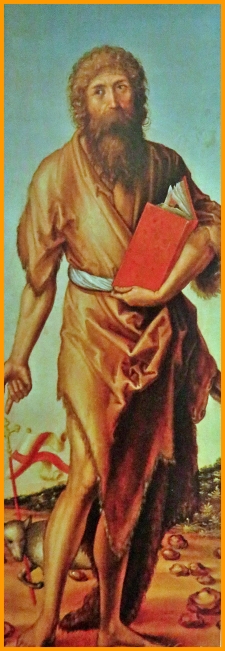
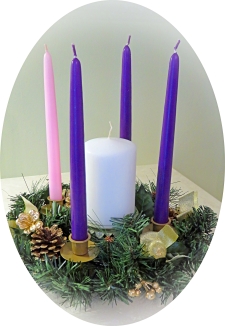 Yesterday was the first Sunday in Advent—a season when Christians throughout the world prepare for the coming of Christ. For most of my life, I attended liturgical churches where, on each of the four Sundays in this season, we’d sing “Oh, Come, Oh Come, Immanuel” as the Advent candles were lit. Although this song is sung by 21st century Christians, its words easily could have been sung by 1st century Jews. Immanuel means “God with us” and, after centuries of being subject to pagan nations, they yearned for God to come and ransom their captive land.
 The book of Leviticus outlined several things that could make someone ceremonially or ritually unclean. These things included bodily discharges, touching a corpse, and skin infections, as well as contact with any unclean person or thing. By Jesus’ day, even entering a Gentile’s home made someone unclean. Anything and anyone an unclean person touched became unclean and, anyone who touched them or what they touched also became unclean.
