
Just make sure you stay alert. Keep close watch over yourselves. Don’t forget anything of what you’ve seen. Don’t let your heart wander off. Stay vigilant as long as you live. Teach what you’ve seen and heard to your children and grandchildren. [Deuteronomy 4:9 (MSG)]
Generation after generation stands in awe of your work; each one tells stories of your mighty acts. [Psalm 145:4 (MSG)]
 Stories—everyone loves a good one and we all have stories to tell. My children loved hearing their Grandpa tell stories of boyish pranks like stealing watermelons and tipping over outhouses but it wasn’t just his tales of mischief they enjoyed. They relished hearing about him working on the farm, playing basketball and wrestling, working his way through college, having a victory garden, and starting a business. The stories we never heard, however, are the ones I wish he had shared: the stories of his faith journey. He was a Christian, yet I don’t know how he came to be such a man of faith. I know he met his wife at a church social and they both attended the Lutheran church in our town, but that doesn’t tell me when and how the Holy Spirit truly entered his life. It doesn’t tell me about the times he might have doubted or been afraid or the times he knew without question that God was holding his hand or had answered his prayers.
Accounts of faith journeys are some of the best stories we’ll ever hear. It’s not just from pulpits or lecterns that I’ve heard people chronicle their faith journeys. These stories came from people just like you and me: people who openly shared their wounds and scars and the way God changed their lives. They spoke of mental illness, alcoholism or physical abuse or told of losing a loved one, their health or even their faith. I’ve heard a Gideon tell how the Bible guided him to Jesus, an addict tell how a 12-step program brought him to Jesus, and a minister tell about his time in prison. I’ve heard people tell of reaching the depths of despair when they thought life was impossible and others tell of miraculous healing. These stories had little or nothing to do with what church they attended; they had everything to do with what God did with, for and to them. They were the testimonies that came from their tests and the messages that came from their messes and I am thankful to those who shared their lives so openly.
After ridding him of demons in Gerasenes, Jesus told the once possessed man to return home and tell his story. Can you imagine what it was like to hear his testimony or the testimony of Paul when he told of meeting Jesus on the road to Damascus? Can you picture what it was it like to hear Peter speak of walking on water or Bartimaeus tell of regaining his sight? The woman caught in adultery would have had a powerful testimony to the forgiveness of Jesus and Mary Magdalene to His resurrection. Granted, not all of us have stories as remarkable as theirs, but we all have stories about the way Jesus has touched our lives and we don’t have to be missionaries, ministers, or Biblical scholars to share them. We are, after all, disciples of Christ!
What’s your story? Who should you tell?
I love to tell the story of unseen things above,
Of Jesus and His glory, of Jesus and His love. …
I love to tell the story, ’twill be my theme in glory,
To tell the old, old story of Jesus and His love.
[A. Katherine Hankey]
 Do you think you can explain the mystery of God? Do you think you can diagram God Almighty? God is far higher than you can imagine, far deeper than you can comprehend, Stretching farther than earth’s horizons, far wider than the endless ocean. [Job 11:7-9 (MSG)]
 The story was told of a devout Christian woman who, after moving to a new town, visited the local church: the Church of Holier than Thou. When the children’s choir sang the prelude, she was so happy to hear their angelic voices that she applauded at the end of their song. An usher came up and whispered in her ear, “Ma’am, we don’t applaud in this church.” She apologized for the disturbance and the service continued. When the pastor gave his sermon, she was so moved by his words that she shouted out an “Amen!” in response. The usher returned to her side and again sternly instructed her, “You’ll have to restrain yourself here in the Church of Holier than Thou.” Chagrined, the woman promised to behave and the service continued. The choir rose and sang a beautiful medley that included God of our Fathers and How Great Thou Art. Overcome by the words of praise, the woman shouted out “Hallelujah” and “Praise God!” at the song’s conclusion. The usher strode up to her and said, “Lady, you’re causing a disturbance. You’ll have to leave!” The poor woman responded, “I just couldn’t help myself; I was overcome by the joy of the Lord!” In a huff, the usher responded, ‘Well, you sure didn’t get it here!”
 Don’t panic. I’m with you. There’s no need to fear for I’m your God. I’ll give you strength. I’ll help you. I’ll hold you steady, keep a firm grip on you. [Isaiah 41:10 (MSG)]
 Proverbs 31 is said to have been written by King Lemuel. We only know that Lemuel was “the king of Massa,” possibly an Arab king, his name means “devoted to God,” and his words were written somewhere between the tenth and sixth centuries BC. Attributing his words to counsel from his mother, the first nine verses sound like the sort of thing a queen-mother would tell son about government and the dangers of wine and bad women. Verses 10 through 31, however, are an acrostic poem outlining the qualities of the ideal wife.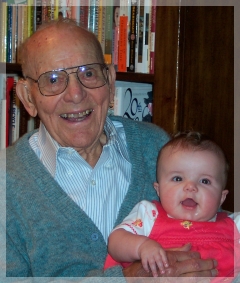
 Devotions of the Heart