
Hear my prayer, O Lord; listen to my plea! Answer me because you are faithful and righteous. … Show me where to walk, for I give myself to you. … Teach me to do your will, for you are my God. May your gracious Spirit lead me forward on a firm footing. [Psalm 143:1,8b,10 (NLT)]
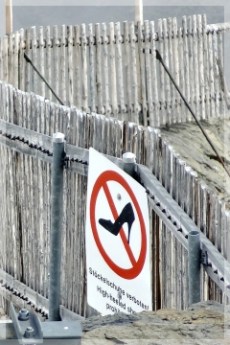 Many years ago, I was facing a difficult decision about a project. In spite of praying, pondering, searching Scripture for direction, and consulting with wise advisors, I was still in a quandary. Nothing brought me closer to a clear answer to my dilemma. Although it seemed like a good idea (at least in theory) and I felt like I should want to be part of it, doubts kept nagging at me. Wanting God to make known His will, I prayed the words of Psalm 143:10: “Teach me to do your will, for you are my God. May your gracious spirit lead me forward on a firm footing.”
The phrase “firm footing” reminded me of a sign I’d seen at the top of the Schilthorn in the Swiss Alps. Warning that high-heeled shoes shouldn’t be worn while hiking the mountain, the caution seemed to demonstrate a firm grasp of what seemed obvious. The steep slope was covered with scree and would prove precarious even for a properly equipped and skilled hiker! I realized the footing on this particular project felt anything but firm. In spite of its good intentions, it was as ill-considered as wearing a pair of strappy high heels while hiking the Schilthorn. While there’d been no cautions about prohibited footwear, I’d seen plenty of other warning signs about the venture; I just hadn’t wanted to heed them. It’s easy to confuse what we want to do with what God intends for us or to think we’re hearing God’s voice when it is only ours speaking louder than His!
Had I been reading any other Bible translation, rather than “firm footing,” the verse would have read level ground, land of uprightness, level pastureland, or good paths. Whether those words would have resonated with me the way “firm footing” did, I don’t know. But, as God would have it, I was using my NLT Bible and I finally understood the project was not right for me.
God has challenged, admonished, cautioned, and tested me but He has never steered me wrong. Even when I haven’t especially liked God’s task for me, He’s always given me a sense of peace along with His mission, even when it meant stepping into unknown territory. Admittedly, obedience often has upset my plans, meant more work, pushed me out of my comfort zone, or challenged my capabilities, but it always has led to peace. The sense of peace I had as soon as I declined this undertaking told me that I’d finally found and followed God’s will.
If we don’t have peace about a choice we’ve made, if we don’t feel confident in our walk, it’s time to stop, reconsider, and pray. We’ll only know we’re on firm footing and following His plan when God gives us peace about our decision.
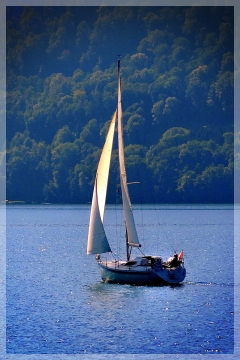 The anchor, the Christian symbol of hope, is the most prevalent of all the Christian symbols found in the Roman catacombs. In fact, all of the symbols, paintings, mosaics, and reliefs found in the miles of labyrinth-like narrow tunnels and thousands of graves in the catacombs reflect hope in some way. Instead of the dark funereal images you might expect in an underground cemetery, the white walls of the Christian catacombs feature living things like flowers and birds along with Bible stories expressing hope in God’s plan of salvation. Prominent themes from the Old Testament include Daniel emerging untouched from the lions’ den and Shadrach, Meshach, and Abednego exiting unharmed from the fiery furnace. Frequently depicted are the stories of Noah, who escaped from the flood, and Jonah who was delivered from the sea monster. Continuing the theme of deliverance are many images of the good shepherd so frequently mentioned in Psalms. New Testament stories usually showed Jesus raising the dead (with over fifty representations of Lazarus), healing people, and feeding the multitude. The art of the catacombs is all about man’s hope in God’s deliverance, provision, and plan of salvation.
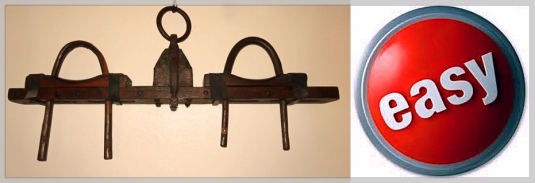
 My father had what’s often described as a Type-A personality. An impatient workaholic, he always took on more than he could handle. Life, for him, was one crucial task after another, none of which anyone else could do, at least not correctly. Always in a hurry, he never wanted to stop for anything, even when his gas gauge read precariously close to empty. Something more pressing always took precedence over a brief stop for gas. As a result, his car was often left on the roadside while he trudged off with a gas can to find the nearest service station. Instead of saving time, his refusal to stop cost him time. Living that way actually cost him his life; he died of a massive coronary at the age of fifty-six. It’s often been said that your in-box still will be full when you die and, indeed, his was. None of us can accomplish everything on our to-do list and we may well destroy both our relationships and ourselves while trying.
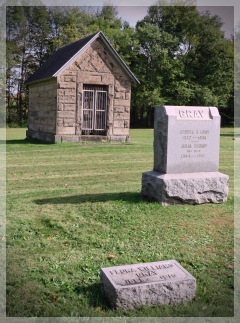
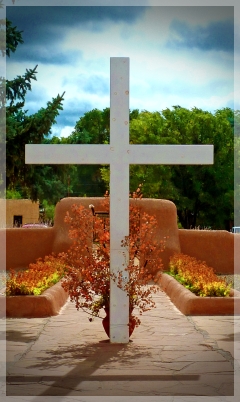 Yesterday, I wrote about Job’s lamentation. 19th century bible scholar George Granville Bradley said this about Job 3: “Where in the world will you find a sadder strain of more hopeless, uncontrolled, and unbroken lamentation and mourning? … Filled to the brim, they run over with pain.” I have to agree.
 Devotions of the Heart