
No, this is the kind of fasting I want: Free those who are wrongly imprisoned; lighten the burden of those who work for you. Let the oppressed go free, and remove the chains that bind people. Share your food with the hungry, and give shelter to the homeless. Give clothes to those who need them, and do not hide from relatives who need your help. [Isaiah 58:6-7 (NLT)]
 As I continued my Lenten fasting, Saturday’s fast was criticism. “A piece of cake,” I thought as I began the day. While criticism can be constructive, it usually is little more than complaint and, as it turned out, I’d blown it by 10:00 AM. Unfortunately, that wasn’t the last time I caught myself being critical. Even though Sundays during Lent are a day free of fasting, I tried going without criticism again Sunday morning. Surely a day without any critical judgment shouldn’t be that hard! I hate to admit, I botched it by 8:00 while watching the news! Granted, I’d already made three hours without complaint but that wasn’t my last criticism of the day. Not every comment was verbalized but whether I said it to myself or to someone else, criticism still is criticism. I continued fasting from criticism yesterday and this fast may turn out to be a year’s work!
Another day’s fast was discontentment—the feeling of not-enough—the feeling that keeps us from being grateful for all that we do have. Like some of my other fasts, I thought this one would be a breeze until I received an on-line ad for a sale at one of my favorite stores. In spite of an over-full closet, I felt discontent creep into my heart as I scrolled through pages of beautiful clothes. I know I have more than enough and yet I still wanted something more! There’s another one to work on for the rest of the year!
Yesterday’s assignment was to fast “God-as-job.” Just because we don’t receive a paycheck to serve the Lord doesn’t mean we can’t slip into thinking of our service as a job rather than a calling or thinking of our prayer and Bible study as a task or duty rather than a blessing. Our relationship with God is no more a job that the relationship we have with our loved ones. Nevertheless, when concentrating on doing for Him, we easily forget about being with Him and, when working for Him, we often stop hearing Him. When God is a job, we’re present in body but absent in spirit.
These weeks preparing for Resurrection Sunday brought me a growing awareness of my spiritual weaknesses. Rather than giving up something I enjoy like chocolate, alcohol, or TV, this fast was about revealing the kinds of things that restrain or control me. Moreover, there were hidden blessings in each sacrifice I made. These last several weeks have been a time of decluttering my mind, sweeping the dust bunnies from my soul, and regaining balance. Of course, I remain a work in progress but, like the author of Hebrews, I’m trying to rid myself of the things that weigh me down.
Lent is a time of going very deeply into ourselves… What is it that stands between us and God? Between us and our brothers and sisters? Between us and life, the life of the Spirit? Whatever it is, let us relentlessly tear it out, without a moment’s hesitation.” [Catherine Doherty]
 With nearly 20,000 tweets, the 2022 Twitter “Lent Tracker” revealed that the top Lenten fast for Twitter users was alcohol. Twitter and social networking took second and third places followed by Lent, sex, coffee, chocolate, swearing, men and meat. Using Twitter to give up Twitter seems somewhat counter-productive and giving up Lent for Lent makes no sense at all. Then again, since I don’t tweet, Twitter itself doesn’t make sense to me. In a survey by YouGov, people were asked what would be the hardest thing to abstain from for Lent and watching TV or using streaming services was the number one answer in all age groups except for ages 18 to 24. It’s no surprise that the hardest thing to relinquish for that group was social networking!
 Throughout His ministry, it seems that Jesus knew that the cross awaited Him but we don’t know if the human part of Him knew the exact details. Even so, it’s one thing to know what lays in the future but quite another to know it is about to begin within a matter of minutes. That night in Gethsemane, God showed Jesus the cup from which He would drink and He showed it in gruesome detail. Jesus viewed the betrayal, abandonment, sham trials, mocking, beating, flogging, and suffering torture on the cross along with the jeers of the crowd and the heartbreak and tears of His mother and the other women at the foot of the cross. Had Jesus not known exactly what the next 24-hours held, He would have been no different than the lambs brought to the Temple for sacrifice. They weren’t there of their own volition and had no knowledge of what would happen to them when presented to the priest. Rather than willing sacrifices, they were victims! The Lamb of God, however, needed to know the extraordinary cup—the horrible ordeal—that lay before him because, rather than a victim, He was a willing volunteer! His anguished prayers that night, however, tell us He didn’t look forward to it.
 We were having lunch at a local sports bar filled with televisions airing football, soccer, BMX, skiing, and hockey all at the same time. I find the restaurant’s many glaring screens disconcerting and were it not for the gyro my husband claims is the best one in town, we wouldn’t have been there. While sitting across from him, I looked up and saw two fighters viciously pounding one another in an MMA bout. Evoking images of Roman gladiators in battle and combining combat techniques from boxing, wrestling, judo, jiu-jitsu, and the back alley, this sport seems to allow just about everything short of eye gouging and biting! With neither fighter wanting to be the loser, no matter how battered or bloody, they continue until someone is knocked out, a fighter submits, or the referee stops it because of severe injury.
 When the Academy Awards were held recently, Oscars were presented for things like best director, best lead and supporting actors and actresses, and even best make-up and hair styling. If it’s true (as my theater teachers claimed) that, “There are no small parts, only small actors!” how is it that no awards were given to the best small part players? Regardless of the perfection with which they may have fulfilled their “bit parts”, their screen time was too short to be nominated for anything. To add insult to injury, they may have been known only as Dog Walker or Nurse #2! The small role, however, doesn’t mean the character played an insignificant part in the story. Nevertheless, after moving the story forward, the bit part players just fade into the background. Even so, while their names may be forgotten, the story wouldn’t have been the same had they not played their roles.
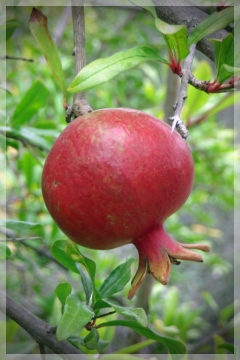 The culture of the 1st century was agrarian in nature so the analogies used by Jesus and the evangelists often were those of agriculture – seeds, soil, fruit, and vines. For example, when writing about the characteristics in the lives of those who follow Jesus, Paul spoke of the fruit of the Spirit. But, if Paul were writing to modern industrial society, he might have used a different metaphor. Instead of the fruit of the Holy Spirit, we might have the Spirit’s toolbox. Rather than fruit, we’d have God’s tools to help us to build His Kingdom. The saw in the box would be God’s peace that cuts worry and fear out of our lives. The sandpaper would be kindness as it smooths out life’s rough edges. Protective gear like safety goggles and steel-toed shoes would be the self-discipline that protects us from sin. Duct tape and WD-40 would be as essential as love, a flashlight would shine our joy, and we’d have clamps to hold us tight to the faith. God’s word would be our blueprint and, instead of being connected to a vine, the power tools would be plugged into the Holy Spirit’s power. Regardless of the metaphor, the Holy Spirit provides us with what we need to be more like Christ.
 Devotions of the Heart