
I take back everything I said, and I sit in dust and ashes to show my repentance. [Job 42:6 (NLT)]
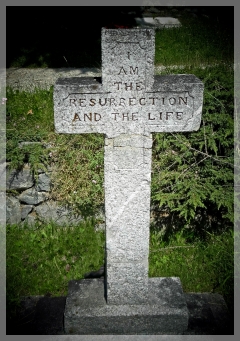 Today is Ash Wednesday and the beginning of the Lenten season. Marking the forty days Jesus spent fasting in the wilderness before beginning His ministry, Lent is a time many believers intentionally reflect on the life of Jesus: his ministry, sacrifice, death, and resurrection. For some Christians, today also starts a season of repentance, fasting, and self-examination.
Although many evangelical Christians do not observe Lent, it is one of the oldest traditions of the Church. A letter written by Irenaus of Lyons (c. 130-200) describes a pre-Easter fast that originated “in the time of our forefathers.” Originally lasting only a few days, in 325 AD the Council of Nicaea wrote about the occurrence of a 40-day season of fasting, penitence and self-examination. While it originally may have been a time for new Christians to prepare for Baptism, the whole Church soon joined in observing the Lenten season.
Although Lent is 40-days long, a look at the calendar tells us there are 46 days until Easter. Since those other six days are Sundays, they aren’t considered Lent. The disciples and most of the first followers of Jesus were Jews who had observed the seventh day (Saturday) as the Sabbath. Because Jesus rose from the dead on Sunday, however, the early apostles changed their Sabbath day of rest and worship to the first day of the week as a continued celebration of His resurrection. When the early church began to observe the season of Lent, Sundays (being mini-celebrations of the risen Christ) were exempt from fasting and other forms of self-denial.
Most Roman Catholics and some Protestants will observe this day with the imposition of ashes on their foreheads. Made by burning palms from the previous year’s Palm Sunday and mixing the residue with anointing oil, the ashes are a visible reminder of mankind’s mortality—God made us by breathing life into dust and it is to dust that our bodies shall return. [Genesis 3:19] The ashes also represent penance. Putting dust or ashes on the head was an ancient gesture of mourning and penitence; when people repented of their sins, they would dress in uncomfortable sackcloth and cover themselves with ashes. Today, some worshipers may leave church with the ash cross still on their foreheads as a way of carrying the cross into the world while, in other churches, worshipers will wash off the smudge as a sign that they’ve been cleansed of their sins.
Neither Ash Wednesday nor Lent is Biblically ordained and whether we observe either is a matter between us and God. We must keep in mind that observing any religious ritual or rite is not a way to earn salvation; we are saved by God’s grace through faith alone. Moreover, if we choose to observe Lent, Jesus made it clear that fasting and abstinence should be done humbly, sincerely, and discreetly. [Matthew 6:16-18] While it is okay to be seen fasting, it is not okay to fast so to be seen. Finally, let us remember that there is no specific season for repentance; we should repent of our sins all year long!
 In my granddaughter’s ethics class, the question was posed, “Should elected officials be held to a higher standard than the population that elected them?” She maintained that everyone should be held to the same high standard and I agreed. We have no right to hold anyone to a higher standard than the one we keep. I added, however, that having taken on the public’s trust, elected officials have an obligation to hold themselves to the highest standards possible.
 Instead, be kind to each other, tenderhearted, forgiving one another, just as God through Christ has forgiven you. [Ephesians 4:32 (NLT)]
 I’ve undertaken a series of “Abundance” exercises, the purpose of which is to take Jesus up on His promise of an abundant life. While my first assignment was to notice God’s abundance in His creation, the second was to let go of any guilt that I might be holding by asking God to forgive me (and believing that He truly has).
 After my walk through the bird sanctuary, I visited the ladies’ room. While washing my hands, I heard someone struggling to open the door. As I opened it, a heavy set woman shuffled unsteadily into the room. I gave her my arm as she explained that she suffers from MS. After assisting her into the stall, I offered to stay in the rest room until she was done. As I lent a hand while she washed up, she thanked me profusely for my help and explained that her husband didn’t feel comfortable coming into the ladies’ room to assist her. I said that she’d do the same for someone else if she could. “Of course, I would,” she replied, pulling out a cross from around her neck, ”I’m a Christian.” My reply was a simple, “As am I!” I helped her out to the lobby and got her settled back into her wheelchair. “You see,” she explained, “I just had to come. I want to see the painted-buntings again before I leave for home.” I hope she wasn’t disappointed; I, too, had wanted to see the buntings but they’d remained hidden in the trees that morning.
 In Jesus’s time, rabbis weren’t the Jewish equivalent of a minister or employed by a synagogue. A rabbi simply was a teacher of the Torah—what we’d call a sage—and his students were called disciples. Jesus’s disciples often called him “rabbi” and there were more than just twelve of them. Although we know the identity of His inner circle, we don’t know the names of the seventy-two he sent out to prepare towns for his visit or the two with whom He spoke on the road to Emmaus that Sunday morning.
 Devotions of the Heart