
 Anyone who listens to my teaching and follows it is wise, like a person who builds a house on solid rock. Though the rain comes in torrents and the floodwaters rise and the winds beat against that house, it won’t collapse because it is built on bedrock. But anyone who hears my teaching and doesn’t obey it is foolish, like a person who builds a house on sand. When the rains and floods come and the winds beat against that house, it will collapse with a mighty crash. [Matthew 7:24-27 (NLT)]
5-miles south of Marco Island, Florida, the remains of the Cape Romano dome house are a perfect illustration of Jesus’ parable about building on a solid foundation. When completed in 1982, the 2,400 sq. ft. house was on Tice Island and about 100 feet from the water. Consisting of six interconnected dome-shaped modules, it was eco-friendly and state-of-the-art. Completely self-sustaining, it had solar panels, generator, satellite TV, a 23,000-gallon cistern that collected water runoff, a water filtration system, and even air conditioning. While its rounded domes survived the hurricane force winds of Andrew in 1992, in the years following, water levels began to rise and destabilize the house’s foundation. After 2005’s Hurricane Wilma, the domes began leaning as the shifting sands eroded their foundation. As the beach retreated, the domes appeared to be marching into the Gulf and, by 2013, they were standing in 6-feet of water. After Hurricane Irma in 2017, two of the domes collapsed into the sea. The remaining domes now sit about 300 feet offshore. When the house was built in the 1980s, two other large houses stood on the island. But, like the dome house, they were no match for Florida’s storms that sucked the sand beneath them right back into the Gulf of Mexico; they, too, are a thing of the past!
Before erecting this house, the owner built a prototype in Tennessee to test his design and it still is standing. Since sand from the beach was used for the concrete, the sand was analyzed to make sure it had the proper aggregate for construction. The problem, however, wasn’t with the concrete or the domes’ unique design; the problem was with the choice of foundation! Rather than bedrock, it was sand!
The Sermon on the Mount concludes with the parable of The Wise and Foolish Builders. Israel is known for torrential rains that cause floods and, when the winter rains came, the Jordan River would pour into the sea causing it to overflow its banks. While the sand around the Sea of Galilee was hard on the surface during the hot summer months, a wise builder would not be fooled those conditions. He’d dig down as far as ten feet below the surface to reach the bedrock for the foundation of the house. The foolish builder, however, takes the easy way and doesn’t dig down to the bedrock. Like the homes on Tice Island, both homes would look secure in good weather. It was only when the storms hit that the difference would become obvious. Houses built on the bedrock can withstand floods and erosion while those built on sand won’t.
Having been raised by a builder, Jesus knew His topic well but He wasn’t giving a lesson in construction. Many of His listeners had built their lives on surface righteousness—one of cursory adherence to the letter of the Law without actually building a deep faith in and obedience to God. No matter how carefully they observed the outward rituals of Judaism, without an inner relationship with the Lord, they had no foundation. They’d built something that looked good on the outside but was weak on the inside and would not stand strong during life’s tempests and turmoil.
It’s inevitable that one or more storms will pummel us and challenge our foundation and this parable still applies to us. Foolish builders choose to build their lives on worldly things like the false gods of wealth, status, looks, power, and self. However, their lives will crumble and collapse when those things disappear. As with the dome house, it may not occur all at once but it will happen. Because wise builders build their lives on faith in the unchanging Lord and His Word, they can withstand life’s challenges. If our foundation is laid in the bedrock of Jesus and Scripture, while battered and bruised, we will remain standing.
When the homes on Tice Island originally were built, they looked sturdy—but looks are deceiving. Without a firm foundation, they couldn’t stand; neither can we! How firm is your foundation?
 Although Jesus performed many miracles, when compared to the illusions performed by various well-known magicians, they aren’t all that impressive. Jesus emerged from the tomb on the third day but David Blaine buried himself alive in a plexiglass coffin under a 3-ton water-filled tank for seven days and nights! Calling Lazarus out of the tomb after several days was impressive but only his family and some mourners were there to see it. When David Blaine emerged from the 6-ton block of ice in which he’d been encased for over 63 hours, thousands in Times Square were there and even more watched it on television. Granted, Blaine fell short of his 72-hour goal but the man knows how to draw crowds! Couldn’t Jesus have done something similar?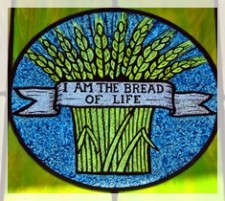
 Matthew and Mark tell of a second time Jesus fed a multitude. Jesus had been north of Galilee in Tyre and Sidon before going south to the Sea of Galilee and on to the region of the Ten Towns or Decapolis. Once there, a huge crowd assembled and set up camp around Jesus as He healed and preached. After three days on the hillside, the crowd ran out of provisions and Jesus voiced His concern. Just like the first time they were faced with a hungry crowd, the disciples don’t know what to do, even though the solution was standing right in front of them. After they found seven loaves and a few fish, Jesus miraculously turned that into a feast for 4,000 men (plus women and children) with seven large reed baskets of food remaining!
 Other than His resurrection, the feeding of the 5,000 is the only one of Jesus’ miracles recorded in all four gospels. Wanting some quiet time, Jesus and the disciples went by boat to a remote area near Bethsaida. Because the crowd followed them, Jesus spent the rest of day healing and teaching. When the disciples asked Jesus to send the people home so they could eat, Jesus said to feed them. All four accounts agree that only five loaves and two fish were available, that 5,000 men (along with women and children) ate as much as they wanted, and that the left-overs filled a dozen wicker hand-baskets.
 Last week, a devotion I read asked, “What is the worst sin?” How would you answer it? While the “Seven Deadly Sins” (pride, greed, lust, envy, gluttony, wrath, and sloth) are all wrong, I’m not sure they belong at the top of the list. Would it be idolatry, murder, stealing, or adultery? What about the heinous sins of mass murder, genocide, torture, or the abuse of children?
 Devotions of the Heart