ON MARCH 25 (Part 1)

So the Word became human and made his home among us. He was full of unfailing love and faithfulness. And we have seen his glory, the glory of the Father’s one and only Son. [John 1:14 (NLT)]

If we were living in England or any of its colonies between 1155 and 1752, today would be New Year’s Eve. Back then, the British Isles used the Julian calendar. Named after Julius Caesar, the calendar year originally began January 1. After the fall of the Roman Empire, however, the new year’s onset gradually changed to the first day of spring. While starting a new year in the dead of winter seemed counter-intuitive, beginning it on March 25, the date of both the spring equinox and the Christian Feast of the Annunciation of Christ’s Birth, seemed a more logical way to start the year.

The Julian calendar, however, miscalculated the adjustments needed for leap years as well as the date of the spring equinox. Wanting Christians to celebrate Easter on the correct date, Pope Gregory instituted a new liturgical calendar with a better way of calculating leap years in 1582. Called the Gregorian calendar, January 1 was set as the beginning of the year. While March 25 no longer marked the equinox, it remained the date of the Annunciation. Although much of Roman Catholic Europe adopted Gregory’s calendar, Protestant England resisted and continued to follow the Julian calendar until finally adopting the Gregorian one in 1752.

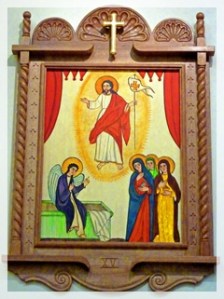
While no longer New Year’s Day, for those in liturgical churches, tomorrow (March 25) is known as the Annunciation of our Lord. Commemorating the angel Gabriel’s visit to the Virgin Mary, it is a celebration as much Protestant as it is Roman Catholic. The Annunciation was celebrated as far back as the fourth or fifth century and its March date was set in the seventh.

Let’s not forget that the story of Jesus didn’t begin in Bethlehem; it began in Nazareth nine months prior to that night. It was when Mary became pregnant that God became incarnate—a human being made of flesh and blood. Granted, He was only two cells fused together at first. Nevertheless, that zygote had everything in it to become the man Jesus. It divided again and again, the embryo grew, the cells began to differentiate, and the fetus developed everything needed to live outside His mother. Since sin-filled man was incapable of going to God, on that day, our perfect God came to us. Fully God and fully man—that baby boy forming in Mary’s womb was the promised Messiah and savior of mankind!

While Jesus’ incarnation is the core of our Christianity, it is difficult to understand and, for some people, impossible to believe. Nevertheless, the God who spoke the world into creation, created night and day, scattered the stars through the sky, filled the oceans with water, and populated the earth with living plants and animals could certainly manage to plant a fetus in a womb without going through the ordinary steps. When Mary assented to God’s will, Jesus was conceived through the power of the Holy Spirit!

Of course, since we really don’t know when Jesus’ birth took place, we don’t know the date of His conception. Nevertheless, having grown up in a liturgical church, I find a richness and strength in remembering and celebrating events in the life of Christ (even if the dates are wrong). Luke’s gospel account of Gabriel’s visit to Mary seems more appropriate in this spring season of new beginnings and fresh starts than in winter, a time of dormancy. On what I hope to be a beautiful spring day for you, please take the time to read the account of this blessed miracle found in Luke 1:28-36. Remember to thank God for His entry into the world as a man so that He could save humanity.

Jesus Christ became Incarnate for one purpose, to make a way back to God that man might stand before Him as He was created to do, the friend and lover of God Himself. [Oswald Chambers]

Without question, this is the great mystery of our faith: Christ was revealed in a human body and vindicated by the Spirit. He was seen by angels and announced to the nations. He was believed in throughout the world and taken to heaven in glory. [1 Timothy 3:16 (NLT)]

Copyright ©2025 jsjdevotions. All rights reserved.

DIRTY CUPS

Woe to you, scribes and Pharisees, hypocrites! You clean the outside of the cup and dish, but inside they are full of greed and self-indulgence. Blind Pharisee! First clean the inside of the cup, so that the outside of it may also become clean. [Matthew 23:25-26 (CSB)]

When I put my mug under the hot water tap, I saw the stain. Fresh out of the dishwasher, the mug was clean on the outside but had a dark tea stain inside. As I applied some elbow grease and Bon Ami, I thought of Jesus’ criticism of the Pharisees. Like my mug, their exterior looked spotless but their interior was soiled. Unlike my tea-stained mug, however, it would take more than scouring powder to correct their problem. Rather than stained by tea tannins, the Pharisees were tainted by a host of sins starting with hypocrisy and moving right through to pride, judgment, self-righteousness, and more.

More interested in their external righteousness than God’s holiness, the Pharisees developed ways of appearing godly without being godly. Conspicuous in their strict adherence to both the oral and written law, they made a show of their piety. With their focus on external purity and cleanliness, like my mug, they looked good on the outside. But, as we know, looks can be deceiving! Appearing to be godly isn’t the same as having God in our hearts!

While scouring the mug, I wondered if I, like the Pharisees of old, had some internal stains that needed removing. Is there a disconnect between my head and heart—a discrepancy between my external behavior and my internal thoughts and motives? Am I seeking to glorify God with my words and actions or am I pursuing the approval and admiration of people? Could I be I more interested in looking good than being and doing good?

For that matter, am I ever easily offended or overly critical of others in small matters? Do I nitpick about things of no consequence, assume the worst about other people, or pass judgment on them? Have I been known to profess knowledge of God’s law without practicing obedience to it? Do I ever justify my behavior while condemning the same thing in others or think of myself as more devout or virtuous than someone else? Are there times I boast of my accomplishments or diminish those of others? Like the Pharisees, could I be spiritually blind when it comes to my faults but the possessor of 20/20 vision when it comes to the faults of others?

Guilty as charged; my head and heart are not always on the same page. I’m as stained on the inside as were the Pharisees. Clearly, the Spirit and I have some work to do that has nothing to do with scouring powder!

Just because we’re not ancient Pharisees who enlarged the phylacteries on their arms, lengthened the tassels on their robes, and stopped in the middle of the road to make a show of bowing low during their prayers doesn’t mean we’re not like them. The weeks of Lent are a good time to take a hard look at the inside of our cups (not the ones we use for coffee and tea) and do some serious scrubbing! For the Pharisees of yesterday and today, godliness, like beauty, is only skin deep. True godliness, however, should go through and through into our innermost being.

Sometimes we emulate the Pharisees more than we imitate Christ. [R.C. Sproul]

A Pharisee is hard on others and easy on himself, but a spiritual man is easy on others and hard on himself. [A.W. Tozer]

Woe to you, scribes and Pharisees, hypocrites! You are like whitewashed tombs, which appear beautiful on the outside, but inside are full of the bones of the dead and every kind of impurity. In the same way, on the outside you seem righteous to people, but inside you are full of hypocrisy and lawlessness. [Matthew 23:27-28 (CSB)]

FASTING ALLELUIA

Hallelujah! Give thanks to the Lord, for he is good; his faithful love endures forever. [Psalm 106:1 (CSB)]

Hallelujah! Give praise, servants of the Lord; praise the name of the Lord. [Psalm 113:1 (CSB)]

low bindweed“Alleluia” (or “Hallelujah”), like “Amen,” is a word familiar throughout Christendom. Meaning “Praise the Lord,” it is the transliteration of the Hebrew hallel, meaning to shine, be boastful, praise, or rejoice and Yah, an abbreviated form of the name of the Lord: YHWH (Yahweh/Jehovah). Although two distinct words, they were consistently written as one (halleluyah).  In the Old Testament, this extraordinary word occurs only in Psalms. Usually found at the beginning, halleluyah was an imperative call to praise or boast in the Lord—a call to shine a light upon Him! Whether we spell this beautiful word the Latin way as “alleluia” or the Greek way as “hallelujah,” the meaning is the same. Many modern translations simply translate it as “Praise the Lord!”

On the Sunday prior to Ash Wednesday, the pastor at our liturgical church selected “All Creatures of our God and King” for the opening hymn at worship. As we sang its many alleluias, I knew we wouldn’t be singing any more of them until Easter. When our pastor was a girl, on the Sunday before Lent, the church’s children would process into the sanctuary carrying a banner with the word “Alleluia” on it. After being folded and placed in a box under the cross, that word and banner wouldn’t reappear until Easter morning. Although we don’t physically put away or “bury” any alleluias at our church, she continues the ancient tradition by eliminating them during Lent.

As a way of highlighting the solemnity of Lent, the “putting away” or depositio (meaning burial) of the alleluia goes back to medieval times. Choir boys would process into church with crosses, candles, and holy water while carrying a casket containing an “Alleluia” banner. The coffin was then buried in the garden until it was unearthed during the Easter vigil. In Paris, a straw figure bearing an “Alleluia” of gold letters was carried out and burned in the churchyard. After the Reformation, many Protestants continued the tradition of eliminating alleluias during the somber penitential season of Lent.

One modern writer compared putting away our alleluias during Lent to putting away all our Christmas decorations in January. If we had the tree, nativities, and wreaths out all year long, they’d lose their significance. Commonplace rather than special, they’d be ignored and unappreciated. Because we put them away in January, they’re treasured when we bring them out again in Advent! Without any alleluias during Lent, we appreciate them even more on Easter morning as we praise the Lord with every “Alleluia” in “Christ the Lord is Risen Today.”

While many hymns include “alleluia” or “hallelujah,” it occurs in only four New Testament verses, all in Revelation 19, when a heavenly chorus sings “Hallelujah!” at the marriage supper of the Lamb. While Lent is a time to focus on recognizing our sin and need for salvation, fasting from alleluias for seven weeks reminds us that our story is not yet complete. The day will come when Christ returns and God’s victory is completed. When that happens, we will be part of that heavenly chorus and praise the Lord while singing “Hallelujah!”

The greatest adventure in life—knowing God—begins at the Cross of Christ and ends with a “Hallelujah!” [David Jeremiah]

Then I heard something like the voice of a vast multitude, like the sound of cascading waters, and like the rumbling of loud thunder, saying, Hallelujah, because our Lord God, the Almighty, reigns! [Revelation 19:6 (CSB)]

Copyright ©2025 jsjdevotions. All rights reserved.

A LENTEN SOJOURN

And he was in the wilderness forty days, being tempted by Satan. And he was with the wild animals, and the angels were ministering to him. [Mark 1:13 (ESV)]

broom groundselAs I pondered my goals for this year’s Lenten practice, I remembered Alica Britt Chole’s suggestion to “consider Lent as less of a project and more of a sojourn.” While we often encounter the word ”sojourn” in Scripture, it’s not a word typically used today. Although the basic meaning of gûr, the Hebrew word translated at sojourn, is to “live, settle, dwell,” gûr usually included the sense of it being a temporary or transient stay. Typically, a sojourner was someone living outside their clan or a noncitizen in a strange place. Because of famine, Israel sojourned in Egypt for 430 years and, because of their disobedience, they sojourned forty years in the desert before entering the Promised Land. It is Jesus’ 40-day sojourn in the wilderness before entering His public ministry that is remembered in Lent.

The usual question prior to Ash Wednesday is, “What are you giving up for Lent?” and the question following Easter is, “How did you do?” If someone else doesn’t ask it, we ask it of ourselves. Were we successful in refraining from sweets, social media, criticism, shopping, or whatever we gave up? Did we meet our goal of reading the four gospels or memorizing 40 Bible verses? Was our commitment to a daily random act of kindness kept? With its clear start and end dates, Lent easily can turn into an assigned forty-day project. It’s tempting to look at our Lenten practice as we might a New Year’s resolution—we set an objective, create a plan, track our progress, and evaluate our success or failure. God, however, is a relationship, not an obligation or duty! With their thinking that salvation lay in strict observance of the oral and written Law, the Pharisees turned God into a job; we mustn’t make the same mistake with Lent.

If, however, we view Lent as a sojourn rather than an assignment, it becomes an experience instead of a chore. Rather than an objective that must be completed successfully on the 40th day, Lent becomes a temporary journey in the wilderness with God. Rather than 40 days of trying to meet goals, it becomes a blessed season of retreat—a time to hear God’s voice in the silence of the wilderness—a time to feel His presence in the stunning colors of the desert sunset, the stark contrast between sun and shadow, the enormous saguaros cactus with its upturned arms, and the wildflowers determined to grow in this parched and barren land. Without a timeline, we can pause to taste the nopales and fruit of the prickly pear and look for road runners and Gila monsters. Unhindered by city lights, we see God’s majesty in the spectacular view of the stars. Granted, we probably won’t be retreating to the desert but, when we think of Lent as a sojourn with God in the wilderness, it can become a close encounter with Him rather than a job for Him!

Describing Lent as a journey of “bright sadness,” Orthodox Reverend Alexander Schmemann says, “The purpose of Lent is not to force on us a few formal obligations, but to ‘soften’ our heart so that it may open itself to the realities of the spirit, to experience the hidden ‘thirst and hunger’ for communion with God.” Through fasting, prayer, study, and reflection, may we grow closer to God as we sojourn through the wilderness of this Lenten season into the joy of the Resurrection!

He has told you, O man, what is good; and what does the Lord require of you but to do justice, and to love kindness, and to walk humbly with your God? [Micah 6:8 (ESV)]

Copyright ©2025 jsjdevotions. All rights reserved.

FASTING THOUGHTS

You have heard that our ancestors were told, “You must not murder. If you commit murder, you are subject to judgment.” But I say, if you are even angry with someone, you are subject to judgment! … You have heard the commandment that says, “You must not commit adultery.” But I say, anyone who even looks at a woman with lust has already committed adultery with her in his heart. [Matthew 5:21-22a,27-28 (NLT)]

little blue heronWe tend to think of fasting during Lent as abstaining from certain foods, drinks, or activities. Several years ago, however, I was asked, “What if you fasted regret? What if your friends fasted comparison? What would be the fruit of fasting stinginess?” Those questions proposed an entirely different kind of fast than refraining from sweets or social media. In truth, fasting from things like self-righteousness, discontent, and criticism is probably harder (and more meaningful) than giving up energy drinks or dining out.

Even though we have freedom of speech, we can’t shout “Fire!” in a crowded theatre or “Bomb!” in the security line at the airport. In the silence of our minds, however, we can shout anything at anyone, anywhere, whenever we want, with no one ever knowing! We can secretly call people unpleasant names and even wish ill upon them! We can be charming and polite to the ex-spouse who abandoned us while we wreak all sorts of revenge on them in our minds. We can be civil to the false friend who betrayed us or the contractor who deceived us while, in our imaginations, we’re hitting back to even the score. We appear to have “turned the other cheek” when, in our hearts, we haven’t.

Since our thoughts are far less easy to control than our actions, we’d like to think of them as less important. When we entertain wicked, vengeful, or hurtful thoughts, we think we’re not sinning because we’d never actually do the terrible things we’re picturing. Since we won’t burn down the house of the man who deceived us or climb in bed with the sexy hunk at work, we think we’re innocent of wrongdoing by thinking about them. But are we? Remember the words of Jimmy Carter that nearly cost him the 1976 election: “I’ve looked on a lot of women with lust. I’ve committed adultery in my heart many times.” Upon reading Jesus’ words in Matthew 5, Carter’s confession, while ill-advised politically, was true! While thoughts and actions can have vastly different results, our Lord made it quite clear that our thoughts are as important as our actions. Jesus knew the evil thoughts of the Scribes and he knows ours.

Fortunately for Jimmy Carter and the rest of us sinners, when Jesus told us to cut off our hands or gouge out our eyes if they cause us to lust, He was using hyperbole; otherwise, we all would be missing both hands and eyes. Nevertheless, Jesus was stressing the importance of avoiding sin. Sin is not a matter of the eyes and hands; it is a matter of the heart!

While we can’t control the temptations of this fallen world, we can control our evil thoughts. We can renounce every one of them and replace them with godly thoughts. Max Lucado describes it this way: ”You can be the air traffic controller of your mental airport. You occupy the control tower and can direct the mental traffic of your world.” Lucado explains that, when we keep the runway filled with godly thoughts, the bad ones circling around have no place to land. Our thoughts about other people are as much a part of love for them as are our actions.

Instead of fasting from caffeine or social media during Lent, what if we deliberately and prayerfully fasted from things like anger, lust, envy, animosity, conceit, disdain, spite, and impatience? How would our lives change if, instead of only forty days, we fasted from them all the time?

We use God’s mighty weapons, not worldly weapons, to knock down the strongholds of human reasoning and to destroy false arguments. We destroy every proud obstacle that keeps people from knowing God. We capture their rebellious thoughts and teach them to obey Christ. [2 Corinthians 10:4-5 (NLT)]

And now, dear brothers and sisters, one final thing. Fix your thoughts on what is true, and honorable, and right, and pure, and lovely, and admirable. Think about things that are excellent and worthy of praise. [Philippians 4:8 (NLT)]

Copyright ©2025 jsjdevotions. All rights reserved.

OBSERVING LENT

‘We have fasted before you!’ they say. ‘Why aren’t you impressed? We have been very hard on ourselves, and you don’t even notice it!’ “I will tell you why!” I respond. “It’s because you are fasting to please yourselves. Even while you fast, you keep oppressing your workers. What good is fasting when you keep on fighting and quarreling? This kind of fasting will never get you anywhere with me. You humble yourselves by going through the motions of penance, bowing your heads like reeds bending in the wind. You dress in burlap and cover yourselves with ashes. Is this what you call fasting? Do you really think this will please the Lord?” [Isaiah 58:3-5 (NLT)]

grey catbirdEvery evening, a man went to the local pub and ordered three beers. When asked why three, he explained that he ordered the two extra beers in honor of his two dear brothers who lived far away. One evening, when the man ordered only two beers, the bartender assumed the worst and extended sympathy for the loss of a brother. Correcting the bartender, the man said his brothers were both fit as fiddles and the beers were for them. “It’s me that’s not drinking tonight,” he explained. “You see, I’ve given up beer for Lent!”

Yesterday was Ash Wednesday, the first day of Lent, a period of forty days (not counting Sundays) that commemorate Jesus’ forty days of fasting and temptation in the desert. Originally, Lent was a time of fasting, penitence, and reflection in preparation for an Easter baptism. Today, many people continue to observe this tradition with some sort of fast or spiritual discipline before Easter. While they tend to “give up” something in the way of food, entertainment, or pleasure, the most common fasts usually have to do with desserts, alcohol, chocolate, social media, television, or coffee from Starbucks or Dunkin’. Since Lent’s observation isn’t founded in Scripture, the choice to observe this season in some way is a personal one.

What we must never do is err in thinking that God will love us more for our Lenten sacrifice or that giving up something like gum, candy, beer, eating out, or YouTube has any bearing on our salvation. Jesus took care of our salvation on the cross and God’s love could never be greater than it is right now. No amount of sacrifice can earn God’s free gift of grace.

If we do choose to give up something for Lent, we make a mistake if we focus only on our sacrifice. After all, fasting from carbs or alcohol without prayer and Scripture are nothing more than a diet or “dry January.” Rather than focusing on ourselves, Lent is a time to focus on Christ and the sacrifice He made to give us the gift of salvation.

Although Jesus fasted, He never commanded us to do so. His words on fasting tend to focus on people’s hypocrisy when fasting—they often fasted to impress people with their holiness rather than grow closer to God. Self-sacrifice is not to be done ostentatiously but humbly, quietly, and privately. Regardless of how we choose to observe Lent, unlike the man at the bar, it should be done sincerely. God sees into our hearts and knows when we’re repentant and genuinely seeking Him or just going through the motions!

The purpose of Lent is not to force on us a few formal obligations, but to ‘soften’ our heart so it may open itself to the realities of the spirit, to experience the hidden ‘thirst and hunger’ for communion with God. [Alexander Schmemann]

“No, this is the kind of fasting I want: Free those who are wrongly imprisoned; lighten the burden of those who work for you. Let the oppressed go free, and remove the chains that bind people. Share your food with the hungry, and give shelter to the homeless. Give clothes to those who need them, and do not hide from relatives who need your help.” [Isaiah 58:6-7 (NLT)]

Copyright ©2025 jsjdevotions. All rights reserved.