
But the other criminal protested, “Don’t you fear God even when you have been sentenced to die? We deserve to die for our crimes, but this man hasn’t done anything wrong.” [Luke 23:40-41 (NLT)]
 We’re hosting family and friends for Thanksgiving dinner and I’m still planning the menu. One guest won’t eat anything green, another doesn’t eat seafood, one dislikes turkey, and two are vegetarians. While I’m still working on appetizers, salad, main course and sides, dessert is a given. Between the sweets our guests are bringing and my pecan pumpkin pie topped with caramel sauce and whipped cream, even the pickiest eater will be happy! I probably could please everyone with just desserts!
Thinking of eating just desserts reminded me of a show I saw several years ago about non-traditional Thanksgiving menus. Prepared by the owner of a confectionery, the entire meal consisted of sweets masquerading as traditional savory holiday dishes. The turkey was formed of dark and light chocolate and the mashed potatoes and gravy were a white cake heaped in a bowl, topped with buttercream frosting, and drizzled with butterscotch syrup. The dinner rolls were doughnuts, the yams were sweet pumpkin soufflé, and the peas were made of marzipan. After their initial dismay, everyone enjoyed eating just desserts. In fact, upon cleaning his dinner plate, one little boy asked for dessert!
The life God give us isn’t like that holiday dinner of just desserts; there always will be things like sadness, trouble, loss, and pain. We didn’t enjoy them the first time around and certainly don’t want second or third helpings. Nevertheless, like that little boy, rather than relishing whatever sweetness we’re given, we often think we deserve more. While we might prefer a life of just desserts, what we don’t want is one of just deserts!
You see, in spite of their similar pronunciation, the phrases “just desserts” and “just deserts” are not the same thing. “Just deserts” uses a now obsolete definition of “desert” as “something that is deserved” and precedes the mid-16th century concept of an after dinner sweet called “dessert” by several hundred years.
In fact, we’re blessed that God doesn’t give us our just deserts. As sinners, we don’t even deserve the blessings we’ve already been given. We certainly don’t deserve God’s love—a love so great that He sacrificed His only son for us. Without sin, Jesus didn’t get His just deserts when he suffered on the cross; He took our just deserts! Dying so that we might live, our Lord got what He didn’t deserve so that we could receive what we didn’t! We deserve condemnation and punishment but God’s mercy gives us love and forgiveness. Let’s be careful when we demand what we truly deserve from God; we don’t want Him to give us our just deserts!
The Gospel is good news of mercy to the undeserving. The symbol of the religion of Jesus is the cross, not the scales. [John Stott]
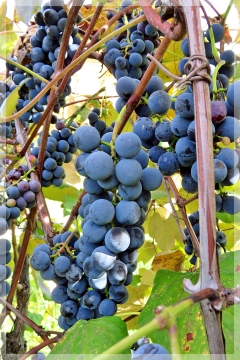 When explaining to some of John the Baptist’s followers why His disciples didn’t fast, along with the illustration of patching an old garment, Jesus compared His new way with winemaking. While many of us have sewn patches on clothing, few of us are experienced winemakers. Nevertheless, we know that today’s vintners ferment their wine in oak, stainless, concrete, or clay barrels rather than wineskins. Our only experience with wineskins may hearken back to college football games and ski trips when some fellows carried a wineskin filled with an alcoholic beverage hidden under their coats.
 You have stripped off the old human nature, complete with its patterns of behaviour, and you have put on the new one – which is being renewed in the image of the creator, bringing you into possession of new knowledge. In this new humanity there is no question of ‘Greek and Jew’, or ‘circumcised and uncircumcised’, of ‘barbarian, Scythian’, or ‘slave and free’. The king is everything and in everything! [Colossians 3: 9-11 (NTE)]
 My in-laws were great ones for giving theme parties. When they hosted a “Backwards Party,” guests entered through the back door, wore their clothes backwards (which my mother-in-law admitted made it difficult for the men), and ate dessert before dinner. At another get-together, attendees came dressed as children, received jump ropes and jacks, pulled taffy, and played games like “Mother May I?” and “Pin the Tail on the Donkey.” My introduction to their parties was in 1966 when they turned their house into a Prohibition era speakeasy and guests needed a password to enter. Women dressed as flappers while the men wore fedoras, vests, and spats. Another party had the theme, “Come as You Wish You Had Been.” My mother-in-law, dressed in shorts with a whistle around her neck, came as the PE teacher she once dreamed of becoming and my father-in-law dressed as the train conductor he once aspired to be. Other attendees dressed as ballerinas, weight lifters, princesses, cowboys, or baseball players.
 While sorting through comic strips I’d saved, I came across an old Beetle Bailey (written by Greg and Mort Walker). In it, the inept General Halftrack approaches the chaplain and says, “I’d like to talk to God like you do, but when I try to talk to him, He doesn’t answer.” Chaplain Stainglass replies, “Maybe you’ve been calling the wrong number!” Indeed, sometimes the silence seems deafening when we call on God but I don’t think it’s because we’ve called the wrong number. The general simply may have hung up too quickly! Abraham determinedly pled for the city of Sodom, Hannah untiringly prayed for a son, Elijah persisted in praying for rain, and the Syrophoenician woman stubbornly begged Jesus to heal her daughter. They continued to call and God answered them all! Then again, maybe the General was so busy talking, that he didn’t hear God answer him!
 Every breakfast, lunch and dinner, a recent house guest consumed between five and fifteen supplements like flaxseed and fish oils, magnesium, vitamin D, calcium, turmeric, ginger, cinnamon, and resveratrol (among others). Annually, people like our guest spend around $35 billion on supplements, vitamins, minerals, botanicals, and other substances to enhance their health. It doesn’t stop there; every year, five million diet books are published, at least 17 million cookbooks are purchased, and $33 billion is spent on weight loss products. Add to that all of the magazines, food channels, websites, blogs, and podcasts dedicated to nutrition, recipes, and weight loss and you have a nation of people who seem obsessed with what goes into their bodies.
