FARMA – Part 3

The kingdom of heaven may be compared to a man who sowed good seed in his field, but while his men were sleeping, his enemy came and sowed weeds among the wheat and went away. So when the plants came up and bore grain, then the weeds appeared also. And the servants of the master of the house came and said to him, “Master, did you not sow good seed in your field? How then does it have weeds?” He said to them, “An enemy has done this.” [Matthew 13:24-28 (ESV)]
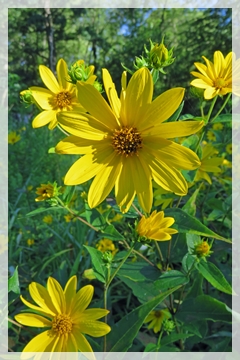
sunflowerWhile we usually reap what we sow, we also can receive unexpected and undeserved harvests! When we lived in the north, courtesy of God and nature, wildflower seeds took root in the field next to our house and Spiderwort, Sunflowers, Dame’s Rocket, and Wild Bergamot grew there without any effort on my part. Although I hadn’t sowed them, I never protested those beautiful wildflowers; I just thanked God for them. None of us are likely to complain to God about the many undeserved blessings He regularly bestows on us!

While we certainly don’t object when we get a harvest of blossoms, we’re sure to protest when we receive an unexpected (and seemingly undeserved) harvest of life’s thistles. Like the farmer who sowed high-quality seeds only to discover weeds growing in his field, we were distressed the year we discovered our beautiful field of wildflowers had been invaded by thistles. Although we hadn’t planted the invasive weeds, the unwelcome thistles were there!

Shortly before his eviction from Eden, Adam was told that the ground would yield thistles and thorns along with grain. That warning was both literal and figurative. Satan will spread his seeds wherever and whenever the opportunity arises and the enemy’s seeds of evil can invade people’s lives no matter how many good seeds they’ve sown. We can sow the seeds of love and fidelity but still be betrayed by an unfaithful spouse, we can work carefully and industriously but get downsized, we can drive cautiously and courteously but get hit by a drunk driver, and, even though we pray for and love our enemy, he may continue to hate us!

While we should expect more of the same when we sow thistle seeds, we’re perplexed when we’ve sown seeds of righteousness and get things like misfortune, difficulty, suffering, or loss. That’s the enemy assaulting us and we can’t allow his seeds of hatred, anger, resentment, doubt, or violence to take root in our hearts. Rather than wonder why, our job is simply to faithfully tend our fields and keep sowing seeds of righteousness. When the time is right, God will take care of the weeds and we’ll be part of a wonderful harvest.

If I ask, “Why me?” about my troubles, I would have to ask, “Why me?” about my blessings. … I take the good with the bad, and I try to face them both with as much calm and dignity as I can muster. [Arthur Ashe]

Therefore, my beloved brothers, be steadfast, immovable, always abounding in the work of the Lord, knowing that in the Lord your labor is not in vain. [1 Corinthians 15:58 (ESV)]

Copyright ©2021 jsjdevotions. All rights reserved.

FARMA – Part 2

Remember this—a farmer who plants only a few seeds will get a small crop. But the one who plants generously will get a generous crop. [2 Corinthians 9:6 (NLT)]

Illisnois corn field - farmWhile we often reap what we’ve sown, farmers don’t plant on one day and expect to harvest the next and neither should we. No matter how good the soil, it usually takes about two weeks for a corn shoot to appear and two to three months before it’s ready for harvest. Spiritual farming is even less predictable than growing corn and we shouldn’t expect immediate results after sowing seeds of God’s love and Word. Rarely does an apology yield instant reconciliation, words of correction yield an immediate change, or our first witness produce an instantaneous conversion. It often takes considerable plowing and sowing to soften a hardened heart.
In both agriculture and “farma,” even with the best seeds, richest soil, and the farmer’s diligence in tending the field, not every seed sowed will survive to harvest. Between insects, wildlife, and weather, millions of farm acreage are ruined every year. For example, between 2020’s derecho windstorm and its late summer drought, nearly one million acres of crops in Iowa were destroyed. When seeds of God’s love and Word have been sowed, instead of animals or weather, it is Satan who ruins the crop. Just as wildlife steal soybeans and corn, he tries to steal every seed sown in God’s name. Just as hail and wind can break a cornstalk, by breaking down people with storms of his making, the enemy attempts to keep seeds of righteousness from maturing.

Sadly, not every seed will bear fruit and not every hand extended in love will be accepted. Not every person to whom we witness will respond, not every hearer will believe, and not every soul will be saved. Nevertheless, we are farmers in God’s world and our job is to cultivate His fields and sow His seed. Like the local farmers, we don’t give up when the crop is slow in coming or the enemy ruins the harvest. Even if we have to replough and reseed, we faithfully continue to do our part by sowing the seeds of God’s love and Word.

With nearly a third of the world’s population Christian, there are plenty of potential farmers. Unfortunately, that percentage has remained about the same for more than a century and appears to be dropping. Apparently, we haven’t been sowing anywhere near enough seeds to defeat the enemy and bring forth a bountiful harvest.

He said to his disciples, “The harvest is great, but the workers are few. So pray to the Lord who is in charge of the harvest; ask him to send more workers into his fields.” [Matthew 9:37-38 (NLT)]

Copyright ©2021 jsjdevotions. All rights reserved.

FARMA – Part 1

Don’t be misled—you cannot mock the justice of God. You will always harvest what you plant. Those who live only to satisfy their own sinful nature will harvest decay and death from that sinful nature. But those who live to please the Spirit will harvest everlasting life from the Spirit. So let’s not get tired of doing what is good. At just the right time we will reap a harvest of blessing if we don’t give up. [Galatians 6:7-9 (NLT)]

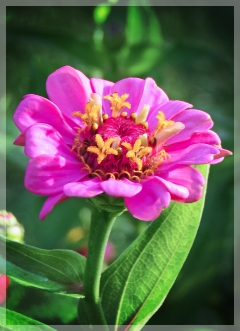
zinniaFound in Buddhism and Hinduism, the concept of karma is the idea that how you live your life now determines the quality of life you’ll have after reincarnation. Christians, however, believe that “each person is destined to die once and after that comes judgment,” [Hebrews 9:27] which means that karma, with its continual opportunities to get it right, is not compatible with Christianity. Nevertheless, the karmic idea of good and bad actions yielding similar consequences—that “what goes around comes around”—is present throughout the Bible. Because many of the Bible’s metaphors about cause and effect have to do with agriculture and farming, a pastor friend likes to call this concept “farma.”

When a seed is planted, it will produce a harvest only of that particular plant. Apple seeds only produce apples just as just as corn seeds only yield a harvest of corn. It’s much the same with people—we usually get whatever we plant in our relationships. More often than not, the seeds of kindness produce more kindness and thoughtfulness, the seeds of patience yield a harvest of patience and perseverance and, when truth is planted, the planter typically reaps truth and trust.

If, however, we plant weeds, that’s exactly what we’ll get. Just as thistle seeds won’t yield roses, seeds of rage won’t produce peace, those of confrontation won’t yield harmony, and seeds of selfishness won’t produce generosity. The harvest from seeds of deceit will probably be more lies while disloyalty reaps betrayal. We can’t sow hate and expect affection and compassion won’t bloom where callousness has been planted. When we sow discord, we should expect a harvest of conflict in return.

Good farmers and gardeners think seriously about the kind of seeds they’ll plant. They not only look for seeds that will yield a bountiful crop but also for ones that are resistant to weeds, disease and pests. Perhaps we need to spend some time every morning determining the sort of seeds we will plant in our lives and the lives of those we encounter during the day. What kind of crop do we want? What can we plant in the garden of our lives that will blossom into a bountiful harvest of good?

We plant seeds that will flower as results in our lives, so best to remove the weeds of anger, avarice, envy and doubt, that peace and abundance may manifest for all. [Dorothy Day]

My experience shows that those who plant trouble and cultivate evil will harvest the same. [Job 4:8 (NLT)]

Plant the good seeds of righteousness, and you will harvest a crop of love. [Hosea 10:12 (NLT)]

Copyright ©2021 jsjdevotions. All rights reserved.


WE CAN’T STAY IN SWITZERLAND

Anyone who isn’t with me opposes me, and anyone who isn’t working with me is actually working against me. [Matthew 12:30 (NLT)]

The Gospel is of such a nature, as to its offers and its claims, that it cannot tolerate indifference. [John Broadus]

The Matterhorn

I often say my daughter is our family’s Switzerland. If a dispute should occur between family members, while she is a sympathetic listener and wise advisor, like Switzerland, she remains neutral. Although staying impartial about certain issues is possible (and prudent when it involves family), there can be no neutral territory when it comes to Jesus.

We can be indifferent as to who wins the ball game, unsure of an explanation, apathetic toward a cause, impartial when it comes to a spat between our children, undecided about a candidate, and neutral about where we go for dinner but we can’t be wishy-washy when it comes to God! If we’re not fully for Him, we’re opposing Him. We can’t stay in Switzerland when it comes to believing in Jesus!

Indecision about some things carries serious risks. That was demonstrated last month when TikTok star Megan Alexandra Blankenbiller posted her final video from her hospital bed. As she struggled to catch her breath, Blankenbiller pleaded with her followers to get vaccinated against COVID-19. Rather than being anti-vax, she just hadn’t made up her mind about the vaccine. “It was a mistake,” she admitted while adding, “I shouldn’t have waited.” Nine days later the 31-year-old died. The previous month, an Alabama doctor urged the undecided to get their COVID-19 vaccine shots. In a Facebook post, Dr. Brytney Cobia wrote about her once healthy young patients who suffered from serious COVID-19 complications. “One of the last things they do before they’re intubated is beg me for the vaccine. I hold their hand and tell them that I’m sorry, but it’s too late.”

Even though it’s too late for people to get vaccinated once they’re infected, as long as people have breath in their bodies, it’s never too late to decide about Christ! That day on Calvary, as the unbelieving criminal hung beside Jesus, he mocked our Lord one minute and then professed belief in Him the next. Because Jesus assured him that, “Today you will be with me in paradise,” we know that last minute conversions are possible. Nevertheless, it’s not a smart idea to wait until the last minute. After all, people who wait until the 11th hour to repent might die at 10:30! St. Augustine said, “God has promised forgiveness to your repentance, but He has not promised tomorrow to your procrastination.”  While the choice we make about a vaccine will not affect how we spend eternity, the choice we make about Jesus will!

Deathbed repentance is burning the candle of life in the service of the devil, and then blowing the smoke into the face of God. [Billy Sunday]

Jesus told him, “I am the way, the truth, and the life. No one can come to the Father except through me.” [John 14:6 (NLT)]

Copyright ©2021 jsjdevotions. All rights reserved.

AN OUNCE OF PREVENTION

And don’t let us yield to temptation, but rescue us from the evil one. [Matthew 6:13 (NLT)]

Back in the ‘70s, comedian Flip Wilson coined the phrase, “The devil made me do it!” Actually, Wilson really can’t be credited with its origin. Eve used pretty much the same excuse when she blamed the serpent back in Eden and Adam kept the ball rolling when he blamed Eve! Instead of the devil, Aaron blamed the people for the golden calf, Moses blamed the Israelites for his failure to enter Canaan, and Saul blamed his soldiers for his refusal to follow God’s command. Of course, they all were wrong. The responsibility for all of our actions falls solely on us and yet, like them, we’d prefer blaming our missteps on someone or something else.

Although temptation frequently enters our lives, it never is God who tempts us—that’s Satan’s job. Just as God won’t force us to be obedient, Satan can’t force us be disobedient. Although God give us trials, whether we sin or not in those trials is entirely up to us.

One of Benjamin Franklin’s most famous sayings is, “An ounce of prevention is worth a pound of cure.” Although Franklin coined the phrase in 1735 when writing to The Pennsylvania Gazette about Boston’s impressive fire prevention methods, that axiom holds true when it comes to preventing sin, as well. It is far easier to prevent something bad from happening than to fix the problem later. Nevertheless, we often put ourselves smack dab in the middle of tempting situations—the man encountering marriage difficulty who meets with an ex for a drink and a little sympathy, the recovering addict who spends time with friends who still use drugs, the compulsive shopper who “walks” in the mall, or even the dieter who regularly stops at the donut shop for coffee.

Neither of my parents were saints but they did their best not to become sinners. My father enjoyed a martini nearly every evening but, after my mother died, he completely abstained from alcohol for several months. The grieving man said he was afraid that he’d end up trying to drown his sorrows in alcohol. Recognizing his vulnerability and not wanting to add to his problems, he used an ounce of prevention by turning away from something that could lead to trouble. That’s what Joseph did with Potiphar’s wife and what David should have done the moment he saw the naked Bathsheba bathing on her rooftop.

It’s never a sin to be tempted; the sin comes in yielding to temptation! In Proverbs, Solomon cautioned, “If a bird sees a trap being set, it knows to stay away.” [1:17] Let’s use the common sense given to us by God and do the same!

We must not count temptation a strange thing. “The disciple is not greater than his master, nor the servant than his lord.” If Satan came to Christ, he will also come to Christians. [J.C. Ryle]

If you think you are standing strong, be careful not to fall. The temptations in your life are no different from what others experience. And God is faithful. He will not allow the temptation to be more than you can stand. When you are tempted, he will show you a way out so that you can endure. [1 Corinthians 10:12-13 (NLT)]

Copyright ©2021 jsjdevotions. All rights reserved.

MONOLOGUE OR DIALOGUE?

Then God came and stood before him exactly as before, calling out, “Samuel! Samuel!” Samuel answered, “Speak. I’m your servant, ready to listen.” [1 Samuel 3:10 (ESV)]

snowy egret 0 tri-colored heronWhen friends moved into an apartment in a brand-new senior living community, I asked the wife how she liked it. While she liked their new home, she admitted being tired of meeting new people—and everybody there was new to the community! She then confided that it wasn’t the new people that exhausted her; it was having to listen to her husband tell their latest acquaintances the same old stories she’s heard him recite for the last thirty plus years! As nice as he is, I’m not sure I could have lasted three years, let alone three decades, with her loquacious husband. We’ve vacationed with this couple and her husband is best taken in small doses!

My conversation with her spurred me to ask another friend if she experiences the same thing with her equally outgoing and chatty husband, a man who is always ready to start conversations with strangers at the drop of a hat. She, however, hasn’t grown tired of meeting new people and hearing many of her husband’s same old stories. Oddly, I don’t think the difference lies in the wives’ attitudes—it lies in the men.

The first husband rarely pauses in his banter to listen to anything his listeners have to say. If they do manage to get a word in edgewise, he doesn’t let whatever has been said redirect his monologue. When he’s on a roll, there’s no stopping him. Conversing with him is more like listening to a long soliloquy or an operatic aria. He’s the star of his show and everyone else is his audience. Of course, his wife is tired of listening to him (as are many of his friends).

The second husband, however, is a wonderful conversationalist because he’s a good listener. While he may start the story, he draws in his listeners as he speaks. He asks questions, listens to their answers, and responds to their replies. His isn’t a solo performance; it’s an exchange of thoughts and ideas. He values what others say as much as what he has to say. Granted, he may tell many of the same old stories but, since others become involved in their telling and share their stories as well, there is always a new twist to them. Conversing with him is like being actors in the same play or singing together in a choir—everyone participates in the show.

Thinking of those two men, I wondered what it’s like for God when we come to him day after day in prayer. Does he ever tire of hearing the same thing over and over? When we pray, are we like the first husband? Do we approach God, time and time again, with the same old thanks, complaints, petitions and intercessions without waiting for his response? Do we focus our prayers on what we want rather than what God wants for us? Or, like the second husband, do we come to God as anxious to listen as to speak, as ready to learn as to explain, and as willing to change as to ask for change? When Samuel was just a boy, God spoke directly to him but we don’t read about Samuel giving God his two shekels’ worth in return. Samuel responded that he was ready to listen and, for the rest of his life, that’s what he did as he passed on God’s word to the Israelites.

While hearing is easy, listening is not and we can only hear God if we have a heart that listens. We expect God to listen attentively to us when we pray but I’m not so sure we do a very good job of listening in return. Since it’s difficult to hear anyone else when we’re doing the talking, perhaps we should follow the Psalmist’s advice to be still and know that He is Lord. I’m sure God is never at a loss for words but, if we’re not quiet, we won’t hear His voice! The Greek philosopher Epictetus said we have two ears and only one mouth so that we can listen twice as much as we speak. Did I hear a heavenly “Amen!” to that?

Know this, my beloved brothers: let every person be quick to hear, slow to speak. [James 1:19 (ESV)]

Hear, O my people, while I admonish you! O Israel, if you would but listen to me! [Psalm 81:8 (ESV)]

Copyright ©2021 jsjdevotions. All rights reserved.