
And forgive us our sins, as we have forgiven those who sin against us. … If you forgive those who sin against you, your heavenly Father will forgive you. But if you refuse to forgive others, your Father will not forgive your sins. [Matthew 6:12,14-15 (NLT)]
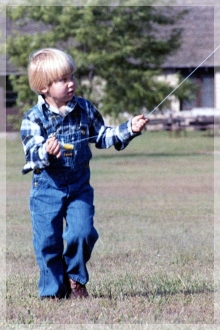 It’s been nearly 50 years, but I’ll never forget that day when, out of anger and fear, I vowed, “I’ll never forgive him!” My husband and I had taken our three children shopping for school clothes. While I was busy with the eldest, my husband said he’d take the other two for a walk through the mall. Unknown to me, the three-year-old had convinced his father that he’d stay at the store, sit quietly in a little crawl-through hole by the store’s entrance, and wait for his dad’s return. Unfortunately, my husband never told me of that decision. Having the attention span of a gnat, the little guy quickly grew bored watching shoppers. After wandering into the store to hide in the clothes racks, he looked for his brother and me. Not seeing us (since we were in a changing room), the independent guy decided we’d left without him and calmly went looking for us in the mall parking lot. While I was paying for our purchases, my husband returned with only one child in tow. Almost simultaneously, with panic in our voices, we asked one another, “Where’s Scooter?” My imagination went wild with all the horrible things that could have happened to the youngster. In an instant, I decided I’d never forgive my husband for his carelessness and that our marriage would be over!
After the saleswoman made a call to mall security, we learned that a concerned woman had spotted the boy wandering in the parking lot sobbing because he was sure we’d left for home without him. She took him to security where he was enjoying a red lollipop. Through God’s good graces, his misadventure had a happy ending, but what if it hadn’t? While angrily deciding I’d never forgive my husband, it never occurred to me that he’d be hard put to forgive himself if our son was harmed in any way!
I thought of that episode after reading about a 5-year-old severely autistic child who’d wandered out of his house and was found drowned in a nearby pond. A few days later, I learned of a critically injured three-year old who’d fallen out of an industrial mowing tractor and been run over by his father. Unlike our story, those stories had sad endings. Several years ago, a friend’s grandchild died in another tragic accident. Wanting to go on a ride with his dad, the toddler had quietly left the house and was standing in the driveway when his father backed over the youngster. That accident ended up destroying a family through divorce and then the father’s suicide. Apparently, neither parent could forgive the other nor could they forgive themselves. I sometimes think of how my husband and I narrowly escaped a similar ending that day in the mall. Would we have forgiven ourselves and one another? How will the family of the child run over by that lawn mower or the parents of that special-needs child cope? Will they forgive each other? Will they ever forgive themselves? Or, as happened with our friend’s family, will one tragedy lead to others?
C.S. Lewis said, “Everyone says forgiveness is a lovely idea, until they have something to forgive.” Indeed, forgiveness isn’t easy and, sometimes, it seems nearly impossible. Nevertheless, we ask God to forgive us in the way we forgive others. It is hypocritical for us to ask God to forgive our sins if we withhold forgiveness from anyone else. Unless we want God to pick and choose among our sins and failings, we cannot pick and choose among the actions of those who’ve failed us. We don’t get to forgive the little transgressions and withhold forgiveness on the big ones unless we want God to do the same with us.
Instead of a mall cop and a three-year-old with a red lollipop, what if our story hadn’t ended well? I’d like to think that I would have forgiven my husband and our marriage would have survived and thrived. Only God knows—I certainly don’t and I thank Him for not putting me to the test!
To be a Christian means to forgive the inexcusable because God has forgiven the inexcusable in you. [C.S. Lewis]
 The hatred between Jews and Samaritans began in 930 BC when Solomon’s son Rehoboam was king and the united kingdom of Israel divided. Ten tribes rebelled and made Jeroboam king of the northern kingdom of Israel whose capital was Samaria. Only the tribes of Judah and Benjamin along with the Levitical priesthood remained in the southern kingdom of Judah. Fearing a change of alliance if people returned to Jerusalem to worship, Jeroboam set up his own worship centers in the north.
 The two were seated next to us on the patio; the frail elderly woman was the mother and the younger woman her daughter. After pondering the menu, the mother had all sorts of questions about it. In no rush to order, she dithered over her entrée choice and, once food was served, she lingered over it. As I observed the two women, I could see and hear the daughter’s growing frustration and impatience with her mother. They reminded me of the times I took my mother-in-law out to lunch. Having “been there and done that,” I wanted to tell the daughter to be patient. One day, mom would be gone and she’d wish they had more days together.
 As much as I enjoy reading the works of authors like C.S. Lewis, A.W. Tozer, Dietrich Bonhoeffer, and N.T. Wright, I admit to not always understanding exactly what they’re saying. Nevertheless, thinking me an expert, a friend sent me an article written by a well-known Christian theologian and asked for my thoughts. Unfortunately, I had none because I couldn’t make sense of it. When I reluctantly admitted my bewilderment, my friend admitted the same. Although we both tried to understand the author, neither of us could discern his point. He appeared to have used a great many fancy words to say very little. While another scholar might make sense of his words, we two reasonably intelligent believers couldn’t. Unfortunately, some pastors, theologians, Christian writers, and fellow believers unnecessarily complicate faith and our relationship with God.
 Monday’s devotion (“No Words of Comfort”) originally was published back in 2018. It came to mind because my son-in-law recently died. His death was sudden and unexpected and, when my daughter told me, I was sure I’d misunderstood her words. Not Mike! Still a young man in the prime of his life; it couldn’t be, but it was! Just as we all know we’re going to die someday, we know the people we love will die. It’s just that we expect those deaths to be on our timeline. But they’re not—they’re on God’s. The only guarantee that comes with life on earth is that it will end!
 Devotions of the Heart