
And he took a cup, and when he had given thanks he gave it to them, saying, “Drink of it, all of you for this is my blood of the covenant, which is poured out for many for the forgiveness of sins.” [Matthew 26:27-28 (ESV)]
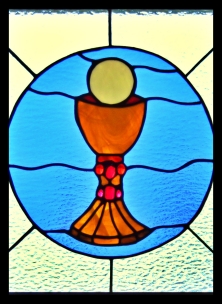 The celebration of the Lord’s Supper/Holy Communion/the Eucharist has been central to Christian worship since the early church. While Protestants think of the Eucharist as the sacrament commemorating the Last Supper with bread and wine, for Roman Catholics and some Orthodox, “Eucharist” specifically refers to the consecrated elements, especially the bread. How ever you define it, the word “eucharist” originally had nothing to do with this beautiful sacrament.
Meaning to be thankful, the Greek eucharisteó comes from eú meaning “grateful” and charizesthai meaning “to offer graciously”. Charizesthai comes from charis, meaning “grace” (a gift that cannot be repaid) from chario meaning “to rejoice”. From its etymology, eucharisteó isn’t the kind of thanks we’d say to a friend who saved us a seat at the movie or to someone for opening the door for us. Encompassing the ideas of thanksgiving, grace in receiving a gift that cannot be repaid, and rejoicing or joy, eucharisteó is the kind of thanks that is specifically directed toward God! This is the word the Apostle Paul used whenever he said he thanked God. We find Jesus giving thanks (eucharisteó) before feeding the 5,000 and again before taking the wine at the last supper.
The first sacramental Eucharist took place during a Passover meal (seder) celebrating Israel’s deliverance from bondage to Egypt. The question “Why is this night different from all other nights?” would have been asked early in the seder and would have been answered by a retelling of Israel’s exodus from Egypt. When Jesus took the bread and passed it to the disciples, they didn’t know that the bread symbolizing Israel’s suffering in Egypt would come to represent the Lord’s suffering on Calvary. When Jesus filled the cup and passed it to the disciples, they didn’t know that the wine symbolizing Israel’s redemption from slavery in Egypt would come to represent the blood Jesus shed to purchase mankind’s redemption from sin.
While the disciples didn’t understand what lay ahead for Jesus that night, let’s not forget that Jesus certainly did! He knew that His body, having been defeated by thorns, whip, nails, and cross, would be broken in less than a day. Nevertheless, knowing full well the torment he would suffer and the blood He’d shed, Jesus graciously offered Himself for us and gave thanks—and not just any old thanks. He gave eucharisteó—the sacrificial lamb gave thanks to God with joy!
Like the exodus, the story of Jesus is one of redemption. Israel was in bondage to Pharaoh—mankind in bondage to sin and death. Israel was saved by the blood of a lamb; we are saved by the blood of the Lamb of God. Moses led the people to the Promised Land; Jesus leads us into the Kingdom of God. When we partake of the bread and wine during Holy Communion, let us pause and ask, “What makes this meal different from any other?” Do we recognize God’s grace and give thanks (eucharisteó) with joy?
So the community of the cross is a community of celebration, a eucharistic community, ceaselessly offering to God through Christ the sacrifice of our praise and thanksgiving. The Christian life is an unending festival. And the festival we keep, now that our Passover Lamb has been sacrificed for us, is a joyful celebration of his sacrifice, together with a spiritual feasting upon it. [John Stott]
 What would you do if you were six and your father said that your mom is in the hospital because she finds it hard to be happy and “did something stupid”? That question is answered in Duncan Macmillan and Jonny Donahoe’s one-act play, Every Brilliant Thing. In their play, that boy, now a grown man, tells the audience that he made of list of everything that was “brilliant” about the world—everything worth living for—and left it on his mother’s pillow. Reflecting a six-year old’s priorities, the list included ice cream, Kung-Fu movies, laughing so hard you shoot milk out your nose, burning things, construction cranes, and “me.” Although she returns the list with its spelling corrected, the boy’s mother never comments on it. Nevertheless, he keeps adding to his list. Although his mother eventually takes her life, the narrator tells how his list took on a life of its own and eventually saved him from his own depression and suicidal thoughts.
 During that dark time about which I recently wrote, I was in intense pain and it seemed like God had turned His back on me. When I confided to a friend that God seemed deaf to my pleas, she asked the simple question, “Have you turned it over to the Lord?” I assured her I had but, as the day wore on, I wondered if that were true.
 When I first started reading the psalms, I suspected David might have been bi-polar—his highs seemed so high and his lows so very low; now I understand that he was just being truthful. In his psalms, David unabashedly expressed his deepest feelings to God. Pouring out his soul, he openly shared his emotions—whether anger, disappointment, sorrow, regret, shame, joy, love, fear, doubt, or even his desire for vengeance upon his enemies. No matter how troubled he was, David never was afraid to speak from his heart. I’m not sure we are willing to be as vulnerable and straightforward in our prayers as was David.
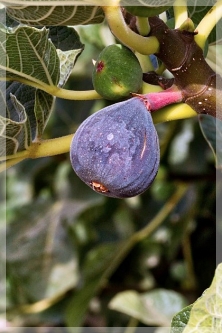 The next morning, while Jesus and the disciples walked from Bethany to Jerusalem for yet another confrontation with Judea’s religious leaders, the disciples saw the tree Jesus cursed the previous day. The disciples had witnessed Jesus cast out demons and still a storm with a just a word but, when they saw the withered and dead fig tree, they were amazed. Normally, trees die slowly from the top down but this tree instantly withered from the roots up. With dead roots, no amount of water or fertilizer would revive it. Having witnessed the tree go from abundance to ruin with just a word from the Lord, rather than asking Jesus to explain cursing the tree, the disciples focused on the speed with which the fig died.
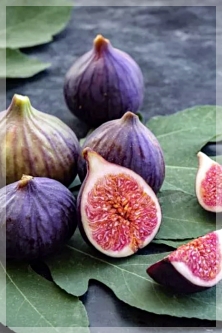 Mark tells of a time when a hungry Jesus cursed a fig tree and caused it to wither and die simply because it had no figs. As the only destructive miracle done by the Lord, His action is difficult to understand, especially since we’re told “it was too early in the season for fruit.” The same power that brought Lazarus back to life and turned water into wine easily could have given the tree ripe figs, so why did Jesus kill the fruitless tree?
 Devotions of the Heart