
He personally carried our sins in his body on the cross so that we can be dead to sin and live for what is right. By his wounds you are healed. [1 Peter 2:24 (NLT)]
 In all three accounts of Jesus healing the paralytic whose friends carried him to the Lord, Jesus forgave the man before healing him. While the combination of both forgiveness and healing demonstrated Jesus’ power over both sin and disease, His offer of forgiveness before healing might lead us to think there is a causal relationship between sin and sickness or forgiveness and physical healing.
Connecting sin with disease goes as far back as Job and their cause-and-effect/retribution theology is part of what got Job’s friends in trouble with God. Nevertheless, associating calamity and suffering with sin continued to be a common point of view in 1st century Judah. Thinking sin and misfortune related, even Jesus’ disciples asked Him whether it was the sins of the blind man or his parents that caused him to be born sightless. Jesus’ answer clarified that sin had nothing to do with the man’s blindness. Later, when Jesus heard about Pilate’s ruthless execution of some Galileans, He made it clear that the murdered men, like eighteen others who died when a wall collapsed on them, were no worse sinners than any other people. Rather than explaining the why of such tragedies, Jesus pointed out that all people are sinners—sinners who should repent so they’re ready for the eternity following their unpredictable lives.
While illness can be caused by God (as it was in the case of King Uzziah’s leprosy, Nebuchadnezzar’s madness, and Herod’s worms), we must remember that we live in a fallen world. While all suffering is due to man’s fall into sin, not all suffering is because of a specific sin on the part of that individual. While some afflictions may be the specific consequences of sin, for the most part, sickness is just part and parcel of living in this fallen world of ours—a world where all creation “groans” under the consequences of our sin.
By forgiving the paralytic before healing him, Jesus wasn’t implying his paralysis was the direct result of his sins. Rather than seeing a man with a paralyzed body, Jesus saw a man with a troubled heart whose greatest need wasn’t mobility but forgiveness! What good would the ability to walk do for a man who remained spiritually broken? The paralyzed man’s most pressing need was forgiveness and, regardless of our physical ailments, forgiveness is our most pressing need, as well. Jesus didn’t die to heal our bodies; He died to heal our souls!
 When Jesus forgave the unnamed woman’s sins, he caused quite a stir among the Pharisees and religious leaders who were His fellow dinner guests. People can forgive an offense against them, but they can’t forgive an offense against someone else or God! While I can forgive your $10 debt to me, I have neither the right nor the power to say you don’t have to pay the $150,000 you also owe the Bank of America, Sallie Mae, Capital One and Chase for your mortgage, college loan, car financing, and credit card purchases. A person can’t do that but God can! Because only God has the authority to forgive people’s sins, implied in Jesus’ forgiveness of the woman’s sins, is a claim that He is God.
 When entering someone’s home, while we might be offered some hand sanitizer or asked to remove our shoes, none of us expect the host to provide us with water to wash our feet. Back in Biblical times, however, hospitality was quite different. No one wore socks and the shoes and sandals bore little resemblance to the Nikes, Tevas, and Keens of today. Between the dusty roads and the oxen, horse, donkey and camel droppings on them, people’s feet were filthy. Foot washing was an expected sign of hospitality and a good host always offered water so a guest could wash his own feet. If the host were rich enough, his servant did the washing and, if the guests were honored enough, the host might do the washing. For example, both Abraham and Lot offered foot washing to their heavenly visitors and, before feeding them, Laban provided Abraham’s servant and men water for foot washing. On the last night of His life, Jesus took on the role of a servant and washed the feet of His disciples.
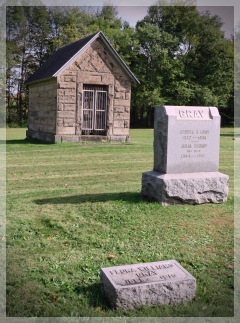 My father had what’s often described as a Type-A personality. An impatient workaholic, he always took on more than he could handle. Life, for him, was one crucial task after another, none of which anyone else could do, at least not correctly. Always in a hurry, he never wanted to stop for anything, even when his gas gauge read precariously close to empty. Something more pressing always took precedence over a brief stop for gas. As a result, his car was often left on the roadside while he trudged off with a gas can to find the nearest service station. Instead of saving time, his refusal to stop cost him time. Living that way actually cost him his life; he died of a massive coronary at the age of fifty-six. It’s often been said that your in-box still will be full when you die and, indeed, his was. None of us can accomplish everything on our to-do list and we may well destroy both our relationships and ourselves while trying.
 Yesterday, I wrote about Job’s lamentation. 19th century bible scholar George Granville Bradley said this about Job 3: “Where in the world will you find a sadder strain of more hopeless, uncontrolled, and unbroken lamentation and mourning? … Filled to the brim, they run over with pain.” I have to agree.
 After Satan took Job’s loved ones and wealth, the grieving man remained a pillar of patience and faith. Rather than blaming God, the stoic man acknowledged God’s sovereign authority saying, “The Lord gave me what I had, and the Lord has taken it away. Praise the name of the Lord!” [1:21]
 Devotions of the Heart