NOT A DRY EYE

You learn more at a funeral than at a feast – After all, that’s where we’ll end up. We might discover something from it. [Ecclesiastes 7:2 (MSG)]

black swallowtail - butterflyAt my age, I’ve attended a fair share of funerals and they’ve run the gamut from full-blown productions complete with video presentations and choirs to a few mourners on a windy ski slope with a bag of ashes. Some ministers knew the deceased well and others couldn’t even pronounce the name correctly. There have been inspiring prayers and eulogies and some with no prayer at all. They’ve taken place in jam-packed churches and nearly empty mortuary chapels. Solomon was correct; there is a lot we can learn at funerals.

I’ve learned how much we miss when we don’t take the time to truly know someone. I discovered more about one woman from her obituary and eulogy than I did from 30 years of socializing with her. Her funeral showed me how little we really know about people we call “friends” and how superficial our friendships can be.

I’ve learned how empty some lives have been. When asked to do the eulogy for a distant family member, I was given a list of the five things of which he was most proud, the high point being a 4-H trophy awarded some seventy years earlier. He made no mention of family, friends, faith, or love. As I looked out over the mourners, there were no friends and only a few family members who attended out of a sense of obligation.

As we released butterflies following the joyous and love-filled celebration of life of another family member, I learned about courage and how much faith, love, family and friends can guide someone in life and through the dark valley of death.

I’ve learned how much a parent’s love and guidance can influence his children after hearing a son speak eloquently at his father’s funeral. I was reminded of how fragile life can be and, upon returning home, called every family member just to tell them I loved them.

I’ve learned that communities can come together with offerings of food, comfort and support and that families can be torn apart by resentment, jealousy, and greed. A funeral not only reminds us all of the inevitability of death, it can teach us how to live. If nothing else, we return home appreciating each day just a little more.

Good and brave men buried Stephen, giving him a solemn funeral—not many dry eyes that day! [Acts 8:2 (MSG)]

Copyright ©2018 jsjdevotions. All rights reserved.

FOR BEAUTIFUL WOMEN EVERYWHERE – Mother’s Day 2018


Charm is deceptive and beauty disappears, but a woman who honors the Lord should be praised. Give her credit for all she does. She deserves the respect of everyone. [Proverbs 31:30-31 (GNT)]

muscovy - ducklingsMy mother disliked having her picture taken. She didn’t think of herself as attractive and she probably wasn’t pretty in the conventional way. Yet, even with a face covered by freckles, unruly hair, an overbite combined with a toothy smile, thick glasses and a hearing aid, she was the most beautiful woman I’ve known.
It was at my mother’s side that I learned to love the written word. She urged me to read all sorts of books that were probably considered far too adult for my age and we discussed every one of them in detail. She was intelligent and creative and encouraged me in every one of my efforts. She was incredibly open with me about her past, her faith and feelings. Perhaps she knew her time on earth was brief so she had to pack everything a mother wants to teach her daughter into a few short years. It was from my mother that I learned about love and forgiveness. She showed me that true love takes effort and is more a choice than a feeling. She started me on my journey of faith and it was through her that I came to know Jesus.

This shy quiet woman taught me courage: courage in the face of adversity, courage in the face of cancer, courage in the face of death. She taught me how to live and how to die. She was probably the most beautiful when she was the least attractive, just a few days before her death, when I was fifteen. As we were departing her hospital room, my father leaned over, picked up a corner of the oxygen tent, and kissed her. He said, “You look like an angel tonight.” Her response, said with a smile on her radiant face, was, “Maybe tomorrow I’ll be with the angels.” As she passed through the valley of death, she had no fear. She had complete faith in God’s promise. She wasn’t worried; she trusted God that the family she left behind would be just fine and she knew that where she was going would be even better. She may not have been pretty but my mother was the most beautiful woman in my world.

On this special day, Dear Lord, we thank you for our mothers: those beautiful women who gave us life. We also thank you for all of the beautiful women of faith who have blessed our lives with their example and encouragement, enlightenment, love, and guidance. Please reassure them that, in spite of what the mirror and society may tell them, they are truly beautiful both in your eyes and ours!

…Your beauty should consist of your true inner self, the ageless beauty of a gentle and quiet spirit, which is of the greatest value in God’s sight. [1 Peter 3:4 (GNT)]

Copyright ©2018 jsjdevotions. All rights reserved.

DORMANCY

God, make a fresh start in me, shape a Genesis week from the chaos of my life. Don’t throw me out with the trash, or fail to breathe holiness in me. Bring me back from gray exile, put a fresh wind in my sails! [Psalm 51:10-12 (MSG)]

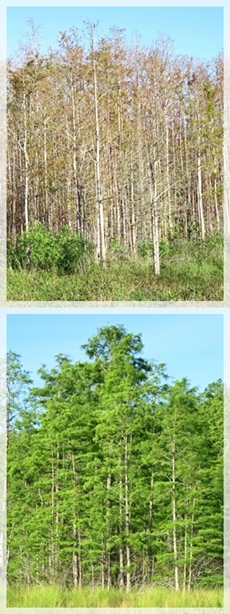
Corkscrew swamp - cypress - dormantEarlier this year, upon seeing the browning and nearly naked cypress trees at the bird sanctuary, the visitor asked if Hurricane Irma had killed them. I explained that the bald and pond cypress weren’t dead, just dormant. Being deciduous, they shed their leaves annually and were just enjoying a much needed rest during the shorter days and dryer conditions of winter. I reassured her that, in a month or so, their bright green needles would return and new growth would sprout from their branches. Today, the forest is verdant throughout the swamp.

While it is possible to force trees to evade dormancy by keeping them inside and controlling the light, temperature and water conditions, it would greatly shorten the plant’s lifespan; they’re not meant to leaf and branch continually. Dormancy is vital for the survival of deciduous trees and the way they withstand unfavorable growing conditions. When better conditions return, the trees wake up and start to bud and blossom again.

While dormancy is good for trees, dormancy is not usually considered a good thing when applied to Christians. A study in Great Britain found that 55 percent of those who identify themselves as Christian never read the Bible, 29 percent never pray, and a third of them don’t even attend church; it called these people “dormant Christians.” When God’s word isn’t growing in our hearts or we fail to bear the Fruit of the Spirit, some people say we’re in “spiritual dormancy.” Superficial, uncommitted, wilting or dying faith like this seems more a case of failure to thrive than dormancy. Just because growth isn’t obvious when a tree is dormant doesn’t mean nothing is happening. Dormancy is when the tree gathers strength, prepares for leafing and branching, and is the best time for pruning in preparation for new growth!

I’ve seen too many people lose their zeal for Christ because they haven’t taken a rest from their busyness for Him to spend time abiding in Him. It’s often when they’ve forgotten to spend time in His rest that their spiritual lives go dead. Sometimes, like trees, we need to retreat into dormancy to rest, do some pruning, and prepare ourselves to take our next steps in God’s ministry. Even Jesus took time away from His ministry for prayer and guidance.

During these next few months, my husband and I will be travelling a great deal. While I remain committed to prayer, worship, study, and journaling, there will be times when writing and posting will be difficult, if not impossible. Last year, I solved this problem with some “summer re-runs.” Knowing how refreshed and enthusiastic I felt upon my return to writing, I think dormancy is a far better term. So, like the cypress trees that go dormant in adverse conditions, I will take a break when circumstances are not conducive to writing. Unlike the trees, however, I won’t change color or shed my needles in preparation for dormancy. Instead, I’ve selected a few old devotions to repost and, with over 1,500 devotions from the last four years, I have plenty from which to choose. Throughout the next few months, they will be scattered in among new ones. So, if you see a devotion you’ve read before, don’t worry; I’m not dead, I’ve just gone dormant!

God, my shepherd! I don’t need a thing. You have bedded me down in lush meadows, you find me quiet pools to drink from. True to your word, you let me catch my breath and send me in the right direction. [Psalm 23:1-3 (MSG)]

I’ll refresh tired bodies; I’ll restore tired souls. [Jeremiah 31:25 (MSG)]

Copyright ©2018 jsjdevotions. All rights reserved.

GOOD SOIL GONE BAD

And the seeds that fell on the good soil represent honest, good-hearted people who hear God’s word, cling to it, and patiently produce a huge harvest. [Luke 8:15 (NLT)]

thistleWhen Hurricane Irma uprooted trees here last September, the underground irrigation pipes throughout our 1,800 home community were wrenched out of the soil and the lines ruptured. Trees and stumps had to be removed before the process of finding and fixing the leaks could begin and we went more than seven months without irrigation. What with winter and spring’s hotter than average temperatures, receiving about half of our average rainfall since November, and no working irrigation system in our community, the once lush green grass became dry and brown, the flowers wilted, and the parched soil got hard. The only things that seemed to thrive were the weeds! Fortunately, the repairs were completed last week, the summer rain eventually will arrive, and our grass, shrubbery and trees will recover.
Seeing how our once good soil became so hard and dry made me think about Jesus’ parable of the four soils in which the soils represent the sort of people who receive the seed of God’s word. One was the hard dry soil of a footpath where the birds quickly snatched away the seed. Because the second soil was rocky, the plants’ roots were shallow and they withered and died in the hot sun. The third seed was sown among the weeds that crowded out the new growth. It was only in the fertile fourth soil that the seeds produced a good crop. Although this parable tells us that not everyone will be receptive to God’s message, perhaps, there’s more to it.

When looking at our parched ground, I realize that unless it is cultivated, watered, and fertilized, good soil will not remain that way. Like the fourth soil, we can receive God’s word with enthusiasm but, unless it is well tended, our faith will suffer. Worry, busyness, or discontent can crowd out our enthusiasm and commitment the way thorny weeds do in an untended garden. If we don’t keep feeding our soil with God’s word, like the plants sown on the rocky soil, our roots can wither and die because of things like regret, troubles, doubt or unforgiveness. When we let failure, complaint, anger, or temptation give the enemy a foothold, he can snatch away our faith faster than a sparrow can a sunflower seed on a footpath. We may have been good soil when we accepted Jesus but, at various times in our lives, we can become any one of those other soils. I’m not a gardener, but even I know that it takes work to keep a garden productive. We must continue to fertilize with prayer, cultivate with a community of faith, and water with God’s word if we want to bear fruit in God’s garden.

Although Jesus was explaining to His disciples why people responded as they did to Him, His parable is more than a lesson about evangelism or gardening. It’s a reminder that good soil can go bad. We must continue to tend the soil in our spiritual garden lest Satan steals the word, we stop believing when troubles arise, or the cares of the day leave no room for His word to grow.

Remain in me, and I will remain in you. For a branch cannot produce fruit if it is severed from the vine, and you cannot be fruitful unless you remain in me. Yes, I am the vine; you are the branches. Those who remain in me, and I in them, will produce much fruit. For apart from me you can do nothing. [John 15:4-5 (NLT)]

When the ground soaks up the falling rain and bears a good crop for the farmer, it has God’s blessing. But if a field bears thorns and thistles, it is useless. The farmer will soon condemn that field and burn it. [Hebrews 6:7-8 (NLT)]

Copyright ©2018 jsjdevotions. All rights reserved.

NOT JUST HALF

From then on Jesus began to tell his disciples plainly that it was necessary for him to go to Jerusalem, and that he would suffer many terrible things at the hands of the elders, the leading priests, and the teachers of religious law. He would be killed, but on the third day he would be raised from the dead. But Peter took him aside and began to reprimand him for saying such things. “Heaven forbid, Lord,” he said. “This will never happen to you!” [Matthew 16:21-22 (NLT)]

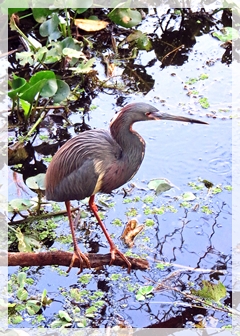
tri-colored heronWhile talking with a friend, I mentioned how many people of our generation seem unprepared for the challenges of widowhood. Having relinquished certain responsibilities to their spouses during the decades of marriage, they’re ill-equipped when they lose that spouse. There are men who have no idea how to do laundry, grocery shop, clean the bathroom or use the microwave. On the other hand, many of my women friends have never done minor repairs, paid bills, made an investment or purchased a car. “That was me!” replied my friend whose husband died of cancer. His death, while unwelcome, was not unexpected so I asked why they hadn’t prepared her for widowhood. “He tried to,” she said, “but I wouldn’t listen.” As long as they didn’t talk about his imminent passing and her future life without him, she still could deny its reality.

While thinking of her experience, I thought of the disciples’ behavior when Jesus spoke of his death. At first, He spoke metaphorically: “Destroy this temple and in three days I will raise it up.” At least three times, however, He spoke quite plainly about what the future held: he would be killed and raised from the dead. He didn’t mince any words when he described his death but the disciples didn’t understand. Jesus forewarned them but they were confused and frightened when He died, hid in a room instead of waiting expectantly at the tomb, and didn’t believe the women who said the tomb was empty.

Jesus spoke of fulfilling the prophecies and the disciples knew those prophecies. They preferred the ones about the messiah’s glory, however, to those of the suffering servant. Still thinking about an earthly king, Jesus’s words were contrary to their expectations and the disciples couldn’t reconcile what Jesus said to what they wanted. How could suffering and death accomplish anything? Like my widowed friend, they didn’t want to face the truth of what the future held. Perhaps, like her, they thought their denial would keep the horror from happening.

We aren’t all that different when it comes to seeing and hearing only what we want. In his Bible commentary, Matthew Henry cautions that we’re like the disciples when we read the Bible “by halves” – only the half we like. Consistently, the top three searched-for Bible verses are John 3:16, Jeremiah 29:11, and Philippians 4:13; the rest of the top twenty are other reassuring verses of comfort. If the Bible was a buffet, we’d find those feel-good verses on the dessert table. Dessert is great and so are those verses; nevertheless, they only tell part of the story. The other half of the Bible, while just as nourishing, isn’t quite as sweet; it’s the meaty stuff on the main dish table that tells us we’re going to have trials, temptation, affliction, and persecution. It tells us of mankind’s failures, God’s warnings, and why He had to redeem the world He created. It speaks of sin and God’s wrath and uses words like sacrifice, suffering, judgment and tribulation.

Let us never turn away from God’s word because we don’t like what it says. Ignoring the prophecies didn’t keep Jesus from being crucified and ignoring the still unfulfilled ones will not keep them from coming true! As for me, I want to be prepared for what the future brings (both in this world and the next).

Anyone with ears to hear should listen and understand. … Pay close attention to what you hear. The closer you listen, the more understanding you will be given—and you will receive even more. To those who listen to my teaching, more understanding will be given. But for those who are not listening, even what little understanding they have will be taken away from them. [Mark 4:23,24-25 (NLT)]

Copyright ©2018 jsjdevotions. All rights reserved.

THE COURT OF THE GENTILES

And all the surrounding nations will ask, “Why has the Lord done this to this land? Why was he so angry?” And the answer will be, “This happened because the people of the land abandoned the covenant that the Lord, the God of their ancestors, made with them when he brought them out of the land of Egypt. Instead, they turned away to serve and worship gods they had not known before, gods that were not from the Lord. That is why the Lord’s anger has burned against this land, bringing down on it every curse recorded in this book. In great anger and fury the Lord uprooted his people from their land and banished them to another land, where they still live today!” [Deuteronomy 29:24-28 (NLT)]

salt marsh mallowThe money changing and selling of animals that so angered Jesus took place in the Court of the Gentiles, but what was a Court of the Gentiles doing in the Jewish Temple? The explanation starts around 590 BC, when Nebuchadnezzar deported the Jews from Judah to Babylon (as happened to Daniel, Shadrach, Meshach, and Abednego). Although many Jews like Zerubbabel, Ezra and Nehemiah returned, a large Jewish population remained in Mesopotamia. The economic hardship and incessant warfare experienced by those who returned to Judah caused many to emigrate later. Jews eventually settled in Rome, Egypt, Macedonia, Greece, and the great cities of Asia Minor. Historians believe that, by the middle of the first century AD, there were more Jews living outside of Judah than in it.

Bringing their faith with them wherever they settled, the Jews built synagogues that became community centers where Scripture was taught and discussed. These synagogues drew not just Jews but also Gentiles who may have come for the interesting philosophical discussions about God or to hear the Psalms chanted. In any case, Jewish beliefs began to spread to the Gentiles. A few converted but more (preferring to avoid circumcision and Jewish restrictions) just adopted the Hebrew God as their own. They would attend synagogue, observe some of the Jewish laws, and come to Jerusalem for religious festivals. Since Gentiles could not enter the Temple proper, when Herod the Great rebuilt the Temple in 20 BC, a large courtyard was erected to accommodate the non-Jews who wanted to observe Jewish traditions. It was here that Gentiles (and ritually unclean Jews) could come and worship.

Although the scattering (or diaspora) of the Jews came from droughts, famines and Judah’s conquest by Nebuchadnezzar, Alexander, Egypt, the Syrians, and Rome (among others), the Old Testament prophets’ words tell us this was punishment for their idolatry and unbelief. Nevertheless, that displacement is what helped spread Christianity. The Jews were no longer an isolated nation but a broad community of expats. Along with Hebrew, they spoke Greek (the language spoken by nearly everyone), the Hebrew Bible had been translated into Greek so that all could read it, and their synagogues had introduced the concept of one God to Gentiles throughout the area. The line dividing Jew and Gentile had started to blur.

Jews (and believing Gentiles) from all nations were present in Jerusalem for the Passover celebration when Jesus was crucified and resurrected. Many of those were in Jerusalem fifty days later for Pentecost when 3,000 were baptized in one day. Although Christianity began in Jerusalem as a subcategory of Judaism, once persecution started, these early followers of Jesus fled to Jewish communities in Syria, Asia Minor, Turkey, Greece, and Italy and it was to both Jew and Gentile that their message quickly spread. The Christian church may have begun in 33 AD, but the groundwork for its expansion had been laid long before then. God truly does work in mysterious ways.

Meanwhile, the believers who had been scattered during the persecution after Stephen’s death traveled as far as Phoenicia, Cyprus, and Antioch of Syria. They preached the word of God, but only to Jews. However, some of the believers who went to Antioch from Cyprus and Cyrene began preaching to the Gentiles about the Lord Jesus. The power of the Lord was with them, and a large number of these Gentiles believed and turned to the Lord. [Acts 11:19-21 (NLT)]

Copyright ©2018 jsjdevotions. All rights reserved.