THE BURDEN

My guilt overwhelms me—it is a burden too heavy to bear. [Psalm 38:4 (NLT)]
First published in 1678, John Bunyan’s The Pilgrim’s Progress is the second best-selling book of all time (the first being the Bible). In this religious allegory, the reader follows the adventures and trials of Christian (Part I) and his wife Christiana and their children (Part II) as they journey from the City of Destruction toward the Celestial City.

The iconic picture of the pilgrim Christian is that of a man bent over with a heavy pack strapped to his back. From that illustration, many assume that means Christians must carry a heavy burden, which is anything but the truth. Although Bunyan’s allegory opens with the man saddled with that pack on his back, he is free of its enormous weight for most of the story.

At the book’s start, the burdened man is crying while reading the Bible. Realizing that death is followed by judgment, he fears that his heavy load of sin will condemn him to Hell. The troubled man asks, “What must I do to be saved?” When the Evangelist tells him to follow the light to the Narrow Gate, Christian leaves on his pilgrim’s journey. He still carries that pack laden with the weight and shame of his sins; it is a burden that he can’t remove by himself.

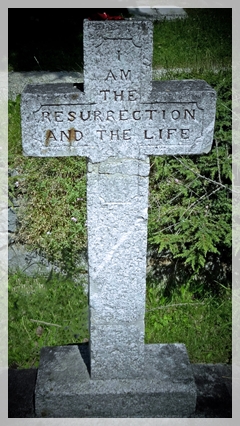
Even after Christian enters the Gate, that heavy load remains. Goodwill tells him to be content carrying it until he comes to the Place of Deliverance.  Upon getting there, Christian sees a cross at the top of the hill and a tomb at the bottom. As he approaches the Cross, the straps on his pack loosen from his shoulders. The burden drops to the ground, tumbles down the hill, and disappears into the mouth of the sepulcher. Christian’s burden has been transferred to Jesus who, while on that cross, atoned for all of his sins. When the empty tomb receives his sins, they are gone forever.

It’s no surprise that Charles Spurgeon’s favorite book (after the Bible) was The Pilgrim’s Progress, that this man known as the “Prince of Preachers” read it at least one hundred times, or that Bunyan’s allegory has been used by Christian missionaries for centuries. As with the parables of Jesus, the book’s powerful visual images skillfully illuminate gospel truths. Christian’s burden falling at the cross is what Good Friday was all about. We are rid of the weight of sin and the burden of trying to earn our way into God’s good graces. Released from guilt and condemnation, we are free of sin’s penalty because Jesus paid that price for us. That Christian will eventually reach the Celestial City is what Easter was about!

We know that our old sinful selves were crucified with Christ so that sin might lose its power in our lives. We are no longer slaves to sin. For when we died with Christ we were set free from the power of sin. And since we died with Christ, we know we will also live with him. [Romans 6:6-8 (NLT)]

Then Jesus said, “Come to me, all of you who are weary and carry heavy burdens, and I will give you rest. [Matthew 11:28 (NLT)]

Copyright ©2019 jsjdevotions. All rights reserved.
 

GOOD FRIDAY: ON THIS HOLY DAY

Simeon…took the child [Jesus] in his arms and praised God, saying, “I have seen your salvation, which you have prepared for all people. He is a light to reveal God to the nations, and he is the glory of your people Israel!” Jesus’s parents were amazed at what was being said about him. Then Simeon blessed them, and he said to Mary, the baby’s mother, “This child is destined to cause many in Israel to fall, but he will be a joy to many others. He has been sent as a sign from God, but many will oppose him. As a result, the deepest thoughts of many hearts will be revealed. And a sword will pierce your very soul.” [Luke 2:28,31-35 (NLT)]

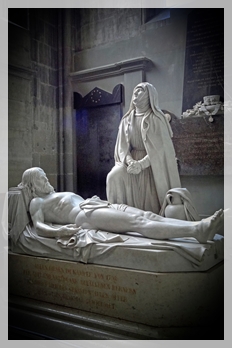
Munster - Bern CathedralAs Mary stood in the shadow of the cross, did she recall Simeon’s words when he held the infant Jesus in his arms? His prophecy came true that day at Calvary; as she watched her son endure such torture, it truly must have felt as if a sword had pierced her very soul. Jesus was supposed to be the glory of His nation but there He was—dying the death of a criminal. Mary didn’t understand why her beloved boy had to perish and she certainly didn’t know that He’d be back in three days. Imagine her sorrow and the emptiness in her heart as she witnessed her son’s agony.

Mary knew she loved her son but I wonder if that day she questioned God’s love for Him. She didn’t know that from the moment Jesus was planted in her womb her boy was headed to Calvary or that His death on the cross was all part of God’s perfect plan. How could she understand that her Son’s death was a deliberate choice: that He was dying for the very people who had placed Him on that cross? How could she know that His death proved the enormity of God’s love for all of humanity?

Like Mary, we don’t know the reason why our loved ones suffer or what will result from their suffering. Unlike Mary, however, we do know the rest of the story. Without the crucifixion, there would have been no resurrection. But, because of Jesus’s death and resurrection, there is another life waiting for us in God’s heavenly kingdom. Jesus’s resurrection means that hope overpowered desperation, love claimed victory over hate, forgiveness prevailed over condemnation, joy conquered despair, and life triumphed over death.

Jesus, the Son of God, was ignored, denied, betrayed, falsely accused, demeaned, scorned and scourged, and finally crucified on a cross. He suffered and died like a common criminal and was buried in a borrowed tomb like a vagrant. The sinless One paid the sinners’ debts. He didn’t have to, but he did. Thank you, God, for your loving redemption.

…death was not Jesus’ penalty; it was His destiny. It was not His lot in life; it was His mission. It was not His unavoidable fate; it was His purpose statement for coming to earth that first Christmas: “Born to die.” [Bill Crowder, from“The Path of His Passion”]

But he was pierced for our rebellion, crushed for our sins. He was beaten so we could be whole. He was whipped so we could be healed. All of us, like sheep, have strayed away. We have left God’s paths to follow our own. Yet the Lord laid on him the sins of us all. [Isaiah 53:5-6 (NLT)]

Copyright ©2019 jsjdevotions. All rights reserved.

MAUNDY THURSDAY: THE ROOSTER CROWS

“Don’t be so sure,” Jesus said. “This very night, before the rooster crows up the dawn, you will deny me three times.” Peter protested, “Even if I had to die with you, I would never deny you.” All the others said the same thing. [Matthew 26:34-35 (MSG)]

Ballenburg roosterThere’s a therapeutic riding center across the highway from one of the churches we attend. Along with horses, barn cat, and dog, they have a rooster. No matter what the time of day we’re there, that rooster crows. Every time I hear that bird’s loud “cock-a-doodle-do!” I remember Jesus’s words to Peter and ask myself, “Have I denied my Lord today?”

I can’t say I blame Peter for his betrayal. He was there when Judas, along with Temple guards and a contingent of Roman soldiers armed with swords and clubs, arrived in Gethsemane. Peter saw them man-handle and arrest Jesus. Peter was the one who impulsively drew his sword and cut off the ear of the high priest’s slave. Although Jesus healed the man, Peter had to be afraid as he stood around the fire with the servants and guards in the high priest’s courtyard. Would he be the next one arrested? His name may have meant “rock,” but his behavior was anything but rock-like that night.

Would I have been braver and more faithful than Peter or would I, too, have denied Christ? I’m ashamed to say that I probably wouldn’t have behaved any better than did Peter. I often deny knowing Jesus, and I’m not even afraid of being arrested. I deny Him when I ignore His call to service, remain silent when I should speak, or speak when I should remain silent. I deny Him when I hold a grudge, withhold forgiveness, judge others, and act prideful, spiteful or self-righteous. I deny Christ when I do what I know is wrong, when I don’t do what should be done, when I accept what I know He wouldn’t, and when I take credit for His gifts to me. Unfortunately, there are many ways we can deny knowing Jesus.

Lord, forgive us for the times we’ve denied being your servant. Fill us with your Holy Spirit so that our denials become affirmations and our lives give testimony to your saving grace.

All this time, Peter was sitting out in the courtyard. One servant girl came up to him and said, “You were with Jesus the Galilean.” In front of everybody there, he denied it. “I don’t know what you’re talking about.” As he moved over toward the gate, someone else said to the people there, “This man was with Jesus the Nazarene.” Again he denied it, salting his denial with an oath: “I swear, I never laid eyes on the man.” Shortly after that, some bystanders approached Peter. “You’ve got to be one of them. Your accent gives you away.” Then he got really nervous and swore. “I don’t know the man!” Just then a rooster crowed. Peter remembered what Jesus had said: “Before the rooster crows, you will deny me three times.” He went out and cried and cried and cried. [Matthew 26:69-75 (MSG)]

Copyright ©2019 jsjdevotions. All rights reserved.

AND TO GOD WHAT IS HIS!

“Should people cheat God? Yet you have cheated me! But you ask, ‘What do you mean? When did we ever cheat you?’ You have cheated me of the tithes and offerings due to me. You are under a curse, for your whole nation has been cheating me. Bring all the tithes into the storehouse so there will be enough food in my Temple. If you do,” says the Lord of Heaven’s Armies, “I will open the windows of heaven for you. I will pour out a blessing so great you won’t have enough room to take it in! Try it! Put me to the test!” [Malachi 3:8-10 (NLT)]

blue flag irisWhen I was a little girl, I once went to mass with my Roman Catholic cousins. Before leaving for church, my mother pressed two shiny quarters into my hand. “For the offering,” she reminded me. Part way through the service, long-handled offering baskets were extended down each row and people dropped their offering envelopes and money into them. “Who will know?” I thought as I reached into my pocket and pulled out just one quarter for the offering. Almost immediately, another basket came down our row. “God saw me!” I thought in a panic. “God knows I was holding out on Him and now the priest has sent the basket back.” I quickly reached into my pocket for the second quarter. As I dropped it into the basket, I heaved a great sigh of relief; I was safe from Hell for at least one more day. My only consolation was that I clearly wasn’t the only sinner; other people had dropped money into that second basket. Looking back, I think the second basket probably was for a special offering of some kind. To my child’s mind, however, that second basket was for those of us who hadn’t given God what belonged to Him.

Yesterday, I wrote about Jesus’s response to the Pharisees that we should “give to Caesar what belongs to Caesar.” [Matthew 22:21] Sometimes we forget that there was more to His response. Jesus added that we should “give to God what belongs to God.” Jesus was speaking of more than our tithes and offerings or little girls who hide quarters in their pockets.

Since Caesar had minted those silver coins with his name and picture on them, Jesus said they were Caesar’s. Let us never forget that God created us in His image and His mark is on us. By Jesus’s reasoning, that would seem to mean that we are God’s! His words were a not so subtle reminder that God wants our lives used for Him and for His glory. It’s not just our finances, but also our time, talent, hearts, worship and obedience that belong to God. Do we truly give God all that is His? Does He have all of us or are we keeping something hidden in a pocket?

Giving is more than a responsibility—it is a privilege; more than an act of obedience—it is evidence of our faith. [William Arthur Ward]

The heavens are yours, and the earth is yours; everything in the world is yours—you created it all. [Psalm 89:11 (NLT)]

You must each decide in your heart how much to give. And don’t give reluctantly or in response to pressure. “For God loves a person who gives cheerfully.” [2 Corinthians 9:7 (NLT)]

Copyright ©2019 jsjdevotions. All rights reserved.

RENDER UNTO CAESAR

Then Jesus said to them, “Give to Caesar the things that are Caesar’s, and give to God the things that are God’s.” [Matthew 22:21b (NCV)]

green heronSome things never change and, aside from death, it’s said that taxes are the only other sure thing in our lives. Along with a poll (or head) tax, the Romans had a variety of other taxes including customs taxes, property taxes, import and export taxes, crop taxes, toll bridges, sales tax, and special taxes when there was a war or building project to finance. Sounds a bit like nowadays! Yesterday was April 15, the day the IRS demanded what is theirs. When you put “the” and “IRS” together you get the word “theirs” and, once we’ve filed our taxes, it sure feels like the government considers most of what’s ours to be theirs!

When the Pharisees joined with the Herodians and asked Jesus if it was right to pay taxes to Caesar, they weren’t asking for accounting advice. Both groups wanted to trap Jesus into saying something that would get Him into trouble either with Rome or the people of Judea. Since paying taxes was a painful and costly reminder of their subjection to Rome, saying yes would anger his own people. If he said no, he’d infuriate the Herodians (Jews who supported Rome), be reported as an insurrectionist, and could be executed for treason. There was no good answer.

It’s foolish to try to outsmart God and Jesus gave the perfect answer. He asked whose portrait was on the coin. Caesar’s picture was on the denarius, the coin of the day, along with these words: “Tiberius Caesar Augustus, Son of the Divine Augustus.” With Caesar’s picture and title on it, the coin that deified the emperor clearly belonged to him. Jesus told the people to give to Caesar what belonged to Caesar and to God the things that were His.

Jesus told us we should pay the government what rightfully belongs to it; like it or not, our obligations to the government and the services it provides must be met. Following good and honest accounting advice is wise and no one wants to pay more than his due. There is, however, a fine line between tax avoidance and tax evasion. While there are some people who would never describe themselves as thieves, they think nothing of cheating on their taxes. They don’t call it theft but theft it is. Unfortunately, some of us dishonor God when preparing our taxes by fudging, misreporting, manipulating, or conveniently forgetting income. The term “creative accounting” doesn’t change what it is: stealing.

Some citizens justify tax cheating by saying they don’t approve of the way the government spends tax money. That’s a convenient excuse. Something tells me, no matter which party is in power and how the government spends, as long as they were expected to pay taxes, they’d never approve of the government’s expenditures. So, as much as we disliked doing it, yesterday we rendered unto to Caesar the things that are his. While we didn’t enjoying doing it, let us remember that laws and taxes are the price we pay for living in a civilized society.

Income tax returns are the most imaginative fiction being written today. [Herman Wouk]

So you must yield to the government, not only because you might be punished, but because you know it is right. This is also why you pay taxes. Rulers are working for God and give their time to their work. Pay everyone, then, what you owe. If you owe any kind of tax, pay it. Show respect and honor to them all. [Romans 13:5-7 (NCV)]

Copyright ©2019 jsjdevotions. All rights reserved.

THE ROAD TO HELL

PythonI don’t want Satan to outwit us. After all, we are not ignorant about Satan’s scheming. [2 Corinthians 2:11 (GW)]

The Screwtape Letters, by C.S. Lewis, is a series of letters written by a senior demon, Screwtape, to his nephew, Wormwood, a demon-in-training. Screwtape, acting as Wormwood’s mentor, advises the novice tempter on ways to acquire the soul of a nameless young man known as “the patient.” Wormwood, like many young people, is both enthusiastic and impatient. He hopes to win the man’s soul quickly by having him sin on a grand scale with an act of deplorable wickedness. Screwtape, however, points out that the patient succumbing to the many little temptations of life are what will eventually corrupt him. The experienced demon points out that evil on a petty scale will seep into the man’s relationships, prayer life, and view of the church and that, says Screwtape, is the way to capture a soul.

Lewis’ book reminds us to keep alert regarding Satan’s plots. It’s easy to be confident about not becoming terrorists, murderers, blackmailers, bank robbers or kidnappers because we’d see those satanic schemes a mile away. It’s the little things like pique, exhaustion, fear, disillusionment, annoyance, disappointment, over-confidence, or boredom that can give Satan a foothold in our lives and blind us to his presence. Once he’s gotten in the door, he provides us with temptations to gossip, bicker, ridicule, lie, cheat or covet and nudges us with discontent, restlessness, and a dash of envy so we want bigger, better and more than our neighbor. He encourages unforgiveness, self-importance, jealousy, and intolerance and then tells us we’re not being boastful, selfish, petty, hypocritical, greedy, self-righteous or vain. He tells us what we want to hear—that the end justifies the means, the crowd can’t be wrong, or that no one will know! He subtly encourages us to put other activities before prayer or Bible study and to put other relationships before our relationship with God.

Make no mistake about it—Satan and his forces are out and about and we must never forget it. He knows our weaknesses, doesn’t play fair, and won’t announce his presence or tell us his plans. Whether the enemy crushes us with one blow from a wrecking ball, a few swings of a sledge hammer or patiently chips away at us with a chisel makes no difference to him; he just wants to defeat us.

You will say these are very small sins … The only thing that matters is the extent to which you separate the man from the Enemy [God]. It does not matter how small the sins are, provided that their cumulative effect is to edge the man away from the Light and out into the Nothing. Murder is no better than cards if cards can do the trick. Indeed, the safest road to Hell is the gradual one – the gentle slope, soft underfoot, without sudden turnings, without milestones, without signposts. [Screwtape to Wormwood, from “The Screwtape Letters” by C.S. Lewis]

So place yourselves under God’s authority. Resist the devil, and he will run away from you. Come close to God, and he will come close to you. Clean up your lives, you sinners, and clear your minds, you doubters. [James 4:7-8 (GW)]

Copyright ©2019 jsjdevotions. All rights reserved.