A CHANGE OF HEART

For you are not a true Jew just because you were born of Jewish parents or because you have gone through the ceremony of circumcision. No, a true Jew is one whose heart is right with God. And true circumcision is not merely obeying the letter of the law; rather, it is a change of heart produced by the Spirit. [Romans 2:28-29a (NLT)]
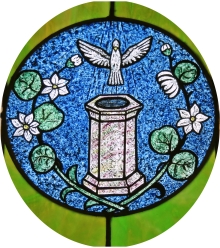
In 1962, my 2-month-old nephew Johnny and his parents traveled 1,500 miles for his Baptism. Because my mother was hospitalized (and soon would be dead), the sacrament took place at her bedside. This was the only time Johnny and his grandmother met and the last time my sister saw our mother alive.

Believing that children should be free to find their own way to God, my brother-in-law was opposed to infant baptism. Nevertheless, my father wanted that baby baptized as much as he wanted my mother to meet her first grandchild. Because children under 12 were not allowed to visit hospitals back then, he convinced my brother-in-law that a hospital baptism was the only way my mother could see and hold the little guy. The hospital was run by the Sisters of Charity so he knew the nuns wouldn’t deny his request for a bedside baptism (especially since he neglected to mention that the priest was Episcopalian rather than Roman Catholic). That we were Protestants, however, didn’t keep the nuns from joining us during the service.

Unfortunately, other than the funerals of his grandparents, Johnny’s baptism probably was the only time he came near a minister, church, Bible, prayer book, holy water, or even a nun. While his parents were good people, they never attended church and the boy had no religious education. By the time he was in his teens, the troubled youth was diagnosed with schizoaffective disorder. As often happens for people with severe mental illness, he self-medicated with drugs and alcohol. A vicious cycle began as the substance abuse exacerbated his mental illness and his disease increased the abuse.

Unable to stay on his meds and off drugs, he was a lost soul. When he wasn’t in jail, the hospital, or couch surfing through the homes of other users, Johnny lived on the streets. Sadly, it was on those streets that he died from a fentanyl overdose. While I can’t know what is in anyone’s heart, I doubt that Johnny believed in Jesus. Nevertheless, he was baptized; did that sprinkle of water mean he was saved?

As a sign of God’s covenant with Israel, all of Abraham’s descendants were to be circumcised. In Romans 2, however, Paul points out that, for the Jew, the true sign of belonging to God was not the ceremony of circumcision; it was a change of heart produced by God’s Spirit. It was God’s spiritual surgery upon the heart rather than the removal of one’s foreskin that made a Jew right with God. While there are parallels between baptism and circumcision, they symbolize two very different covenants. Nevertheless, while studying Romans and rereading today’s verse, I replaced “Jew” with “Christian” and “circumcision” with “baptism.” Indeed, Christianity has nothing to do with parentage nor does baptism bring salvation; salvation requires a change of heart.

The Book of Common Prayer (1958) calls baptism an “outward and visible sign of an inward and spiritual grace.” Without that “inward and spiritual grace,” I fear it is just a ritual. External actions like baptism, communion, genuflecting, making the sign of the cross, or church attendance are not what make us Christians. Salvation doesn’t come by works or sacraments; it comes through God’s grace through faith!

Assuming Johnny never came to know Jesus and be filled with His Holy Spirit, I fear that my nephew’s baptism didn’t make him a Christian any more than his hospital circumcision made him a Jew. While baptism is a step of obedience for every Christian, it does not save us. Our salvation is because of Jesus’ death and resurrection and is available only through faith in Jesus Christ. Let us all beware of trusting that baptism alone will bring us to heaven.

Tragically, some people believe they are going to heaven when they die just because a few drops of water were sprinkled over their heads a few weeks after their birth. They have no personal faith, have never made a personal decision, and are banking on a hollow ceremony to save them. How absurd. [Max Lucado]

If you openly declare that Jesus is Lord and believe in your heart that God raised him from the dead, you will be saved. For it is by believing in your heart that you are made right with God, and it is by openly declaring your faith that you are saved. [Romans 10:9-10 (NLT)]

Copyright ©2025 jsjdevotions. All rights reserved.

CLOSE ONLY COUNTS IN HORSESHOES

For God loved the world so much that he gave his only Son, so that every one who believes in him shall not be lost, but should have eternal life. … Any man who believes in him is not judged at all. It is the one who will not believe who stands already condemned, because he will not believe in the character of God’s only Son. [John 3:16,18 (PHILLIPS)]

clematisWe once had neighbors who left our church for what I’ll call the “church of what’s happening now.” Its members have a variety of beliefs about God and, while they acknowledge a “higher power,” they do not share a concept of it. It could be God, a sacred force, or the spirit of life and there is no right or wrong way to understand Him, Her, or It. While some may regard Jesus as a great moral and spiritual leader or prophet (and possibly even supernatural), they don’t believe He was God and reject the Trinity. Theirs is an eclectic mix of beliefs with each person having his or her own personal truth. Embracing uncertainty, some believe there may be an afterlife and/or reincarnation but, for others, this life is all there is. Although they look to the Bible for wisdom, they also find spiritual inspiration in texts like the Bhagavad Gita, Dhammapada, and Tao Te-Ching. Our neighbors were loving caring people who believed in good things like justice, compassion, peace, protecting the environment, and the dignity of the individual. Nevertheless, while some of their thinking was correct, their conclusion was very wrong.
C.S. Lewis asserts that while many non-Christian religions have good ideas and may not be entirely erroneous, they most definitely are not correct. After all, while some math answers might be closer to being correct than others, there is only one correct answer to the problem. For example, if we had to determine the volume of a cone, we’d need the correct formula:⅓ x b x h. But, before starting, we’d need to figure out b (the area of the base) with another formula: pi x r2. To do that, however, we’d have to know the value for pi. With two formulas, several multiplications and one division, there are plenty of opportunities to get the final answer wrong. If the wrong formulas are used, the answer is wrong. If both the formulas and math are correct but the wrong number for pi is used, the answer is wrong and, if everything is done correctly but the decimal is misplaced, the answer still is wrong. Although a nice math teacher may give us some credit for being partially correct, I’m not sure God works that way. Although some of the answers offered by other religions are closer to being right than others, the only correct answer to the salvation equation is Jesus Christ!

In mathematics, we’re given a set of axioms (fundamental truths) and postulates (fundamental assumptions) on which we base our figuring. In Christianity, our creeds are our axioms and postulates. But rather than basing them on Aristotle or Euclid, our fundamental truths and assumptions are based on the Word of God as revealed in Scripture. Within those uncompromisable Christian beliefs, however, we are free to make choices and even disagree. That’s why we have so many different denominations! Nevertheless, our Christian creeds are just that—Christian—and they clarify and encompass our universal beliefs so that, however we got there, we all share the one and only right answer!

I believe in God the Father Almighty, Maker of heaven and earth, And in Jesus Christ his only Son our Lord, Who was conceived by the Holy Ghost, Born of the Virgin Mary, Suffered under Pontius Pilate, Was crucified, dead, and buried. He descended into hell; The third day He rose again from the dead; He ascended into heaven, And sitteth on the right hand of God the Father Almighty; From thence he shall come to judge the quick and the dead. I believe in the Holy Ghost; The Holy catholic Church, the Communion of Saints; The Forgiveness of sins; The Resurrection of the body, And the Life everlasting. Amen. [Apostles’ Creed]

You all belong to one body, of which there is one Spirit, just as you all experienced one calling to one hope. There is one Lord, one faith, one baptism, one God, one Father of us all, who is the one over all, the one working through all and the one living in all. [Ephesians 4:4-6 (PHILLIPS)]

Copyright ©2025 jsjdevotions. All rights reserved.

DIFFERING WEIGHTS

Do not have differing weights in your bag, one heavy and one light. Do not have differing dry measures in your house, a larger and a smaller. You must have a full and honest weight, a full and honest dry measure, so that you may live long in the land the Lord your God is giving you. For everyone who does such things and acts unfairly is detestable to the Lord your God. [Deuteronomy 25:13-16 (CSB)]

Differing weights are detestable to the Lord, and dishonest scales are unfair. [Proverbs 20:23 (CSB)]

lady justice

In 1971, archeologists near the Temple Mount discovered a 2,700-year-old stone weight bearing two parallel lines. Although those lines indicated a weight of two gerah (a little less than a gram), it weighed 3.61 grams. Researchers believe it was used to defraud customers—something first condemned by God in Deuteronomy. Its discovery tells us that, despite Deuteronomy’s words, cheating weights and fraudulent scales were used in ancient Jerusalem. Nowadays, unless we’re butchers, greengrocers, goldsmiths, or grain merchants, we probably don’t have occasion to cheat anyone by short weighting them. Nevertheless, the Hebrew Scripture’s words about dishonest weights may not be limited to cheating someone out of a few ounces of lamb or grain.

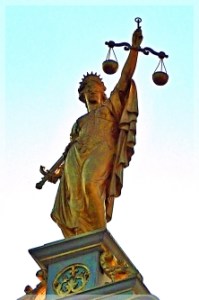
Just because we don’t put our thumb on the scale or cheat on our income taxes doesn’t necessarily mean we’re using honest weights. Consider the scales of justice, one of the oldest and most familiar symbols associated with law. Representing the fairness expected in our courts, they represent the weighing of evidence on its own merit. Lady Justice often is depicted carrying those scales. Her blindfold means that she is blind to a person’s wealth, power, gender, politics, nationality, religion, and race. She doesn’t have double weights and measures or double standards. But, just as justice does not always wear its blindfold in our legal system, it often doesn’t in our personal lives, as well.

How fair and unbiased are we when we deal with people? Do we prejudge them based on their race, accent, clothing, age, or position? Do we favor those who are more attractive, wealthier, more influential, better educated, or look like us? Does it tip the scales when someone can return a favor or do something for us? Do we give the benefit of the doubt to certain people and not to others? Are we as considerate and polite to those who serve us as we are to those we serve?

Do we hold ourselves to a different standard than that we hold for others? Using a different weight, do we readily overlook our poor behavior when we wouldn’t tolerate that same behavior in someone else? Do we love some neighbors more than others or more freely extend mercy and kindness to certain people? When we buy something do we expect full disclosure but say, “buyer beware,” when we sell it? Do we correct the check when it’s in the restaurant’s favor but leave well enough alone when it’s in ours? Do our ethics and morals change with the situation or the people present? If the answer is yes to any of these questions, we’ve been using differing weights and dishonest scales!

The prophets Amos and Micah pronounced judgment on Israel for their lack of social justice, theft, exploitation, corruption, violence, bribery, and unethical business practices. What would the prophets say about us?

You can easily judge the character of a man by how he treats those who can do nothing for him. [James D. Miles Allison]

My brothers and sisters, do not show favoritism as you hold on to the faith in our glorious Lord Jesus Christ. For if someone comes into your meeting wearing a gold ring and dressed in fine clothes, and a poor person dressed in filthy clothes also comes in, if you look with favor on the one wearing the fine clothes and say, “Sit here in a good place,” and yet you say to the poor person, “Stand over there,” or “Sit here on the floor by my footstool,” haven’t you made distinctions among yourselves and become judges with evil thoughts?… If, however, you show favoritism, you commit sin and are convicted by the law as transgressors. [James 2:1-4,9 (CSB)]

God’s verdict is on the lips of a king; his mouth should not give an unfair judgment. Honest balances and scales are the Lord’s; all the weights in the bag are his concern. [Proverbs 16:10-11 (CSB)]

Copyright ©2025 jsjdevotions. All rights reserved.

WAS THERE RAIN BEFORE THE FLOOD?

…for the Lord God had not made it rain on the land, and there was no man to work the ground. But mist would come up from the earth and water all the ground. Then the Lord God formed the man out of the dust from the ground and breathed the breath of life into his nostrils, and the man became a living being. [Genesis 2:5-7 (CSB)]

double rainbowEarlier this week, I compared a fictional 21st century Noah with the original ark builder. Although I was told there had been no rain on earth before the Flood, since I hadn’t read it myself, I wanted to make sure before writing it. As it turns out, there is no clear decisive answer to whether or not there was rain before Noah’s day so I didn’t mention it at all.

Those who claim it never rained before the Flood occurred cite verses from Genesis and Hebrews to support their position. Genesis 2:5-7 tells us a mist covering the land watered the ground before the advent of mankind. Since rain isn’t mentioned again until Genesis 7:4 when God tells Noah He will make it rain, they assume the mist covered the earth until that time.

On the other hand, mist watering the earth prior to Adam doesn’t necessarily mean this canopy of water continued when Adam and Eve were banished from Eden. After the fall, things on earth changed radically—pain and death were introduced, the ground was cursed, and man had to toil to have food to eat. That neither rain nor drought are mentioned doesn’t necessarily mean they didn’t exist after the fall. It’s quite possible that the physical processes of water evaporation, cloud formation, and precipitation that recycle the world’s water supply today existed at the time of Noah, but we don’t know.

In Hebrews 11:7, we are told that God warned Noah “about what was not yet seen.” While that which hadn’t yet been seen could have been rain, it also could have been the phenomenon of a global catastrophe that started with a 40-day rainstorm flooding the entire earth and destroying every living thing on the earth. The event was so extraordinary that it would be one year and ten days after the rain began that Noah, his family, and the animals emerged from the ark onto dry land.

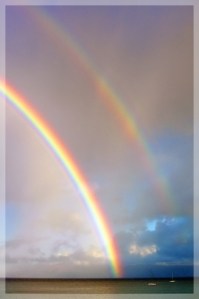
Once the waters receded, God promised that never again would floodwaters destroy all life; He confirmed His covenant with a rainbow. The timing of this post-flood rainbow is given as additional evidence that rain was a new phenomenon on earth since a rainbow requires the existence of rain. But, when God said, “I have placed my bow in the clouds,” He never said it was the first rainbow. God merely told Noah that it would serve as a reminder of His promise never to flood the earth again.

There is no way to know for sure whether there was rain prior to the flood and a case can be made for both sides of the question. Fortunately, whether or not it rained before the flood is a moot point because it doesn’t matter. Nevertheless, two valuable lessons were learned while I tried to answer that question. The first was simply to get our Bible knowledge first-hand!

The second lesson is that we should be cautious of reading more into a few Bible verses than what is there. There is a vast difference between speculation and Gospel truth and much of what occurred from the beginning of time through the 1st century AD is not mentioned in the Bible. After all, 400 years are missing between Malachi’s words and the birth of John the Baptist! Just because something isn’t stated in Scripture doesn’t necessarily mean it didn’t exist or happen! For example, Exodus mentions only two midwives by name but that doesn’t mean they were the only midwives serving several thousand Hebrew women! While we may find portions of Scripture ambiguous about peripheral issues (like rain or midwives), the Bible is quite clear about the essentials of Christian doctrine! Where Scripture is clear, we must be inflexible about the fundamentals of our faith. Let us be wary, however, of being unbending when Scripture is unclear and the issue is minor.

On the essentials, unity. On the nonessentials, liberty. In everything, charity. [Jack Hyles]

I have placed my bow in the clouds, and it will be a sign of the covenant between me and the earth. [Genesis 9:13 (CSB)]

By faith Noah, after he was warned about what was not yet seen and motivated by godly fear, built an ark to deliver his family. By faith he condemned the world and became an heir of the righteousness that comes by faith.  [Hebrews 11:7 (CSB)]

Copyright ©2025 jsjdevotions. All rights reserved.

NOAH AND THE RED TAPE

It was by faith that Noah built a large boat to save his family from the flood. He obeyed God, who warned him about things that had never happened before. By his faith Noah condemned the rest of the world, and he received the righteousness that comes by faith. [Hebrews 11:7 (NLT)]

Thousands of years ago, God told Noah to build a boat the height of a four-story house, the length of one-and-a-half football fields, and with the storage capacity of about 450 semi-trailers. Without benefit of Home Depot or power tools, he managed to do it. What would happen if God gave Noah those same instructions today?
As the rain started to fall, I suspect 21st century Noah would be sitting on his front porch with no ark or animals in sight. He would however, have a litany of excuses for God. First, his neighbors objected to boat building in their neighborhood, so he had to go before the planning commission, zoning board, and city council for rezoning. The ark’s building permit wasn’t issued until its blueprints conformed to code with sprinkler system, emergency lighting, additional bathrooms, fire escape routes, exit signs, handicap accessibility, and commercial kitchen. The Forest Service refused to allow him to log the 3-million board feet of gopherwood he needed and the EPA objected to using tar to waterproof the ark.

FEMA said Noah couldn’t start work until an environmental impact study was done on the proposed flood. Even though the man explained he wasn’t proposing a flood but was preparing for one, Noah still had to wait until the study was finished. His attorney insisted he get easements from his neighbors to cross their property while hauling the ark to the shore, the power company demanded payment to raise several power lines so the ark could pass under them, and the Army Corps of Engineers required a permit to dredge a channel once the ark got to the water. Noah’s explanation that none of those things were necessary since the water would be coming to him fell on deaf ears.

After getting into a dispute with the CDC and USDA about importing and exporting animals, PETA and the ASPCA claimed Noah was collecting wildlife against their will and that placing them in pens on a boat was cruel. Even though Noah was trying to save rather than harm them, an injunction prevented him from gathering or possessing any animals. Following a confrontation with the Coast Guard about the number of life-jackets and life-boats needed for the people and animals coming aboard, Noah was told he needed to obtain a Master Captain’s license to pilot the ark. After sitting through 56 hours of classes, acing four exams, and spending the required 720 days aboard a ship, Noah failed the required physical because of his advanced age! “Lord, I tried,” he explained, “but what you asked was impossible!”

Fortunately, the deluge happened long before man’s invention of red tape and bureaucracy. If the real Noah had allowed circumstances to deter him from God’s task, mankind’s story would have ended in the sixth chapter of Genesis. Then again, it probably wasn’t a whole lot easier for the real Noah than my modern one. Obtaining the wood, building a ship that size, explaining the project to his family, dealing with skeptical neighbors, supplying the ark, assembling and loading the animals—all posed tremendous challenges. Noah, however, was a “righteous” man and, as “the only blameless person living on earth at the time…he walked in close fellowship with God.” Even in the 21st century, a man like that wouldn’t let any amount of red tape keep him from doing God’s will!

What my modern Noah didn’t understand is that we are to fear God above all others—even indignant neighbors, government bureaucracy, and angry protesters. There is an urgency in our obedience to God that has been lost in today’s world of red tape, paper work, and excuses. Even though the concept of a cataclysmic global flood and building a boat on dry land probably made little sense to him, Noah obediently did everything that God commanded him to do when God told him to do it. God expects us to do the same—even when the task seems impossible and the challenges insurmountable.

When God assigns a task, He doesn’t abandon us. He equips, enables, provides, and qualifies us. He can be trusted to give us the resources, skills, and direction necessary to do His work. Let us remember that the Jordan River didn’t stop flowing for the Israelites until the priests’ feet had touched the water and the widow’s flour and oil didn’t multiply until she used the last of hers to feed Elijah! If we are doing God’s will, He will hold back the water when we bravely walk into it, provide the ingredients we need when the cupboard is bare, and give us a giant pair of scissors to cut through red tape when we get tangled in it. Before that happens, however, we must trust Him enough to take the first step.

Each of us may be sure that if God sends us on stony paths, He will provide us with strong shoes, and He will not send us out on any journey for which He does not equip us well. [Alexander MacLaren]

May he equip you with all you need for doing his will. May he produce in you, through the power of Jesus Christ, every good thing that is pleasing to him. All glory to him forever and ever! Amen. [Hebrews 13:21(NLT)]

Copyright ©2025 jsjdevotions. All rights reserved.

SWEETER THAN HONEY

Your words were found, and I ate them. Your words became a delight to me and the joy of my heart, for I bear your name, Lord God of Armies. [Jeremiah 15:16 (CSB)]

“Son of man,” he said to me, “feed your stomach and fill your belly with this scroll I am giving you.” So I ate it, and it was as sweet as honey in my mouth. [Ezekiel 3:3 (CSB)]

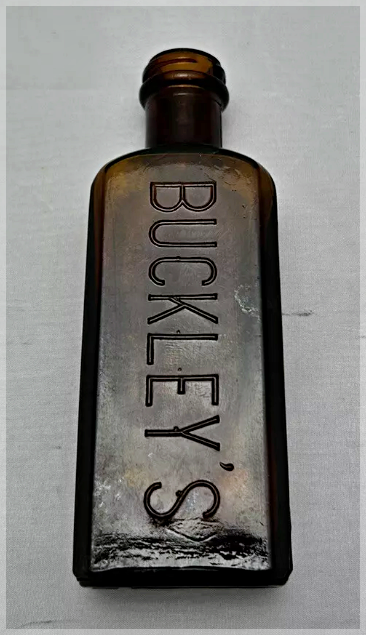
Back in 1919, pharmacist W.K. Buckley created a concoction to treat coughs, colds, and bronchitis called Buckley’s Original Mixture. Buckley’s elixir was tremendously effective but its flavor was horrid. Nevertheless, their nasty tasting blend of things like menthol, camphor, Canadian balsam, and pine needle oil is still being sold more than 100 years later. The mixture’s longevity is due as much to the company’s straightforward and humorous “awful taste” ad campaign as it is to its reputed efficacy. With the slogan, “It tastes awful. And it works!” Buckley’s is described by consumers as “the worst tasting, foulest smelling, yet most effective cough remedy.” Apparently, it is. Despite ads admitting, “People swear by it. And at it,” consumers continue to endure Buckley’s ghastly flavor. Never having used Buckley’s (and not about to try), this is not an endorsement!

While nowhere as unpleasant tasting as Buckley’s Mixture, many Christians tend to treat imbibing in God’s word as they might taking a dose of it or some other nasty tasting medication: hard to swallow and consumed only out of necessity! While Scripture’s writers sometimes likened God’s word to food or wrote of its taste, they never described it as “drinking turpentine and transmission fluid mixed together, with a hint of menthol and petroleum” as do some of Buckley’s customers!

While the Bible can be said to be “good for what ails you” and “just what the doctor ordered,” reading Scripture isn’t like taking a dose of Buckley’s or castor oil. God’s word never should be treated as a horrible-tasting medicine—something taken only when absolutely necessary. Peter likened God’s word to milk while Paul and the writer of Hebrews compared it to both milk and solid food (like meat). Job reported treasuring God’s words more than his daily food and Jeremiah, Ezekiel, and the Apostle John all wrote of eating God’s word. And, unlike those who consumed Buckley’s, there were no complaints about its foul taste. In fact, Jeremiah found God’s words a delight and the joy of his heart while Ezekiel and John said they were “sweet as honey” in their mouths. In fact, Psalms 19 and 119 refer to God’s words as even “sweeter” than honey!

When God fed the hungry Israelites in the Sinai desert, His provision included more than earthly food. Along with manna, He gave them something beautiful with which nourish their very souls—His Word! When Israel arrived in the Promised Land, the manna stopped but God’s voice didn’t; He provided mankind with a feast from Genesis through Revelation—and that feast remains with us today. As Moses told the Israelites and Jesus repeated to His followers, “Man must not live on bread alone but on every word that comes from the mouth of God.”

While God’s Word has been described as “sweet as honey” in one’s mouth, unlike cotton candy and sugary sodas, there’s more to it than a sweet taste. Rather than empty calories, God’s words were described by Charles Spurgeon as, “full of substance—they are spirit, they are life, they are to be fed upon by the spiritually hungry!” Remembering that God spoke all of creation into existence with His Word, it shouldn’t come as a surprise that God’s Word is what sustains us, as well! Fortunately, the words of Scripture are sweeter and much easier to consume than Buckley’s disagreeable mixture!

The Bible is not an end in itself, but a means to bring men to an intimate and satisfying knowledge of God, that they may enter into Him, that they may delight in His Presence, may taste and know the inner sweetness of the very God Himself in the core and center of their hearts. [A.W. Tozer]

 He humbled you by letting you go hungry; then he gave you manna to eat, which you and your ancestors had not known, so that you might learn that man does not live on bread alone but on every word that comes from the mouth of the Lord. [Deuteronomy 8:3 (CSB)]

Copyright ©2025 jsjdevotions. All rights reserved.