
For God loved the world so much that he gave his only Son, so that every one who believes in him shall not be lost, but should have eternal life. … Any man who believes in him is not judged at all. It is the one who will not believe who stands already condemned, because he will not believe in the character of God’s only Son. [John 3:16,18 (PHILLIPS)]
 We once had neighbors who left our church for what I’ll call the “church of what’s happening now.” Its members have a variety of beliefs about God and, while they acknowledge a “higher power,” they do not share a concept of it. It could be God, a sacred force, or the spirit of life and there is no right or wrong way to understand Him, Her, or It. While some may regard Jesus as a great moral and spiritual leader or prophet (and possibly even supernatural), they don’t believe He was God and reject the Trinity. Theirs is an eclectic mix of beliefs with each person having his or her own personal truth. Embracing uncertainty, some believe there may be an afterlife and/or reincarnation but, for others, this life is all there is. Although they look to the Bible for wisdom, they also find spiritual inspiration in texts like the Bhagavad Gita, Dhammapada, and Tao Te-Ching. Our neighbors were loving caring people who believed in good things like justice, compassion, peace, protecting the environment, and the dignity of the individual. Nevertheless, while some of their thinking was correct, their conclusion was very wrong.
C.S. Lewis asserts that while many non-Christian religions have good ideas and may not be entirely erroneous, they most definitely are not correct. After all, while some math answers might be closer to being correct than others, there is only one correct answer to the problem. For example, if we had to determine the volume of a cone, we’d need the correct formula:⅓ x b x h. But, before starting, we’d need to figure out b (the area of the base) with another formula: pi x r2. To do that, however, we’d have to know the value for pi. With two formulas, several multiplications and one division, there are plenty of opportunities to get the final answer wrong. If the wrong formulas are used, the answer is wrong. If both the formulas and math are correct but the wrong number for pi is used, the answer is wrong and, if everything is done correctly but the decimal is misplaced, the answer still is wrong. Although a nice math teacher may give us some credit for being partially correct, I’m not sure God works that way. Although some of the answers offered by other religions are closer to being right than others, the only correct answer to the salvation equation is Jesus Christ!
In mathematics, we’re given a set of axioms (fundamental truths) and postulates (fundamental assumptions) on which we base our figuring. In Christianity, our creeds are our axioms and postulates. But rather than basing them on Aristotle or Euclid, our fundamental truths and assumptions are based on the Word of God as revealed in Scripture. Within those uncompromisable Christian beliefs, however, we are free to make choices and even disagree. That’s why we have so many different denominations! Nevertheless, our Christian creeds are just that—Christian—and they clarify and encompass our universal beliefs so that, however we got there, we all share the one and only right answer!
I believe in God the Father Almighty, Maker of heaven and earth, And in Jesus Christ his only Son our Lord, Who was conceived by the Holy Ghost, Born of the Virgin Mary, Suffered under Pontius Pilate, Was crucified, dead, and buried. He descended into hell; The third day He rose again from the dead; He ascended into heaven, And sitteth on the right hand of God the Father Almighty; From thence he shall come to judge the quick and the dead. I believe in the Holy Ghost; The Holy catholic Church, the Communion of Saints; The Forgiveness of sins; The Resurrection of the body, And the Life everlasting. Amen. [Apostles’ Creed]

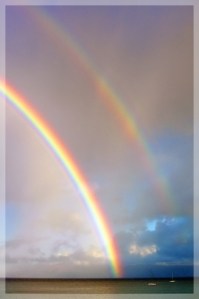 Earlier this week, I compared a fictional 21st century Noah with the original ark builder. Although I was told there had been no rain on earth before the Flood, since I hadn’t read it myself, I wanted to make sure before writing it. As it turns out, there is no clear decisive answer to whether or not there was rain before Noah’s day so I didn’t mention it at all.
 Thousands of years ago, God told Noah to build a boat the height of a four-story house, the length of one-and-a-half football fields, and with the storage capacity of about 450 semi-trailers. Without benefit of Home Depot or power tools, he managed to do it. What would happen if God gave Noah those same instructions today?
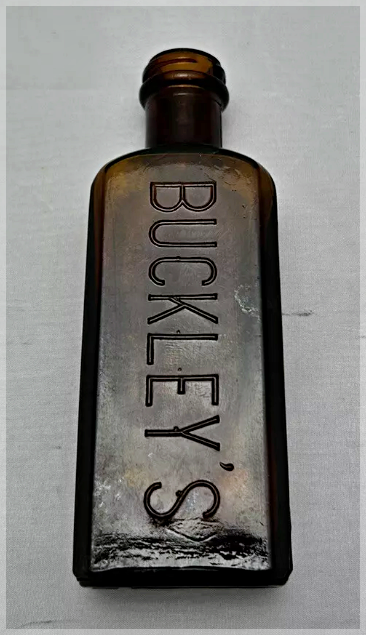 Back in 1919, pharmacist W.K. Buckley created a concoction to treat coughs, colds, and bronchitis called Buckley’s Original Mixture. Buckley’s elixir was tremendously effective but its flavor was horrid. Nevertheless, their nasty tasting blend of things like menthol, camphor, Canadian balsam, and pine needle oil is still being sold more than 100 years later. The mixture’s longevity is due as much to the company’s straightforward and humorous “awful taste” ad campaign as it is to its reputed efficacy. With the slogan, “It tastes awful. And it works!” Buckley’s is described by consumers as “the worst tasting, foulest smelling, yet most effective cough remedy.” Apparently, it is. Despite ads admitting, “People swear by it. And at it,” consumers continue to endure Buckley’s ghastly flavor. Never having used Buckley’s (and not about to try), this is not an endorsement!
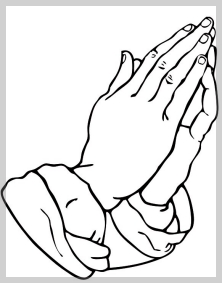 While there are no hard and fast rules about prayer except to believe in it and do it, some people use acronyms to help organize their prayers. The PRAY method stands for Praise, Repent, Ask, and Yield while the ACTS method formats prayer into Admiration (praise), Confession, Thanksgiving, and Supplication (asking God for what is needed). A TACOS prayer structure is Thanks, Adoration (or Applause), Confession, Others, and Self. Rather than an acronym, I was taught “The Hand of Prayer” as a girl. Beginning with the thumb, the order was Praise, Thanksgiving, Confession, Intercession (prayer for others), and Petition (prayer for oneself).
 Devotions of the Heart