
With his great power the Lord warned me not to follow the road which the people were following. He said, “Do not join in the schemes of the people and do not be afraid of the things that they fear.” [Isaiah 8:11-12 (GNT)]
 Knowing that God’s people must be fully committed to their cause in battle, Deuteronomy 20 provided several exemptions from combat. An anxious man wouldn’t have his mind on battle and could make blunders that might endanger the entire army. Because men too preoccupied with concerns at home wouldn’t fight wholeheartedly, those who were engaged to be married, had built a house and not yet dedicated it, or planted a vineyard and not harvested it were released from service. Moreover, anyone who admitted to being afraid was also sent home. This was done to keep their negativity and fear from infecting the entire army’s morale. A small army of faithful men was better than a large army of worried, frightened or fainthearted ones.
While the anxious and fearful soldiers were sent home, it’s not so easy to avoid those kinds of people in our daily lives. We all know people who seem to carry a dark cloud of pessimism over their heads. It doesn’t just rain on their parade—negativity pours down on everyone else’s, as well.
Several years ago, a friend’s husband had a slight cough. By the time she was done fretting about it to family and friends, she was sure it was bronchitis which would lead to pneumonia which would mean hospitalization. This led another family member to be sure the man’s death was imminent and funeral plans needed to be made. The wife’s negativity and fear were far more contagious than the man’s cough which, incidentally, never turned into bronchitis and is now long forgotten.
I’m not Pollyanna and I know that some coughs do lead to pneumonia, not all biopsies come out benign, bad things happen to good people, not everyone recovers from COVID, and not every story has a happy ending. That, however, doesn’t mean I have to put up my umbrella at the first cloud or focus on the storm rather than pray for a rainbow! Whether my glass is half empty or half full, I know that God will make sure I have all that I need in it.
The Old Testament advice is simple: stay away from the faint-hearted, pessimistic and fearful lest they infect you with their lack of faith. While we can be protected from measles, chicken pox, pneumonia, and even coronavirus, there’s no vaccine for panic, negativity or anxiety and they’re far more contagious than any virus! When dealing with a communicable disease, medical experts advise us to wear a mask, wash our hands, keep our distance, avoid crowds, and get vaccinated. Pessimism and fear are as infectious as COVID and, since there’s no vaccination for them, we can avoid exposure by washing our hands of doom scrolling, socially distancing ourselves from the “Debbie Downers“ of life, and avoiding groups of grumblers and faultfinders. Rather than being infected by pessimism, complaint or anger, let us prevent contagion by trusting in the Lord and choosing faith over fear and gratitude over grievance.
Fear is catching. He whose heart fails him makes his brethren’s heart to fail, like his heart. [Matthew Henry]
 “Don’t worry, be happy,” sang Bobby McFerrin. Right now, for many of us, that’s easier sung than done. This pandemic has turned our lives upside down. Between rising numbers of COVID cases and concern about on-line schooling, money troubles, closing businesses, political divisiveness, and quarantining, it’s hard not to worry!
 In spite of the theological reasons I gave for the miracle at Cana, providing wine for a wedding still seems an odd choice for Jesus’ debut miracle. Compared to the rest of His miracles, it almost seems frivolous. While the situation was embarrassing for the host, it wasn’t as grave as a demon-possessed child, thousands of hungry people, a crippled woman, a paralyzed man, or a dead friend. When considering Jesus’ reason for performing this miracle, Max Lucado had a simpler explanation than mine. He suggests that Jesus was concerned about the dearth of wine at the wedding simply because it concerned Mary; He cared because she cared! Pointing out that God is there for both the great and small, Lucado asked, “If Jesus was willing to use divine clout to solve a social faux pas, how much more willing would He be to intervene on the weightier matters of life?” Lucado certainly has a point; since it mattered to Mary, it mattered to Jesus.
 “We’re just a big ball of frustration right now!” a public information officer for the San Antonio Police said while describing the rise in road rage and violent driver incidents in that city. Unfortunately that big ball of frustration isn’t limited to the road or San Antonio. Satan must be chortling in glee as he watches people’s virus-fueled anxiety spurring rising levels of aggression and hostility everywhere.
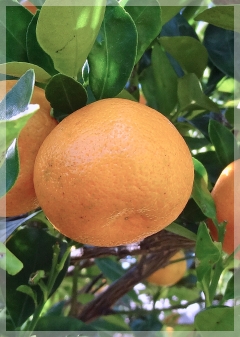 “What’s your orange?” the teacher asked her remote learning class. Before having them answer, she explained the “monkey trap.” In Southeast Asia, hunters capture monkeys by drilling a hole in a pumpkin. The hole is just large enough for a monkey’s hand but too small for his fist. They secure the pumpkin to a tree, put a piece of sweet juicy orange inside the gourd, then retreat and wait. Eventually, an unsuspecting monkey comes along, smells the orange, and reaches through that small hole into the pumpkin. Once he’s grabbed hold of the orange, however, his fist can’t get back through the same hole. The monkey pulls and pulls but can’t free his hand. While he’s struggling to pull out his orange-filled fist, hunters easily throw a net over him. Not understanding that he can’t have both his freedom and the orange, he loses them both. After telling this story, the teacher again asked her students, “What is your orange? What is it you can’t release?”
 Yet God has made everything beautiful for its own time. He has planted eternity in the human heart, but even so, people cannot see the whole scope of God’s work from beginning to end. [Ecclesiastes 3:11 NLT
 Devotions of the Heart