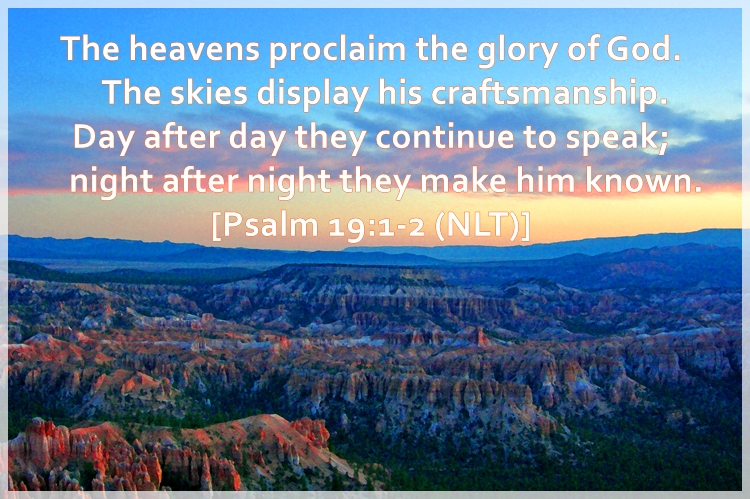
Bryce Canyon Sunrise

Bryce Canyon Sunrise
 A severely ill 12-year old girl’s wish was to be a singing star and, thanks to the Make-a-Wish Foundation, last Sunday her dream came true. Over a year’s worth of planning went into creating a full concert experience for her. The flashing lights of a police car announced her arrival and, when the professionally made-up, coifed, and gowned star exited her limo, we joined hundreds of others and screamed like adoring fans. While her security team (complete with dark glasses and earpieces) cleared the way, she and her entourage walked down the red carpet to the theater. The crowd cheered, took photos, waved banners and begged for autographs. Once in the theater, backed up by the choir from her school, she sang to an auditorium filled with 300 admiring fans.
While being a pop star is not an unusual wish for a tween, if someone offered to fulfill one wish for you, what would it be? Some of us may have exotic trips on our bucket list. At $76,950, however, that 24-day “Around the World by Private Jet” tour sponsored by National Geographic will probably remain just a fantasy. Others of us might wish to complete a major feat—hike the Appalachian Trail, bike across America, get a book published or have 600 species of birds on our Life List. It certainly isn’t wrong to wish big dreams; after all, wishes often become goals and goals can become reality. Good wishes are ones that center on God and His desires for us: wisdom, peace, spiritual gifts, the coming of God’s kingdom, or the salvation of others. On the other hand, our wishes should never lead us to sin, be for more material goods than needed, harm others, erase what God has already given us or try to circumvent His plan for our lives.
The behavior of the Israelites on their trek to the Promised Land is a perfect example of wrongful wishing. Tired of God’s generous provision of manna and desiring more than necessary, they cried “We want meat!” That wish certainly didn’t turn out well for them. Although they got what they wanted—60 bushels of quail apiece—they also got something extra. Before the quail had been eaten, God sent a plague and thousands died. Unfortunately, the Israelites were slow learners. Ready to enter the Promised Land but afraid of the Canaanites, they expressed their dissatisfaction with God’s plan. “If only we had died in the land of Egypt! Or if only we had died in this desert!” Again, God accommodated them. Over the next forty years, all of those faithless people got exactly what they wanted and died in the desert. Although Moses lived long enough to see Canaan again, only Caleb and Joshua and the Israelites who’d been under twenty at the time of the rebellion entered the Promised Land.
Their experience should teach us to be careful what we wish for—we just might get it!
A prayer in its simplest definition is merely a wish turned Godward. [Phillips Brooks]
 If there ever was a time for wisdom, this election season is it. I’ve watched debates, read articles, researched claims, listened to the pundits, and still haven’t decided. The choice seems to be between bad and worse and whoever is worse seems to change daily.
I came across an article in The Aquila Report that posed an interesting scenario. With apologies to its author John Barber, here’s my version. For a moment, pretend you and your family are stranded in a sinking boat. Along come two rescue vessels. One is captained by an infamous liar and thief while the other is captained by a notorious adulterer and reprobate. Both promise to take you and your family safely to shore. You, however, don’t want to ride in a boat with either sinner and you’re not convinced either one truly knows how to pilot a ship. You’d prefer to wait for an evangelical Christian captain who shares your faith and values.
Many might advise, “Stand your ground; don’t compromise your values. Stick to your guns and stay in the boat!” Others might tell you to get in whichever ship is captained by whoever appears to be the lesser of two evils. This is the situation many of us feel we’re in with the Presidential election fast approaching. We have two candidates claiming they will take us to safety and yet there are few people who want to trust their future to either one. So, do we pick the lesser of two evils, write in a name, or not vote at all?
Let’s go back to that sinking boat and the lesser of two evils option. That’s clearly a no-win situation since no matter which captain we choose, we’ve chosen wrong. Even the lesser of two evils is still evil! In good conscience, can we get in any boat with someone of poor character? Unfortunately, sticking to our principles and staying in the sinking boat is also a no-win solution. Since that hoped for Christian rescue ship isn’t on the horizon, our boat will sink and our family will perish. We’ve failed them by doing nothing to ensure their future. Perhaps our only option is to look carefully at those two scoundrel captains and choose whoever appears to be the better one or will do the least amount of damage while at the helm. The important thing is to save our family and safeguard their future the best we can.
As to which captain or candidate is the better one, I wouldn’t presume to tell you. I will, however, tell you how I’m deciding. I’m consulting with the Captain of my ship—God. He’s given me plenty of guidelines in His word as to the qualities of a good leader and I will prayerfully weigh both candidates against God’s wisdom. While I think God is sorely tempted to throw a few lightning bolts at both politicians, as I mark my ballot, I will be asking myself, “How would Jesus vote?”
For starters, unless Jesus of Nazareth is on the ballot, any election forces us to choose the lesser of evils. … Across every party and platform, all have sinned and fall short of the glory of God. [Russell Moore in “Christianity Today”]
Knowledge is knowing a tomato is a fruit. Wisdom is not putting it in a fruit salad. [Miles Kington]
 I know a lot of knowledgeable people, educated and erudite, some of whom may even be MENSA members. I also know several wise people, many of whom are neither learned nor especially well-read. While they might never come close to passing MENSA’s membership requirements, I would much prefer their wise advice to that of someone who is merely book smart or scholarly.
Solomon, when asked by God what he wanted, recognized his own inadequacy and asked God for wisdom. Recently, our pastor asked us what we’d want if God gave us a similar offer. Since we were at Bible study, we knew the right answer and promptly responded “wisdom.” In actuality, however, given the opportunity, wisdom probably wouldn’t be our first response. More often than not, we would request something like riches, health, success or happiness.
When Solomon asked for wisdom, God gave him that along with riches, fame, and a long life. While there were no caveats with the first three gifts, there was with the fourth—to get that long life, Solomon had to remain obedient to the Lord. As Solomon’s actions proved, all the wisdom in the world is meaningless unless one uses it. Unfortunately, through the years, the wise king started to depend on his own knowledge rather than God’s wisdom; as a result, he never got those extra years God had promised.
Fortunately, if we want wisdom, we don’t have to wait for God to make us an offer like Solomon’s. He’s already given it to us. The Apostle James assures us that, if we need wisdom, all we need to do is ask and God will generously give it to us! Just as there was for Solomon, however, there is a condition to this offer. When we ask God for wisdom, we must believe in Him and trust that His way is best. We’d better be planning on being obedient to His direction and committed to what He says. His wisdom is not to be weighed as we might the advice of a friend or consultant nor is it to be considered in light of our personal preferences. When we ask, we must believe that God will answer and be willing to accept His answer unconditionally. Although Solomon’s wisdom came with riches and fame, we shouldn’t expect to get such an extravagant bonus with God’s gift of wisdom to us. Then again, maybe we will. After all, regardless of the amount, a truly wise man is more than satisfied with all the riches, fame and years with which he is blessed.
Wisdom is the right use of knowledge. To know is not to be wise. Many men know a great deal, and are all the greater fools for it. There is no fool so great a fool as a knowing fool. But to know how to use knowledge is to have wisdom. [Charles Spurgeon]

Fortunately, I’m not an explorer—my sense of direction is terrible and I’m not so handy with a compass. Besides, compasses can’t be trusted. Because the earth actually is one big magnet, instead of pointing to true north (the “North Pole”), a compass will align itself with the earth’s magnetic field. Although true north is located somewhere in the Arctic Ocean, a compass points to magnetic north, which is about 500 km away on Ellesmere Island in Northern Canada. To make it even more confusing, magnetic north is always moving and has moved 1000 km in the last 150 years. Unfortunately, finding true north is essential for accurate navigation, which is why I defer to the captain of my ship and the pilot of my plane when travelling long distances.
Folklore has it that one of my favorite wildflowers can find true north better than most compasses. The Compass Plant (or Silphium laciniatum as the botanists would say) stands six to twelve feet tall and its bright yellow flowers are beacons in the prairie. In bright sunlight, its leaves tend to orient themselves in a north-south pattern to avoid the direct rays of the midday sun. Apparently, the plant got its name because the pioneers used it to guide them across the Midwest prairies. I’m not so sure about its accuracy since, from my observation, the leaves tend to go every which way. The flowers, however, always seem to point in the same direction—toward the sun!
Finding our true north is as essential in life as it is in navigation and it’s even easier to be lost in life’s journey than it is on the prairie or in the ocean. Uncertain of where we are, we’re often unclear about where we’re going or what path we are to take to get wherever it is. Life’s true north, of course, has nothing to do with the North Pole, the earth’s axis, magnetic variations, grid lines, maps or even compasses. If I need to know where I am, where I need to go, or how to get there, I’m going to follow the example of the Compass Plant and look to the Son!
 “Biology!? Math!? English! AAHH!” groans Nancy in a recent one of Guy Gilchrist’s comics. “I shouldn’t have to memorize anything I can Google!!” she protests with a frown. Oh, I feel your pain, Nancy; indeed, I do! Were it not for my Bible’s concordance and Google, I’d be hard put to include Bible verses in my devotions. I can manage to remember the gist of many verses but don’t ask me for chapter or verse and you’d better not quote me because my words won’t be exact. If quizzed on Scripture, I definitely would need an open book test and, like Nancy, would much prefer having access to Google.
We are called to witness for Christ and yet, without a Bible (or a computer) in hand, I make a pretty poor witness. The Bible, however, is pretty clear about knowing God’s word—not just reading it—but actually knowing it. I may read it, I may study and write about it but, when it comes to actually knowing Scripture and being able to recite it, I’m at the bottom of the class.
Granted, being able to talk the talk and recite Scripture certainly doesn’t make someone a follower of Christ or a good witness for His kingdom. Having faith and walking the walk is more important that being able to rattle off Bible verses. Nevertheless, at some point, we’ll be asked why we walk with Christ and what makes us so sure ours is the path to take. It’s then that we need to be able to do some talking—to share what we believe and why we believe it.
At Bible study recently, someone asked our pastor how to defend his belief that Christ is the only way to salvation. The answer, of course, is found in Scripture—John 14:6 which says, “I am the way, the truth, and the life. No one can come to the Father except through me.” Our pastor reminded us that the Holy Spirit will provide us with the words we need when witnessing and, indeed, He will. Yet, we need to remember that God already has provided us with most of those words in the Bible. Let us never forget that God’s armor has only one weapon—the Sword of the Spirit—which is God’s word. Even without our Bibles, iPads or a wireless connection, we’ll have all the weaponry we need if we have God’s word in our hearts and minds.
I know of no other single practice in the Christian life more rewarding, practically speaking, than memorizing Scripture. . . . No other single exercise pays greater spiritual dividends! Your prayer life will be strengthened. Your witnessing will be sharper and much more effective. Your attitudes and outlook will begin to change. Your mind will become alert and observant. Your confidence and assurance will be enhanced. Your faith will be solidified. [Chuck Swindoll]
 Devotions of the Heart