
Jesus told him, “If you want to be perfect, go and sell all your possessions and give the money to the poor, and you will have treasure in heaven. Then come, follow me.” [Matthew 19:21 (NLT)]
 Tomorrow, December 6, is the Feast of St. Nicholas (or Sinterklass). Although it is difficult to know fact from fiction, we do know that St. Nicholas was born around 270 AD in Patara, a city in Lycia (modern day Turkey). The son of wealthy and devout parents, it was his uncle, the Bishop of Patara, who took charge of his spiritual life. Nicholas became the Bishop of Myra in Turkey, quite likely attended the council of Nicaea, spent seven years imprisoned under Diocletian Persecution, and died on December 6, around 343 AD. While we don’t know much about the man, he must have had a great impact on the early Christian church because, by 450 AD, churches in Asia Minor and Greece were named in his honor and, by the mid-6th century, the Emperor Justinian dedicated a church to him in Constantinople.
When Nicholas’ parents died, legend has it that he distributed the money and property he inherited to those who begged him for help. Taking seriously Jesus’ command to sell his possessions and give to the poor, he selflessly gave away his entire wealth. It’s said that wherever he saw suffering or need, he gave in secret and expected nothing in return. The best-known story of this revered saint is that he secretly provided money for three girls whose father was so poor he couldn’t provide them with dowries. No dowries meant no marriages which meant they’d be sold into lives of servitude. Nicholas secretly provided each girl with a bag of gold (some say by putting it in their stockings that were drying by the fire). This legend evolved through the centuries into the custom of gift giving on the eve of his saint’s day.
Tonight, in memory of the cherished saint, children throughout Europe will put out shoes, boots, or stockings to be filled with small gifts like coins, oranges, nuts, candies, and cookies brought by the Saint. These little gifts are meant to be shared with others rather than kept for oneself. In some countries, the legendary saint is said to be accompanied by the demonic Krampus who leaves coal in the shoes and stockings of naughty children (or possibly beats them with a stick)!!
From what we know of him, Nicholas loved God more than anything. I wonder what he would think of the way his name, faith, and generosity have turned into such crass commercialism. While he is the patron saint of children, seamen, brides, the hungry, and scholars, he is not the patron saint of credit card companies, malls, shoppers, catalogues, or Amazon! Nicholas certainly wouldn’t approve of the way Santa Claus has eclipsed the Christ child in the hearts of many.
As we move into this holiday season, perhaps we should emulate St. Nicholas, the original Santa Claus. His life wasn’t about how many presents were stacked under his tree; it was about dedicating his life to serving God and helping those in need. Perhaps we should pare down our Christmas list so that our gifts are as simple as fruit and nuts and must fit into a shoe or stocking. Let us also remember that those holiday gifts are to be shared. After all, it is Jesus, not Santa, who is the reason for the season!
 In C.S. Lewis’ children’s fantasy novel The Lion, the Witch and the Wardrobe, the youngest child, Lucy Pevensie, happens upon an enchanted armoire and steps into the magical world of Narnia. Upon returning, she rushes to tell her siblings of her astonishing adventure. Hearing such a tall tale and finding no concrete proof of its truth, her older siblings assume the story to be a figment of her imagination. They take their concern over her falsehood to their wise elderly uncle. He cautions them to use logic and consider Lucy’s story carefully. He points out there are only three possibilities: either she’s lying, crazy, or telling the truth. After pointing out that lies usually are more plausible than Lucy’s inexplicable tale, he asks if she’s lied before. The children admit she’s always been truthful. After pointing out that none of Lucy’s behavior indicates mental illness, they all agree she can’t have gone mad. He then suggests that since she’s neither a liar nor crazy, they could consider the possibility that Lucy’s story is true.
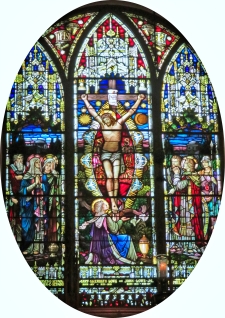 Pope Francis recently visited Singapore and, when speaking to young people at an interfaith meeting, he is reported to have said “All religions are paths to God.” After comparing the various religions to “different languages that express the divine,” he added, “There is only one God, and each of us has a language to arrive at God. Some are Sheik, Muslim, Hindu, Christian, and they are different paths [to God].” While the pontiff was encouraging interfaith dialogue, his words are troubling. I will not presume to know the Pope’s meaning or intention with his comments. Nevertheless, I find it important to address how the world understood the pontiff’s message.
 I was married fifty-seven years ago today. When I promised to love, comfort, honor, cherish, forsake all others, and to have and to hold my husband “for better for worse, for richer for poorer, in sickness and in health” until we parted at death, I had no idea just how bad “for worse” could get, how little money “for poorer” might be, or that sickness could mean much more than a case of the flu. I certainly never pictured us growing old with wrinkles, white hair, hearing aids, bifocals, arthritis, and the limitations that come advanced years.
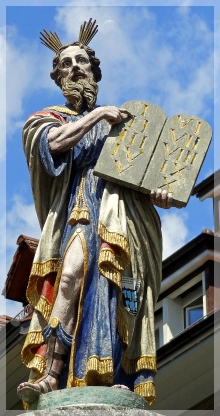 Although three places in Scripture tell us that the Lord proclaimed ten commandments and wrote them on stone tablets, those tablets weren’t numbered (especially not with Roman numerals)! The original languages of the Bible (Hebrew, Aramaic, and Greek) didn’t contain punctuation and the earliest manuscripts didn’t even have spaces between the words. While the words in Scripture are God-breathed, the punctuation was at the discretion of later copyists and translators. Without numbering, punctuation, or paragraphs, we can’t know for sure where one commandment ends and the other begins. As a result, while Jews, Roman Catholics, Protestants, and Orthodox Christians all observe the Ten Commandments, their commandments are not all the same!
 While reading about David and Goliath, I realized that it’s not just our seniors who can be undervalued or overlooked. It’s as wrong to disregard the youth in our midst as it is to discount the old. Likewise, just as some seniors may underestimate their gifts, the same could be said for those who still count the years rather than the decades! Age is just a number to God—He’s more interested in willing hearts than number of years!
