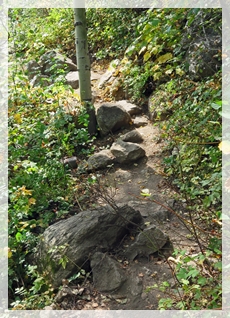
WORDS OF WARNING

Our kings, leaders, priests, and ancestors did not obey your Law or listen to the warnings in your commands and laws. [Nehemiah 9:34 (NLT)]
WARNING -8042webAlthough I heard the rumble of thunder and saw flashes of lightening, they weren’t what woke me from a sound sleep at midnight—it was the klaxon-like sound coming from my cell phone. My foggy brain figured it to be a weather alert and, since I could already see there was a storm, I rolled over and went back to sleep. After checking my phone the following morning, I saw it had been a warning about flash floods in our area. While running errands later that day, I saw the damage left by the storm and understood why the warning had been sounded. Since I had been safely tucked into bed in a house set on high ground, ignoring the flood alert didn’t endanger me. If, however, that had been an alarm about a tornado, I might have regretted not looking at the message or heeding its words of caution.

It’s not just weather warnings that we tend to ignore. Every time a smoker lights up, he is ignoring clearly written warnings on his pack of cigarettes. Do we always slow down when we see those yellow signs warning of a sharp turn, poor road conditions or a hidden entrance? As many times as we women are advised to regularly check our breasts for suspicious lumps, most women I know don’t. We’re cautioned about the dangers of the sun and yet we use tanning booths rather than sun block. Every year, the commuter trains in our area are delayed because people have ignored the warning lights and bells at a railroad crossing and, even though the waiter warns us that the plate is extremely hot, we will touch it nearly every time.

The Bible is filled with warnings; in fact, the word “warn” and its variations appear 173 times in my NLT translation. Add words like “heed,” “beware,” and “be careful” and it is obvious that the Bible is filled with cautionary advice and admonishments. The Israelites failed to heed the various words of warning given them by Moses and the many prophets that followed him and we’re not much better when it comes to abiding by the cautionary words of the New Testament.

Let us never forget that words of warning are a blessing in disguise. Like the annoying weather alerts, they are there for our safety, protection and welfare. It is, however, our responsibility to listen to and abide by them.
So be careful how you live. Don’t live like fools, but like those who are wise. Make the most of every opportunity in these evil days. Don’t act thoughtlessly, but understand what the Lord wants you to do. Don’t be drunk with wine, because that will ruin your life. Instead, be filled with the Holy Spirit, singing psalms and hymns and spiritual songs among yourselves, and making music to the Lord in your hearts. And give thanks for everything to God the Father in the name of our Lord Jesus Christ. [Ephesians 5:15-20 (NLT)]

When you follow the desires of your sinful nature, the results are very clear: sexual immorality, impurity, lustful pleasures, idolatry, sorcery, hostility, quarreling, jealousy, outbursts of anger, selfish ambition, dissension, division, envy, drunkenness, wild parties, and other sins like these. Let me tell you again, as I have before, that anyone living that sort of life will not inherit the Kingdom of God. [Galatians 5:19-21 (NLT)]

TOMORROW

bearing fruit -horz web

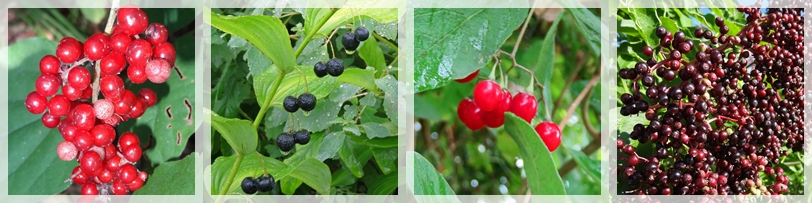
False Solomon’s Seal, Solomon’s Seal, Bittersweet Nightshade, Elderberry

I have carried you since you were born; I have taken care of you from your birth. Even when you are old, I will be the same. Even when your hair has turned gray, I will take care of you. I made you and will take care of you. I will carry you and save you. [Isaiah 46:3b-4 (NCV)]

Last night, at my mother-in-law’s retirement home, I was nearly run over by a parade of residents in wheelchairs along with several more ambulatory seniors shuffling along on their walkers as they moved toward the patio to enjoy the last rays of the day’s sun. Last night, I caught a glimpse of tomorrow and I’m not anxious to go there. It’s not the white hair and wrinkles—it’s not even the stooped posture and frailty—it’s the lack of independence that frightens me the most.

I’m at a point in life where, when I look at my children, I see what I was like yesterday—or what feels like just yesterday. Then, when I look at my mother-in-law, I see what life will be like tomorrow or the day after. At my age, time passes way too quickly. It seems only a few years ago that we had teenagers and now our teenagers have teens of their own. Wasn’t it just last month when I held the first grand in my arms? I turned around for just a second and now she has her driver’s permit. I’m sure it was yesterday when I stood on the bus so a senior could have my seat—now people offer their seats to me!

As I walk through the park, I’m reminded of the season. Instead of the gaudy colors of summer, I see the yellows, oranges and browns that come with autumn. The asters are just bits of fluff and the black-eyed Susans look naked without their golden petals. Yet, I see another kind of beauty—the beauty that comes with the changing season. In fact, the maples and oaks are more spectacular with their brightly colored leaves. Moreover, it is only when the flowers have faded that they start bearing their beautiful fruit. Old age, like the autumn prairie and woodlands, can be beautiful when accepted gracefully.

Our years are a gift from God. Having outlived all but one of my family members, these years are a gift I appreciate. Yet, I confess to apprehension when I walk into a room and can’t remember why I’m there, forget someone’s name, can’t open a jar, or need ibuprofen for my aching joints. I’m not so sure I’m going to enjoy everything about this next season of life. I don’t relish the thought of eventually giving up my driver’s license, being unable to handle my finances, using a cane or walker, or possibly needing a caregiver. I would much prefer to have the health and vitality of middle age to the frailty of the elderly and so I exercise and watch my diet. Nevertheless, no matter what I do, the years will eventually take their toll on my mind and body.

I’m sure God didn’t ask the flowers how they felt about getting old, withering and eventually dying, and I don’t think He’s going to ask me. I have no choice but to accept this season of life and joyfully prepare to move on to the next. Like the flowers and the people I saw last night, I will turn to face the sun and make the most of the days with which I have been blessed. And, like them, I will gracefully accept the passage of time and bear as much fruit as possible. While I may change and fade with the years, I know that God never will. As old as He is, He’ll never be infirm, He’ll never be too weak to hold me upright and He’ll never become so absent-minded that He forgets my name.

I have no one in heaven but you; I want nothing on earth besides you. My body and my mind may become weak, but God is my strength. He is mine forever. [Psalm 73:25-26 (NCV)]

People ought to enjoy every day of their lives, no matter how long they live. [Ecclesiastes 11:8a (NCV)]

ON A NEED TO KNOW BASIS

I also saw something else here on earth: The fastest runner does not always win the race, the strongest soldier does not always win the battle, the wisest does not always have food, the smartest does not always become wealthy, and the talented one does not always receive praise. Time and chance happen to everyone. [Ecclesiastes 9:11 (NCV)]

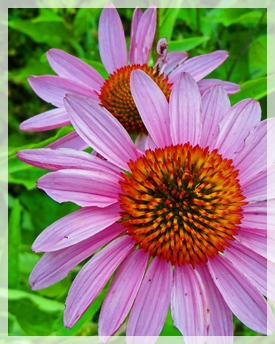
purple coneflower - MHSP087webSometimes, in the hope of protecting the integrity of secret or sensitive information, access to information is limited to a “need to know” basis. Of course, WikiLeaks and a variety of journalists have proven that there’s little that is ever truly confidential. The HIPA Act and all of those forms we sign when visiting a doctor are supposed to keep our medical information private and on a “need to know” basis. Having just learned that my medical insurance records have been hacked, it seems that a “need to know” status isn’t much of a safeguard to one’s privacy. In spite of all sorts of precautions, hackers, whistle blowers, and informants manage to access and leak information whether we need to know it or not!

There are times we think God is keeping certain information from us that we have a need to know. We want to know the answers to “Why?” Why did he get Alzheimer’s? Why did she go into a coma? Why did this child get leukemia? Why does my child have Down’s syndrome? Why the tornado? Why didn’t the driver stop? Why can’t I have children? Why was he at the wrong place at the wrong time? Why is her child in the gifted class when mine struggles to keep up? Why didn’t she listen? Why did he kill himself? Why is there so much hate and hurt? Why did so many die in such a senseless act of terrorism? Why couldn’t you save them? Why do bad things happen to good people? Why?

I freely admit that any sermons I’ve heard that tried to answer those questions failed miserably; they left me dissatisfied and empty. The short answer, of course, is readily available in Genesis: bad things happen because man sinned. That answer, however, is anything but satisfactory. The only sermons that ever made sense were the ones conceding that, while we’re in this world, there never will be an acceptable explanation for why bad things happen.

The answers to the cries of “Why?” are on a “need to know” basis. We’ll only know the facts we need to know at the time we need to know them. If we truly needed to know, God would tell us; but we don’t, so He won’t. It’s in God’s job description to know the answers to those questions; it’s not in ours. Our job description simply requires us to trust in Him and in His plan. It appears that the angels are all rather content with their positions so we shouldn’t count on them leaking any privileged information our way. We just have to accept that when, and if, we ever need to know why, God will supply a satisfactory answer. We don’t need to know why; we just need to know Him!

You are only human, and human beings have no right to question God. An object should not ask the person who made it, “Why did you make me like this?” The potter can make anything he wants to make. He can use the same clay to make one thing for special use and another thing for daily use. [Romans 9:20-21 (NCV)]

We know that in everything God works for the good of those who love him. [Romans 8:28a (NCV)]

TREKKING POLES – LESSONS FROM THE TRAIL (3)

But he said to me, “My grace is sufficient for you, for my power is made perfect in weakness.” Therefore I will boast all the more gladly of my weaknesses, so that the power of Christ may rest upon me. [2 Corinthians 12:9 (ESV)]

Trust in the Lord with all your heart and do not lean on your own understanding. In all your ways acknowledge him, and he will make straight your paths. [Proverbs 3:5-6 (ESV)]

chipmunk- SSCO9368awebI always had a false sense of pride about not using trekking poles when hiking. They were for novices or ersatz hikers—not a seasoned hiker like me. After reading about hiking the Appalachian Trail, however, it occurred to me that I could be mistaken. With my arthritic knees, perhaps I could use a little assistance.

After a few hikes in the Rockies, I am now a proponent of trekking poles. Where, I wondered, are the aching muscles, stiff joints, and sore feet I expected after several strenuous hikes? The poles, however, greatly reduced the impact on my legs, knees, ankles and feet. Why was I able to walk as quickly and steadily? The poles helped propel me forward and maintain a rhythm. Why hadn’t I struggled more on the steeps? The poles increased my traction and helped me maintain my balance. Why hadn’t I been more frightened on the most challenging sections? I felt more secure with the poles’ assistance. Why no scratches from the brambles? The poles helped me push away nuisances like thorny branches. I suppose I could have used them as defense weapons if attacked, but the squirrels and chipmunks posed no threat and the dogs I met were all friendly.

It took a bit of humility to admit that I might need some help when hiking and now I wonder why it took me so long to realize what seasoned hikers have known for so long. Sometimes our relationship with God is that way, as well. We struggle on, exhausting ourselves, defenseless, getting discouraged, struggling, frightened, and even hurt, before admitting, “Lord, I can’t do it alone!” When we finally admit our weakness, He will ease our fears, keep us steady, and provide us with the skill, strength, confidence and protection needed to complete our walk.

So we can confidently say, “The Lord is my helper; I will not fear; what can man do to me?” [Hebrews 13:6 (ESV)]

For God have us a spirit not of fear but of power and love and self-control. [2 Timothy 1:7 (ESV)]

The Lord is my light and my salvation; whom shall I fear? The Lord is the stronghold of my life; of whom shall I be afraid? [Psalm 27:1 (ESV)]

THE INDIRECT WAY – LESSONS FROM THE TRAIL (2)

When Pharaoh let the people go, God did not lead them on the road through the Philistine country, though that was shorter. For God said, “If they face war, they might change their minds and return to Egypt.” So God led the people around by the desert road toward the Red Sea. [Exodus 13:17-18a (NIV)]

Paul and his companions traveled throughout the region of Phrygia and Galatia, having been kept by the Holy Spirit from preaching the word in the province of Asia. When they came to the border of Mysia, they tried to enter Bithynia, but the Spirit of Jesus would not allow them to. … After Paul had seen the vision, we got ready at once to leave for Macedonia, concluding that God had called us to preach the gospel to them. [Acts 16:6-7,10 (NIV)]

9-3-15_9280web
While hiking up the ski mountain, we discovered that what takes only nine minutes on the gondola takes several hours. A 2,200 vertical rise became a more than five mile hike. When looking at the trail map, it is easy to see why—rather than walking straight up the face and following the path of the gondola, the trail traverses back and forth across the mountain. Geometry taught us that the shortest distance between two points is a straight line yet, sometimes, the most direct way is not always the best way. In actuality, going straight up the face of the mountain is near impossible except for the fittest, most adventurous, and possibly craziest of hikers. Being none of those, we followed the meandering trail. There were moments of discouragement as we crossed back and forth across the face of the mountain, catching a brief glimpse of our destination in the distance, before passing again into the woods and continuing our slow ascent.

Is that what it felt like for the Israelites who spent forty years on a trip that should have taken only a matter of days? The forty years, of course, were tacked on for disobedience, but their initial route, given them by God, wasn’t the shortest one either. The shorter route from Goshen to Canaan, a four or five day’s journey, would have led them through Philistine country and was heavily guarded by a string of Egyptian fortresses. God wisely knew that His people, their spirits broken by years of slavery, were not yet ready for war. Their inexperience and possible cowardice would make them shrink from conflict and want to return to Egypt. Knowing this, God sent them the long way around to the Red Sea, an eleven days’ journey. Then, just as they’d gotten to the edge of the wilderness, instead of going forward, God re-directed them back to make camp by the sea. It probably made no sense to the people but it did to God. Pharaoh, thinking them lost and discouraged, would be lulled into a false sense of confidence. He would pursue them, giving God the opportunity at the Red Sea to prove to the Egyptians (and Israelites) exactly with whom they were dealing: the one true God.

God knows our abilities, our weaknesses and fears. By giving us lesser trials, He prepares us for greater ones, just as he did for the Israelites. Sometimes, the less direct route is necessary for us to gain knowledge and experience and learn to trust, obey and appreciate God and His blessings. Other times, God takes us the less direct route because He has a greater task for us elsewhere. When Paul wanted to go into the provinces of Asia, for example, he was directed instead to Macedonia where he brought the gospel message to Europe. He eventually got back to Asia but one look at his missionary journeys shows us that the Apostle never took the most direct route; instead, he followed God’s plan. Admittedly, when our journey takes longer than expected, it is frustrating to think we’ll never reach our objective. We must remember that God is guiding us to the destination that He has chosen by the path that He wants us to take. It may not be the shortest or easiest trail; it will, however, be the best.

There is a long way which is short and a short way which is long. [Babylonian Talmud, Eruvin 53b]

I know, O Lord, that a man’s life is not his own; it is not for man to direct his steps. [Jeremiah 10:23 (NIV)]

SMOOTH PATHS – LESSONS FROM THE TRAIL (1)

But for those who are righteous, the way is not steep and rough. You are a god who does what is right, and you smooth out the path ahead of them. [Isaiah 26:7 (NLT)]

Tears of joy will stream down their faces, and I will lead them home with great care. They will walk beside quiet streams and on smooth paths where they will not stumble. [Jeremiah 31:9a (NLT)]

9-2-15_9047web
While hiking on one of our favorite mountain trails last month, my husband noted how much easier it was to hike it during the winter. As I stumbled over an exposed root and then tripped on a rock, I had to agree. When covered with snow, I hadn’t realized how uneven its terrain and how rough the trail actually was. Even while wearing our rather cumbersome snowshoes, the winter hike was much easier because several feet of packed-down snow had filled in all of the irregular and rutted parts. The uneven and rocky trail was still there—the rocks, stumps and roots don’t miraculously disappear in the winter—but the snow smoothed out the path. The ruts and other hazards were still there, but we were far less affected by them.

Walking with Jesus is like a trek on a snow-packed trail. Life’s obstacles are still there but Jesus makes the way smoother and easier to traverse. Like the rocks on the path, our troubles won’t miraculously disappear, but we will be less aware, less affected, and less troubled by them. Instead of blindly stumbling along, we will walk confidently because the Lord is smoothing the path ahead and holding us steady with His hand.

The Lord directs the steps of the godly. He delights in every detail of their lives. Though they stumble, they will never fall, for the lord holds them by the hand. [Psalm 37:23-24 (NLT)]

I will lead blind Israel down a new path, guiding them along an unfamiliar way. I will brighten the darkness before them and smooth out the road ahead of them. Yes, I will indeed do these things; I will not forsake them. [Isaiah 42:16 (NLT)]