
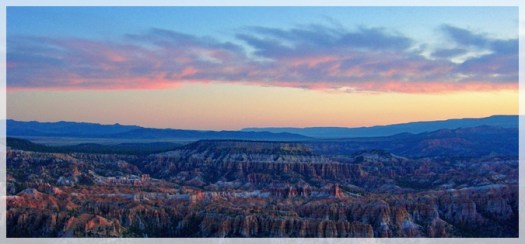
 Everything I did was honest. Righteousness covered me like a robe, and I wore justice like a turban. I served as eyes for the blind and feet for the lame. I was a father to the poor and assisted strangers who needed help. I broke the jaws of godless oppressors and plucked their victims from their teeth. I thought, “Surely I will die surrounded by my family after a long, good life.” [Job 29:14-18 (NLT)]
No one enjoys reading the book of Job; it’s difficult to read about someone who, through no fault of his own, loses family, wealth, reputation, and health in one fell swoop. Complicating matters is that, while six voices are heard, only God’s voice is completely correct and we don’t hear from Him until the end. As for the rest of the speakers, while there are nuggets of truth in every speech, much of what is said both by Job and his friends, is incorrect and based on faulty assumptions. Eliphaz, for example, is correct when he says it is a joy to be disciplined by God when we’ve done wrong, but his belief that Job’s troubles are because he’s done wrong is incorrect. Although they make different points, Eliphaz, Bildad, Zophar and Elihu all base their arguments on the assumption that Job’s suffering is because he’s a sinner. Urging him to repent and turn back to God, Job doggedly maintains his innocence.
While Job is correct that his suffering is not because of his sinfulness, like his friends, he is operating on a retribution theology: that we get what we deserve. Because he’s been righteous, Job believes he doesn’t deserve his trials. Sure that his suffering is in error, Job is determined to speak with God to defend himself. Neither Job nor his friends have the right answer; good fortune is not necessarily because of righteousness any more than misfortune is necessarily because of sin. When Job eventually repents, he does not repent of any sin that led to his suffering because sin wasn’t the cause. Instead, Job repents of questioning God’s wisdom and falsely accusing Him of injustice.
Like Job, it is easy to question God when troubles rain down, but do we ever question God when blessings are showered upon us? Do we really think we deserve only the good and never the bad? God doesn’t owe us blessings for righteousness. Good times are undeserved and hard times often come to those who least deserve them. Just as we are unable to fathom God’s omnipotence and generosity in his blessings to us, we are incapable of comprehending why our almighty and loving Father allows evil to shatter lives. We no more deserve God’s grace and blessings than Jesus deserved to suffer on that cross!
Suffering and hardship happen because we live in a fallen world; God offers no more explanation to us or to Job. The only answer is to put our hope and faith in God, secure in the knowledge that He is in control. Evil wins only when we turn away from God in pain and confusion and stop trusting in His infinite power and wisdom.
If I ask, “Why me?” about my troubles, I would have to ask, “Why me?” about my blessings. … I take the good with the bad, and I try to face them both with as much calm and dignity as I can muster. [Arthur Ashe (tennis champion, winner of both Wimbledon and the U.S. Open, who died of AIDS after being infected by a blood transfusion)]
 Abraham and Sarah waited twenty-five years for their promised son, Isaac, but then God demands that Abraham sacrifice his long-awaited child as a burnt offering. Abraham takes Isaac off to the mountain and to what he believes is his son’s death. Abraham’s knife is drawn and he’s ready to kill Isaac when God intervenes. After an angel tells him not to lay a hand on his son, Abraham looks up to see a ram caught in the brush. With God’s blessing, he sacrifices it in place of Isaac.
 Quicksand forms in saturated loose sand and, when undisturbed, appears to be solid ground. If a person steps into it, however, there is a decrease in its viscosity which causes the water and sand to separate so the soil becomes liquefied. When I was growing up, a scene of someone sinking into the death trap of quicksand was a staple of adventure movies. Because of those Saturday matinees in the 1950s and 60s, countless children probably had a fear of plunging into quicksand while walking in the woods; I know I did!
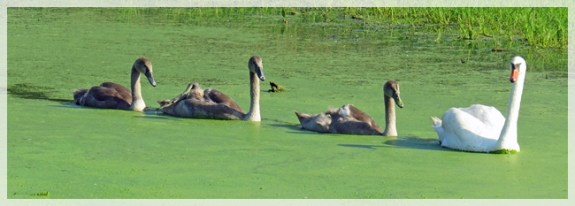 He said to them, “Let the children come to me. Don’t stop them! For the Kingdom of God belongs to those who are like these children. I tell you the truth, anyone who doesn’t receive the Kingdom of God like a child will never enter it.” Then he took the children in his arms and placed his hands on their heads and blessed them. [Mark 10:14-16 (NLT)]
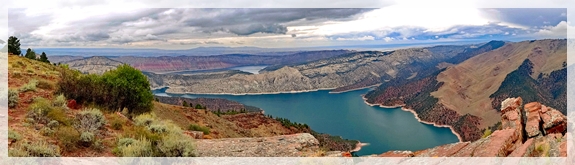 This is my command—be strong and courageous! Do not be afraid or discouraged. For the Lord your God is with you wherever you go.” [Joshua 1:6a,9 (NLT)]
 Yesterday, I wrote about archeological support for the story of Balaam; his is but one of many Old Testament stories with evidence provided by archeology. When reading about King Belshazzar giving a feast for 1,000 in his Babylonian palace, it’s easy to think there must have been exaggeration as to the size of his party. Archaeologists, however, have excavated a large hall in Babylon that was 55 feet wide and 165 feet long, a room sufficient to host a gathering of that size. The Bible mentions writing that appeared on the room’s plaster walls and archeologists found that this ancient room had plaster walls!
 Devotions of the Heart