
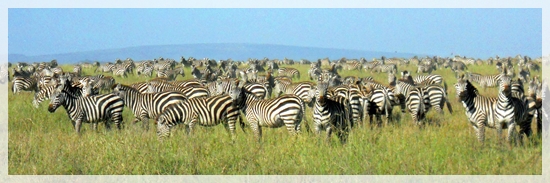
 What shall we say about such wonderful things as these? If God is for us, who can ever be against us? Since he did not spare even his own Son but gave him up for us all, won’t he also give us everything else? Romans 8:31-32 (NLT)]
Yet you don’t have what you want because you don’t ask God for it. [James 4:2b (NLT)]
Yesterday, when writing about Malala Yousafzai, the Pakistani girl who was shot in the head by the Taliban in 2012, I thought of an exchange between her parents while the girl was being operated on for the removal of the near fatal bullet. The words “the patient may die,” had been on the papers consenting to her surgery and Malala’s father was deep in prayer. Making bargains with God, he prayed aloud, “Even if she is injured, just let her survive.” Malala’s mother, a devout Muslim, stopped him in his prayers with these words, “God is not a miser!” She confidently added, “He will give me back my daughter as she was,” and then returned to her non-stop prayers for a full recovery.
Her dissatisfaction with her husband’s prayers and her confidence in God’s ability to do great things reminded me of something said by C.S. Lewis in The Weight of Glory. Calling us “half-hearted creatures,” he compared us to “an ignorant child who wants to go on making mud pies in a slum because he cannot imagine what is meant by the offer of a holiday at the sea. We are far too easily pleased.” While Lewis was writing about wanting things of the world when the splendor of God could be ours, I think his words apply to prayer, as well. Our prayers often are half-hearted and, like Malala’s father, we are far too easily pleased. We forget that, rather than a miser, God is our generous loving Father.
Pint-sized prayers suggest that we doubt God’s love for us and yet God is love; He loved us enough to give His only son to die for us! Small prayers imply that we think God is puny. A 97-pound weakling God could not have created man from dust and woman from man, made walls collapse and the sun stand still for Joshua, provided both drought and rain to Elijah, or given sight to the blind and raised Lazarus from the dead. Nothing is impossible for Him.
Perhaps we ask far too little of God because we’re afraid that He will think we are asking too much. Yet, without asking, we won’t receive. Malala’s mother said that God isn’t a miser and, with 100 thousand million stars in the Milky Way alone, creation tells us that’s true. A miserly God wouldn’t have given us nearly 10,000 different species of birds, 950,000 species of insects, and even 16,000 species of mushrooms. He’s a “more than enough” God who loves to give gifts to His children. Why are we so easily pleased asking for a little bite when He’s waiting to give us the whole cake?
Mark’s gospel tells of a man who brought his demon-possessed, deaf and mute son to Jesus. He didn’t ask Jesus just to stop the convulsions or only to give the boy hearing or speech; he asked Jesus to heal him, but added, “if you can.” Assuring him that, “Anything is possible if a person believes,” the father’s reply was, “I do believe, but help me overcome my unbelief!” [9:23-24]
Knowing that nothing is impossible with God, and remembering that God is not a miser, let our prayers be bold ones. Let us also pray that He helps us overcome our unbelief!
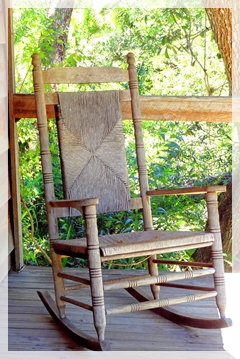 When we’re told to “Be still” in Psalm 46, we tend to think in terms of stopping movement—our busyness, frantic activity, or agitated actions. We associate it with a director yelling, “Cut!” the ref blowing his whistle, or a frustrated parent’s “Cut it out!” Being still can entail all of that, but it is much more. The root of the original Hebrew word used for “still” is the verb rapa which means to be faint, forsake, or sink down. When used as the imperative ra’pha’h, as it is in Psalm 46, it means to drop or release our concerns, to become weak, or surrender. While most Bible versions translate this as “Be still,” some translate as desist, stop fighting, cease striving, be quiet, or be at peace. In short, we’re being told to stop anxiously fighting a situation and leave the matter to God—to relax our grip on things, stop worrying and let it be.
 In our pastor’s absence, I led worship for two Sundays. For me, giving the sermons was far easier than leading the prayers. Our pastor has a way with words that inspire, enlighten and lift my spirits and his extemporaneous prayers appear to flow effortlessly from his heart through his mouth to my ears and up to God. He always seems to have the perfect Bible verse up his sleeve, the wisest thoughts in his mind, and the power of the Holy Spirit in his words. The Holy Spirit has truly given him a beautiful spiritual gift and our entire congregation is blessed by it.
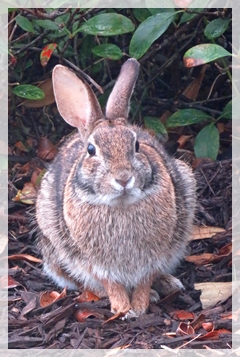 We know Jesus was capable of big miracles: twice He ended up with leftovers after feeding thousands with only a few scraps and He brought the widow’s son, Jairus’ daughter, and Lazarus back to life. Nevertheless, when Jesus was at the pool of Bethesda and surrounded by a crowd of sick, paralyzed, blind and lame people, He healed only one man before disappearing into the crowd! That crippled man didn’t even ask for healing. From his later encounter with Jesus, we know he was a sinner so he couldn’t have been more deserving than anyone else gathered at that pool! Jesus could have healed, not just everyone at that pool, but every malady in all of Palestine. Why just that one man?
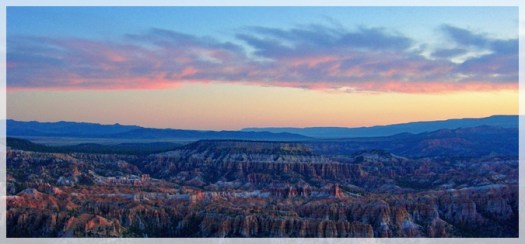 Everything I did was honest. Righteousness covered me like a robe, and I wore justice like a turban. I served as eyes for the blind and feet for the lame. I was a father to the poor and assisted strangers who needed help. I broke the jaws of godless oppressors and plucked their victims from their teeth. I thought, “Surely I will die surrounded by my family after a long, good life.” [Job 29:14-18 (NLT)]
 Abraham and Sarah waited twenty-five years for their promised son, Isaac, but then God demands that Abraham sacrifice his long-awaited child as a burnt offering. Abraham takes Isaac off to the mountain and to what he believes is his son’s death. Abraham’s knife is drawn and he’s ready to kill Isaac when God intervenes. After an angel tells him not to lay a hand on his son, Abraham looks up to see a ram caught in the brush. With God’s blessing, he sacrifices it in place of Isaac.
 Devotions of the Heart