UNBEATABLE ODDS AND INVINCIBLE ADVERSARIES

Only by your power can we push back our enemies; only in your name can we trample our foes. I do not trust in my bow; I do not count on my sword to save me. You are the one who gives us victory over our enemies; you disgrace those who hate us. O God, we give glory to you all day long and constantly praise your name.[Psalm 44:5-8 (NLT)]

Some of the lesser-known heroes of the Bible are found in the lists of David’s mightiest men. Among his warriors, David’s mighty Three had the most authority, influence, and leadership. Their leader was Jashobeam, a man who once used his spear to kill 800 warriors in a single battle. Next in rank was Eleazar who remained with David in battle when the rest of the troops fled. He killed Philistines until he no longer could lift his sword. The third of the Three was Shammah. After being attacked in a field by the Philistines, the troops fled. Shammah alone remained to defend it and bring victory to Israel. These three were so devoted to David that, when he expressed a desire for fresh water from Bethlehem, they risked their lives to break through enemy lines to get some for him. David’s Three were among the best of the best when it came to valor, courage, and allegiance.

David also had an elite group of about thirty warriors. The mighty men of the Thirty helped David establish his kingdom and served as commanders for the rest of his troops. As famous as the Three was Abishai. Leader of the Thirty, he once killed 300 of the enemy in a single battle!

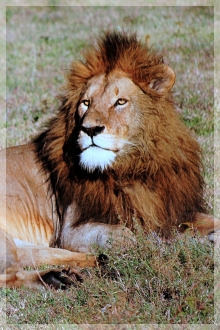
Described by Samuel as being more honored than any of the Thirty was Benaiah (son of Jehoiada). Among his feats was the killing of two ariels from Moab. The meaning of ariels is unclear and, while it could mean two lion-like oversize warriors like Goliath, it also could be a description of the lion-like ferociousness and strength of his opponents. In either case, alone and outnumbered two to one, the odds were against Benaiah, but he bravely defied the odds, and killed those lion-like warriors. Another time, upon encountering a lion, Benaiah accessed the situation and spotted a pit. Instead of turning tail and fleeing, the warrior turned toward the lion, chased it down into the pit, and killed it. Later, armed only with a club, he killed an impressive-looking Egyptian warrior bearing a spear. At a disadvantage since his clumsy club was useful only in close-up battle and the Egyptian’s spear was long, Benaiah ran toward his enemy, wrenched the spear from his hands, and killed him with his own weapon (much as David did with Goliath)!

Although we’re not likely to face great warriors or lions, we often encounter a number of what often seem to be unbeatable odds or invincible adversaries. Our first reaction to overwhelming challenges easily can be to abandon the cause and accept defeat without even trying. That’s what the troops did when they left David, Eleazar, and Shammah to fight the Philistines alone!

Warriors like David, Jashobeam, Eleazar, Shammah, Abishai, and Benaiah knew how to face both danger and adversaries. Instead of being paralyzed by fear or fleeing, these men faced each challenge head-on. What made these warriors so mighty? It wasn’t their bravery, strength, and prowess on the battlefield that made them that way; their might came from their knowledge of and faith in the Lord! They had courage, power, and steadfastness because they knew they weren’t fighting their battles alone; God was with them!

Could we be missing God-ordained opportunities because we only see insurmountable obstacles, invincible opponents, or fierce lions? It’s easy to let fear discourage and even paralyze us. Doing nothing, however, gets us nowhere. When the odds are against us, let’s think of these mighty men, trust in God, and give chase to the lions in our life!

Stand up to your obstacles and do something about them. You will find that they haven’t half the strength you think they have. [Norman Vincent Peale]

So be strong and courageous, all you who put your hope in the Lord! [Psalm 31:24 (NLT)]

Don’t be afraid, for I am with you. Don’t be discouraged, for I am your God. I will strengthen you and help you. I will hold you up with my victorious right hand. [Isaiah 41:10 (NLT)]

 Copyright ©2025 jsjdevotions. All rights reserved.

NOAH AND THE RED TAPE

It was by faith that Noah built a large boat to save his family from the flood. He obeyed God, who warned him about things that had never happened before. By his faith Noah condemned the rest of the world, and he received the righteousness that comes by faith. [Hebrews 11:7 (NLT)]

Thousands of years ago, God told Noah to build a boat the height of a four-story house, the length of one-and-a-half football fields, and with the storage capacity of about 450 semi-trailers. Without benefit of Home Depot or power tools, he managed to do it. What would happen if God gave Noah those same instructions today?

As the rain started to fall, I suspect 21st century Noah would be sitting on his front porch with no ark or animals in sight. He would however, have a litany of excuses for God. First, his neighbors objected to boat building in their neighborhood, so he had to go before the planning commission, zoning board, and city council for rezoning. The ark’s building permit wasn’t issued until its blueprints conformed to code with sprinkler system, emergency lighting, additional bathrooms, fire escape routes, exit signs, handicap accessibility, and commercial kitchen. The Forest Service refused to allow him to log the 3-million board feet of gopherwood he needed and the EPA objected to using tar to waterproof the ark.

FEMA said Noah couldn’t start work until an environmental impact study was done on the proposed flood. Even though the man explained he wasn’t proposing a flood but was preparing for one, Noah still had to wait until the study was finished. His attorney insisted he get easements from his neighbors to cross their property while hauling the ark to the shore, the power company demanded payment to raise several power lines so the ark could pass under them, and the Army Corps of Engineers required a permit to dredge a channel once the ark got to the water. Noah’s explanation that none of those things were necessary since the water would be coming to him fell on deaf ears.

After getting into a dispute with the CDC and USDA about importing and exporting animals, PETA and the ASPCA claimed Noah was collecting wildlife against their will and that placing them in pens on a boat was cruel. Even though Noah was trying to save rather than harm them, an injunction prevented him from gathering or possessing any animals. Following a confrontation with the Coast Guard about the number of life-jackets and life-boats needed for the people and animals coming aboard, Noah was told he needed to obtain a Master Captain’s license to pilot the ark. After sitting through 56 hours of classes, acing four exams, and spending the required 720 days aboard a ship, Noah failed the required physical because of his advanced age! “Lord, I tried,” he explained, “but what you asked was impossible!”

Fortunately, the deluge happened long before man’s invention of red tape and bureaucracy. If the real Noah had allowed circumstances to deter him from God’s task, mankind’s story would have ended in the sixth chapter of Genesis. Then again, it probably wasn’t a whole lot easier for the real Noah than my modern one. Obtaining the wood, building a ship that size, explaining the project to his family, dealing with skeptical neighbors, supplying the ark, assembling and loading the animals—all posed tremendous challenges. Noah, however, was a “righteous” man and, as “the only blameless person living on earth at the time…he walked in close fellowship with God.” Even in the 21st century, a man like that wouldn’t let any amount of red tape keep him from doing God’s will!

What my modern Noah didn’t understand is that we are to fear God above all others—even indignant neighbors, government bureaucracy, and angry protesters. There is an urgency in our obedience to God that has been lost in today’s world of red tape, paper work, and excuses. Even though the concept of a cataclysmic global flood and building a boat on dry land probably made little sense to him, Noah obediently did everything that God commanded him to do when God told him to do it. God expects us to do the same—even when the task seems impossible and the challenges insurmountable.

When God assigns a task, He doesn’t abandon us. He equips, enables, provides, and qualifies us. He can be trusted to give us the resources, skills, and direction necessary to do His work. Let us remember that the Jordan River didn’t stop flowing for the Israelites until the priests’ feet had touched the water and the widow’s flour and oil didn’t multiply until she used the last of hers to feed Elijah! If we are doing God’s will, He will hold back the water when we bravely walk into it, provide the ingredients we need when the cupboard is bare, and give us a giant pair of scissors to cut through red tape when we get tangled in it. Before that happens, however, we must trust Him enough to take the first step.

Each of us may be sure that if God sends us on stony paths, He will provide us with strong shoes, and He will not send us out on any journey for which He does not equip us well. [Alexander MacLaren]

May he equip you with all you need for doing his will. May he produce in you, through the power of Jesus Christ, every good thing that is pleasing to him. All glory to him forever and ever! Amen. [Hebrews 13:21(NLT)]

Copyright ©2025 jsjdevotions. All rights reserved.

HARD HEARTS

But when they saw him walking on the water, they cried out in terror, thinking he was a ghost. They were all terrified when they saw him. But Jesus spoke to them at once. “Don’t be afraid,” he said. “Take courage! I am here!” Then he climbed into the boat, and the wind stopped. They were totally amazed, for they still didn’t understand the significance of the miracle of the loaves. Their hearts were too hard to take it in. [Mark 6:49-52 (NLT)]

wood stork After feeding a multitude with little more than a handful of food, Jesus sent the disciples across the Sea of Galilee to Bethsaida. He stayed behind to send the people home and then, exhausted, went into the mountains to pray. During the fourth watch (somewhere between 3:00 and 6:00 AM), Jesus looked out at the water and saw that the disciples were struggling against the wind and waves to keep the boat on course. Seeing their distress, he walked on the water toward them. Seeing Him walking on water, they thought Him a ghost and cried out in terror. Phantoms of the night were said to bring disaster and it was thought that the last thing a boatman saw before drowning in Galilee was a ghost on the water! It’s no wonder they were frightened at first.

When Jesus climbed into the disciples’ boat, the wind stopped. He could have calmed the sea any time He wanted, but He chose to wait until the boat was far away, the men had rowed against the fierce wind for hours, and all hope was gone. By walking on the water, Jesus showed the men that the tempestuous sea they feared was nothing more than a path to bring Him to them! Like the feeding of the multitude, Jesus demonstrated His control over the elements—something only God could do!

The disciples failed to recognize Jesus on the water because they weren’t looking for Him. Had they waited in faith, they would have recognized Him, but they waited in fear. By this point in the ministry of Jesus, He had restored a deformed hand, exorcised numerous demons, raised a child from the dead, and healed a paralyzed man, a bleeding woman, lepers, Peter’s mother-in-law, and many others. The disciples just witnessed Jesus feed a multitude with just a few loaves and fish and probably had those twelve baskets of leftovers in the boat with them but they still didn’t get the significance of His provision of food to the multitude. Like so many others, they still were spiritually blind—they saw the miracles but failed to see the one who was God and performed those miracles! They shouldn’t have been surprised by Jesus’ appearance on the water; they should have expected it!

Mark tells us that the hearts of the disciples “were too hard to take it in.” Even knowing all that Jesus had done, they didn’t yet believe. I wonder if the disciples simply were afraid to believe. Just imagine their discussion in the boat that evening as they tried to understand how Jesus managed to feed thousands. They must have wondered what it would mean for them if Jesus really were the Messiah. Would they end up headless as did John the Baptist? Would Jesus’ mission end up as did the failed Messianic movement led by Judas of Galilee with the leader dead and his followers scattered? These men weren’t soldiers; they were common working men and Simon was the only Zealot among them. Did they wonder what Jesus would expect of them? Do we hesitate to accept Jesus because we’re afraid of what He will ask of us?

Almighty God, through the power of your Holy Spirit, open our hearts and minds to your holy truth.

Unbelief is a matter not only of the head but of the heart. The unbeliever’s trouble is that his heart is not right with God. [R. B. Kuiper]

Then he asked them, “Why are you afraid? Do you still have no faith?” [Mark 4:40 (NLT)]

Anyone who believes and is baptized will be saved. But anyone who refuses to believe will be condemned. [Mark 16:16 (NLT)]

Copyright ©2026 jsjdevotions. All rights reserved.

IN PAIN

So to keep me from becoming conceited because of the surpassing greatness of the revelations, a thorn was given me in the flesh, a messenger of Satan to harass me, to keep me from becoming conceited. Three times I pleaded with the Lord about this, that it should leave me. But he said to me, “My grace is sufficient for you, for my power is made perfect in weakness.” [2 Corinthians 12:7-9 (ESV)]

But pain insists upon being attended to. God whispers to us in our pleasures, speaks in our conscience, but shouts in our pain: it is His megaphone to rouse a deaf world… [C.S. Lewis]

morning gloryDuring that dark time about which I recently wrote, I was in intense pain and it seemed like God had turned His back on me. When I confided to a friend that God seemed deaf to my pleas, she asked the simple question, “Have you turned it over to the Lord?” I assured her I had but, as the day wore on, I wondered if that were true.

In my prayers for relief, I was telling God the outcome I desired, but that really isn’t “turning it over” to Him. If any human had a direct line to God’s heavenly office, it would have been the Apostle Paul and yet God didn’t relieve him of whatever his thorn was! Instead of demanding the result I wanted, I had to place myself in God’s loving hands as did Paul and pray for God’s grace and the power to accept what He’d placed in my lap.

Each morning, I prayed for grace enough for the day—for the strength, endurance, peace, patience, courage, and joy needed to get through the next twenty-four hours. I asked God to reassure me of His lovingkindness and to protect me from the doubt, fear, and negativity Satan was whispering in my ears. The hardest thing, however, was to hand the outcome of my upcoming surgery into His loving hands. I had to trust in His plan and presence regardless of its outcome. The physical pain remained but, with the power of the Spirit, I dealt with it.

I don’t think God decides our fate with a toss of the dice and, while a quick view of my MRI told me the why of my present physical pain, I asked God to help me understand its purpose. Paul knew his thorn was to keep him from being conceited; what was my pain telling me? In The Problem of Pain, C.S. Lewis points out how easy it is to ignore God when all is well. “We will not seek it [our happiness] in Him as long as He leaves us any other resort where it can even plausibly be looked for. While what we call ‘our own life’ remains agreeable we will not surrender it to Him.” Admittedly, I’d been in a state of “meh” and become self-sufficient rather than God-dependent and lax in my spiritual disciplines. Like the Apostle Paul, perhaps I’d become too sure of myself; the intense pain reminded me of my need for God!

As C.S. Lewis wisely pointed out, an intellectual understanding of pain is far easier than the fortitude, courage, and patience needed to endure it. It’s far easier to talk the talk than walk the walk! Nevertheless, endure it we must and through the power of the Holy Spirit, we can!

By the time this devotion is published, I will have had the surgery that, God willing, will relieve my pain. While I don’t know what my future holds, I do know who holds it in His loving hands and I trust that He will supply me with all I need to face whatever it may be.

And we know that for those who love God all things work together for good, for those who are called according to his purpose. … Who shall separate us from the love of Christ? Shall tribulation, or distress, or persecution, or famine, or nakedness, or danger, or sword?… No, in all these things we are more than conquerors through him who loved us. For I am sure that neither death nor life, nor angels nor rulers, nor things present nor things to come, nor powers, nor height nor depth, nor anything else in all creation, will be able to separate us from the love of God in Christ Jesus our Lord. [Romans 8:28, 35, 37-39 (ESV)]

Copyright ©2025 jsjdevotions. All rights reserved.

THE FIG TREE – Part 2

As they passed by in the morning, they saw the fig tree withered away to its roots.  And Peter remembered and said to him, “Rabbi, look! The fig tree that you cursed has withered.” And Jesus answered them, “Have faith in God. Truly, I say to you, whoever says to this mountain, ‘Be taken up and thrown into the sea,’ and does not doubt in his heart, but believes that what he says will come to pass, it will be done for him. [Mark 11:20-23 (ESV)]

The next morning, while Jesus and the disciples walked from Bethany to Jerusalem for yet another confrontation with Judea’s religious leaders, the disciples saw the tree Jesus cursed the previous day. The disciples had witnessed Jesus cast out demons and still a storm with a just a word but, when they saw the withered and dead fig tree, they were amazed. Normally, trees die slowly from the top down but this tree instantly withered from the roots up. With dead roots, no amount of water or fertilizer would revive it. Having witnessed the tree go from abundance to ruin with just a word from the Lord, rather than asking Jesus to explain cursing the tree, the disciples focused on the speed with which the fig died.

Rather than focusing on spiritual hypocrisy and the significance of the dead fig, Jesus focused on how He performed the miracle and spoke about the power of genuine faith. This wasn’t faith in something vague like positive thinking or an object; it wasn’t faith in faith or faith in the power of prayer. He made it clear that the sole object of this faith must be God! After all, faith is only as good as the object in which it trusts and God is all-powerful, ever-faithful, and trustworthy to His promises.

Pause for a moment and consider—even though Jesus was God, He was living as a man with the limitations of humanity. By saying, “Have faith in God,” He displayed both His humanity and His dependence upon God. Jesus’ power to speak with authority, forgive sins, calm a storm, heal the sick, raise the dead, provide food for a multitude, and wither that fig tree came from His faith in God and the indwelling of the Holy Spirit.

Explaining the power of faith in God, Jesus told them that, with faith, they could move the mountain on which they were standing (the Mount of Olives) into the sea (probably the Dead Sea 15 miles away). Moving a mountain is even more inconceivable than killing a tree with a word but Jesus uses this hyperbole to emphasize that what is impossible with man can be accomplished through faith in the power of God!

We tend to say that prayer changes things—but it is God who does the changing! Although we speak of the power of prayer, prayer alone has no power; the power comes from God who hears that prayer. We often lament, “If only I had more faith!” The disciples even asked Jesus to increase their faith. Jesus, however, told them that the size of their faith doesn’t matter—even a mustard seed of faith is enough! (With a diameter of 1 to 2 millimeters, the mustard seed was used proverbially to represent the smallest of things.) It’s not the amount of faith that matters—as long as we put our faith completely in God’s power rather than ours. It’s not faith that moves those mountains—it’s God! Even if our faith is not great, our God is!

The apostles said to the Lord, “Increase our faith!” And the Lord said, “If you had faith like a grain of mustard seed, you could say to this mulberry tree, ‘Be uprooted and planted in the sea,’ and it would obey you.” [Luke 17:5-6 (ESV)]

But he said, “What is impossible with man is possible with God.” Luke 18:27 (ESV)]

Copyright ©2025 jsjdevotions. All rights reserved.

MARY’S HUSBAND

And her husband Joseph, being a just man and unwilling to put her to shame, resolved to divorce her quietly. But as he considered these things, behold, an angel of the Lord appeared to him in a dream, saying, “Joseph, son of David, do not fear to take Mary as your wife, for that which is conceived in her is from the Holy Spirit.” [Matthew 1:19-20 (ESV)]

JosephWhile putting away our nativity, I looked at the figure of Joseph. For the man who played a pivotal role in the Christmas story, once Christmas is packed away, Mary’s husband rarely gets a second thought until the next December. Neither Mark nor John mention the man who served as step-father to Jesus and the author of Hebrews didn’t even list him in its “Hall of Faith.”

Unfamiliar with 1st century Jewish marriage customs, we probably take Joseph’s presence at the nativity too lightly. Rather than an agreement between two people, marriage at the time was an agreement between two families. Before the prospective bride was consulted, the groom (or his father) approached her father and the men would negotiate the price [mohar] to be paid for the girl. Once the mohar had been paid, the first of two ceremonies, the betrothal, was held and the couple were legally married. Following the betrothal, the bride remained in her father’s house, gathered her trousseau, and prepared for married life while the groom prepared living accommodations for his wife and arranged for the wedding feast. Although married, the couple were prohibited from having sex. It wasn’t until about a year after the betrothal that a colorful procession led the woman to the house of her groom, more vows were made, and the marriage finally was consummated.

During her betrothal, the bride could not belong to another man. Should the groom learn that she lied about her virginity, he could dissolve the marriage contract through a certificate of divorce and, if caught in the act of adultery, she could be killed.

Matthew tells us Joseph was dikaios, meaning righteous and just. Expressing a righteousness rooted in a covenant relationship with God, dikaios emphasizes moral integrity and obedience to the Law. Can you imagine this honorable man’s reaction to his bride’s pregnancy? Remember, within days of Gabriel’s visit to her, Mary hurried to the home of Zechariah and Elizabeth where she stayed for three months. When she told Joseph of her pregnancy, did he wonder what his bride had been up to while away in the hill country? Consider his distress at what seemed a betrayal. Imagine his disappointment at Mary’s preposterous explanation that probably seemed like an outlandish lie. Knowing he wasn’t the father, Joseph had every legal right to divorce her and demand the mohar’s return; in fact, Mary’s infidelity could cause her to be stoned!

Although an angel appeared to Joseph in a dream to reassure him that Mary’s baby was, indeed, conceived by the Holy Spirit, Joseph was an ordinary builder—not a priest like Zachariah or a prominent rabbi like Shammai. I suspect this was his first angelic visit and he must have questioned the validity of his dream. Imagine his confusion and consider his torment as he struggled with his choice. If he divorced Mary, Joseph could deny responsibility for her shameful pregnancy and maintain his good reputation but, if he stayed with Mary, he assumed responsibility for the pregnancy and took on her disgrace. His choice regarding Mary’s scandalous pregnancy affected both of their families, as well.

Nevertheless, Joseph valued God’s call over his reputation and remained betrothed to Mary. Moreover, despite everyone else assuming they had sex, both Matthew and Luke tell us that Joseph refrained from intercourse with Mary before Jesus’ birth. The young man honored God’s plan over his own wants and needs. It was not until after Jesus’ birth that their marriage finally was consummated.

Right after the Magi’s departure, the new father had a second visit from an angel. Told to flee to Egypt because the child’s life was in danger from Herod, Joseph immediately obeyed. Although he must have had misgivings about leaving his homeland, Joseph kept Mary and Jesus safe and they became refugees in a pagan country. They only returned when, once again, an angel of the Lord directed his way.

While Joseph seems to disappear after the second chapters of both Matthew and Luke, his role in Jesus’ life certainly didn’t stop. It was in his home that “Jesus increased in wisdom and in stature and in favor with God and man.” [Luke 2:52]

Can you imagine what it was like for this righteous (but ordinary) man to be tasked by God with the responsibility of being guardian to the Messiah—the one who would “save his people from their sins”? What was it like to hold the Son of God in his calloused hands or to teach Him to walk, handle tools, and read the Torah? Consider the weight of responsibility upon Joseph’s shoulders. The last we hear of him is when he and Mary temporarily “lost” the twelve-year-old Jesus on their return from celebrating the Passover in Jerusalem. I can’t imagine his panic at having lost the Messiah! Although Joseph almost certainly died before the Lord’s crucifixion, we don’t know when, where, or how. What we do know is that Joseph was, indeed, a dikaios man—a man who was willing to follow God’s guidance and do His will regardless of the consequences.

Joseph reminds us that those who appear hidden or in the shadows can play an incomparable role in the history of salvation. [Pope Francis]

An angel of the Lord appeared to Joseph in a dream and said, “Rise, take the child and his mother, and flee to Egypt, and remain there until I tell you, for Herod is about to search for the child, to destroy him.” And he rose and took the child and his mother by night and departed to Egypt and remained there until the death of Herod. [Matthew 2:13-15 (ESV)]

Copyright ©2025 jsjdevotions. All rights reserved.