
Only by your power can we push back our enemies; only in your name can we trample our foes. I do not trust in my bow; I do not count on my sword to save me. You are the one who gives us victory over our enemies; you disgrace those who hate us. O God, we give glory to you all day long and constantly praise your name.[Psalm 44:5-8 (NLT)]
 Some of the lesser-known heroes of the Bible are found in the lists of David’s mightiest men. Among his warriors, David’s mighty Three had the most authority, influence, and leadership. Their leader was Jashobeam, a man who once used his spear to kill 800 warriors in a single battle. Next in rank was Eleazar who remained with David in battle when the rest of the troops fled. He killed Philistines until he no longer could lift his sword. The third of the Three was Shammah. After being attacked in a field by the Philistines, the troops fled. Shammah alone remained to defend it and bring victory to Israel. These three were so devoted to David that, when he expressed a desire for fresh water from Bethlehem, they risked their lives to break through enemy lines to get some for him. David’s Three were among the best of the best when it came to valor, courage, and allegiance.
David also had an elite group of about thirty warriors. The mighty men of the Thirty helped David establish his kingdom and served as commanders for the rest of his troops. As famous as the Three was Abishai. Leader of the Thirty, he once killed 300 of the enemy in a single battle!
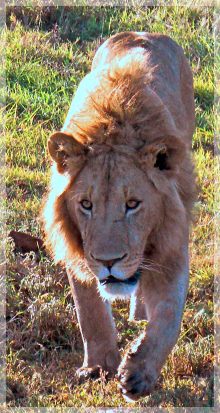
Described by Samuel as being more honored than any of the Thirty was Benaiah (son of Jehoiada). Among his feats was the killing of two ariels from Moab. The meaning of ariels is unclear and, while it could mean two lion-like oversize warriors like Goliath, it also could be a description of the lion-like ferociousness and strength of his opponents. In either case, alone and outnumbered two to one, the odds were against Benaiah, but he bravely defied the odds, and killed those lion-like warriors. Another time, upon encountering a lion, Benaiah accessed the situation and spotted a pit. Instead of turning tail and fleeing, the warrior turned toward the lion, chased it down into the pit, and killed it. Later, armed only with a club, he killed an impressive-looking Egyptian warrior bearing a spear. At a disadvantage since his clumsy club was useful only in close-up battle and the Egyptian’s spear was long, Benaiah ran toward his enemy, wrenched the spear from his hands, and killed him with his own weapon (much as David did with Goliath)!
Although we’re not likely to face great warriors or lions, we often encounter a number of what often seem to be unbeatable odds or invincible adversaries. Our first reaction to overwhelming challenges easily can be to abandon the cause and accept defeat without even trying. That’s what the troops did when they left David, Eleazar, and Shammah to fight the Philistines alone!
Warriors like David, Jashobeam, Eleazar, Shammah, Abishai, and Benaiah knew how to face both danger and adversaries. Instead of being paralyzed by fear or fleeing, these men faced each challenge head-on. What made these warriors so mighty? It wasn’t their bravery, strength, and prowess on the battlefield that made them that way; their might came from their knowledge of and faith in the Lord! They had courage, power, and steadfastness because they knew they weren’t fighting their battles alone; God was with them!
Could we be missing God-ordained opportunities because we only see insurmountable obstacles, invincible opponents, or fierce lions? It’s easy to let fear discourage and even paralyze us. Doing nothing, however, gets us nowhere. When the odds are against us, let’s think of these mighty men, trust in God, and give chase to the lions in our life!
Stand up to your obstacles and do something about them. You will find that they haven’t half the strength you think they have. [Norman Vincent Peale]
 Thousands of years ago, God told Noah to build a boat the height of a four-story house, the length of one-and-a-half football fields, and with the storage capacity of about 450 semi-trailers. Without benefit of Home Depot or power tools, he managed to do it. What would happen if God gave Noah those same instructions today?
 After feeding a multitude with little more than a handful of food, Jesus sent the disciples across the Sea of Galilee to Bethsaida. He stayed behind to send the people home and then, exhausted, went into the mountains to pray. During the fourth watch (somewhere between 3:00 and 6:00 AM), Jesus looked out at the water and saw that the disciples were struggling against the wind and waves to keep the boat on course. Seeing their distress, he walked on the water toward them. Seeing Him walking on water, they thought Him a ghost and cried out in terror. Phantoms of the night were said to bring disaster and it was thought that the last thing a boatman saw before drowning in Galilee was a ghost on the water! It’s no wonder they were frightened at first.
 During that dark time about which I recently wrote, I was in intense pain and it seemed like God had turned His back on me. When I confided to a friend that God seemed deaf to my pleas, she asked the simple question, “Have you turned it over to the Lord?” I assured her I had but, as the day wore on, I wondered if that were true.
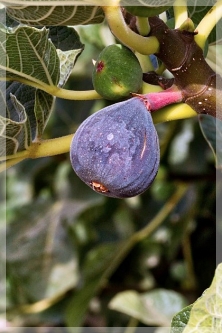 The next morning, while Jesus and the disciples walked from Bethany to Jerusalem for yet another confrontation with Judea’s religious leaders, the disciples saw the tree Jesus cursed the previous day. The disciples had witnessed Jesus cast out demons and still a storm with a just a word but, when they saw the withered and dead fig tree, they were amazed. Normally, trees die slowly from the top down but this tree instantly withered from the roots up. With dead roots, no amount of water or fertilizer would revive it. Having witnessed the tree go from abundance to ruin with just a word from the Lord, rather than asking Jesus to explain cursing the tree, the disciples focused on the speed with which the fig died.
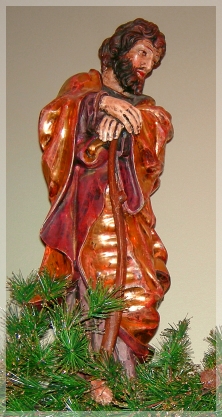 While putting away our nativity, I looked at the figure of Joseph. For the man who played a pivotal role in the Christmas story, once Christmas is packed away, Mary’s husband rarely gets a second thought until the next December. Neither Mark nor John mention the man who served as step-father to Jesus and the author of Hebrews didn’t even list him in its “Hall of Faith.”
 Devotions of the Heart