
Then he said to the crowd, “If any of you wants to be my follower, you must give up your own way, take up your cross daily, and follow me. [Luke 9:23 (NLT)]
 It’s been five years since I’ve skied but I still remember that the three scariest words I ever heard when on the slopes were, “Follow me, Nonnie!” My grands loved to venture off the groomed runs into the bumps and through the woods. On my own, I never would have chosen to leave the main trail but, because I loved those little guys, I faithfully followed behind as they maneuvered between the trees and over the moguls.
Although my grands boogied joyfully off trail, I was far more hesitant. The children’s perspective was far different than mine. As they snaked through the trees, they saw the openings between them but my tendency was to focus on the pines blocking my path rather than the gaps between them. Seeing the moguls as fun friends rather than evil enemies, my grands stayed relaxed and loose and absorbed the bumps they encountered. On the other hand, seeing the moguls as adversaries, I stiffened in anticipation of trouble. Moreover, the little guys weren’t afraid of falling and, when they did, they just laughed, picked themselves up, and continued downhill. Although I rarely fell, my mind was filled with all the “what ifs” of falling: embarrassment, injury, or worse!
Life is a lot like skiing off trail into the heavy powder, bumps and trees. We can choose to see the difficulties in front of us rather than notice ways to get beyond them. If we keep our eyes focused on God, He’ll show us the way through, between or around the obstacles of life. Instead of stiffening up when we see the bumpy challenges ahead, we can choose to remain flexible and ready to absorb the impact when jolted around by life. When we trust God, He’ll give us the strength and ability to get through the moguls on life’s trail. We can be afraid of falling, humiliation or failure, or accept that missteps, disappointment, and loss are part of life. Resting secure in God’s love when we follow His ways, we won’t be afraid of crashing.
If I hadn’t followed my grands when they called, I would have missed some of the best times I’ve had with them. Enduring moguls, sore knees and occasional face plants in the snow were worth it. Our Heavenly Father has more in store for us than some thrills while skiing off trail. We certainly don’t want to miss all that He has to offer simply because we’re afraid of a few bumps and tumbles! Trust Him; He’s got a great plan. Just be sure to follow Jesus when he calls. Like skiing with the grands, it will be worth it when you do!
 With all the online shopping we’re doing during this time of sheltering in place, can you imagine how busy it is in Amazon’s various warehouses? Even though basic items like hand sanitizer, bleach wipes, disinfectant spray and face masks are on back order, we still can get a vast assortment of products like a package of 9,000 ladybugs (along with a ladybug life cycle poster), a “daddy saddle” for piggy back rides (complete with horn and stirrups), a potty putter for our favorite golfer, or even a talking toilet paper spindle.
 A family of mockingbirds has moved into a nearby bush and they frequently serenade us from their vast repertoire of songs. Hearing their exuberant and joyful warbles is a perfect antidote to the sameness of life during this pandemic. While being charmed by their avian concerts, I thought of Emily Dickenson’s poem “‘Hope’ is a thing with feathers.”
 Since they’re not hard and fast rules, some proverbs are contradictory. Perhaps the most glaring contradiction (and one non-believers love to mention) is found in Proverbs 26:4-5. First, we’re told not to answer the foolish argument of fools but then we’re told to do that very thing!
 With just 31,164 verses in the entire Bible, a Canadian schoolteacher named Everett R. Storms questioned claims that it held around 30,000 promises. During his 27th reading of the Bible in 1956, the inquisitive Mr. Storms compiled a list of all Scripture’s promises. Given that the books of prophecy are filled with promises (Isaiah, Jeremiah, and Ezekiel have over 1,000 each) and the psalms are steeped in promises, no wonder it took 18 months to complete this massive task! When finished, Storms had recorded 8,810 promises: 7,487 of which were made by God to man and 290 by man to God. Other promises were made by one man to another, by God the Father to God the Son, by angels to people, by man to an angel, by an evil spirit, and by Satan (all nine of which were lies).
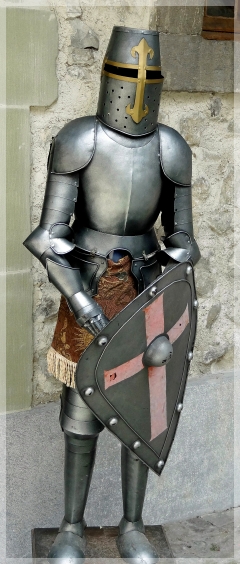 You’ve probably heard people pray for a hedge of protection around friends or family members. Is it an impenetrable bubble that keeps tragedy and trouble at bay or a substance that acts like kryptonite against Satan and protects us from his temptations and deceit?
 Devotions of the Heart