
Relish life with the spouse you love each and every day of your precarious life. [Ecclesiastes 9:9 (MSG)]

When getting out a chip n’ dip bowl for some Super Bowl noshing, I noticed the heavy tarnish on the silver candle holders. Because COVID and social distancing have kept us from entertaining, they’ve been ignored in the back of the cupboard for nearly a year. Feeling guilty about letting them get so black, I started polishing off the tarnish. They were a wedding gift to my parents more than 80 years ago and my thoughts turned to marriage as I worked. It’s easy it is to allow our marriages to grow as dull as those candlesticks had. Marriages, like silver, shouldn’t be ignored or neglected.
A pastor friend once remarked that the relationship we have with our spouse is probably the one thing in our lives about which we truly care but which we regularly neglect. We care about our houses, so we paint, repair, renovate, remodel, vacuum, dust, mop, and mow the lawn to maintain them. When we value our health, we take vitamins, get vaccinated, eat healthy food, and exercise. If our children’s education is important to us, we volunteer at school, help with homework, drill them on their spelling, and shuffle them to assorted activities. When we care about our community, we vote, attend meetings, volunteer, or even run for office. If church is important, we tithe, regularly worship, attend Bible study, and serve on committees. Although we usually work at preserving or bettering anything we hold precious, we tend to take the relationship with our spouse for granted.
Marriage is the second most important relationship we have (God, of course, being first) and yet it’s often neglected. Unless we’re experiencing serious marital difficulties, most of us do little to consciously improve it. In fact, we probably spend more time perusing the catalogues and magazines that fill our mailboxes, watching our favorite television programs, or browsing the internet than we do on consciously bettering our marriages. Just because we’re secure in a relationship doesn’t mean we shouldn’t put a little shine on it.
It isn’t that we’re not spending time with one another! Because of this pandemic, couples probably spend more time together than they ever expected. Instead of kissing each other before leaving for work, they just clear off the kitchen counter or move to the dinner table and open their computers. The lines between jobs, home, school, family, entertainment, and leisure have become blurred. Yet, in spite of all the time we’re spending with our loved one (or perhaps because of it), we may have settled into a routine where we’ve stopped noticing one another. We don’t have to ask how their day went or what they did because we already know! Even though we’re together all day in the same house, our lives are more parallel than intersecting.
Sunday is Valentine’s Day—a day we traditionally celebrate romance and love. Even a marriage of more than 50 years needs some tweaking occasionally. Candlelight dinners aren’t just for newlyweds or guests and celebrating pandemic style doesn’t have to be fancy. Like shining silver, it just takes a little effort to shine up a relationship. It can be as simple as grocery store flowers, playing a game together, an unexpected kindness, changing out of the sweat pants, a love note, shaving or putting on make-up, skipping Netflix for a night, taking a walk together while holding hands, having a picnic in the park (or in front of the fireplace), or dancing to slow music (even if it’s in the kitchen and the kids are there). It’s noticing, listening, caring, encouraging, sharing and praying together and often takes less effort than polishing silver. Marriages may be made in heaven but their maintenance work is done here on earth!
Rather than put those now polished candlesticks back into the cupboard, I put them out on the table. They’ve gotten a few dents over the years, just as marriages do, but the dents remind me that marriage is beautiful even when it’s less than perfect. Any tarnish that appears on them will remind me that a good marriage takes effort. While God should be our first priority, our spouse needs to be our second one and not just on Valentine’s Day! Our significant others should be of significance every day; let us be sure to let them know it!
Remember that children, marriages and flower gardens reflect the kind of care they get. [H. Jackson Brown, Jr.]
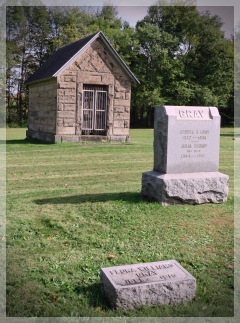 My father had what’s often described as a Type-A personality. An impatient workaholic, he always took on more than he could handle. Life, for him, was one crucial task after another, none of which anyone else could do, at least not correctly. Always in a hurry, he never wanted to stop for anything, even when his gas gauge read precariously close to empty. Something more pressing always took precedence over a brief stop for gas. As a result, his car was often left on the roadside while he trudged off with a gas can to find the nearest service station. Instead of saving time, his refusal to stop cost him time. Living that way actually cost him his life; he died of a massive coronary at the age of fifty-six. It’s often been said that your in-box still will be full when you die and, indeed, his was. None of us can accomplish everything on our to-do list and we may well destroy both our relationships and ourselves while trying.
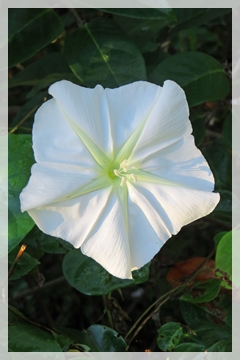 When Robert Louis Stevenson was just a boy, he was gazing out the window one evening and saw the lamplighter lighting the street lights. The future poet is reported to have said, “Look, Nanny! That man is putting holes in the darkness.” While it makes for a good sermon illustration, a more accurate version of his words is found in an essay he wrote in 1878, “A Plea for Gas Lamps,” in which the man expressed his opposition to the “ugly blinding glare” of the electric lights that were beginning to replace the gas lamps of Edinburgh. After asking God to bless the lamplighter, the poet described him as “speeding up the street and, at measured intervals, knocking another luminous hole into the dusk.” The lamplighter, said Stevenson, “distributed starlight, and, as soon as the need was over, re-collected it.”
 What is the most important moment in your Sunday service? If your church follows a liturgy, perhaps it is the confession, absolution, or thanksgiving. Singing praise music, hearing an inspiring sermon or sharing in the Lord’s Supper may be the highlight of your worship. Reciting the Creed, saying the Lord’s Prayer, greeting one another, communal prayer—all are important parts of the day’s worship service but are they the most important part of it? I wonder if the holiest moment of our Sunday morning occurs when the service is over and we leave the sanctuary (or turn off the computer) and go into the world. When the service has concluded, instead of our obligation to God being over for the week, could it just be starting? Could the next six days and twenty-three hours be more critical than that hour or so we spent at church?
 When Alexander the Great’s army was advancing on Persia, his troops were so weighted down by the spoils of war they’d taken in earlier campaigns that they moved too slowly to be effective in combat. At one critical point, it seemed that defeat was inevitable. As much as the greedy Alexander desired the silver, gold, and other treasures they’d pillaged, he ordered that all the plunder be thrown into a heap, burned, and left behind. Although his troops complained bitterly, they did as directed. Once unencumbered by the excess weight of their treasure, his army saw the wisdom of Alexander’s command when their campaign turned from impending defeat to victory. “It was as if wings had been given to them—they walked lightly again,” said one historian.
 Since we’ll be held accountable for our words, I wondered how many words that might be. In 1984, Gyles Brandreth claimed that by the time a typical American dies, he (or she) will have uttered more than 860 million words. Since Brandreth is an actor, writer, and Scrabble fanatic rather than a scientist, his number seems questionable. In 2006, Louann Brizendine claimed that women speak an average of 20,000 words per day while men speak a mere 7,000. Based on her numbers, in a lifetime of seventy years, women would have to account for over 511 million words while men would answer for about 179 million. While Brizendine’s qualifications as a neuro-psychiatrist lend credence to her statements, she provided no source for her statistics. Skeptical of her lopsided numbers, psychology professor James Pennebaker conducted a systematic study in 2007 that recorded the daily conversational word output of both men and women. He found that women averaged 16,215 words a day and men 15,669. Based on his numbers, both men and women will speak well over 400 million words in a seventy-year lifetime.
 Devotions of the Heart