
 Lord, I trust in you. You are my God. My life is in your hands. [Psalm 31:14-15a (ERV)]
Going by the popular name of “Yesterday, Today and Tomorrow,” the Brunfelsia is one of my favorite Florida flowers. Three colors of pansy-like fragrant flowers can be seen on the one plant at the same time: the deep purple of the new flower, the pale lavender that appears shortly thereafter, and the pure white just before the flower falls off. Although we get to see what this flower looked like yesterday, looks like today and will look like tomorrow, we don’t get to see the past, present and future of our lives all at once. God, however can.
This lovely flower was brought to mind last week when I had my yearly exam at the dermatologist’s. In honor of Thanksgiving, one wall of the waiting room displayed brown, orange, red, and yellow construction paper leaves scattered under a banner that asked, “For what are you thankful?” While reminiscent of an elementary school classroom bulletin board, the answers written on those leaves by both patients and staff weren’t like those of the average grade-schooler who knows little of things like death, biopsies, addiction, loneliness, strokes, cancer, conflict, bankruptcy, job loss, homelessness, violence, or struggle. While a fourth-grader might have written her dog’s name on a leaf, only a mature adult would have said, “I’m thankful for the troubled times because, without them, I wouldn’t be the person I am today!”
Indeed, I can’t say I was thankful for my troubles when they occurred but, like that person, I am thankful for what God did with them in my life. The hurdles, pain, injury, loss, and trouble that seemed so random and senseless at the time make sense in retrospect. I can see how God brought those difficult yesterdays together to bring me to a better and more beautiful today and how today’s challenges will lead me into an even more amazing tomorrow. Having no crystal ball to see how it all will come together at some point in the future, however, we simply must trust God with our tomorrows and settle on only seeing the past, present, and future at one time in the lovely flowers of the Brunfelsia.
Another name for the Brunfelsia is “Kiss Me Quick Before I Fade,” but I tend to think of it as the Carpe Diem flower. The phrase comes from the Roman poet Horace and was part of his injunction to “carpe diem quam minimum credula postero” meaning “pluck the day, trusting as little as possible in the next one.” Horace, who died in 8 BC, was a pagan but, had he been born at a later date and become a follower of Jesus, the poet could have trusted in his tomorrows because he would have known they were in God’s hands.
As for me, while thanking God for the blessings of yesterday (even though I didn’t appreciate many of them at the time), I will pluck this day with enthusiasm and joy while trusting God with the next one. He planted us right here and at this time for a reason and He will faithfully cultivate, prune, water, and nurture us. Trusting that God knows what He’s doing, what He wants for us, where He’s taking us, and how He will get us there, let us release to Him all of our yesterdays, todays, and tomorrows.
God promises a safe landing but not a calm passage. [Bulgarian Proverb]
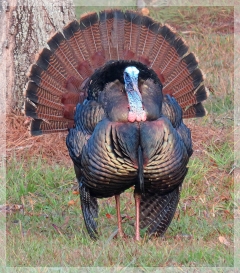 We’re hosting family and friends for Thanksgiving dinner and I’m still planning the menu. One guest won’t eat anything green, another doesn’t eat seafood, one dislikes turkey, and two are vegetarians. While I’m still working on appetizers, salad, main course and sides, dessert is a given. Between the sweets our guests are bringing and my pecan pumpkin pie topped with caramel sauce and whipped cream, even the pickiest eater will be happy! I probably could please everyone with just desserts!
 Jesus often took the Pharisees to task, not for their theology, but for their behavior. With the Talmud’s description of seven different kinds of Pharisees, six of whom were contemptible, we know that the Jews were not unaware of their failings. Since Jesus was well-versed in Jewish law and tradition, I wonder if He was thinking about the Talmud’s list when He pronounced seven woes upon the scribes and Pharisees.
 Thirty years ago, Al Franken played a character on Saturday Night Live named Stuart Smalley. Host of a fictitious self-help show called “Daily Affirmations with Stuart Smalley,” Stuart would look into in a mirror and affirm that he was good enough, smart enough, and that people liked him. A member of several twelve-step programs, Stuart often shared maxims like, “Denial Ain’t Just a River in Egypt!” along with affirmations that he was entitled to his share of happiness and (my personal favorite) that it is easier to put on slippers than to carpet the world.
 When a servant comes in from plowing or taking care of sheep, does his master say, “Come in and eat with me”? No, he says, “Prepare my meal, put on your apron, and serve me while I eat. Then you can eat later.” And does the master thank the servant for doing what he was told to do? Of course not. In the same way, when you obey me you should say, “We are unworthy servants who have simply done our duty.” [Luke 17:7-10 (NLT)]
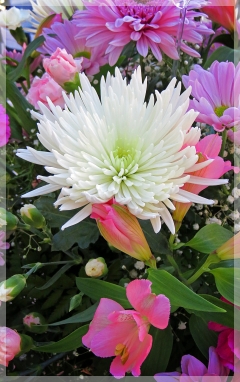 Whenever we were with my mother-in-law, she would say, “Come, sit down, and rest for a bit.” Since I usually was busy preparing a meal or doing some task for her, I’d say, “Not now, Grandma, maybe later!” Now that she’s gone, I wish I’d spent a few more minutes sitting and resting with her. I thought of her this morning when reading Jesus’ words urging the disciples to find a quiet place to rest awhile.
 Devotions of the Heart