
And so, dear brothers and sisters, I plead with you to give your bodies to God because of all he has done for you. Let them be a living and holy sacrifice—the kind he will find acceptable. This is truly the way to worship him. [Romans 12:1 (NLT)]
 I grew up in a church with hymn boards in the front of the sanctuary that displayed the liturgical church date and the day’s hymns. I loved seeing “First Sunday in Advent” because that meant there were only three more Sundays until Christmas. While “Lent” meant six weeks of no candy, “Palm Sunday,” with its promise of Easter (and Easter baskets) in just a week was always welcome. For most of the year, however, that sign was uninspiring. The weeks after Easter were simply noted as the first through the seventh Sundays of Easter until the arrival of Pentecost 50 days after Easter.
Yesterday was Pentecost Sunday which commemorates the receipt of the Holy Spirit by the early church [Acts 2]. A mighty wind filled the house where the believers were meeting, what looked like tongues of fire settled on each person, and everyone was filled with the Holy Spirit. Because of the uproar, people gathered, Peter preached, and 3,000 new believers were added to the church that day. Pentecost was the day the Christian church was born! On the hymn board in our church, Pentecost also was the last notable event for the next six months!
From then on, that board marked time by how many Sundays it was after Pentecost until the church year started over again with the first Sunday in Advent. For a child, those months between Easter and Advent pretty much lived up to their church name: Ordinary. It felt like we were just marking time until something important, like Christmas or Easter, happened. What I didn’t understand as a child is that Ordinary Time in the church year doesn’t mean dull or commonplace. “Ordinary” comes from the Latin word ordinalis and refers to numbers in a series. It’s called “Ordinary Time” because ordinal numbers are used to count the Sundays as they relate to major church celebrations like Easter and Pentecost.
Granted, days like Christmas, Easter, and Pentecost commemorate significant events in the life of Christ and the church but that doesn’t mean any other worship service is less special or significant. Rather than celebrating specific events such as His birth, death, resurrection, ascension, and the descent of the Holy Spirit, the season of Ordinary Time celebrates the presence of Christ in our lives throughout the year. It is during this in-between time that we learn, grow, mature, witness, and serve as we live out our faith in Christ. If we think about it, the really extraordinary events in our lives usually happen in ordinary times!
Nothing in Scripture demands observing the liturgical year—it just is a tradition followed by several denominations. Nevertheless, whether or not we observe Ordinary Time, our worship should never be ordinary, sporadic, or missing altogether. Too many of those who claim to be Christians are little more than “birth and resurrectionists.” The message of the resurrection doesn’t end once the eggs are found nor does the significance of the risen Christ stop when the last of the jelly beans and chocolate bunnies are eaten. The promise of our salvation doesn’t disappear when Easter dinner is finished only to reappear at Christmas and disappear again when the tree is taken down. Christ’s birth and resurrection bring us love, grace, peace, forgiveness, redemption, and salvation, not just on Easter and Christmas, but in every ordinary day of our lives. Following Jesus isn’t limited to two days a year and the gospel message isn’t limited to a few events in Christ’s life. None of the days He walked on earth were ordinary and every day with Him is extraordinary!
The discovery of God lies in the daily and the ordinary, not in the spectacular and the heroic. If we cannot find God in the routines of home and shop, then we will not find Him at all. [Richard J. Foster]
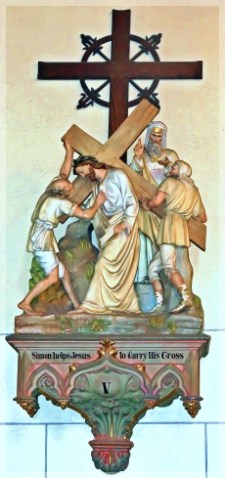
 It’s easy to assume the Pharisees were irate just because Jesus had worked on the Sabbath but, for these sticklers for the law, it was as much about how He healed the man! Spitting on the ground on the Sabbath was forbidden because plowing was one of the 39 types of work prohibited on the Sabbath! Using their convoluted logic, that meant that digging any hole was prohibited and, when spittle landed on soil, it might cause a small dent in the ground (which would be digging a hole) and dislocate a small amount of dirt (which would be plowing)! Compounding Jesus’ violation of the law by both healing and plowing, He made mud. Kneading, defined as joining small particles into a mass using any liquid, was another of the 39 kinds work prohibited on the Sabbath. Jesus broke this law the moment his spittle wet the dust; the mixing of his spittle and the dirt together to make mud was an additional offense! To them, the restoration of sight meant nothing when compared to His many transgressions of the law!
 It’s hard to think of our omnipotent, invincible, and unstoppable God getting tired after a mere six days of work but Scripture tells us He “rested” on the seventh day. The Hebrew word translated as rested, however, is shabath, meaning to stop, cease, or desist. Rather than God resting because He was exhausted; God simply stopped! I suspect it’s because He wanted to enjoy His finished creation. Picture Him sitting in the Almighty’s version of a La-Z-Boy chair, looking out at the magnificence of the universe—breathing in its aromas, tasting its sweetness, hearing its song, and delighting in its beauty.
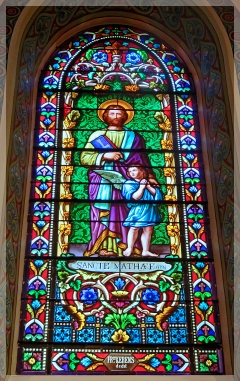 Although Mark and Luke call him Levi, there is no doubt that Levi and Matthew are the same man. He may have had two names, as did John Mark or was known by two different names as were Peter (Simon), Thomas (Didymus), Jude (Thaddeus), and Nathanael (Bartholomew). It simply may be that, like the Apostle Paul (Saul), he was known both by his Greek name of Matthew as well as his Hebrew one of Levi.
 Since the beginning, Satan has been determined to impede God’s plan. He started in Eden and continued by attempting to cut off the promised line of the Messiah with the killing of Israel’s infant boys in Egypt, Haman’s evil plans to exterminate every Jew in the Persian empire, and Herod’s slaughter of boys under two in Judah. When that failed, Satan sought to derail Jesus’ mission to mankind by tempting Him in the wilderness and Scripture tells us that wasn’t his last attempt to stop the Lord. Having failed with Jesus, Satan has been trying to interfere with the church’s mission to spread the gospel ever since.
 Devotions of the Heart