
Jesus told him, “I am the way, the truth, and the life. No one can come to the Father except through me.” [John 14:6 (NLT)]
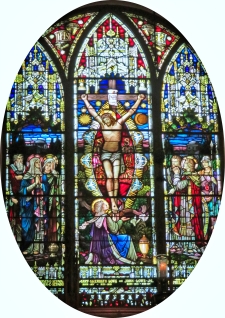 Pope Francis recently visited Singapore and, when speaking to young people at an interfaith meeting, he is reported to have said “All religions are paths to God.” After comparing the various religions to “different languages that express the divine,” he added, “There is only one God, and each of us has a language to arrive at God. Some are Sheik, Muslim, Hindu, Christian, and they are different paths [to God].” While the pontiff was encouraging interfaith dialogue, his words are troubling. I will not presume to know the Pope’s meaning or intention with his comments. Nevertheless, I find it important to address how the world understood the pontiff’s message.
Jesus is not one of many ways to God; He is the one and only way! He spoke of Himself as the only path to heaven. He said His words are life, called Himself the ”bread of life,” and promised that His believers would have eternal life. Jesus is the only one who came down from Heaven, lived a perfect sinless life, fulfilled the Law and the Prophets, sacrificed Himself for mankind’s sins, and conquered death! As Christians, we believe salvation comes through Christ alone and that the Bible teaches us everything we need to know about God. At best, all any other religion offers is an incomplete, inaccurate, and deceptive understanding of God and His creation.
From where we live, there are no direct flights to my son’s home in San Diego. Although we have a choice of routes and airlines, we must change planes in Atlanta, Houston, Dallas, Charlotte, Chicago, or Washington. While there are different ways to get to California, if we stay in a connecting city, we’ll never get there. If we hope to see our son, we need to board the right plane—the one headed for San Diego. If, by mistake, we get on a plane going to Paris, we’d land more than 5,600 miles away from our son’s home. But, if we landed in Tijuana, we’d only be 20 miles away. Nevertheless, whether 5,600 miles or only 20 away from our destination, we wouldn’t find our son waiting there to welcome us to his home! While some flights might get us close to our journey’s end, there only is one correct place to land! It’s said that “close only counts in horseshoes and hand grenades.” That’s important to remember when it comes to both airports and God! Unless we get on another plane headed for San Diego, we won’t be seeing our boy. If we want the Son to welcome us to His heavenly home, we eventually must take the only path that leads to Him!
If we believe Christianity’s claims are true, then the claims of other religions must be wrong wherever they contradict it—and there are plenty of contradictions. For example, Islam’s condemnation of the Trinity and its rejection of the deity of Jesus, His death, resurrection, ascension, and atonement for our sins along with its denial of His Holy Spirit and the salvation of His believers don’t seem remotely close to our path. Islam seems more like deliberately heading to Paris when you’re supposed to be going west to San Diego!
While we may find wisdom and inspiration in Hinduism’s Bhagavad Gita, the Buddha’s words in the Dhammapada, the Chinese philosophy of the Tao Te-Ching, and in the rabbis’ discourse in the Talmud, we know those texts are not sacred and the words in them are man’s, not God’s. Christianity doesn’t allow for a mingling of faith in other philosophies or gods.
Saying we all worship the same God is what David Limbaugh calls “intellectual laziness.” The claim that all paths can lead to God is a statement we should never make or accept. It’s an insult to Jesus. As God incarnate, He came, suffered, and died on the cross for our sins—something totally unnecessary were there any other way to God. Whether you call them languages or paths, all religions do not lead to God. Then again, no “religion” leads to God; only faith in Jesus Christ does!
Jesus is not one of many ways to approach God, nor is he the best of several ways; he is the only way [A.W. Tozer]
 Jeopardy introduced me to the word “performative” but, in an article about how scandals are hurting organized religion, the New York Times introduced me to another new word, “orthopraxy.” While “orthodoxy” means correct belief, doctrine, or teaching, “orthopraxy” has to do with correct practice, behavior, or action. Orthodoxy says, “Hear my words!” but orthopraxy says, “Watch my behavior!” With the flood of scandals throughout the Christian church, it’s easy to point our fingers at the disgraced Christian celebrities, megachurch pastors, and Roman Catholic priests whose orthodoxy didn’t match their orthopraxy—people who espoused devotion to God and adherence to His word while disregarding it in their own lives. Let’s remember, however, that whenever we point a finger at someone, three other fingers point at us! Although the Times article was about the disconnect between orthodoxy and orthopraxy in the church at large, there’s often a disconnect between the two in our personal lives, as well.
 When they had finished breakfast, Jesus said to Simon Peter, “Simon, son of John, do you love me more than these?” [John 21:15 (ESV)]
 If I were doing what accountants call a cost-benefit analysis of our living in Florida, the cost side would include venomous snakes, poisonous cane toads, hurricanes, alligators, sink holes, fire ants, and mosquitos along with humidity, allergies, high insurance, and seasonal traffic. On the other hand, the benefits would include never having to shovel snow, scrape sleet from a windshield, or drive on icy roads, along with the enjoyment of beaches, beautiful birds, colorful flowers, ocean breezes, “early-bird” specials, sunshine, no state income tax, and never-ending summer. While not one hundred times better, the pluses outweigh the negatives and make it worthwhile (at least for us)!
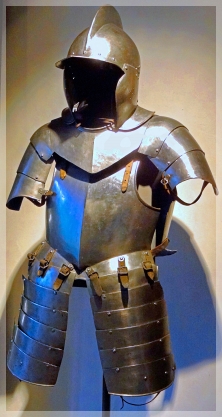 Back in in 1586, during the Eighty Years’ War, Sir Philip Sidney was fighting for the Protestant cause against the Spanish when he noticed another soldier was without leg armor. Believing that he shouldn’t be better protected than his men, Sidney gave the man his cuisses (armor that covered the thigh). During the Battle of Zutphen, Sidney was fatally wounded in his thigh during the final charge and, three weeks later, he died of gangrene from the injury. While heroic, his death was avoidable if the man had worn his complete set of armor!
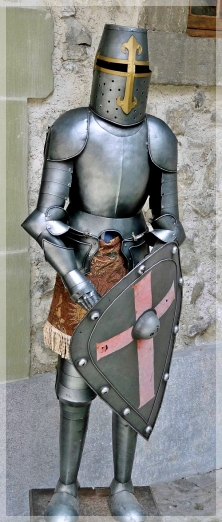 As a young child, I loved singing “Onward, Christian Soldiers” in Sunday school. My enthusiasm for the hymn waned as I grew older and learned about the evil and horrors of the Crusades and the World, Korean, and Vietnam wars. With its mention of war, soldiers, mighty armies, battles, and foes, the hymn seemed to glorify war. Even though the martial imagery comes from Biblical texts, the hymn’s combination of soldiers marching into battle and Jesus (the Prince of Peace) has caused controversy and some denominations have eliminated it from their hymnals.
 Devotions of the Heart