
I heard a loud shout from the throne, saying, “Look, God’s home is now among his people! He will live with them, and they will be his people. God himself will be with them. He will wipe every tear from their eyes, and there will be no more death or sorrow or crying or pain. All these things are gone forever.” [Revelation 21:3-4 [(NLT)]
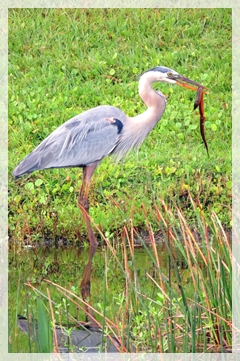
 My Advent devotional suggested taking a prayer walk while looking for signs of hope. I took my regular route and, since I often pray while walking, I wasn’t sure how this walk would be different. Nevertheless, I went in search of hope. The first thing I noticed was the sun rising in the east—a sure sign of hope with its promise of a new day and all of its possibilities. I spotted a family of ducks waddling down to the pond. The five youngsters were no longer little yellow fluffs of feathers but mama duck still kept her eyes on them. Mothers of every species hope to keep their children safe—even when they’re no longer children! I noticed the lilies, canna, and arrowhead that had been planted at waters’ edge last spring to prevent shoreline erosion. They were starting to bear their first flowers—another sign of hope because it means they took root and will serve their purpose. A few people had decorated their houses for the holiday; since not all the décor was secular, I found hope that some people still keep Christ in Christmas. Further on, a patient great blue heron stood absolutely still, neck fully extended, hoping to catch a tasty fish breakfast. It reminded me that we must remain patient in our hope—all things in God’s time. Seeing a few wood storks wading in the water also was a hopeful sign; once an “endangered” breed, their status has been upgraded to “threatened,” meaning there is hope for the survival of their species.
Since this was a prayer walk, I went through my prayer list of hope-filled prayers for what could be called happy endings—things like a successful surgery, passing grades, reconciliation, recovery from illness, sobriety, a new job, successful endeavors, the sale of a house, safe travels, a problem solved, and an obstacle surmounted. Sadly, for some of the names on my list, happy endings on this side of the grass don’t seem likely. Modern-day Jobs, the cards they’re holding are bad ones. Unlike Job who got a better hand in a re-deal and ended up with more than he’d had before, they appear stuck in their dismal situations with no new cards in sight. Barring a miracle, their circumstances aren’t likely to improve. In 1 Corinthians 13, the Apostle Paul mentions the three things that last forever: faith, hope and love. He calls love the greatest of the three; perhaps hope is the hardest.
Wondering about the purpose of my hope walk, I thought back to the day’s Advent readings from Revelation and Isaiah. Advent hope isn’t a wishful thinking/finger-crossing kind of hope, like hoping the pathologist’s report says “benign.” It’s more than hoping a good outcome for something about which we’re unsure. Our hope is in God and He’s already promised us a better future. Advent hope is knowing that, in spite of our circumstances, God eventually will work it all together for our good. While we hope for deliverance from our present troubles, we know that, ultimately, we will be delivered. Our hope isn’t in situations, people, medicine, or the stock market and we don’t need a knight in shining armor to rescue us from our woes. Our hope is in God the Father, God the Son, and God the Holy Spirit! Whether the hand dealt to us looks hopeless or not, we continue to maintain Advent hope by looking away from our circumstances to the One who holds our lives in His hands.
Our hope is in Immanuel, which means “God is with us”! He is with us in our birth and death, sickness and health, joy and sorrow, good times and bad. Let us remember that, if He is with us, then we are with Him—in His resurrection, ascension, and the glory of His second coming!
Optimism and hope are radically different attitudes. Optimism is the expectation that things—the weather, human relationship, the economy, the political situation, and so on—will get better. Hope is trust that God will fulfill God’s promises to us in a way that leads us to true freedom. [Henri Nouwen]
 “As an inmate on death row, I am under many restrictions,” began the writer of my morning’s devotion. Realizing that he’d constantly been asking God for more, the prisoner prayed that God would help him be more grateful for what he already had. Curious about the author, a quick internet search told me that thirteen years ago he was convicted on one count of burglary and two of first-degree murder. His brutal crime was premeditated, there was no question of his guilt and one could say he was “as guilty as sin;” then again, so are we all! It was in prison that he found Jesus.
 The feeding of the five thousand is one of the more impressive of Jesus’s miracles. The gospels’ writers surely thought it important; other than the resurrection, this is the only miracle recorded in all four accounts. While small details vary, they all agree that Jesus had only five loaves and two fish when He said a blessing over the food. Although a typical Jewish blessing would have been something like, “Blessed are you, Lord our God, king of the universe, who brings forth bread from the earth,” I think Jesus said something quite different. I don’t think He thanked God for five loaves and two fish and I don’t think He asked God for more provisions. In spite of not having sufficient food to feed even fifteen let alone more than five thousand, I think Jesus thanked our more-than-enough God for the more-than-enough food that would feed that multitude. I think the One who promised, “If you believe that you’ve received it, it will be yours,” thanked His Father in Heaven for His abundant provision before that food ever appeared!
 Greedy creatures that we are, when reading today’s verse, we tend to focus on the promise that God will give us our heart’s desires rather than the qualification: taking delight in the Lord. I usually think of a parent delighting in a child rather than a child of God delighting in his or her Heavenly Father. What does it mean to delight in God and how do we find our delight in Him?
 These are the first lines of the Lord’s Prayer as if they were written by a lawyer and, having recently met with our attorney to update some documents, I don’t think they’re much of an exaggeration. With all of their circumlocution, it’s difficult to know what lawyers actually mean. They use vague abstract nouns rather than concrete ones and seem to go around a subject rather than straight through it. Why can’t they use straightforward language and directly say what they mean?
 Recently, the Sinner’s Shack Gentlemen’s Club wanted to open an establishment in our small Midwest community. It’s a rather conservative town and, since there’s nothing gentlemanly about the goings on in such an establishment, everyone was up in arms about it. When the Holier Than Thou Evangelical Church started a campaign to halt the tawdry business from locating in town, prayer sessions were held three times a day and the City Council was inundated with letters and calls of protests. Unfortunately, in spite of the prayers and complaints, proper zoning was attained and construction on the Sinner’s Shack began. Just a day before its grand opening, however, lightning struck the new building and it burned completely to the ground!
 Devotions of the Heart