
Job stood up and tore his robe in grief. Then he shaved his head and fell to the ground to worship. He said, “I came naked from my mother’s womb, and I will be naked when I leave. The Lord gave me what I had, and the Lord has taken it away. Praise the name of the Lord!” In all of this, Job did not sin by blaming God. [Job 1:20-22 (NLT)]
 Even though all that he lost was restored to Job at the end of Chapter 42, did the ten new children remove Job’s memory of his first ten or his sorrow at their deaths? While the new ones may have filled Job’s home with laughter again, there still would be an empty place in his heart from his loss. Although Job’s health was restored, would the scars from his boils be a daily reminder of his past afflictions? Would double his livestock be enough to make him forget the original herds and servants who had perished? How would experiencing the precariousness of life—the inexplicable randomness of misfortune—affect Job’s next chapter, the Chapter 43 of his life? Would he be more affectionate, patient, or protective of his children? Would he better appreciate and cherish every precious moment with which he was blessed?
Even though he questioned God, Job is Scripture’s model for patience and endurance. I know some people who could give Job a run for his money if their stories were compared. People of faith, like Job, they have experienced more than their share of life’s tragedies first-hand—things like catastrophic loss, chronic disease, severe disability, heartache, betrayal, grief, poverty, divorce, addiction, abuse, disfigurement, ever-present pain, or the loss of spouse or children. Some have moved through their Job-like experiences while others are still in the midst of them. Like Job, their story didn’t end at Chapter 42 but unlike him, their next chapter wasn’t necessarily a fairy tale ending of complete restoration. I admire them—not because of their suffering but because of what they’ve made of it—because of how they’ve written the next chapter of their lives.
I think of one couple, both of whom lost their beloved first spouses to the ravages of cancer. Perhaps because they know the fragility of life and the pain of loss, in their Chapter 43, they seem to listen better, cherish each other more, and complain less than do most couples. I think of a friend who was nearly destroyed by mental illness and came out the other side of her darkness stronger and wiser. Having experienced the depths of despair, she makes it a point to find joy and thanksgiving on each page of her Chapter 43. The mother who lost a child seems to grumble less about the tears, temper tantrums, mess and teen-age angst of her living children. The man who who once flat-lined values each moment more than those who never have been on the brink of death. I think of a friend, suffering from Parkinson’s, who enthusiastically seizes every today because she knows that she’ll be just a little worse tomorrow. I remember a couple who lost three of their children to drugs and yet they never lost their trust in the Lord and confidence in His goodness. I think of other friends whose Chapter 43 is a continuing battle with metastatic cancer, Alzheimer’s, MS, and chronic pain yet they still bravely face each day with courage, faith, and even joy. Does their experience of what truly defines a “bad day” give them a new perspective and help them know how little is necessary to make any day a great one?
I don’t admire these people simply because they are survivors of tragedy. Anyone can survive tragedy. I admire them because they managed not just to survive but to thrive, to become better not bitter, all while keeping their faith intact. I admire them because they are examples not just of faith, but also of determination, strength, wisdom, generosity, love, joy, and even optimism. I admire them because they are making the most of the 43rd chapter of their lives. Their examples remind me to thank God for every circumstance He throws at me and to savor every breath with which I am blessed!
 Although the Apostle Paul seems to have mixed figures of speech by referring to the military with “fought” and “fight,” athletics with “race,” and religion with “faith,” all three references relate to athletics. The word used for fought was agónizomai (the root word for the English word “agonize”) which meant “to contend for a prize” or “struggle.” The word translated as “fight” was agōna, meaning “a gathering, contest, struggle.” Rather than a conflict or dispute, it referred to a gathering to see contests like the ancient games held at Olympia or the games themselves. Paul’s audience would have understood that he meant something grueling and, in their 1st century world, athletic competitions were so fierce and brutal that even the winners usually carried scars.
 The skink is a reptile that looks as if it can’t decide whether it’s a lizard or a snake. As one scampered away down the boardwalk, it looked more lizard-like than usual because it was missing the pointed end of his long tail. Like many lizards, if a predator manages to catch a skink by the tail, the tail will break off. Since the detached tail continues to wiggle, the predator gets distracted which allows the lizard to escape. Even though a raccoon, snake, or hawk had appropriated its tail, that skink escaped to see another day. Although skinks don’t have much with which to defend themselves, with their detachable tails (caudal autonomy), God provided them with an effective mode of escaping trouble!
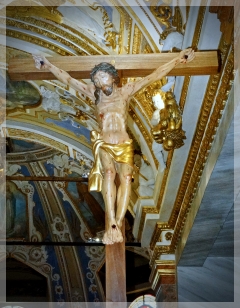 In any cathedral or art museum, we’ll find many pictures of Jesus and even rather graphic depictions of Him on the cross. None of them, however, tell us anything about His appearance because they were created long after His time. Still, in a world where we seem to memorialize everything with pictures, you’d think one of Jesus’ followers would have sketched Him while blessing the children, giving the Sermon on the Mount, or feeding the multitude! 1st century rabbis in Judah, however, vehemently objected to the depiction of human figures because the second commandment prohibited making a “graven image.” With its Jewish roots, this prohibition carried into the early church and inhibited early Christian art.
 After Satan took Job’s loved ones and wealth, the grieving man remained a pillar of patience and faith. Rather than blaming God, the stoic man acknowledged God’s sovereign authority saying, “The Lord gave me what I had, and the Lord has taken it away. Praise the name of the Lord!” [1:21]
 Saturday mornings we usually walk through a nearby park that is home to a unique subspecies of squirrel found here in southwest Florida: the Big Cypress fox squirrel (or BCFS for short). Larger than a common gray squirrel, the BCFS has a black head and back, buff sides and belly, white ears and nose, and a long bushy tail.
 Devotions of the Heart