TUMBLEWEEDS

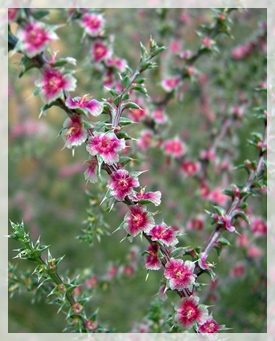
Russian thistle (tumbleweed)-Kodachrome Basin State Park,UT 009-cropwebThe Lord says: Cursed is the man who puts his trust in mortal man and turns his heart away from God. He is like a stunted shrub in the desert, with no hope for the future; he lives on the salt-encrusted plains in the barren wilderness; good times pass him by forever. But blessed is the man who trusts in the Lord and has made the Lord his hope and confidence. He is like a tree planted along a riverbank, with its roots reaching deep into the water—a tree not bothered by the heat nor worried by long months of drought. Its leaves stay green, and it goes right on producing all its luscious fruit. [Jeremiah 17:5-8 (TLB)]

The stunted shrub about which Jeremiah speaks is much like the tumbleweed. If you haven’t seen it in real life, you’ve probably seen it blowing across the desert in movies. The tumbleweed is actually the Russian thistle, a common western weed, and has a pretty little flower. Once mature and dry, however, the entire plant separates from the root; shaped like a ball, it looks like the dead shrub’s skeleton. In the western states, you can see tumbleweeds as small as soccer balls or as large as a Smart Car in ditches or tumbling along the desolate landscape.

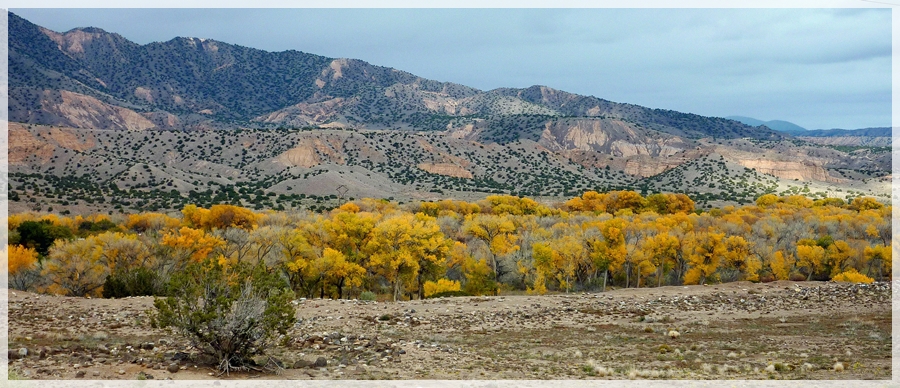
On the other hand, cottonwoods are hardy trees. Much like the ones mentioned in Jeremiah, they put their roots down near rivers, lakes, and irrigation ditches throughout the southwest. Large trees, they have been known to grow up to eighty feet tall with trunks over five feet wide. Because they grow on the water’s edge, they typically survive prairie fires and can live over one hundred years. The hardy Rio Grande cottonwood even flourishes in New Mexico’s White Sands National Monument, an environment too harsh for most plants. In an area of scorching heat, scant rainfall, relentless winds, poor soil and blowing sand, the cottonwood survives because its roots are planted firmly down into the life-giving water hidden beneath the sand.

Do we want to live as a tumbleweed, dry and rootless in a barren land, with no hope for the future? That is what it will be like if we put our trust in our own strength or that of other people. Or do we want to be like the cottonwood, with deep roots, able to withstand fire, heat, wind and drought? If we put our trust in the Lord, we will never be alone and we’ll be able to survive, perhaps even thrive, in the most stressful of situations.

They shall neither hunger nor thirst; the searing sun and scorching desert winds will not reach them anymore. For the Lord in his mercy will lead them beside the cool waters. [Isaiah 49:10 (TLB)]

And now just as you trusted Christ to save you, trust him, too, for each day’s problems; live in vital union with him. Let your roots grow down into him and draw up nourishment from him. See that you go on growing in the Lord, and become strong and vigorous in the truth you were taught. Let your lives overflow with joy and thanksgiving for all he has done. [Colossians 2:6-7 (TLB)]
cottonwoods (NM) -cropaweb

WORDS OF WARNING

Our kings, leaders, priests, and ancestors did not obey your Law or listen to the warnings in your commands and laws. [Nehemiah 9:34 (NLT)]

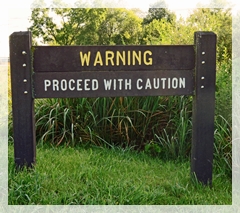
WARNING -8042webAlthough I heard the rumble of thunder and saw flashes of lightening, they weren’t what woke me from a sound sleep at midnight—it was the klaxon-like sound coming from my cell phone. My foggy brain figured it to be a weather alert and, since I could already see there was a storm, I rolled over and went back to sleep. After checking my phone the following morning, I saw it had been a warning about flash floods in our area. While running errands later that day, I saw the damage left by the storm and understood why the warning had been sounded. Since I had been safely tucked into bed in a house set on high ground, ignoring the flood alert didn’t endanger me. If, however, that had been an alarm about a tornado, I might have regretted not looking at the message or heeding its words of caution.

It’s not just weather warnings that we tend to ignore. Every time a smoker lights up, he is ignoring clearly written warnings on his pack of cigarettes. Do we always slow down when we see those yellow signs warning of a sharp turn, poor road conditions or a hidden entrance? As many times as we women are advised to regularly check our breasts for suspicious lumps, most women I know don’t. We’re cautioned about the dangers of the sun and yet we use tanning booths rather than sun block. Every year, the commuter trains in our area are delayed because people have ignored the warning lights and bells at a railroad crossing and, even though the waiter warns us that the plate is extremely hot, we will touch it nearly every time.

The Bible is filled with warnings; in fact, the word “warn” and its variations appear 173 times in my NLT translation. Add words like “heed,” “beware,” and “be careful” and it is obvious that the Bible is filled with cautionary advice and admonishments. The Israelites failed to heed the various words of warning given them by Moses and the many prophets that followed him and we’re not much better when it comes to abiding by the cautionary words of the New Testament.

Let us never forget that words of warning are a blessing in disguise. Like the annoying weather alerts, they are there for our safety, protection and welfare. It is, however, our responsibility to listen to and abide by them.

So be careful how you live. Don’t live like fools, but like those who are wise. Make the most of every opportunity in these evil days. Don’t act thoughtlessly, but understand what the Lord wants you to do. Don’t be drunk with wine, because that will ruin your life. Instead, be filled with the Holy Spirit, singing psalms and hymns and spiritual songs among yourselves, and making music to the Lord in your hearts. And give thanks for everything to God the Father in the name of our Lord Jesus Christ. [Ephesians 5:15-20 (NLT)]

When you follow the desires of your sinful nature, the results are very clear: sexual immorality, impurity, lustful pleasures, idolatry, sorcery, hostility, quarreling, jealousy, outbursts of anger, selfish ambition, dissension, division, envy, drunkenness, wild parties, and other sins like these. Let me tell you again, as I have before, that anyone living that sort of life will not inherit the Kingdom of God. [Galatians 5:19-21 (NLT)]

THE EYE IN THE SKY

The eyes of the Lord are everywhere, keeping watch on the wicked and the good. [Proverbs 15:3 (NIV)]

For your ways are in full view of the Lord, and he examines all your paths. [Proverbs 5:21 (NIV)]

barred owl - CSS6769webDrones have certainly been in the news lately. North Dakota lawmakers just passed a law allowing police drones to carry “less than lethal” weapons such as tear gas or Tasers and Amazon is hoping to have “delivery-by-drone” available within the next few years. Several weeks ago, a Kentucky man blasted a drone out of the air with his shotgun while it hovered over his backyard. Indeed, drones are capable of highly advanced surveillance as a Rhode Island man recently learned. A Benedictine monk who works at the school operating a giant wind turbine, was relaxing in t-shirt and shorts, atop the 200-foot turbine when a drone spotted him catching his private quiet time in the sun. The video ended up on television and YouTube almost instantly.

When he was a toddler, my nephew thought that, by covering his eyes with his hands, he was invisible. Because he couldn’t see anyone, he figured no one could see him. The monk sun-bathing on the turbine knows that belief to be false! Whether we see them or not, it appears that we’re never able to get away from other people’s eyes. Sometimes we’re not a lot different than my nephew when it comes to our relationship with God. Just because we can’t see Him, we think He can’t see us; let’s not forget that not seeing Him doesn’t mean he’s not there. We can’t get away from God’s presence any easier than we can from drones.

Knowing we have absolutely no secrets from God is both reassuring and troubling. Granted, He knows what I look like without make-up or doing my hair, which means I can relax with Him like I would with a best girlfriend. I don’t have to maintain any pretense with Him. On the other hand, He also knows my every dirty little secret, which is far more disturbing than heartening. Since nothing is hidden from God, there are no excuses, justifications or lies about our bad behavior. We may be able to hide things from our family and friends but we can’t from God. He knows the dog didn’t eat the homework, we clearly knew the speed limit when caught speeding, we had time and money to help when we said we didn’t and that no one forced us to have the third drink or smoke the joint. He knows where we go on the Internet, with whom we chat, what we say, what we do, and with whom we do it. He knows more about us than even the most technically advanced drone and yet He still manages to love and forgive us.

Father, I welcome you into my life; search my thoughts and feelings, correct and direct me and lead me in your ways. Guide me so that my walk is always pleasing to your eyes.

Secret sins, services, and sorrow are under God’s eye. This speaks comfort to saints, and terror to sinners. [Matthew Henry’s Concise Commentary]

You have searched me, Lord, and you know me. You know when I sit and when I rise; you perceive my thoughts from afar. … Search me, God, and know my heart; test me and know my anxious thoughts. See if there is any offensive way in me, and lead me in the way everlasting. [Psalm 139:1-2,23-24 (NIV)]

Whoever claims to live in him must live as Jesus did. [1 John 2:6 (NIV)]

COLLATERAL DAMAGE

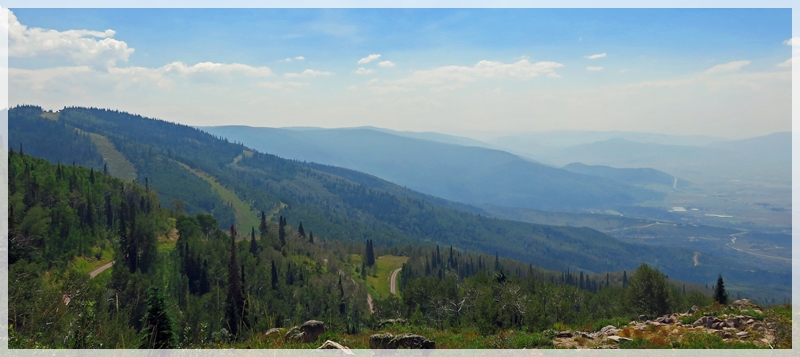
Steamboat Springs, CO-cropweb
Abijam began to rule over Judah in the eighteenth year of Jeroboam’s reign in Israel. … He committed the same sins as his father before him, and he was not faithful to the Lord his God, as his ancestor David had been. [I Kings 15:1,3 (NLT)]

Nadab son of Jeroboam began to rule over Israel in the second year of King Asa’s reign … But he did what was evil in the Lord’s sight and followed the example of his father, continuing the sins that Jeroboam had led Israel to commit. [I Kings 15:25-26 (NLT)]

“Where are the Flattops, Hahn’s Peak, or the Sleeping Giant?” we wondered. Smoke and haze from the fire-ravaged Pacific Northwest were obscuring the view of our favorite Colorado landmarks. The mountains and crystal clear skies had disappeared because of fires raging some 1,500 miles away. Reduced visibility from the smoke caused air traffic delays in Denver and posed respiratory problems for cyclists racing through the mountains. Satellite images show that smoke from these fires has covered a portion of at least twenty states. On our return east, the haze was still visible as we passed through Iowa.

Fire has a way of causing far-reaching collateral damage and so does sin. The chronology of kings in Israel and Judah are filled with stories of how a father’s sinful example was followed by his son and led the people to sinfully disregard God’s commands. Today, the abusive father is likely to have an abusive son, the adulterous spouse’s divorce hurts the entire extended family, toxic relationships poison everyone near them, and the children of an alcoholic carry emotional baggage that affects their own children. When the bad stuff hits the fan, it tends to spatter all over innocent people. Well, I’m not abusive, adulterous, toxic or alcoholic so I can’t spread sin, pain and sorrow, or can I? A few poorly chosen words, a sharp retort, a tidbit of gossip, a rude gesture, a bit of spitefulness, impatience and rudeness can also have far-reaching effects. That saleslady with whom I was clearly annoyed might well be irritable with her next customers who then will be short-tempered with the people they meet later. By the end of the day, my thoughtless act of rudeness may have created a negative chain reaction that affected dozens of people.

We talk of paying it forward when doing a kindness that will reverberate with more kindnesses. Unfortunately, it works that way with sin and unpleasantness, as well, and, sadly, paying unkindness forward with more of the same is probably far more likely to happen. Any time we fail to live as Jesus did, any time we allow Satan a foothold in our lives, any time we forget to respond with love, whenever we are inconsiderate of other people, that ugliness, just like the fires in the northwest, can spread far and wide.

Father, guide our words and actions so that the love of Jesus is clearly seen and felt by all whose lives we touch today.

The greatest need in the world is the transformation of human nature. We need a new heart that will not have lust and greed and hate in it. We need a heart filled with love and peace and joy, and that is why Jesus came into the world. [Billy Graham]

He looked out across the plain toward Sodom and Gomorrah and watched as columns of smoke rose from the cities like smoke from a furnace. [Genesis 19:28 (NLT)]

This wickedness is like a brushfire. It burns not only briers and thorns but also sets the forests ablaze. Its burning sends up clouds of smoke. [Isaiah 9:18 (NLT)]

DINNER GUESTS

Now when Job’s three friends heard of all this evil that had come upon him, they came each from his own place. … to show him sympathy and comfort him. And when they saw him from a distance, they did not recognize him. And they raised their voices and wept, and they tore their robes and sprinkled dust on their heads toward heaven. And they sat with him on the ground seven days and seven nights, and no one spoke a word to him, for they saw that his suffering was very great. [Job 2:11-13 (ESV)]

Tanzania sculptureLabor Day weekend at the cottage was to be our last opportunity to enjoy time at the lake until next summer. Family would be visiting most of the time and the little guys were sure to keep us on the run. Closing the house for the season also meant a lot of chores: the house cleaned, sporting equipment brought up from the lake, deck furniture scrubbed and stowed, windows washed, the pantry emptied, and so on. The last thing either of us wanted was more work.

Before the kids and grands arrived, we had one day to quietly (and leisurely) finish up some tasks. It was also the only day we’d be free to spend any time with our neighbors until our return next June. The husband is suffering from a debilitating form of dementia so time with them is precious. By next summer, the man we’ve come to know and love may no longer even remember us. The easiest thing for us would have been to take them to dinner at a local restaurant but the noise would make it difficult for our hard-of-hearing friend and the crowd would cause him discomfort. While dinner at our house was the obvious solution, neither my husband nor I felt we had the time to spend shopping, prepping, cooking and cleaning up.

The Bible is filled with stories of friendship and people who found time for one another: Ruth and Naomi, Jonathan and David, Elisha and Elijah, Abraham and Lot, and Daniel, Shadrach, Meshach, and Abednego. Even Job’s three friends spent several days with him sitting at his side. A friend loves at all times, not just when it is convenient, so we knew we had to spend time encouraging and loving on our neighbors. Somewhat reluctantly, we invited them to dinner. Panic briefly set in as we scoured the kitchen to see what provisions we had. Cheese and homemade cookies for the appetizer and dessert were found in the freezer. We had enough tomatoes for a salad and the refrigerator held the ingredients for two easy make-ahead side dishes. A quick trip into town would provide the entrée in the way of an already prepared rotisserie chicken. Typically, our dinner party preparations are more complex, involving lots of prep work, but the Holy Spirit reminded us that friendship has nothing to do with an impeccably set table or a gourmet meal; friendship is breaking bread together in love. Perfection isn’t necessary in friendship; presence, however, is. Friendship is accepting and loving one another in our imperfection. While it’s good to remember friends in our thoughts and prayers, real friendship actually sits beside them whenever possible. Jesus gave his life for his friends and few of us will ever be asked to do as much as that. A little inconvenience now and then is a small price to pay for the blessings of friendship and the opportunity to share Christ’s love.

Father, thank you for the blessing of friends—brothers and sisters connected to one another, not by blood, but by their love for one another. Thank you for gifting us with people with whom we share good times and bad, sorrow and joy, laughter and tears, health and illness. May we never hesitate to be as generous with our time as our friends are with theirs. Guide us to love in the way we hope to be loved and to do for one another in the way we want to have done for us.

A friend loves at all times, and a brother is born for adversity. [Proverbs 17:17 (ESV)]

Above all, keep loving one another earnestly, since love covers a multitude of sins. Show hospitality to one another without grumbling. [1 Peter 4:8-9 (ESV)]


THE INDIRECT WAY – LESSONS FROM THE TRAIL (2)

When Pharaoh let the people go, God did not lead them on the road through the Philistine country, though that was shorter. For God said, “If they face war, they might change their minds and return to Egypt.” So God led the people around by the desert road toward the Red Sea. [Exodus 13:17-18a (NIV)]

Paul and his companions traveled throughout the region of Phrygia and Galatia, having been kept by the Holy Spirit from preaching the word in the province of Asia. When they came to the border of Mysia, they tried to enter Bithynia, but the Spirit of Jesus would not allow them to. … After Paul had seen the vision, we got ready at once to leave for Macedonia, concluding that God had called us to preach the gospel to them. [Acts 16:6-7,10 (NIV)]

9-3-15_9280web
While hiking up the ski mountain, we discovered that what takes only nine minutes on the gondola takes several hours. A 2,200 vertical rise became a more than five mile hike. When looking at the trail map, it is easy to see why—rather than walking straight up the face and following the path of the gondola, the trail traverses back and forth across the mountain. Geometry taught us that the shortest distance between two points is a straight line yet, sometimes, the most direct way is not always the best way. In actuality, going straight up the face of the mountain is near impossible except for the fittest, most adventurous, and possibly craziest of hikers. Being none of those, we followed the meandering trail. There were moments of discouragement as we crossed back and forth across the face of the mountain, catching a brief glimpse of our destination in the distance, before passing again into the woods and continuing our slow ascent.

Is that what it felt like for the Israelites who spent forty years on a trip that should have taken only a matter of days? The forty years, of course, were tacked on for disobedience, but their initial route, given them by God, wasn’t the shortest one either. The shorter route from Goshen to Canaan, a four or five day’s journey, would have led them through Philistine country and was heavily guarded by a string of Egyptian fortresses. God wisely knew that His people, their spirits broken by years of slavery, were not yet ready for war. Their inexperience and possible cowardice would make them shrink from conflict and want to return to Egypt. Knowing this, God sent them the long way around to the Red Sea, an eleven days’ journey. Then, just as they’d gotten to the edge of the wilderness, instead of going forward, God re-directed them back to make camp by the sea. It probably made no sense to the people but it did to God. Pharaoh, thinking them lost and discouraged, would be lulled into a false sense of confidence. He would pursue them, giving God the opportunity at the Red Sea to prove to the Egyptians (and Israelites) exactly with whom they were dealing: the one true God.

God knows our abilities, our weaknesses and fears. By giving us lesser trials, He prepares us for greater ones, just as he did for the Israelites. Sometimes, the less direct route is necessary for us to gain knowledge and experience and learn to trust, obey and appreciate God and His blessings. Other times, God takes us the less direct route because He has a greater task for us elsewhere. When Paul wanted to go into the provinces of Asia, for example, he was directed instead to Macedonia where he brought the gospel message to Europe. He eventually got back to Asia but one look at his missionary journeys shows us that the Apostle never took the most direct route; instead, he followed God’s plan. Admittedly, when our journey takes longer than expected, it is frustrating to think we’ll never reach our objective. We must remember that God is guiding us to the destination that He has chosen by the path that He wants us to take. It may not be the shortest or easiest trail; it will, however, be the best.

There is a long way which is short and a short way which is long. [Babylonian Talmud, Eruvin 53b]

I know, O Lord, that a man’s life is not his own; it is not for man to direct his steps. [Jeremiah 10:23 (NIV)]