VASHTI

These events happened in the days of King Xerxes, who reigned over 127 provinces stretching from India to Ethiopia. [Esther 1:1 (NLT)]

deptford pinkWhile translations like the NIV and NLT call him Xerxes, he’s called Ahasuerus in translations like the ESV and RSV. When the king’s Persian name of Khshayârshâ was translated into Hebrew, it became Ahasuerus but, when it was translated into Greek, Khshayârshâ became Xerxes. Regardless of the translation, Xerxes and Ahasuerus are one and the same and we encounter him in the book of Esther.

Greek historian Herodotus (484-425 BC) depicts Xerxes as a cruel, arrogant, incompetent, and fickle monarch known for his harsh temper, excessive drinking, extravagant banquets, and philandering (he pursued both his brother’s wife and niece). When we meet the king in the first chapter of Esther, his behavior matches history’s assessment of him. As one of the wealthiest (and probably one of the most pompous and arrogant) men in the world, he’d been hosting six months of celebrations for his nobles, officials, and military leaders as a way of displaying his great wealth and, perhaps, to assure them of his victory before setting out to conquer Greece. As the festivities wound down, the king held a lavish grand-finale seven-day banquet for all the men in the palace. In a different part of the palace, his wife, Queen Vashti, held her own banquet for the women.

After a week of hard drinking, the King (said to be “in high spirits”) realized he’d flaunted all of his treasures save one—his beautiful queen—and he commanded that she come to the men’s banquet. Wanting his guests to gaze on her beauty, she was instructed to wear the royal crown. Since Vashti was specifically commanded to wear the crown and no other attire was mentioned, rabbinic tradition interpreted this to mean only her crown. Regardless of whether the king meant naked or dressed, Persian modesty would have prohibited Vashti from presenting herself that way before a group of men. While it might be asked of a concubine or dancing girl, Vashti was a Persian princess and the queen. It wasn’t fitting for her to parade around like a piece of meat and be ogled by a group of drunken rowdy men. To wear her crown while doing so was even more demeaning. Knowing full well the consequences of denying her arrogant husband, Queen Vashti refused to be exploited as part of his debauchery.

This may have been the first time anyone dared deny Xerxes anything. As he always did when making any decision, the king immediately asked his advisors what to do. Fearing that all the wives of Persia might think they could defy their husbands if word got out that the queen successfully did so, they recommended immediately dethroning Vashti and banishing her from the king’s presence forever. Xerxes sent out an unprecedented and irrevocable decree ensuring that “husbands everywhere, whatever their rank, will receive proper respect from their wives” that proclaimed every man ruled his own home and could say whatever he pleased. Whether Vashti lived the rest of her life isolated in a corner of the harem or, as rabbinic tradition holds, was beheaded, her fate was meant to be an object lesson for all women to be submissive and obedient to their spouses.

Esther was Vashti’s opposite. A Jewish commoner, she was passive. Once in the harem, she continued to follow her uncle Mordecai’s directions “just as she did when she lived in his home.”  When it was her turn to go to the king, she “accepted the advice of Hegai, the eunuch in charge of the harem and asked for nothing except what he suggested.” Perhaps Xerxes selected Esther as much for her submissiveness as her beauty.

When Esther balked at approaching Xerxes about the plight of the Jews, Mordecai asked if she might not have been made queen specifically for that task. Like Esther, perhaps Vashti was made queen for the moment she exhibited courage by standing up against her bully of a husband. In Vashti’s example, Esther saw a strong woman whose self-respect and character meant more to her than her crown or life. If Vashti risked everything by standing up for herself, could Esther do anything less than stand up for an entire race? The passive orphan girl garnered the strength and courage to confront Xerxes—even though it could result in her death. Vashti failed but Esther didn’t. Nevertheless, I wonder, would Esther have tried had it not been for Vashti’s brave example?

What about us? Could God have placed us in a precarious position for such a time as now? Perhaps, it’s time for us to make our voices heard—to speak up for sake of others, to take a stand for righteousness, or to refuse to take part in something that is wrong.


Speak up for those who cannot speak for themselves, for the rights of all who are destitute. Speak up and judge fairly; defend the rights of the poor and needy. [Proverbs 31:8-9 (NIV)]

If anyone, then, knows the good they ought to do and doesn’t do it, it is sin for them. [James 4:17 (NIV)]

Copyright ©2022 jsjdevotions. All rights reserved.

CONVICTION AND CONDEMNATION

I know that nothing good lives in me; that is, nothing good lives in my corrupt nature. Although I have the desire to do what is right, I don’t do it. I don’t do the good I want to do. Instead, I do the evil that I don’t want to do. … What a miserable person I am! [Romans 7:18-19,24a (GW)]
tri-colored heron - snowy egret

Yesterday, I suggested taking a good look at ourselves in God’s mirror but let’s not beat up ourselves over what we see. While a critical look at our spiritual shortcomings can make us feel wretched and condemned, that’s not what it’s supposed to do. There’s a big difference between condemnation, which comes from the enemy and conviction, which comes from the Holy Spirit.

Conviction of sins is one of the Holy Spirit’s duties and it’s more than a quick pang of conscience pointing out right from wrong. When we’ve been convicted, we see our sin, understand what an affront it is to God, and have the desire to change our ways to honor Him. In conviction, the Holy Spirit acts as a counselor whose purpose is to free us from emotional, mental, and spiritual bondage. Because He knows all of our thoughts (rather than just the ones we want to share), He shows us the truth and exposes our wrongs, admonishes us for them, and then convinces us of our need for Jesus. We repent, ask forgiveness, and then get on with our lives. While conviction may leave us disappointed in ourselves, it doesn’t leave us with guilt, shame, or despair. Rather than a dread of divine judgment, conviction leaves us with a sense of forgiveness, relief, peace, love, and hope.

Rather than acting as our counselor, however, Satan acts as both the accuser and judge who already determined our guilt. While Satan probably prefers that we keep sinning in blissful ignorance, the recognition of our sins gives him another opportunity to overcome us. He has a briefcase full of falsehoods and destructive thoughts to lay on us—self-pity, guilt, shame, and despondency, along with feelings of worthlessness, incompetence, and futility. He wants to condemn us to a prison term of living hell even though we’ve been forgiven because Jesus paid our debt and served our sentence. Moreover, Satan is worse than a nagging spouse—he never lets go of our past failures. He’ll not only tell us how we screwed up this time but he’ll remind us of every past mistake we ever made. Condemnation is Satan’s gift that keeps on giving!

The Holy Spirit convicts us so that we repent but Satan condemns us so that we feel guilt and shame! The Holy Spirit is like a parent who tells the child his actions are wrong and the enemy is like a parent who tells the child how naughty and wicked he is. One is specific and convicts a behavior; the other is general and condemns the person. Conviction tells us how we failed but condemnation calls us a failure. The Spirit’s goal is regeneration and renewal while the enemy’s is destruction and defeat. Conviction focuses on the problem and offers forgiveness; condemnation focuses on the person and lays on the blame. One wants us to be better but the other wants us to feel worse. Let us never forget that Jesus did not come to condemn the world, but to save it!

So those who are believers in Christ Jesus can no longer be condemned. The standards of the Spirit, who gives life through Christ Jesus, have set you free from the standards of sin and death. [Romans 8:1-2 (GW)]

Therefore, everyone was condemned through one failure, and everyone received God’s life-giving approval through one verdict. [Romans 5:18 (GW)]

Copyright ©2022 jsjdevotions. All rights reserved.

MIRRORS

Check up on yourselves. Are you really Christians? Do you pass the test? Do you feel Christ’s presence and power more and more within you? Or are you just pretending to be Christians when actually you aren’t at all? [2 Corinthians 13:5 (TLB)]
little blue heron

Writing about Paul’s flawed bronze mirror yesterday reminded me of the mirror I have at the end of our hallway—the one mirror in the house I actually like! Unlike ancient mirrors with their fuzzy image, this mirror is quite clear but, like those ancient mirrors, the image it reflects is misleading. Some defect in it makes a person look slightly taller and slimmer. Unlike a fun house mirror, however, it’s a minor distortion and so subtle that it takes a while to realize that the reflection isn’t quite true.

I’m not sure any of us truly like mirrors. In actuality, most of us would prefer the ancient bronze ones to those unforgiving three-way mirrors we find in changing rooms! No matter how beautiful we might be, the reflection in a good mirror is brutally honest. I may be able to edit away blemishes, wrinkles, and even pounds with Photoshop but any mirror tells me they’re still there! As much as most of us would prefer not looking too closely at our bodies, we are even less likely to enjoy examining our spiritual nature.

Unfortunately, we’re usually more willing to look closely at other people’s behavior than our own. We’ll use a magnifying glass for them but, when scrutinizing ourselves, we would prefer a mirror like the one in my hall—one that makes us look better than we are—to one that provides a frank and candid assessment. The words “mirror” and “miracle” share the same Latin root of mirari, meaning “to wonder at or admire.” While we’d prefer looking in our spiritual mirrors to admire what we see, at least for me, there is much that isn’t attractive, let alone admirable. One’s spiritual mirror should be as accurate and blunt as those make-up mirrors with lights and magnification! Nevertheless, when we take a deep look at ourselves, we’re tempted to minimize our spiritual flaws by excusing the inexcusable, rationalizing the unjustifiable, defending the indefensible, or just plain ignoring the obvious.

Although diet, exercise, cosmetic surgery, make-up, and Spanx can make some changes in our appearance, there really isn’t a lot we can change about our bodies. No matter what I do, I never will have the added height and long slender legs I see in my hall mirror. There is, however, much that can be done about our spiritual imperfections and shortcomings—things like anger, vanity, bitterness, hardness of heart, bigotry, pride, scorn, resentment, greed, and lust. To do that, however, we need to take a good hard look at ourselves in our spiritual mirrors!

Forgive us, Father, when we fail to take a thoughtful and honest look at ourselves. Examine us, O Lord, and tell us what is there! Give us eyes willing to see what you see, commitment to making the necessary changes, and the power of your Holy Spirit to do it.

O Lord, you have examined my heart and know everything about me. … Search me, O God, and know my heart; test my thoughts. Point out anything you find in me that makes you sad, and lead me along the path of everlasting life. [Psalm 139:1,23-24 (TLB)]

And why worry about a speck in the eye of a brother when you have a board in your own? Should you say, “Friend, let me help you get that speck out of your eye,” when you can’t even see because of the board in your own? Hypocrite! First get rid of the board. Then you can see to help your brother. [Matthew 7:3-5 (TLB)]

Copyright ©2022 jsjdevotions. All rights reserved.

JUST ASKING

Jesus replied, “I tell you the truth, you want to be with me because I fed you, not because you understood the miraculous signs. But don’t be so concerned about perishable things like food. Spend your energy seeking the eternal life that the Son of Man can give you.” [John 6:26-27 (NLT)]

Although people flocked to Jesus, many came for His miracles and what He could do for them rather than for His message. After all, He gave sight to the blind, calmed storms, gave excellent fishing instructions, cured the paralyzed, freed people from demons, healed the sick, raised the dead, turned water into wine, made money appear in the mouth of a fish, and fed thousands with next to nothing. After Jesus fed the multitude, the people recalled the Messianic prophecy of Deuteronomy 18:18 that God would raise up a prophet like Moses and they wanted to make Him king. They didn’t understand that the kingdom of the Messiah would be a spiritual, not a political, one. Rather than seeing Jesus’ miracles as God’s stamp of approval on Him and coming to Jesus out of faith, they came to Him looking for more. As if feeding lunch to over 5,000 hadn’t been enough, they wanted an even greater miracle on a par with the manna Moses provided for the Israelites. Even though Jesus fed 5,000 men for a day, Moses fed millions for decades!

Jesus, however, corrected them. The manna wasn’t from Moses—it was from God. Moreover, that manna only lasted one day—the true bread from heaven, the bread Jesus offered, would last for eternity. Jesus wasn’t there to sustain life with something perishable but to give life with something everlasting!

Seeing Jesus as a miracle worker and a political king, the crowd followed Him. How do we see Him and why do we come to Him? Do we come for spiritual reasons or worldly ones? We may not expect Jesus to provide the food and drink for our next party but are we seeking Him for other things we think we can get from Him? By joining a church, are we seeking friends, contacts, or status? Do we have a personal agenda like politics, business relationships, or help from the parish? Are we motivated to seek Jesus in pursuit of wealth, success, comfort, emotional experience, or a miraculous fix of a problem?

Do we look to Jesus for our advancement or to advance His kingdom? Do we want to be glorified for what we do or glorify Him with what we do? Do we want to feel loved and or do we want to love Him and His children? Are we seeking an emotional high rather than spiritual growth? Do we seek power, influence, or recognition rather than a life of service and humility? Do we want His joy without our obedience or His forgiveness without our repentance?

Like the woman at the well, do we want His water so we don’t have to walk to the well and fill our jugs? Like the people who followed Jesus to Capernaum, do we want Him to miraculously satisfy our daily physical needs? Are we little better than Judas and following Him for the pieces of silver preached in the prosperity gospel? Are we looking for material possessions and wealth or spiritual gifts and the Fruit of the Spirit? Do we seek Him for what He can do for us or for who He is? Do we look to Jesus to take whatever is in His hand or do we come to offer Him what is in ours? Just asking…

True Christianity is to manifest genuinely Christ-like behavior by dependence on the working of the Spirit of God within, motivated by a love for the glory and honor of God. [Ray C. Stedman]

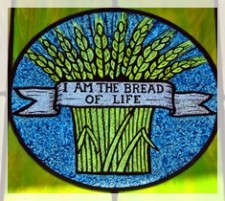
I tell you the truth, anyone who believes has eternal life. Yes, I am the bread of life! Your ancestors ate manna in the wilderness, but they all died. Anyone who eats the bread from heaven, however, will never die. I am the living bread that came down from heaven. Anyone who eats this bread will live forever; and this bread, which I will offer so the world may live, is my flesh. [John 6:47-51 (NLT)]

Copyright ©2022 jsjdevotions. All rights reserved

THE WORST SIN

No, this is the kind of fasting I want: Free those who are wrongly imprisoned; lighten the burden of those who work for you. Let the oppressed go free, and remove the chains that bind people. Share your food with the hungry, and give shelter to the homeless. Give clothes to those who need them, and do not hide from relatives who need your help. [Isaiah 58:6-7 (NLT)]

Canadian geese - goslingsLast week, a devotion I read asked, “What is the worst sin?” How would you answer it? While the “Seven Deadly Sins” (pride, greed, lust, envy, gluttony, wrath, and sloth) are all wrong, I’m not sure they belong at the top of the list. Would it be idolatry, murder, stealing, or adultery? What about the heinous sins of mass murder, genocide, torture, or the abuse of children?

Of course, there’s “blasphemy against the Holy Spirit,” the unforgiveable sin mentioned by Jesus in Matthew 12 and Mark 3. While attributing the divine power of Jesus to Satan without repenting of it is unforgivable and was bad news for Pharisees to whom Jesus was speaking, since it hurts only the sinner, I don’t think it seems to be the worst sin either.

I pondered this question over coffee while the news was airing on TV. Richard Engle gave a report from an orphanage in Ukraine that left me in tears. When Ukraine became an independent country in 1991, it inherited a broken system in which parents of disabled children were encouraged to commit their children to institutional care. Sadly, in the absence of community-based support, therapy services, or educational opportunities, families continued to abandon severely disabled children to institutions. As a result, before the war, Ukraine had the largest number of children in institutional care in Europe; 100,000 children lived in 700 institutions.

Around half of those institutionalized children had special needs or disabilities and others were separated from their families because of poverty, addiction, or poor health; only a few actually were orphans. As these “orphanages” in war-torn eastern Ukraine were evacuated, their caregivers abandoned the most severely disabled to other institutions and fled. The remaining facilities are so overrun that day and therapy rooms have been converted into dormitories. They are overcrowded, understaffed, unequipped, and unable to provide anything but basic medical attention; as a result, proper care, stimulation, rehabilitation, and therapy can’t be provided and the residents’ conditions continue to deteriorate.

Engles’ report was about visiting such an institution that was packed with 200 profoundly disabled youngsters, all of whom were abandoned by their families. Some of the children, refugees from eastern Ukrainian institutions, were little more than skin and bones. These children (and others like them) are innocent victims of a broken system, a horrifying war, and a world that looked the other way. Could the worst of all sins be one of omission—that of not loving enough to see or care?

The question about the worst sin, however, was misleading. There is no “worst” sin because every sin is an affront to God. No sin is so small that it isn’t offensive to Him and deserving of punishment nor is there any sin so great that He can’t forgive it. Nevertheless, there can be a great difference in the earthly impact of our sins. While both are sins, a drug company’s lie about the safety of its pain medication has a vastly different impact than a child’s lie about taking a cookie from the jar. Without a doubt, what has happened to those Ukrainian children is a sin with devastating consequences for those involved.

When Jesus was asked the most important commandment, He answered “You must love the Lord your God with all your heart, all your soul, and all your mind.” He continued with the second and equally important commandment of, “‘Love your neighbor as yourself.” Unfortunately, we don’t have to go to Ukraine to find the least of Jesus’ brothers and sisters who are hungry, homeless, sick, alone, exploited, abused, or abandoned. While there is little we can do for those Ukrainian “orphans,” there is much we can do to alleviate the suffering of others who are “the least of these” here and now. May we love God and our neighbor enough to notice and to care!

Then these righteous ones will reply, “Lord, when did we ever see you hungry and feed you? Or thirsty and give you something to drink? Or a stranger and show you hospitality? Or naked and give you clothing? When did we ever see you sick or in prison and visit you?” And the King will say, “I tell you the truth, when you did it to one of the least of these my brothers and sisters, you were doing it to me!” [Matthew 25:37-40 (NLT)]

Copyright ©2022 jsjdevotions. All rights reserved.

BLIND (Samson – Part 2)

A final word: Be strong in the Lord and in his mighty power. [Ephesians 6:10 (NLT)]

For I can do everything through Christ, who gives me strength. [Philippians 4:13 (NLT)]

HibiscusWhile the Nazarites’ long hair was supposed to be a constant reminder of their commitment to God and a sign to others of their vow, I don’t think his hair was what gave Samson his strength. Three times Delilah asked Samson the source of his strength, three times he lied in his answer, and three times he woke to find himself incapacitated in the way he said he could be defeated. After being betrayed by Delilah three times, why would the man finally tell her the truth the fourth time she asked? He couldn’t possibly have been that foolish. Perhaps, his Philistine wife’s betrayal years earlier taught him a thing or two about deceit. When Samson finally told Delilah the source of his strength, could he have thought all four of his answers to be lies? Wanting to continue enjoying her favors in bed, he might have thought he’d given her an answer as outlandish as tying him with seven bowstrings or weaving his hair onto a loom. I’m not a Bible scholar but I suspect the boastful warrior thought that, in spite of having the long hair of a Nazarite, he alone was the true source of his strength.

What the proud man didn’t understand was that his strength wasn’t found in bulging muscles, six-pack abs, or even untrimmed hair—it was found in God. Samson didn’t lose his strength when he lost his hair. He lost his strength when he lost sight of God—when he decided his lustful desires were more important than his Nazirite vows. Nazarites’ hair was dedicated to God and their heads were shaved only when their vows came to an end. This was to be done publicly at the door of the tabernacle. Considered sacred, the hair was part of their offerings presented to the Lord and was to be burned with the peace offering. Because the hair was consecrated to the Lord, it was not be cast into any profane place—and there probably was no place more profane than the pagan Delilah’s bedroom. Samson’s strength didn’t leave him because his head was shaved. He lost his strength when he ended his Nazirite vows by choosing the pagan and treacherous Delilah over the God to whom he’d been dedicated.

Samson’s long hair was merely a symbol of his being set apart and it didn’t give him strength any more than wearing a cross or a clerical collar endows people with virtue or makes them Christian. Earlier in life, it wasn’t Samson’s hair that enabled him to break out of restraints and kill 1,000 Philistines with a bone—it was the Spirit of the Lord that had come upon him. Rather than thanking God, however, Samson proudly boasted of his personal triumph: “With the jawbone of a donkey, I’ve killed a thousand men!” After claiming the victory for himself, he complained to God about his thirst. When water gushed from a rock, rather than offering thanks to God, Samson called it “The Spring of the One Who Cried Out.” A better name would have been the “The Spring of the God Who Answers!”

Although Samson called to God to deliver him from thirst, he might have been wiser if he’d called to God to deliver him from temptation and desire. Sadly, there is no mention of Samson calling to God again until we find him blind, weak, and humiliated as he is paraded in front of the Philistine crowd in their temple. Thinking God’s purpose was to serve him rather than his purpose being to serve God, Samson was blind long before the Philistines gouged out his eyes. He’d been blind to the power of God throughout his life. As Craig Groeschel aptly said, “He lost sight of his blind spots, which ultimately cost him his sight.”

It was only when he was blind that Samson finally saw the real source of his strength and prayed, “O God, please strengthen me just one more time.” God heard his prayer and Samson killed more Philistines as he died than he ever did when he lived. Without God, no matter how good our eyesight, we are blind and, without Him, no matter how many hours we’ve spent at the gym, we will be weak. It is when we look to God that we see, when we admit our weakness that we become strong, and when we are humble that we can be great.

Amazing grace! How sweet the sound That saved a wretch like me! I once was lost, but now am found; Was blind, but now I see. [John Newton]

Each time he said, “My grace is all you need. My power works best in weakness.” So now I am glad to boast about my weaknesses, so that the power of Christ can work through me. That’s why I take pleasure in my weaknesses, and in the insults, hardships, persecutions, and troubles that I suffer for Christ. For when I am weak, then I am strong. [2 Corinthians 12:9-10 NLT]

Copyright ©2022 jsjdevotions. All rights reserved