GARDEN OR SWAMP?

For everything there is a season, a time for every activity under heaven. A time to be born and a time to die. A time to plant and a time to harvest. A time to kill and a time to heal. A time to tear down and a time to build up. A time to cry and a time to laugh. A time to grieve and a time to dance. [Ecclesiastes 3:1-4 (NLT)]

We enjoy walking in the local Botanical Garden as well as the nearby Corkscrew Swamp. Although both offer plenty of photo ops and pleasant strolls in God’s creation, the Garden offers more color and variety than a swamp any day. Nevertheless, as much as I enjoy the Garden’s beauty and serenity, I feel more at home in the swamp.
While the Botanical Garden always has an abundance of showy colorful orchids, the swamp’s “super ghost orchid” has blossoms for only a few weeks each year. Even then, you need binoculars or a spotting scope to view its delicate (and not very impressive) flowers. At various times of the year, the swamp has wildflowers like blue flag iris, morning glories, and string lilies but they pale in comparison to the variety of exotic flora found in the Garden all year long. If the swamp’s flowers were in a beauty contest with the Garden’s flamboyant blooms like the passion flower or flaming glory bower, they’d easily lose.

Carefully designed by world-famous landscape architects and impeccably maintained by staff and volunteers, the Botanical Garden speaks of order, design, and perfection; nothing ever seems amiss. The Garden’s plants are beautifully pruned, fertilized, and fussed over. Weeds are quickly pulled and, should a plant wither or die, a lovely new one quickly replaces it.

In contrast, the swamp, with no apparent plan to its layout or plants, is a hodgepodge of flora, fauna, and water that changes almost daily. Completely dependent on rain for its existence, its animals and plants are left to the whims of the weather and Mother Nature. No one pulls the weeds, deadheads the flowers, shapes the trees, or brushes away dead leaves. Lightening and hurricanes take a heavy toll on the swamp’s plant life and, when conditions aren’t favorable, plants wither and die while animals move elsewhere. Dead trees eventually fall and, unless they’re blocking the trail, wherever they land is where they remain.

Try as I might, my life will never have the exquisite perfection of a Botanical Garden. In truth, it resembles the unpredictable and disordered swamp more than any garden. Perhaps, that’s why I enjoy it so much. The swamp is imperfect, changeable, and full of surprises. I never know what flowers will be in bloom, what birds will appear, or if I’ll see alligators, snakes, raccoons, or deer. The only thing I know for sure is that the swamp never disappoints; it always is wonderful and wild in its own unique way!

Life, like the swamp, is chaotic, disorganized, and a little dangerous; nevertheless, it is magnificent! As much as we might prefer it to be as ordered, serene, and pristine as a botanical garden, it isn’t! We’re sure to encounter life’s versions of thistles, mosquitoes, fungus, poison ivy, and animal scat. Nevertheless, along the way, there will be blessings like the swamp’s Roseate Spoonbills, sunflowers, deer, Scarlet Hibiscus, butterflies, and tiny green tree frogs! Like the swamp, we’ll have seasons of abundance and scarcity, downpours and drought, growth and dormancy, health and affliction, blessings and misfortune, beginnings and endings, and even occasional hurricanes. Life comes with its share of muck, weeds, pests, predators, storms, and vulnerability to circumstances beyond our control. The only sure thing is that God is with us during it all!

It’s ironic that our local Botanical Garden is in what used to be a swamp. The 250,000 yards of fill created after two lakes were dug in 2008 sculpted the property into the splendid showplace it is today. Someday, we will trade in our earthly swamp for God’s heavenly garden—a garden far more magnificent than any earthly garden—one with no disease, death, sorrow, pain, or weeds. Until then, we must be satisfied living in the crazy and wonderful swamp we call life. As we walk through it, we brush off the spider webs, avoid the scat on the trail, stay clear of the alligators, and look for the swamp’s gifts. Confident in the swamp’s creator, we find joy and contentment in the unique beauty of our somewhat confusing and chaotic journey. Thank you, God, for this amazing holy mess we call life!

They will never again be hungry or thirsty; they will never be scorched by the heat of the sun. For the Lamb on the throne will be their Shepherd. He will lead them to springs of life-giving water. And God will wipe every tear from their eyes. … He will wipe every tear from their eyes, and there will be no more death or sorrow or crying or pain. All these things are gone forever. [Revelation 7:16-17, 21:4 (NLT)]

Copyright ©2025 jsjdevotions. All rights reserved.

THE BRILLIANT THINGS

This is the day that the Lord has made; let us rejoice and be glad in it. [Psalm 118:24 (ESV)]

What would you do if you were six and your father said that your mom is in the hospital because she finds it hard to be happy and “did something stupid”? That question is answered in Duncan Macmillan and Jonny Donahoe’s one-act play, Every Brilliant Thing. In their play, that boy, now a grown man, tells the audience that he made of list of everything that was “brilliant” about the world—everything worth living for—and left it on his mother’s pillow. Reflecting a six-year old’s priorities, the list included ice cream, Kung-Fu movies, laughing so hard you shoot milk out your nose, burning things, construction cranes, and “me.” Although she returns the list with its spelling corrected, the boy’s mother never comments on it. Nevertheless, he keeps adding to his list. Although his mother eventually takes her life, the narrator tells how his list took on a life of its own and eventually saved him from his own depression and suicidal thoughts.
Throughout the play, the audience learns of additions to the list—everything from peanut butter, water fights, and sunlight to peeing in the sea with nobody knowing, someone lending you a book, cycling downhill, and completing a task. Sort of a theatrical and secular version of Ann Voskamp’s One Thousand Gifts, Every Brilliant Thing is a poignant reminder of the importance of noticing and naming the little “brilliant” things in our lives—to step out of ourselves to take in the small blessings with which God blesses us every day—to pause and feel God’s love in a stranger’s smile, a nurses’ gentle touch, the sound of children’s laughter, the smell of lemon zest, the taste of a fresh-baked warm chocolate chip cookie, a mockingbird’s serenade, a compliment, or the smell of a campfire! No one’s list is the same nor should they be.

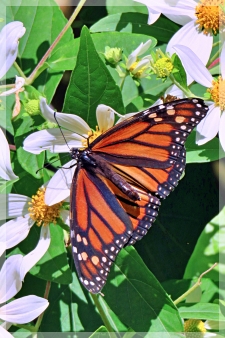
Nearly three years ago, Voskamp’s book inspired me to start my own list of “gifts” (what Macmillan and Donahoe called “brilliant” things). But, like the play’s narrator, I put it aside after a while. Although there were moments I thought, “That’s one for the list,” I rarely added them and they were forgotten. It wasn’t until my most recent bout with depression and pain that I resumed adding to it. Of course, I couldn’t add to the list without making a point of opening my eyes to God’s presence in the ordinary stuff of life. Some were big things like taking Communion or learning that my girls are visiting in a few weeks. Most things, however, are pretty mundane—the aroma of night-blooming jasmine, the two standard poodles that sit regally beside their person as he chauffeurs them around the community in his golfcart, Savannah Guthrie’s  book Mostly What God Does, whipped cream on a cup of hot cocoa, and monarch butterflies. There’s nothing extraordinary about these “brilliant” things; nevertheless, they bring a smile to my face and remind me of God’s presence in all things.

Although our cups overflow with God’s blessings, it’s been said that joy comes in sips rather than gulps. May we always remember that it wasn’t in the storm that Elijah heard God—it was in His whisper. Indeed, God whispers to us in the seemingly insignificant but “brilliant” things of life. Let us take note of each and every one!

There is not one little blade of grass, there is no color in this world that is not intended to make men rejoice. [John Calvin]

You serve me a six-course dinner right in front of my enemies. You revive my drooping head; my cup brims with blessing. Your beauty and love chase after me every day of my life. I’m back home in the house of God for the rest of my life. [Psalm 23:5-6 (MSG)]

Copyright ©2025 jsjdevotions. All rights reserved.

LIKE THE HYRAX

There are four things on earth that are small but unusually wise….Hyraxes—they aren’t powerful, but they make their homes among the rocks. [Proverbs 30:24,26 (NLT)] 

High in the mountains live the wild goats, and the rocks form a refuge for the hyraxes. [Psalm 104:18 (NLT)]

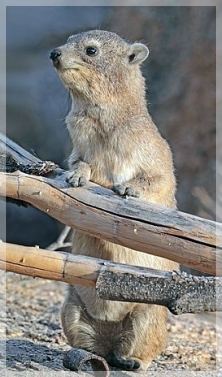
Making the point that wisdom is better than strength, the sage Agur spoke of the wisdom of ants, locusts, lizards, and sāphān. Often translated as badgers, rock-badgers, hyraxes, conies, or marmots, the animal’s exact identity is unknown but commentators suspect it to be the Syrian rock hyrax. Looking like a cross between a rabbit, guinea pig, and meerkat, these social animals gather in colonies of up to 80 individuals. Sleeping and eating together, they live in the natural crevices of rocks and boulders or take over the abandoned burrows of other animals.
Although hyraxes are mammals, like reptiles, they rely on ambient warmth to help regulate their body temperature. To warm up in the morning, they spend several hours sunbathing on the rocks together. Once warmed up, they head out to eat a little and then return to rest again on the rocks. If the sun gets too hot, they take their afternoon siesta in the shade.

Since hyraxes spend most of their time sprawled out resting on rocks in full view of any predators, these defenseless critters seem anything but wise. Looks, however, can be deceiving. Hyraxes never venture far from a safe crevice into which they can dash in an instant. Although these vulnerable animals appear to be asleep on the rocks, their eyes are open and, at the first sign of trouble, an alert is sounded.  Within seconds of that alert, these agile and speedy animals will disappear deep into rocky crevices. When hyraxes forage for food, the ever-alert animals form a circle with their heads pointing outward to keep watch for predators. I suspect it was their ability to both detect and escape peril while living openly on dangerous cliffs that caused Agur to call the hyrax “exceedingly wise.”

As a shepherd, David would have been quite familiar with the hyrax. As the likely author of Psalm 104, he even mentioned how the “rocks formed a refuge” for them. Like the hyrax, David and his men found security in the rocks and caves when they were hunted by Saul. The psalmist’s safe concealment in cliffs and caves may be the reason so many psalms refer to the rocks and cliffs as places of refuge. In Psalms alone, we find more than fifteen metaphors of God as a rock serving as the psalmist’s place of safety.

Since we’re not small and vulnerable animals who spend most of their time resting in the sunshine, what are we to make of Agur’s observation and David’s rock metaphors? Even when it looks like they’re asleep, the hyraxes never close their eyes to their enemies—the hungry lion, leopard, hyena, and eagle. Like the hyrax, Christians must be alert to their enemy, Satan—the one who prowls around like a lion looking for someone to devour. [1 Peter 5:8] Despite its vulnerability, the hyrax doesn’t conceal itself in the dark like a mole; neither should Christians. Rather than hide in the dark crevices, hyraxes boldly sunbathe in the open on the rocks because they have a secure refuge in the rocks. As Christians, we can be as bold and open in our faith because we have a secure refuge in our Triune God. Indeed, He is our fortress, deliverer, stronghold, shield, redeemer, and salvation! And, like the hyrax and David, when we’re in jeopardy, we can quickly flee to the Rock! As hymn writer Augustus Toplady wrote, “Rock of Ages, cleft for me, let me hide myself in thee!”

No one is holy like the Lord! There is no one besides you; there is no Rock like our God. [1 Samuel 2:2 (NLT)]

The Lord is my rock, my fortress, and my savior; my God is my rock, in whom I find protection. He is my shield, the power that saves me, and my place of safety. [Psalm 18:2 (NLT)]

But the Lord is my fortress; my God is the mighty rock where I hide. [Psalm 94:22 (NLT)]

He alone is my rock and my salvation, my fortress where I will not be shaken. [Psalm 62:6 (NLT)]

Be my rock of safety where I can always hide. Give the order to save me, for you are my rock and my fortress. [Psalm 71:3 (NLT)]

Copyright ©2024 jsjdevotions. All rights reserved.

LIKE LOCUSTS

The attackers march like warriors and scale city walls like soldiers. Straight forward they march, never breaking rank. They never jostle each other; each moves in exactly the right position. They break through defenses without missing a step. [Joel 2:7-8 (NLT)]
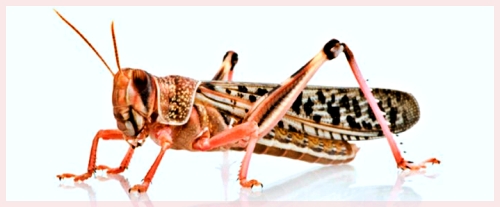
The prophet Joel wrote about God’s coming judgment of Judah but, because there’s disagreement about the date of his prophecy, we aren’t sure if he was describing the approaching Babylonian invasion, God’s final judgment, or both. In any case, the prophet likened the coming army to a swarm of locusts. Like locusts, this invading force would march straight, never break rank or crowd one other, and be unstoppable as they swarmed over the city. Before their arrival, the land would be like the Garden of Eden but, by the time they departed, it would be in utter desolation. Along with Joel, the books of Judges, Jeremiah, Nahum, and Revelation depict enemy hordes as locusts. In Proverbs 30, however, the sage Agur expresses admiration for the “small but wise” locusts because they “march in formation” without a king!

Assuming that Scripture’s words likening locusts to soldiers in a well-organized army were more figurative than scientific, I never gave these grasshopper-like insects much thought. When Charles Spurgeon used them as an example of “how thoroughly the Lord has infused the spirit of order into His universe,” and said, “Locusts always keep their rank, and although their number is legion, they do not crowd upon each other, so as to throw their columns into confusion,” I grew curious.

Normally, locusts are solitary creatures but, when conditions such as flooding or drought cause them to crowd into the same area, physical contact triggers their instinct to become sociable. As they forage for food together, they gather into a swarm of millions. Whether “marching” on land or flying in the air, locusts all go in the same direction and, if the swarm spontaneously changes course, they all switch direction as a group.

Weighing less than a dime, a single locust is hardly worth noticing—an insignificant and unremarkable insect, it’s easily crushed. The locust’s power comes when it joins with others like it. As a swarm, locusts are unstoppable and nearly unbeatable. A single swarm of locusts can number in the trillions, cover hundreds of square miles, move up to 100 miles in a day, and consume over 420 million pounds of vegetation every day!

Sharing a common goal, locusts have learned the best way to achieve it is to act as one. Their singleness of purpose is what makes them unbeatable. They are proof that, when small things come together, they have incredible power. While the cohesiveness of the locusts turns out to be a bad thing for mankind, what if Christ’s church were as unified as these insects? While thinking of the church in terms of locusts isn’t an attractive image, it is a compelling one.

If millions of insects having a brain less than ¼-inch in size can form a united force without having a leader tell them what to do, why can’t Christians? We’re certainly smarter than locusts and we have a king—King Jesus. Under His command, His army of soldiers should be able to gather as one and be a powerful force in this world.

While the locusts’ common enemy is hunger, ours is Satan; one of his favorite strategies is to divide and conquer and he’s done a great job of it! With about 45,000 different Christian denominations worldwide, we’re becoming better known for our scandals, squabbles, splits, and divisions than for our unity, harmony, and cooperation. Christ’s church always will have disagreements but Jesus and the mission He gave us is greater than our disagreements. As part of the same body—the body of Christ—we don’t have to agree on everything to partner with one another. Let us put aside our theological arguments, doctrinal disputes, and cultural biases, along with our different backgrounds, traditions, rituals, and governance to focus on what unites us: our faith in Jesus! Only then will we be able to feed His sheep and “make disciples of all the nations.”

Worldwide evangelism requires the whole church to take the whole gospel to the whole world. [Lausanne Covenant]

“Therefore, go and make disciples of all the nations, baptizing them in the name of the Father and the Son and the Holy Spirit. Teach these new disciples to obey all the commands I have given you. And be sure of this: I am with you always, even to the end of the age.” [Matthew 28:19-20 (NLT)]

Copyright ©2024 jsjdevotions. All rights reserved.

WEED OR FLOWER?

The land produced vegetation—all sorts of seed-bearing plants, and trees with seed-bearing fruit. Their seeds produced plants and trees of the same kind. And God saw that it was good. [Genesis 1:12 (NLT)]

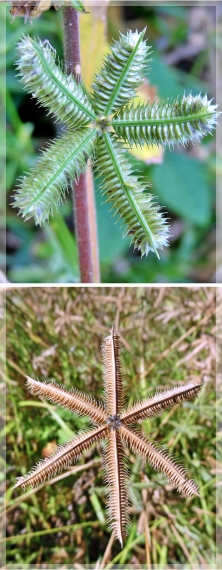
Egyptian crowfoot grassWhen I saw a wildflower that looked like a helicopter’s rotors, I showed it to the park’s naturalist for identification. Not as impressive as Scarlet Hibiscus or as colorful as Butterfly Weed, she found the plant unworthy of name or notice and wrote it off as “just a weed!” What some people call “weeds,” I think of as wildflowers and a little research told me it was the floret of Egyptian Crowfoot Grass (Dactyloctenium aegyptium). Native to Africa and widely distributed throughout the tropics and subtropics, it is one of the most drought-resistant of grasses.

While Crowfoot Grass may be a weed to some people, it is relished by ruminants like sheep, cattle, deer, and their relatives. Suitable for silage, it makes valuable pasture, excellent hay, and its seeds are fed to poultry. The plant material is used for making paper and weaving mats and baskets. In traditional African and Asian folk medicine, decoctions of its seeds have diuretic, anti-inflammatory, analgesic, antipyretic, and antibacterial effects. Its highly nutritious seeds make it a “famine food” and, when food is scarce, those seeds are used to make porridge and cakes that can sustain people’s lives in times of need.

Ralph Waldo Emerson described a weed as “a plant whose virtues have not yet been discovered,” and the naturalist’s quick dismissal of the Crowfoot Grass was because she didn’t appreciate its unseen qualities. Nevertheless, some of God’s best work is evident in His unusual and underrated “weeds” and the same might be said about their human equivalents. Like the unimpressive and humble Crowfoot Grass, God’s prophets were out of the ordinary, overlooked, unappreciated, and rebuffed by many. Nevertheless, even though they were disregarded and disparaged as if they were weeds in a rose garden, they continued in faithful obedience to God.

Like Crowfoot Grass, Jesus didn’t meet people’s expectations or conform to the norm. To Pilate, Herod, Judah’s religious leaders, Rome, and many others in 1st century Palestine, Jesus was little more than a troublesome weed that needed to be eradicated. Appearances, however, are deceiving—that unpretentious weed was the Son of God, the Prince of Peace, and (like Crowfoot Grass) the Bread of Life!

Crowfoot Grass doesn’t look like much but appearances are deceiving. Just as the naturalist dismissed it as “just a weed,” I wonder if I ever do the same with people! Judging by appearance, do I fail to take the time to discover their hidden virtues? After all, a weed is simply a flower in disguise! Let’s never make the error of failing to look beneath the surface to appreciate the value and beauty of both the plants and people we encounter in God’s garden.

There is not a flower that opens, not a seed that falls into the ground, and not an ear of wheat that nods on the end of its stalk in the wind that does not preach and proclaim the greatness and the mercy of God to the whole world. [Thomas Merton]

O Lord, what a variety of things you have made! In wisdom you have made them all. The earth is full of your creatures. [Psalm 104:24 (NLT)]

Copyright ©2023 jsjdevotions. All rights reserved.

STEALING

You shall not steal. [Exodus 20:15 (ESV)]

Jesus once said that Satan was a thief. Satan does not steal money, for he knows that money has no eternal value. He steals only what has eternal value—primarily the souls of men. [Zac Poonen]  

Brown PelicanThe patient Cormorant had been diving and resurfacing empty-beaked for several minutes before finally emerging victorious with a large fish crosswise in its beak. The fish thrashed in the cormorant’s beak while the bird tried to re-position its meal so it could be swallowed head first. A Brown Pelican suddenly crashed into the water and, after a great deal of wing flapping and water splashing, it was clear the Cormorant was no match for the larger bird. While the Pelican threw back its head and swallowed the unlucky fish, the unfortunate cormorant swam away still hungry.

Apparently, food theft (kleptoparasitism) is common among birds and it’s not limited to stealing one another’s fish dinner. Some species harass other birds until they spit up swallowed food and several species conduct high-speed chases in the sky and grab food from other birds in midair. Bird theft isn’t even limited to food. Blue Jays and Black Crows frequently pilfer the nests of other birds for shiny things with which to adorn their own nests while Magpies and Eagles will steal building material as well. At first, it seems like the birds are exploiting the hard work of others but they’re just doing what birds do naturally. Living in a competitive world with limited resources, they’ve developed remarkable skills needed for survival.

Fortunately, we don’t have to steal fish or mice from another person’s mouth or snatch bits of foil, moss, or twigs from someone’s home to survive. Unlike the birds and other animals, God created us in His image. As such, He gave us a different set of rules for living. Nevertheless, the Pelican’s behavior caused me to consider the simple commandment not to steal—a prohibition important enough to be mentioned numerous times throughout the Bible. Is this commandment limited to things like not cheating on taxes, shop lifting, snatching purses, embezzling, and robbing banks or is there something more?

Essentially, most of us are honest; nevertheless, we steal—by using worktime to check social media or personal email, padding an expense account, getting paid under the table, taking more than our share, or cutting in line. We’re stealing when we do a slip-shod job and call it “good enough,” fail to return something borrowed or found, pay unfair wages, or take advantage of someone else’s hardship, kindness, or ignorance. We steal the truth whenever we tell a lie and steal God’s glory when we take credit for His blessings. We rationalize our little cheats and don’t think of them as stealing, but they are.

Worse, we can steal someone’s reputation when we gossip, we can steal their hope when we deny them an opportunity or encouragement, we can steal their joy with a few poorly chosen words, and we can steal their dignity when we treat them in a demeaning manner. When we snub, humiliate, abuse, deny, and ignore or when we’re over-bearing, selfish, rude, negative, and unforgiving, we’re stealing something far more valuable than money. We’re stealing things like self-respect, innocence, courage, delight, confidence, dreams, and opportunities. This sort of stealing is neither a misdemeanor nor a felony; nevertheless, it is a sin.

Owe no one anything, except to love each other, for the one who loves another has fulfilled the law. For the commandments, “You shall not commit adultery, You shall not murder, You shall not steal, You shall not covet,” and any other commandment, are summed up in this word: “You shall love your neighbor as yourself.” Love does no wrong to a neighbor; therefore love is the fulfilling of the law.  [Romans 13:8-10 (ESV)]

 Copyright ©2024 jsjdevotions. All rights reserved.