
 When all the people in the synagogue heard these things, they became very angry. They got up, forced Jesus out of town, and took him to the edge of the cliff on which the town was built. They planned to throw him off the edge, but Jesus walked through the crowd and went on his way. [Luke 4:28-30 (NCV)]
For love to be real, for it to grow deep inside, it must not give in to fear. It is not afraid to give, to risk, to chance, even if it hurts. Love believes. It is faith moving forward. Fear holds us back. It makes us stop or turn and run. [Chris Fabry]
While writing yesterday’s devotion about selfishness being the opposite of love, I found several authors who suggested that fear is the opposite of love. This gave me pause; can something be the opposite of more than one thing?
From day one, when Mary and Joseph fled with Him to Egypt, Jesus had plenty of reasons to be fearful and yet fear never prevented Him from speaking, healing, pointing out hypocrisy and evil, or going to the cross. He didn’t give in to fear when, after speaking of God’s grace to Gentiles, the people of His own hometown tried to force him off a cliff. Angry mobs, religious leaders, and Rome never intimidated Jesus or kept Him from challenging the corrupt political and religious system of His day. He knew a warrant was issued for His arrest and that the cross awaited Him in Jerusalem but fear didn’t stop Jesus from boldly riding into the city while being hailed as a king. He knew Judas would betray Him and yet the Lord shared His last meal with him. Jesus didn’t plead for mercy or justice at his trial and His last words weren’t ones of fear or selfishness; they were words of loving forgiveness. Nothing Jesus said or did speaks of fear but everything He said and did speaks of love.
Afraid of commitment, rejection, manipulation, the opinions of others, insufficiency, injury, ineptitude, failure, or that there won’t be enough left over for us, we don’t love. Afraid of being vulnerable, we protect ourselves by not getting involved, not going all-out, not sharing, and not caring. So, like the priest and Levite in the Good Samaritan parable, we walk away, keep to ourselves and our interests, pretend we don’t notice, or make excuses.
Fear happens when we look at ourselves rather than trust in God. Perhaps fear and selfishness are two sides of the same coin. When we’re fearful, we become selfish and, when we’re selfish, it’s likely we’re afraid of something or someone. Love, however, is the antidote to both afflictions. God is love and where God’s love is, there is neither selfishness nor fear.
The call of Jesus is a call to take heart, to have courage, to stand tall in the name of love. The daily invitation that the risen Christ extends to us is to be a people who refuse, in love, to step to the tune of fear. [Bishop Robert O’Neill]
 While every thesaurus says that hate is the opposite of love, I’m not so sure. Authors like Wilhelm Stekel, John Le Carré, Rollo May, Elie Wiesel, and George Bernard Shaw have said that indifference (or apathy) is the opposite of love. Disagreeing, Reverend Billy Graham said the opposite of love is selfishness.
 Feeling wounded by an unwarranted condemnation, I was struggling with forgiving what to me were slanderous words. The peace that accompanies true forgiveness eluded me as the memory of the accusation haunted me. In comparison to the betrayals, deception, and abuse I’ve managed to forgive in my 74 years, this barely qualified as a misdemeanor. Nevertheless, my integrity had been called into question. Wounded in a way I never expected, I struggled to forgive.
 And if someone asks about your hope as a believer, always be ready to explain it. But do this in a gentle and respectful way. Keep your conscience clear. Then if people speak against you, they will be ashamed when they see what a good life you live because you belong to Christ. [1 Peter 3:15b-16 (NLT)]
 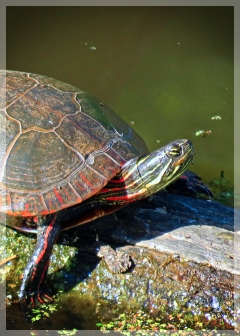 Once upon a time, a father gave his daughter a painted turtle. One morning, she ran to her father in tears and sobbed, “My turtle died!” Wanting to bring a smile back to his little girl’s face, Dad promised the reptile a lovely funeral after which he’d take her to their favorite fast-food spot for a happy meal and toy. When that did nothing to stop the flow of tears, he upped the ante by proposing to follow lunch with the latest Disney princess movie. As the sobbing slowed, he then promised they’d stop at the mall where she could ride on the merry-go-round and Ferris wheel. With only a few whimpers remaining, Dad topped off his offer with a promise to stop on the way home for a double scoop ice cream cone. Thrilled to finally see a smile on his daughter’s face, the relieved father reached into the tank to remove the dead turtle only to discover that it was alive and well and just had been enjoying a turtle nap. When he joyfully reported, “He’s not dead!” the disappointed girl’s response was, “Then can we kill it?”
 When the ten northern tribes refused to submit to Rehoboam, they revolted and, by 930 BC, there were two political states: Israel, the northern kingdom, and Judah, the southern one. Both kingdoms suffered from inept, disobedient, and often corrupt leadership but Judah’s king Ahaz (743-728 BC) was one of weakest and most corrupt of all the southern kingdom’s leaders. Because of his apostasy (which included sacrificing some of his sons to Baal), the Lord allowed Judah’s defeat at the hands of Rezin (king of Aram) and Pekah (king of Israel). By the end of the battle, Ahaz lost a son and two of his close advisors and Judah lost 120,000 seasoned warriors. The Arameans took captives to Damascus and Israel’s warriors returned to Samaria with a huge amount of plunder and 200,000 captured women and children they intended to enslave (in spite of its prohibition in Leviticus 25:39-43).
 Devotions of the Heart