
Stay away from every kind of evil. [1 Thessalonians 5:22 (NLT)]
Moses received the Torah from Sinai and committed it to Joshua, and Joshua to the elders, and the elders to the Prophets, and the Prophets to the Men of the Great Assembly. They said three things: Be deliberate in judgment, raise up many disciples, and make a fence around the Torah. [Misnha (Pirke Avot)]
 Last December, after breaching the barrier surrounding the tiger enclosure at our local zoo, a man stuck his hand into the tiger’s cage. A similar incident occurred a few months later at a nearby airboat attraction when a man improperly went through the first enclosure and put his arms into the tiger’s cage. Although both men survived, they suffered serious injuries to their hands and arms. Fences are placed to protect us and keep us from getting too close to danger but you can’t protect people from their own stupidity.
Just as those fences around the tigers’ cages were meant to protect people from the tigers (and the tigers from people), many of the Rabbinic innovations were designed to protect the commandments of the Torah. It is in the Mishnah (the oldest collection of post-biblical Jewish laws) that we find the phrase “make a fence around the Torah.” It is this fence, not the Bible, that explains the hundreds of prohibitions we find in Judaism.
Those Rabbinic rules were supposed to prevent people from being tempted to break the law or unintentionally doing so. For example, items like hammers and scissors that were associated with prohibited work like building or cutting, were not even to be picked up lest handling them led to their use. Although the Sabbath officially begins at sunset Friday, a few minutes were added before its beginning and after its end to make sure no one accidentally worked too late or resumed work too early. Even today, for my Jewish friend, the Shabbat candles are lit and all work has stopped no later than 18 minutes before the sun officially sets. His Sabbath ends when three stars are visible, which can be about 30 minutes after sunset. Rather than additions to the Mosaic law, these fences were seen as a way of helping people remain obedient to the law; they were erected to keep people from giving into temptation or just cutting it too close! Sadly, through the years, the rules became increasingly complicated and, by Jesus’ time, they were the heavy yoke about which He spoke.
Nevertheless, Jesus gave us a New Testament version of building a fence when He equated the emotion of anger with the act of murder and the attitude of lust with adultery. Anger and lust are like stepping too close to the tiger’s cage—they’re dangerous territory! Just as picking up his cell phone on Saturday might lead my Jewish friend to break the Sabbath by using it, lust and anger can lead to something far worse! Sticking your arm in a tiger’s cage or stepping into sin never ends well and, rather than gouging out our eyes or cutting off our hands, we can erect spiritual boundaries to keep us and our loved ones safe. We may restrict our youngsters to G or PG movies or set specific rules about dating for our teens. We might use internet filters to screen out inappropriate content on our computers, abstain from alcohol, or avoid the appearance of inappropriate behavior by following the “Billy Graham rule” of never being alone with a person of the opposite sex except for one’s spouse. We each have our own spiritual fences.
Unless they’re found in Scripture, however, those fences are not doctrine. They are our personal rules and, as such, other people may have different ones, some of which may be closer or further from the tiger’s cage than ours. We are not in a position to judge other people’s spiritual barriers any more than they are to judge ours. Unfortunately, for the Pharisees of Jesus’ day, the fence around the Torah became more important than the law itself. We must never do that. Every fence we erect must comply with God’s simple law that we love Him with our entire being and love our neighbors as we love ourselves.
 With nearly 20,000 tweets, the 2022 Twitter “Lent Tracker” revealed that the top Lenten fast for Twitter users was alcohol. Twitter and social networking took second and third places followed by Lent, sex, coffee, chocolate, swearing, men and meat. Using Twitter to give up Twitter seems somewhat counter-productive and giving up Lent for Lent makes no sense at all. Then again, since I don’t tweet, Twitter itself doesn’t make sense to me. In a survey by YouGov, people were asked what would be the hardest thing to abstain from for Lent and watching TV or using streaming services was the number one answer in all age groups except for ages 18 to 24. It’s no surprise that the hardest thing to relinquish for that group was social networking!
 When the Academy Awards were held recently, Oscars were presented for things like best director, best lead and supporting actors and actresses, and even best make-up and hair styling. If it’s true (as my theater teachers claimed) that, “There are no small parts, only small actors!” how is it that no awards were given to the best small part players? Regardless of the perfection with which they may have fulfilled their “bit parts”, their screen time was too short to be nominated for anything. To add insult to injury, they may have been known only as Dog Walker or Nurse #2! The small role, however, doesn’t mean the character played an insignificant part in the story. Nevertheless, after moving the story forward, the bit part players just fade into the background. Even so, while their names may be forgotten, the story wouldn’t have been the same had they not played their roles.
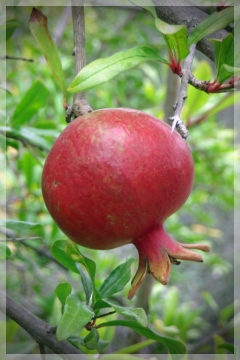 The culture of the 1st century was agrarian in nature so the analogies used by Jesus and the evangelists often were those of agriculture – seeds, soil, fruit, and vines. For example, when writing about the characteristics in the lives of those who follow Jesus, Paul spoke of the fruit of the Spirit. But, if Paul were writing to modern industrial society, he might have used a different metaphor. Instead of the fruit of the Holy Spirit, we might have the Spirit’s toolbox. Rather than fruit, we’d have God’s tools to help us to build His Kingdom. The saw in the box would be God’s peace that cuts worry and fear out of our lives. The sandpaper would be kindness as it smooths out life’s rough edges. Protective gear like safety goggles and steel-toed shoes would be the self-discipline that protects us from sin. Duct tape and WD-40 would be as essential as love, a flashlight would shine our joy, and we’d have clamps to hold us tight to the faith. God’s word would be our blueprint and, instead of being connected to a vine, the power tools would be plugged into the Holy Spirit’s power. Regardless of the metaphor, the Holy Spirit provides us with what we need to be more like Christ.
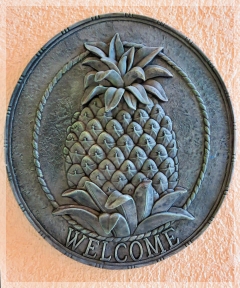 For a Christian, being hospitable should be second nature but, for many, the thought of entertaining is terrifying. Entertaining, however, has nothing to do with hospitality. One has to do with cuisine, attire, atmosphere, and possessions, and says “Look what I have,” while the other has to do with love, respect, sharing, refreshment, and comfort and says, “What I have is yours!” One is meant to impress and the other is meant to bless.
 In the ancient world, travel was dangerous and the nomadic people of Israel took hospitality seriously. It was the way to transform an unknown person (who might pose a future threat) into a guest and a friend. Hospitality was an integral part to many of the Old Testament’s stories. Both Abraham and Lot welcomed strangers into their home. Rebekah gave water to Abraham’s servant, watered his camels, and then offered food for the animals and rooms for the night. Rahab gave lodging and protection to the Israelite spies, Manoah and his wife fed the stranger who visited them, the widow of Zarephath gave her last morsel of food to Elijah, and the Shunammite woman provided food and a room for the prophet Elisha whenever he passed through Shunem. Abigail generously provided food for David and his band of men and David welcomed Jonathon’s crippled son Mephibosheth at his table as a way of showing God’s kindness.
 Devotions of the Heart