KNOWLEDGE AND WISDOM

Trust in the Lord with all your heart; do not depend on your own understanding. Seek his will in all you do, and he will show you which path to take. Don’t be impressed with your own wisdom. Instead, fear the Lord and turn away from evil. [Proverbs 3:5-7 (NLT)]

white ibis - juvenileAfter his wife complained about the roaches that had invaded their garden and begged him to destroy their underground nest, a Brazilian man poured gasoline into the hole he believed to be the source of the infestation and then tossed in lit matches! Within seconds, a massive explosion destroyed his yard while his home security camera captured the entire thing. “I had no idea that this could happen!” he said. Although the man did destroy the roaches, he destroyed his yard in the process! I’m not sure where he got his bright idea but I would guess that his Smartphone was involved. A quick search with mine told me that pouring gasoline on a roach colony is an effective way to eliminate the pests. Assuming a certain amount of common sense among its readers, however, the site had no warning about the explosive nature of gasoline vapors!

According to Apple, we pull out our smartphones some 80 times a day; I suspect many of those times we’re consulting Google. While our phones give us easy access to an extraordinary amount of information, they don’t make us any smarter; they just make us think we’re smarter than we really are. Long before the internet, Solomon warned us about being impressed with our own wisdom. Nowadays, knowledge is abundant but true wisdom is scarce!

Proverbs is a treasure trove of Biblical wisdom. Written mostly by Solomon, the book stresses the importance of godly living so that people will ”live disciplined and successful lives” and do “what is right, just, and fair.”[1:3] At least six different Hebrew words are translated as wisdom in Proverbs and the first one of those is chokmah [1:2]. Used 41 times in Proverbs, this Hebrew word also referred to the technical skills and abilities used in doing things. God endowed the weavers, goldsmiths, architects, and other artisans who fashioned items for the Tabernacle with chokmah. Rather than theoretical knowledge, this wisdom is a practical application of that knowledge; it is making the right choices at the right time and in the right way.

The five other Hebrew words used in Proverbs are binah (understanding, comprehension) leb (heart), ormah (craftiness, prudence, shrewdness), sakal (prudence, common sense) and sekel (insight). None of those words have anything to do with the knowledge of facts—they are about understanding, evaluating, and discerning how to use knowledge. Wisdom is skill, expertise and competence in understanding how life really works and how to achieve positive results. It is a keen insight into life and the ways of dealing with life’s problems. It’s been said that “Knowledge knows that a tomato is a fruit but wisdom doesn’t put it in a fruit salad.” It could also be said that knowledge knows that both gasoline and fire will kill roaches but wisdom doesn’t mix the two! Let us be wise in our use of the vast array of knowledge that lies at our fingertips!

The decisions we make are either wise or foolish and Proverbs makes it clear that the beginning of wisdom lies in fear of the Lord. While it’s easy to get information on line, true wisdom comes from God! Granted, Scripture doesn’t specifically warn us about dropping matches into a gasoline-filled hole, but Proverbs 14:16 tells us, “The wise are cautious and avoid danger; fools plunge ahead with reckless confidence.” That the Brazilian man also posted his folly on line aptly illustrates two other proverbs: “Wise people think before they act; fools don’t—and even brag about their foolishness,” [13:16] and “The wise don’t make a show of their knowledge, but fools broadcast their foolishness.”[12:23]

Wisdom is the right use of knowledge. To know is not to be wise. Many men know a great deal, and are all the greater fools for it. There is no fool so great a fool as a knowing fool. But to know how to use knowledge is to have wisdom. [Charles Spurgeon]

Joyful is the person who finds wisdom, the one who gains understanding. For wisdom is more profitable than silver, and her wages are better than gold. Wisdom is more precious than rubies; nothing you desire can compare with her. [Proverbs 3:13-15 (NLT)]

Copyright ©2020 jsjdevotions. All rights reserved.

THE PLEDGE

A man who makes a vow to the Lord or makes a pledge under oath must never break it. He must do exactly what he said he would do. [Numbers 30:2 (NLT)]

Every knee will bend to me, and every tongue will declare allegiance to me. The people will declare, “The Lord is the source of all my righteousness and strength.” [Isaiah 45:23b-24 (NLT)]

green heronEvery Tuesday, we begin our afternoon Bible study with prayer and by saying the Pledge of Allegiance to the Bible. The words we use are attributed to Homer Grice, a Southern Baptist minister, who wrote them for Baptist Vacation Bible Schools in 1925. He combined two verses from Psalm 119 into this simple vow and versions of it continue to be used by Vacation Bible and Sunday Schools, Christian homeschoolers, and even adult Bible studies. Because it reminded me of elementary school and standing by my desk with my hand across my heart, starting class with this pledge seemed rather childish at first. Once I carefully considered the words, however, I realized that saying this pledge always reminds me that the Bible is at the center of a Christian’s devotion to Jesus Christ. It was in Him that the Word became flesh and, through Scripture, God continues to speak to us today.

A pledge is a formalized promise but pledging allegiance to the Bible means more than simply promising to read it. The promise of allegiance indicates our loyalty and obedience to God’s holy word. The Bible is unlike every other book ever written—ones written to entertain, inform, explain, improve, or motivate us. Its author is God and its words are there to transform us! The Bible is more than words; it is the Word—the living breath of God. This simple pledge of allegiance reflects the importance of Scripture and its vital role in the life of a believer.

The pledge’s words mean that we honor and respect the Bible; we will let its words govern our thoughts, words, and actions. We vow that God’s words will be a lamp to light our way in this dark and difficult world so that we don’t get lost or step off His path. We promise to hide the Bible’s words in our hearts to keep us from sin (just as they did when Jesus was tempted in the wilderness). This pledge reminds us that studying God’s Word is a matter of the heart with these words: “I pledge allegiance to the Bible, God’s Holy Word. May it be a lamp unto my feet and a light unto my path and may I hide its words in my heart that I might not sin against God.”

I have hidden your word in my heart, that I might not sin against you. … Give me understanding and I will obey your instructions; I will put them into practice with all my heart. …Your word is a lamp to guide my feet and a light for my path. [Psalm 119:11,34,105 (NLT)]

Copyright ©2020 jsjdevotions. All rights reserved.

CHECK YOUR SOURCE

All Scripture is inspired by God and is useful to teach us what is true and to make us realize what is wrong in our lives. It corrects us when we are wrong and teaches us to do what is right. God uses it to prepare and equip his people to do every good work. [2 Timothy 3:16-17 (NLT)]

columbineBroken people were drawn to Jesus but Mary Magdalene was not as broken as many people think. Magdalene was not her last name; it simply means “from Magdala” and the Gospels’ writers added it to distinguish her from the many others Marys: Jesus’ mother, Martha’s sister, the wife of Clopas, and the mother of James and Joseph.

When we first meet Mary Magdalene in Luke 8, her name is linked both with women “who had been cured of evil spirits and diseases” and those who “were contributing from their own resources to support Jesus and the disciples.” Luke then elaborates that Jesus cast seven demons from her. Nowhere does he (or any other gospel writer) say anything about Mary’s immorality. In fact, since she was one of the women helping to financially support Jesus’s ministry, it appears that she was an upstanding, respectable and wealthy woman.

Whether it was because Luke’s first reference to Mary Magdalene follows the story of the nameless sinful woman who anointed Jesus’s feet or that Mary had been cured of seven demons but the idea developed through the centuries that she was immoral and probably a prostitute. Mental illness in 1st century Palestine was attributed to evil spirits and those demons probably were a mental illness of some kind. While we don’t know if her disorder was epilepsy, depression, paranoia, psychosis, or something else, Scripture gives us no reason to question her morals. We must never make the error of confusing mental illness with immorality.

It didn’t help Mary’s reputation when, in 1324, the Roman Catholic Church established a home for “the rescue and maintenance of fallen women” and called it the “Magdalen House.” Her reputation suffered further harm when, in 1591, Pope Gregory I gave a sermon associating her seven demons with the seven vices and then fused her with both the sinful woman and Mary of Bethany (both of whom washed Jesus’s feet). When monks and priests read Gregory’s sermons rather than Scripture, the erroneous story of Mary continued to be told.

It was not until 1969 that the Roman Catholic Church declared that Mary Magdalene was not the fallen woman who washed Jesus’ feet. Unfortunately, people seem to love a juicy story and Mary’s undeserved reputation still lingers. She continues to be portrayed as a repentant prostitute, the nameless woman caught in adultery, or even as Jesus’ lover or wife. There is absolutely no Scriptural basis for any of those assumptions.

Mary Magdalene appears in all four Gospels and is mentioned thirteen times. We are given no reason to think that she was anything other than a once ill woman who helped financially support Jesus and the disciples. In fact, when she’s mentioned with other women, her name usually comes first, implying that she was their respected leader. It is only when she is standing at the foot of the cross with Jesus’ family (His mother and aunt) that her name follows those of others. What we do know from Scripture is that, when others fled, Mary Magdalene was there. She was present at the Crucifixion, sat across from the tomb with the mother of James and Joseph as Christ’s body was laid in the sepulcher, was the first person to whom Jesus appeared after his resurrection, and was the first to preach the news of His resurrection.

While I wanted to restore a good woman’s reputation with this devotion, its main purpose is to caution us as to where we get our Biblical knowledge. While it’s tempting (and often easier) to get it second-hand—from sermons, devotions, commentaries, conversations, books, websites, movies and other media—those never should be our sole source of information. God’s word is our spiritual nourishment and, just as a vitamin pill is no substitute for eating real food, there is no substitute for reading Scripture first-hand. After all, to discern between opinion, fact, and fiction, we must know the truth and the gospel truth is found only in the Gospel!

Just because it’s in print doesn’t mean it’s the Gospel. [Michael Jackson]

Work hard so you can present yourself to God and receive his approval. Be a good worker, one who does not need to be ashamed and who correctly explains the word of truth. Avoid worthless, foolish talk that only leads to more godless behavior. [2 Timothy 2:15-16 (NLT)]

Copyright ©2020 jsjdevotions. All rights reserved.

THE RICH YOUNG MAN

The disciples were astounded. “Then who in the world can be saved?” they asked. Jesus looked at them intently and said, “Humanly speaking, it is impossible. But not with God. Everything is possible with God.” [Mark 10:26-27 (NLT)]

great blue heronThe book of Daniel makes reference to the resurrection of both the wicked and righteous, with the destiny of the one being shame and disgrace and the other being everlasting life. By the time of Jesus, many Jews believed in some sort of eternal life and that it would come by obedience to the Law. Matthew, Mark, and Luke tell of the rich young man who asked Jesus what good deed he must do to have eternal life. He wanted Jesus to check his resume of good works and, if found lacking, to give him a task that would assure his immortality.
Before answering, Jesus clarified that goodness only comes from God rather than things or actions and then told the man to keep the commandments. As if some were more important than others, the man asked which ones. After listing several commandments dealing with man’s relationship with man, Jesus summarized with the command to love your neighbor as yourself. The man proudly responded that he obeyed them all. Had he been truly honest about himself, he would have admitted his inability to keep the law perfectly and acknowledged that he couldn’t attain eternal life on his own merit. But, sure his ticket to eternity was safe in hand, the man asked what else he should do. When Jesus told him what needed to be done to be “perfect,” He didn’t mean faultless; the Greek word translated as “perfect” means goal or end. So, to achieve or perfect his goal of eternal life, Jesus told him to sell all of his possessions, give the money to the poor, and follow Him. Hearing this, the rich young man departed. In spite of his claims, he clearly didn’t love his neighbor as himself.

At first, it seems odd that Jesus didn’t mention the first four commandments—the ones having to do with man’s relationship to God. But Jesus could see into the man’s heart and knew the man loved his wealth far more than God or his neighbor. So, after he claimed to love his neighbor, Jesus asked him to put his money where his mouth was by giving his wealth to his neighbor!

That Jesus gave the rich man a requirement wasn’t unusual for a rabbi. When prospective students came to study with rabbis, the teachers often gave them a condition as a way of weeding out those students who really weren’t serious. The young man, however, hadn’t come to our Lord to learn; he’d come to be commended for his righteousness!

When people read this story, they often fear that it means Christians must live a life of poverty, but Jesus wasn’t setting financial requirements for salvation. His demand merely revealed what was in that rich man’s heart. He loved himself and his possessions far more than God or his neighbor. Although this encounter demonstrates the implications of discipleship, it never demands that we sell our possessions or live a life of asceticism. Jesus wasn’t teaching salvation through philanthropy; He was demanding that God be first place in our hearts.

Obedience to the commandments does not qualify any of us for eternal life; there is nothing we can do to merit the gift of salvation and eternal life. That only comes by grace through faith. Nevertheless, obedience to the commandments—loving God and loving our neighbor—is evidence of our faith. Is there something more important to you than loving God? What would Jesus ask you to relinquish? Do you love Him enough to do it?

Jesus replied, “‘You must love the Lord your God with all your heart, all your soul, and all your mind.’ This is the first and greatest commandment. A second is equally important: ‘Love your neighbor as yourself.’ The entire law and all the demands of the prophets are based on these two commandments.” [Matthew 22:37-39 (NLT)]

Copyright ©2020 jsjdevotions. All rights reserved.


WITH A SMALL “C”

For there is one body and one Spirit, just as you have been called to one glorious hope for the future. There is one Lord, one faith, one baptism, one God and Father of all, who is over all, in all, and living through all. [Ephesians 4:4-6 (NLT)]

old world wisconsinIt is said that John Wesley (the founder of the Methodist movement) once dreamt of visiting the gates of Hell. Curious, he asked the gatekeeper how many in Hell were Presbyterians, Episcopalians, and Baptists. “We have many,” was the gatekeeper’s answer regarding each denomination. Nervously, Wesley then asked if there were any Methodists and was disheartened to learn there were plenty of them there, as well.
Dismayed, Wesley proceeded to the gates of Heaven. The preacher asked how many in Heaven were Presbyterians, Episcopalians, and Baptists. To each question, the gatekeeper replied, “Not a one.” After Wesley asked how many Methodists were there, his heart dropped at the gatekeeper’s reply of, “None!” Perplexed, the concerned preacher asked who was in Heaven. The angel at the gate replied, “The only ones here are those who love the Lord and the only name by which they are known is that of Christian!”

From that strange dream, John Wesley is said to have concluded that unity within the Christian church was essential for its mission. Nevertheless, acknowledging that there will be different points of view, he said, “Although a difference in opinions or modes of worship may prevent an entire external union, yet need it prevent our union in affection? Though we cannot think alike, may we not love alike? May we not be of one heart, though we are not of one opinion? Without all doubt we may.”

I thought of John Wesley’s dream when my husband told me how, as a boy, he refused to say the word “catholic” when reciting the Apostle’s or Nicene Creeds. Not attending a Roman Catholic church, he didn’t know how he could say he believed in it! Of course, he didn’t understand that catholic (with a small c) has never meant a specific denomination.

Etymologically, “catholic” comes from two Greek words, kata or kath (meaning “throughout”) and holos (meaning “whole”). When joined as katholikos, it means, “throughout the whole.” Meaning more than universal, “catholic” captures the dual sense of “throughout all time and in all places” while pointing to the essential unity or wholeness of Christ’s Church. When the creeds state, “I believe in the holy catholic church,” they aren’t referring to any branch of Christianity; they refer to the entirety of the whole Church, not just here and now, but everywhere in the past and future as well. First used in the early 2nd century, the adjective “catholic” didn’t mean a particular denomination; it simply described the universal scope of the Christian Church. It was not until the Reformation that the Roman church used “Catholic” (with a capital C) as a denominational title to distinguish itself from the Protestants.

To avoid confusion, many Protestant churches have replaced “catholic” with “Christian” when saying the creed. Nevertheless, the original word has a beautiful subtext because it refers to the wholeness of the entire church and the unity of all believers in the body of Christ, throughout all time and in all places. The “holy catholic church” simply refers to all true believers in the Lord Jesus Christ—people like the ones John Wesley found in heaven! Indeed, we won’t all think alike nor will we worship alike but we all can love alike!

Where Jesus Christ is, there is the catholic church. [Ignatius of Antioch]

I am praying not only for these disciples but also for all who will ever believe in me through their message. I pray that they will all be one, just as you and I are one—as you are in me, Father, and I am in you. And may they be in us so that the world will believe you sent me. I have given them the glory you gave me, so they may be one as we are one. I am in them and you are in me. May they experience such perfect unity that the world will know that you sent me and that you love them as much as you love me. [John 17:20-23 (NLT)]

Copyright ©2020 jsjdevotions. All rights reserved.

THE FEAST OF EPIPHANY – JANUARY 6

Jesus was born in Bethlehem in Judea, during the reign of King Herod. About that time some wise men from eastern lands arrived in Jerusalem, asking, “Where is the newborn king of the Jews? We saw his star as it rose, and we have come to worship him.” [Matthew 2:1-2 (NLT)]

magi

Assuming you don’t worship in the Orthodox Church, today is known as the Feast of Three Kings or Epiphany. Since the church year for Orthodox Christians follows the Julian calendar, tonight is their Christmas Eve and Epiphany won’t be until January 19th. For those of us using the Gregorian calendar, however, today often is the day the Christmas tree is taken down, the nativity sets boxed up, and the holiday decorations are tucked away until next December.

Epiphany, however, isn’t about decorations or eating the last of the Christmas cookies. The word “epiphany” means to show, make known, or reveal. Those “ah-ha” moments when we have a flash of insight or understanding are often called epiphanies. (I frequently prayed for epiphanies when studying algebra and geometry.) When the travelers to Emmaus (in the gospel of John) suddenly recognized the resurrected Jesus, they had an epiphany as did Saul when Jesus revealed Himself on the road to Damascus. Today’s Epiphany celebration is about the coming of the wise men with gifts to visit the Christ child. Their visit revealed Jesus to the world as Lord and King, not just to the Jews, but also to the Gentiles.

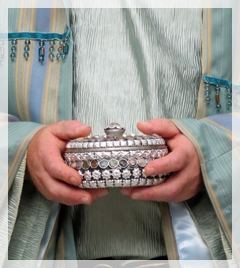
When the long awaited Messiah was born, angels sent the birth announcement to lowly shepherds rather than religious leaders. The king was born, not in a palace, but in a stable. The newspaper didn’t list His birth but a star led the way. The baby gifts were brought not by Jews but by Gentiles: pagans who traveled from Persia, Arabia or India for several months to find this newborn king. They didn’t present the family with typical baby gifts and their offerings certainly weren’t what a poor carpenter’s family would expect to receive. Their offerings, however, were standard gifts to honor a king or deity in the ancient world. Gold, the metal of royalty, symbolized His kingship and acknowledged His right to rule. Frankincense, used in worship and the anointing of priests, symbolized the role Jesus would take as our High Priest. Myrrh, a spice used for embalming, was an odd gift for a child but the magi were familiar with the prophecies that told of the Messiah’s suffering. This was the perfect offering for the One who would be a sacrifice. Perhaps the greatest gift the magi brought was the one that didn’t come in a box: their worship!

As we put away the last of the holiday decorations, let’s not put away the message of Christmas. May the living Christ remain in our hearts: our King, God, and Savior—the One who lived and died so that we might die and live.

Born a king on Bethlehem’s plain, Gold I bring to crown Him again,
King forever, ceasing never Over us all to reign. …
Frankincense to offer have I. Incense owns a Deity nigh.
Prayer and praising all men raising, Worship Him, God on high. …
Myrrh is mine: Its bitter perfume Breaths a life of gathering gloom.
Sorrowing, sighing, bleeding dying, Sealed in the stone-cold tomb.
[“We Three Kings” by John Henry Hopkins, Jr.]

They entered the house and saw the child with his mother, Mary, and they bowed down and worshiped him. Then they opened their treasure chests and gave him gifts of gold, frankincense, and myrrh. [Matthew 2:11 (NLT)]

Copyright ©2020 jsjdevotions. All rights reserved.