
For the Lord will remove his hand of judgment and will disperse the armies of your enemy. And the Lord himself, the King of Israel, will live among you! At last your troubles will be over, and you will never again fear disaster. On that day the announcement to Jerusalem will be, “Cheer up, Zion! Don’t be afraid! For the Lord your God is living among you. He is a mighty savior. [Zephaniah 3:15-17 (NLT)]
He came into the very world he created, but the world didn’t recognize him. He came to his own people, and even they rejected him. [John 1:10-11 (NLT)
 With palm branches waving, the people greeted Jesus as he entered Jerusalem. News of Jesus’ miracles, especially the resurrection of Lazarus, had spread through town. They shouted “Hosanna!” at the man they thought would overthrow the Romans, establish peace in the nation, and retake David’s throne. Expecting a political liberator rather than a spiritual savior, they wanted deliverance from the Romans rather than redemption from sin—a conquering king rather than a suffering servant. More concerned about the here and now than the forever after, they wanted power and might rather than love, peace, humility, forgiveness or eternal life. Jesus, however, didn’t come to change their circumstances; He came to change their lives and, when He didn’t give them what they wanted, they rejected Him.
I sometimes wonder if we do the same. Are we fair-weather followers like the people of Jerusalem? Those cries of “Hosanna!” became calls to crucify Him when the miracles stopped. Like them, do we turn away from God when He doesn’t fulfill our expectations? If God delivered Shadrach, Meshach and Abednego from a fiery furnace, why won’t He deliver us from cancer, marital problems, or debt? God answered Elijah’s prayers with rain, so why won’t He answer ours with an end to this pandemic? He freed Peter from his prison cell, so why won’t he free us from debt, pain, or addiction? When God doesn’t deliver what we want, do we turn our backs to Him as did the people of Jerusalem? Let’s remember that while Shadrach, Meshach and Abednego were delivered from the furnace and Peter escaped from prison, not everyone got what they wanted: Stephen was stoned, John beheaded, Isaiah sawn in half, and James slain with a sword.
When God doesn’t meet our expectations, we may start to doubt. Instead of believing that God is good, we ask, “What good is God?” We don’t have to earn God’s love with our works and yet we expect Him to prove His love through His blessings. Our faith cannot be tied to His fulfillment of our desires and expectations; it must be tied to His word. His business is transforming us and not our circumstances.
Let’s never confuse our desires with God’s promises. He will always deliver what He’s promised—peace, love, forgiveness, salvation, the Holy Spirit, eternal life, His grace, and sufficiency. Whether they recognized Him or not, when Jesus arrived in Jerusalem, God was fulfilling His promises and meeting their greatest need: deliverance, not from the Romans, but from sin. God continues to be true to His word today. He will always deliver what He’s promised but, like that itinerant rabbi from Nazareth riding on a donkey through the streets of Jerusalem, often it is not what we expect or think we want!
 When my “Weekly Wisdom” email reminded me that time is the price we must pay for intimacy with God, I thought of Cindy. A recent widow struggling to make sense of her new normal, Cindy wanted a closer relationship with God, but wasn’t quite sure how to go about it. Rather than reciting the same prayers over and over again, she wanted to sit down and talk to Him, as she would with a good friend.
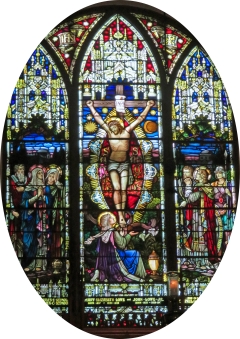 “He’s not at all what I expected!” I said after seeing a well-known radio personality in person. Nowhere near as attractive, suave and elegant as he’d sounded on the air, he was much better in my mind’s eye. Older, heavier, less stylish and bald, I was disappointed. The imagined was so much better than the reality.
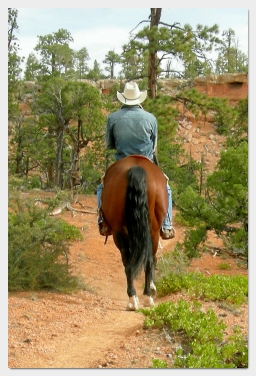 In A Gentle Thunder, author Max Lucado compares the hero of the Bible, the shepherd, with the hero of the American west, the cowboy. They both herd livestock, their home is the range, and they sleep under the stars. The difference, says Lucado, is that the shepherd knows and loves his sheep because he leads them to be shorn. The cowboy, however, doesn’t get attached to his cattle because he’s leading them to slaughter! While several cowboys drive a herd of cattle and know one another’s names, just one shepherd leads a flock of sheep and it is their names that he knows!
 When Jesus finished the Sermon on the Mount, the crowds were astounded at his teaching because, unlike the scribes and Pharisees, He taught with “authority.” When the people wondered at Jesus’ authority, they weren’t referring to His ability to speak confidently and persuasively. The Greek word translated as “authority” was exousia which meant power or right; the people wondered at Jesus’ authorization to say the things He said. Rather than teach on their own authority, most rabbis taught on the authority of earlier sages. The Moody Bible Commentary depicts them as virtual “walking footnotes” who merely cited famous teachers and repeated what had been said before by others.
 The story has been told of a shoemaker who dreamt that Jesus would come to his shop the following day. His dream was so realistic that he washed his shop windows and dusted every shelf in preparation for his holy guest. The man patiently waited at his bench for the Lord to arrive but the only person to come through his door that morning was an old man seeking shelter from the icy winter rain. When the cobbler looked down at the man’s wet feet, he saw toes poking out of his beat-up shoes. Selecting a new pair of shoes, the shoemaker sat the old man down, dried off his feet, gave him a fresh pair of socks, and fitted him with the new shoes. When the rain stopped, the old man went on his way.
 Devotions of the Heart